
Sports
Jadeja, Siraj wrap up India’s innings win inside three days


Ravindra Jadeja has been building a case to be one of the best allrounders in the game. A four-for to follow a hundred against West Indies to start the new home season was just the latest evidence he offered in favour of that argument. On the back of his 104 not out and 4 for 54, India completed an innings win with two-and-a-half days to spare.
A proud record stood tall between February 22, 2013 and October 25, 2024. It buckled 24 hours later. India lost a Test series on home soil for the first time in nearly 12 years. Many of the players who had contributed to that run are now retired, including Virat Kohli, R Ashwin and Cheteshwar Pujara. But Jadeja remains.
He was there when India began that run against Australia in Chennai. He was there when New Zealand broke them last year in Pune. And he was there once again, lifting them back up against West Indies now. At 36 years old, it is unclear how much cricket is left in him but it was poetic that in the first of 66 Tests that India had to play at home without R Ashwin, his old pal came up with a hundred and a four-for.
Alick Athanaze arried the West Indies flag, showing why he is rated as a good player of spin. He picked up length well. He was decisive going forward or back. And he remembered to put pressure back, two rock-solid reverse sweeps for four and one sumptuous cover drive for three highlighted his process. All of those scoring shots were against half-volleys that were well wide of the stumps. This is the judgment and the competence that convinced the coach Daren Sammy and the management to bring him back into the Test side.
India, though, kept placing new threats in front of Athanaze. Jasprit Bumrah hit him on the helmet. Washington Sundar tested him with the ball turning away. They were waiting for Athanaze to be just slightly off with his process and eventually, after 73 balls, he was, closing the face of the bat, baited by an offbreak that pitched on middle. Washington took a simple catch, which then led to a symbolic representation of West Indies’ batting in this Test.
Jomel Warrican tried to impose himself on Mohammed Siraj swinging as hard as he could, only for his bat to fly out of his grip and land at square leg. The ball meanwhile settled in mid-off’s hands.
West Indies are a side still building its best batters. Ahead of this tour, they were shorn of two of their best bowlers. This informed the challenge they could pose. They are struggling to find a better opener than John Campbell, 32, who is the third-most experienced player in this XI. He has 23 caps and in all that time, he has no centuries. Even in first-class cricket, after 101 matches, he has only nine centuries. In Ahmedabad, he fell for 8 and 14. The only slightly younger Tagenarine Chanderpaul finished with 0 and 8. Top-order returns like that just won’t do.
Jadeja is sometimes accused of being that left-arm spinner who just fires the ball in and lets the pitch do its work. But he knows how to work batters out too. He saw Brandon King lunging forward to try and smother the turn and that helped him once. He hit a crisp cover drive for four. It also led to his downfall as Jadeja recalibrated his flight. It was still full so it triggered King’s instinct to get on the front foot. But he had no way of getting to the pitch of this one. Having committed to the shot, he ended up vulnerable to the turn and presented a straightforward catch to slip. All this happened in the space of two overs. In that small period of time, Jadeja turned what the batter thought was a strength into a weakness.
Siraj was the other bowler among the wickets, taking five or more over the course of a home Test for the first time.
West Indies lost 10 wickets in two sessions on the first day. They did it again on the third day. Only two players got into the 30s. Only two faced 50 or more balls. They have five days to address these problems before the start of the second game in Delhi. The wait to win a Test match against India in India, which is into its 31st year, continues.
Brief scores:
India 448 for 5 in 128 overs (Yashaswi Jaiswal 36, Dhruv Jurel 125, KL Rahul 100, Shubman Gill 50, Ravindra Jadeja 104*; Roston Chase 2-90) beatWest Indies 162 in 44.1 overs (Roston Chase 24, Shai Hope 26, Justin Greaves 32; Mohammed Siraj 4-40, Jasprit Bumrah 3-42, Kuldeep Yadav 2-25) and146 in 45.1 overs (Alick Athanaze 38, Justin Greaves 25, Jayden Seales 22; Ravindra Jadeja 4-54, Mohammed Siraj 3-31, Kuldeep Yadav 2-23) by an innings and 140 runs
[Cricinfo]


This fixture was, of course, known in advance, but the stakes are somewhat surprising. Neither was it expected that India could be knocked out of their own party if they lose to West Indies nor was it expected that West Indies could go to the semi-finals if they win this match.
The expected result still is for India to overcome that one blip against South Africa and make it to the semi-finals. Then again, jeopardy and unpredictability are at the heart of this format.
The path to get here has been similar for both teams: a thumping loss to South Africa and a resounding win over Zimbabwe. Even their scores against Zimbabwe were nearly identical.
West Indies are one team India haven’t faced in their dominant run starting with the 2024 T20 World Cup. They are, in fact, the last team to have beaten India in a series way back in August 2023.
Both sides have improved since then. India are a well-oiled domination machine, West Indies have put together scary six-hitters who have happened to hit form. They have hit more sixes than any side at any T20 World Cup, and India are three behind them with 63 so far.
It is with the ball that India hold an advantage. India’s bowlers are match-winners. They have pace and mystery. It gives them room for error. West Indies are a strictly defensive bowling unit. They’ll need everything to go their way to get the better of India.
He might have taken just 26 balls to get there against Zimbabwe, but it was Abhishek Sharma’s second-slowest fifty in T20Is. That’s because he had scored just 15 runs in the first four matches, which made him take his time against offspin, scoring just 13 off 17 balls against that style of bowling. That makes Roston Chase an important player even though he went for 46 against South Africa. He is the only spinner in the West Indies squad who takes his stock ball away from left-hand batters; India have five of them in their top eight.
Rinku Singh lost his father after the match against Zimbabwe, which he missed with India bringing in Sanju Samson to break up the left-hand batters in the top order. He is expected to join the squad on Saturday night but isn’t expected to play.
India (probable): Abhishek Sharma, Sanju Samson (wk), Ishan Kishan, Tilak Varma, Suryakumar Yadav (capt), Hardik Pandya, Shivam Dube, Axar Patel, Arshdeep Singh, Jasprit Bumrah, Varun Chakravarthy.
Brandon King, who had sustained an injury against South Africa, is fit and available, which should suggest no changes for West Indies.
West Indies (probable): Brandon King, Shai Hope (capt & wk), Shimron Hetmyer, Rovman Powell, Roston Chase, Sherfane Rutherford, Romario Shepherd, Jason Holder, Matthew Forde, Gudakesh Motie, Shamar Joseph.
[Cricinfo]
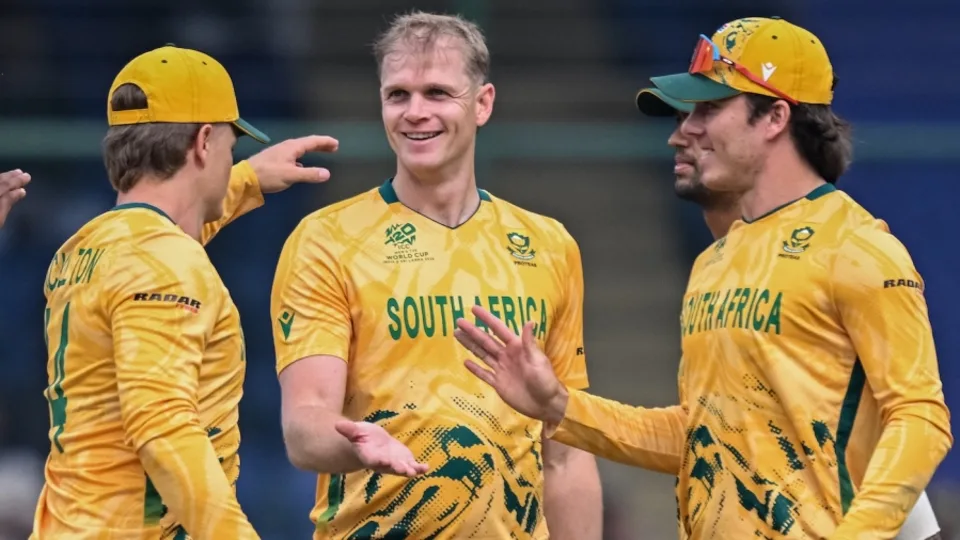
South Africa have had a near-perfect tournament so far. Fifty games in, they are the only unbeaten side in this 20-team T20 World Cup and are poised to enter the semi-finals with a spotless record. On Sunday, Aiden Markram’s men will meet their neighbours Zimbabwe, who last beat South Africa in international cricket way back in 2000. Overall, Zimbabwe have beaten South Africa just twice in 58 completed international matches.
Apart from history, the conditions and recent form are also against Zimbabwe. After toppling Australia and Sri Lanka in Sri Lanka, Zimbabwe have struggled across the board in India. Having suffered back-to-back defeats on flatter pitches at the Wankhede and Chepauk, Zimbabwe were knocked out of contention for the semi-finals.
Their bowlers conceded back-to-back 250-plus totals against West Indies and India. The indiscipline has seeped into their fielding as well: after dropping just one catch in the group stage, Zimbabwe have shelled at least five chances in two matches in the Super Eight. Yet they have had plenty of reasons to celebrate, including avoiding going through the qualifiers for the 2028 T20 World Cup.
South Africa may rest some of their key players as they did earlier in another dead rubber against UAE in Delhi.
A late bloomer in international cricket, allrounder Corbin Bosch has barely been needed with the bat in this competition, but has been South Africa’s go-to bowler in the death overs. He has bowled 54 balls between overs 16 and 20, conceding just 56 runs while taking three wickets. Lungi Ngidi’s variations have grabbed the headlines, but Bosch has certainly played his part with variations of his own, especially the yorker.
Brad Evans also has a good slower ball in his repertoire, but didn’t find grip at Wankhede or Chepauk. His slower ones slid onto the bat, making it easier for batters to line him up. Can he find a way to be more potent in these conditions and sign off on a high?
With not much riding on this fixture, South Africa may empty their bench again and keep some of their first-choice players fresh for the knockouts. Jason Smith, Kwena Maphaka, George Linde and Anrich Nortje all could add to their caps.
South Africa (probable): Aiden Markram (capt), Quinton de Kock (wk), Ryan Rickelton, Dewald Brevis, Jason Smith/David Miller, Tristan Stubbs, Marco Jansen/Kwena Maphaka, Corbin Bosch, Kagiso Rabada, Keshav Maharaj/George Linde, Lungi Ngidi/Anrich Nortje
The presence of four left-handers in South Africa’s top seven may keep left-arm fingerspinner Wellington Masakadza on the bench. Zimbabwe, though, may consider bringing wristspinner Graeme Cremer back in place of medium-pacer Tinotenda Maposa.
Zimbabwe (probable): Brian Bennett, Tadiwanashe Marumani (wk), Dion Myers, Ryan Burl, Sikandar Raza (capt), Tony Munyonga, Tashinga Musekiwa, Brad Evans, Graeme Cremer, Blessing Muzarabani, Richard Ngarava

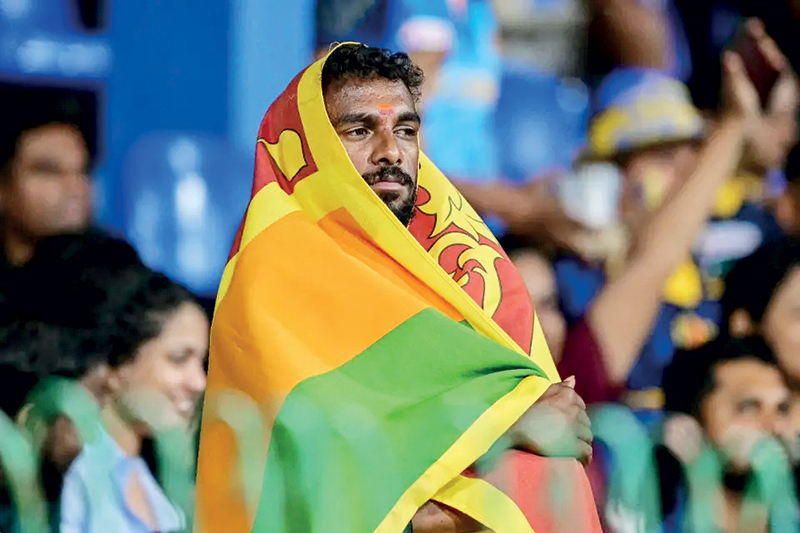
Those of us who have earned our bread and butter from this grand old game have a duty to guard its gates. Cricket has been our benefactor; we cannot now let the grass grow under our feet and drift into mediocrity. Wednesday night’s painful exit from the T20 World Cup left 35,000 fans at the ground shell-shocked, while millions more switched off their televisions hoping it was all a bad dream. Sri Lanka are better than this.
When Pramodya Wickramasinghe and Dasun Shanaka were brought back to spearhead the national selection panel and the team respectively, there were murmurs in cricketing corridors that the move could boomerang. Those warnings were brushed aside. Today, the heat is being felt in the boardrooms.
Shanaka’s elevation never quite passed the straight-face test. He had been dropped for poor returns and since his comeback was scrapping to hold onto his place in the XI. To fast-track him to the captaincy was a gamble that has now backfired. The argument that he was “trustworthy” and “obedient” to the authorities hardly forms the blueprint of great leadership.
Sri Lanka’s finest skippers – Bandula Warnapura, Arjuna Ranatunga, Mahela Jayawardene and Kumar Sangakkara – were never nodding puppets. They did not always see eye to eye with administrators, but strong leaders seldom do. That friction, at times, sharpened the blade rather than blunt it.
It was widely known that Shanaka’s tactical acumen would be tested under fire. What has startled many, even within his own establishment, is the decision to bowl first in a must-win clash against New Zealand, a call that raised eyebrows and in some quarters, questions about judgment and conviction. On surfaces where scoreboard pressure is king, Sri Lanka blinked first. You never bowl first at RPS. It’s always a bat first track.
The selectors, too, must front up over the late drama surrounding Dhananjaya de Silva’s inclusion on the eve of the tournament. It smacked of muddled thinking. When tried and tested policies are abandoned at the eleventh hour, you often end up padding up without a plan. An opportunity to back clarity and continuity was squandered.
To be fair, Sri Lanka Cricket faced a Hobson’s choice in appointing a chief selector, with few eager to walk into a thankless job. Yet stability might have served them better. Upul Tharanga had steadied the ship and deserved a longer rope rather than another shake up that unsettled the dressing room.
Finger pointing, however, will not mend broken campaigns. If the game we cherish is to thrive, solutions must replace soundbites. The recurring injury cloud is a glaring concern. This is not the first global event Wanindu Hasaranga has missed and as former captain Marvan Atapattu queried in these columns, should SLC rethink the volume of No Objection Certificates handed out for franchise leagues? You cannot flog your thoroughbreds year-round and expect them fresh for the big dance.
Playing spin has long been Sri Lanka’s Achilles heel. The emergence of Pavan Rathnayake has offered a glimmer of hope, his nimble footwork and soft hands suggesting a player cut from sturdier cloth. But one swallow does not make a summer. The talent pool must be widened and deepened.
Then there is the Lanka Premier League, a tournament that has promised much but delivered in fits and starts. Constant ownership changes and questionable investors have left it looking like a ship without a steady captain. SLC cannot have their cake and eat it. If the LPL is merely a cash cow, the national side will pay the price. If it is to be a genuine pathway to the Sri Lanka cap, then profits may need trimming in favour of purpose. The bigger picture is preparing cricketers hardened enough for the global arena.
Finally, the idea of a fully-fledged Cricket Academy deserves some thinking. Former cricket chief Hemaka Amarasuriya was keen on such a venture, not merely to polish cover drives and yorkers, but to mould character. Cricketing education must extend beyond the boundary rope. Discipline, resilience and decision-making are as vital as strike rates and economy figures.
by Rex Clementine

Can West Indies make up for bowling gulf in virtual quarter-final against India?

Flights cancelled as travel warnings issued after strikes on Iran

Trump says Iran’s Supreme Leader Ayatollah Ali Khamenei is dead after US-Israeli strikes

South Africa put spotless record on the line in all-African clash

Fair weather will prevail over most parts of the island

Renewed Lanka’s Easter Bombing probe puts NTJ’s South India radicalisation network back under lens

‘Dates have the highest sugar content to fight Coronavirus’

Sunday Island 27 December – Headlines

#SundayIsland 17th December – Headlines

Sunday Island – 28th March

Sunday Island Headlines – 21 March

Sunday Island – 21st February – Headlines
-

 Features6 days ago
LOVEABLE BUT LETHAL: When four-legged stars remind us of a silent killer
-

 Business6 days ago
Bathiya & Santhush make a strategic bet on Colombo
-

 Business6 days ago
Seeing is believing – the silent scale behind SriLankan’s ground operation
-
 Latest News7 days ago
India, South Africa meet in the final before the final
-

 Features6 days ago
Protection of Occupants Bill: Good, Bad and Ugly
-

 News6 days ago
Prime Minister Attends the 40th Anniversary of the Sri Lanka Nippon Educational and Cultural Centre
-

 Business6 days ago
Huawei unveils Top 10 Smart PV & ESS Trends for 2026
-

 News6 days ago
Coal ash surge at N’cholai power plant raises fresh environmental concerns