
Business
JAAF calls on GoSL to urgently reconsider SVAT abolition

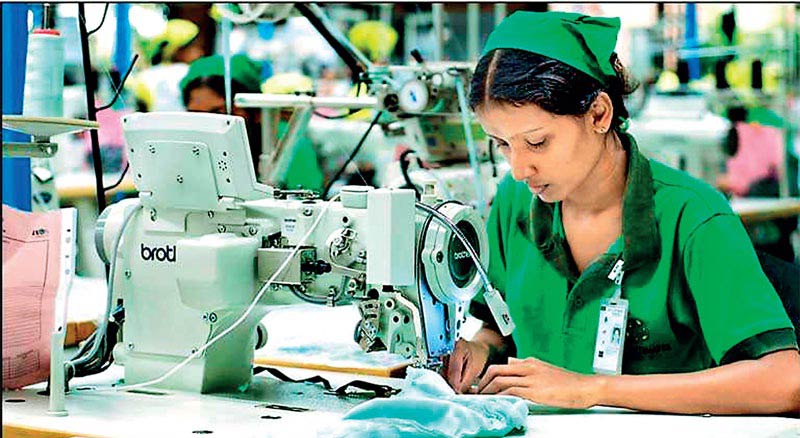
With the countdown to the forthcoming abolition of the Simplified Value-Added Tax (SVAT) system ticking down to an end date of April 1, 2025, the apex body of the Sri Lankan apparel industry, the Joint Apparel Association Forum (JAAF) urged the government to urgently reconsider its decision in light of growing stresses on the industry, a press release said.
The release adds: “The apparel sector is currently grappling with significant challenges in the global market, which is already being reflected in reduced export figures. At such a time, the removal of SVAT without first establishing a viable and efficient refund mechanism is going to drastically disrupt cash flows for all exporters including the apparel industry, which makes up nearly half of the nation’s entire export portfolio. Failure to reconsider this policy will almost certainly exacerbate financial strain on the sector, and further erode Sri Lanka’s export competiveness as funds will inevitably be tied up in refund processes, even in the most efficient systems,” said Bandula Fernando, chairman, Sri Lanka Chamber of Garment Exporters – which represents the SME sector with JAAF.
‘While authorities have committed to “significantly speed up valid VAT refunds” the apparel industry has maintained its position that this commitment has not been met with no measurable improvements on time taken for refunds having been achieved as yet. According to Fernando, any decision to proceed with abolition of the SVAT scheme in the absence of any tangible progress on speeding up valid VAT refunds would be catastrophic, particularly for the SME sector.
“The SME sector is really struggling right now and if the removal of the SVAT system goes ahead this will be a major burden on the cash flows of the SME sector. Despite the law requiring for refunds to be made within 45 days, exporters have legitimate VAT refunds due as far back as 2010 and no interest is paid on these delayed refunds. In that time, the Sri Lankan rupee has lost 69% of its total value. Such inefficiencies will create insurmountable obstacles for SME apparel exporters, and severely erode cash flows even for larger players,” he noted.
‘Meanwhile, JAAF Secretary General, Yohan Lawrence stressed that JAAF and its members recognize and appreciate the government’s need to meet revenue targets as part of the IMF program However, he noted that the decision to remove the SVAT scheme had unfortunately been made on two incorrect assumptions, namely: that the current system creates revenue erosion and that the removal of SVAT would enhance the revenue collection for the state.
“This claim has not been substantiated in respect of the formal apparel sector where the SVAT system is used for the sourcing of intermediary goods for the manufacture of apparel. The industry has been on a journey of backward integration whereby supply of raw materials has moved away from being imported to being manufactured locally. Removal of the SVAT system will reverse this trend, leading to more imports,” Lawrence cautioned.
‘According to industry experts, the primary effect of abolishing SVAT would be increased cash flow between exporters and the IRD, and not increased revenue. Sri Lanka’s history with VAT refunds prior to SVAT was marked by significant delays, with refunds due for over 18 months, creating significant financial bottlenecks for exporters.
‘Historically, VAT refund systems have been prone to fraud, particularly in the non-export sector. The SVAT system effectively mitigates this risk by limiting the scope for abuse. Exporters, who utilize SVAT to purchase local inputs for conversion into export products, have minimal local sales, thus reducing potential misuse. Conversely, the likelihood of fraud is significantly higher in an inefficient payment and refund system compared to the voucher-based SVAT system.
‘Moreover, the reintroduction of a VAT refund system may compel apparel exporters to import raw materials rather than purchasing domestically. This shift would not only strain cash flows but also increase imports and reduce incentives for domestic value addition, negatively impacting the balance of trade.
‘Under SVAT, apparel exporters could purchase local raw materials without immediate cash outflows for VAT, promoting the use of domestically produced inputs. With the inefficient refund system, the incentive to buy local decreases. Such a scenario would eventually undermine the unique vertical integration benefits that Sri Lanka’s apparel industry offers, potentially threatening the sector’s viability and the jobs it supports.
“Reinstating a VAT refund system will demand substantial resources from the IRD for ongoing follow-ups and evaluations, leading to increased administrative costs and misallocation of precious resources. The additional burden on both the IRD and the industry is unnecessary and counterproductive,” Lawrence added.


The Asian Development Bank (ADB) is acting quickly and decisively with $4 billion in financing to help countries withstand the impact of the Middle East conflict, including about $3 billion requested by governments and $1 billion provided as trade finance for energy and food imports.
“ADB is acting with speed and scale to support countries experiencing a range of impacts from the Middle East conflict, including pressure on finances, remittances, tourism, and fuel and fertilizer supplies,” said ADB President Masato Kanda. “At this time of acute uncertainty and risk, we are deploying our full suite of crisis response instruments—including budget support, trade finance, and a new mechanism to rapidly repurpose existing portfolio funds—to deliver the tailored and timely support our members, from large to small, need to safeguard their economies and communities.”
ADB has received formal requests for support from 15 affected governments across the region, including previously announced requests from Bangladesh, Fiji, the Philippines, and Sri Lanka. The requests, which follow a financial support package announced by ADB in late March, range in size from $15 million to $1.5 billion and include policy-based loans, countercyclical financing, rapid repurposing of existing sovereign portfolio funds, and emergency assistance loans. ADB is in discussions with an additional 4 countries facing continued impacts on their economies.
In addition to these requests, the Government of India has requested $1.5 billion in ADB financing to build and accelerate resilience and to sustain reform-based urban transformation and clean energy objectives. The proposed assistance includes a $1 billion policy-based loan under the Urban Transformation and Investment Program to sustain momentum in urban infrastructure investment and reforms, and $500 million under the Accelerating Affordable and Inclusive Rooftop Solar Systems Development Program to expand clean energy access, reduce dependence on imported fuels, strengthen domestic manufacturing, install battery energy storage systems, promote circular economy initiatives, and enhance long-term energy security.
Complementing this sovereign assistance, ADB has reactivated support for oil imports under its Trade and Supply Chain Finance Program (TSCFP) on an exceptional basis for a limited period to soften the impact of rising oil prices and supply chain disruptions. Since 1 March, ADB’s TSCFP has delivered $673 million to support oil and gas imports and $390 million for food security across 9 countries, helping maintain access to essential supplies amid global market disruptions. Trade finance support to the Cook Islands is also expected to commence soon as part of ADB’s broader support for vulnerable small island developing states.

A new study by researchers from the University of Sri Jayewardenepura and the Ministry of Irrigation argues that strengthening the knowledge and adaptive capacity of tea smallholders is critical to safeguarding the future of Sri Lanka’s tea industry in the face of climate change.
The study, titled “Enhancing Climate Resilience through Informal Education: The Case of Tea Smallholder Farmers in Sri Lanka,” was authored by Dr. Nuwan Gunarathne, Mahendra Peiris, Thilini Cooray and G.W. Dimalka Perera. It examines the growing challenges confronting tea smallholders and identifies practical measures that can help build a more resilient and sustainable tea sector.
Tea smallholders account for more than 74 percent of Sri Lanka’s total tea production, making them the backbone of one of the country’s most important export industries. However, many farmers are struggling with declining productivity and profitability due to labour shortages, limited technical knowledge, inefficient farming practices and the use of poor-quality agricultural inputs. These long-standing problems are now being exacerbated by climate change.
The researchers note that irregular rainfall patterns, prolonged droughts, rising temperatures and soil degradation are increasingly affecting tea yields and farmer incomes. They also point to inefficiencies in fertiliser use, observing that Sri Lanka currently applies nearly one kilogram of fertiliser to produce one kilogram of made tea, despite actual nutrient replacement requirements being significantly lower. This not only raises production costs but also contributes to environmental degradation.
According to the study, climate-smart agriculture and regenerative farming practices offer practical pathways to address these challenges. Techniques such as rainwater harvesting, micro-irrigation, drought-tolerant crop varieties, improved canopy management and organic soil enhancement can help farmers maintain productivity while reducing dependence on costly chemical inputs. Several locally developed innovations, including herbicide-free integrated weed management, deep envelope forking and stripe spreading of tea bushes, have already demonstrated promising results in improving yields, restoring soil health and enhancing resilience to climate stress.
However, the authors emphasise that technology alone is insufficient. Farmer education and capacity building are equally important.

‘Goodbye to guesswork, hello to hard numbers for a more secure financial future’
Sri Lanka has just secured a coveted seat at a high-powered global table – one where number-crunchers don’t just balance spreadsheets but help save economies from disaster. The country has been selected for the UNDP–Milliman Global Actuarial Initiative (GAIN), a kind of financial “special forces” training programme for developing nations.
When The Island Financial Review told an actuarial expert at a roundtable held at the Kingsbury Colombo on June 12 that it knew little about what an actuary does, this is how she explained it: “Think of actuaries as the fortune-tellers of finance. We use maths, data, and risk models to answer questions like: Will our pension system survive an ageing population? Can insurance handle a flood of climate disasters? For too long, Sri Lanka has lacked enough of these experts. GAIN aims to fix that.”
When asked to elaborate, she continued: “The initiative, a brainchild of the UN Development Programme and Milliman Inc., a global actuarial heavyweight, was launched in 2022 at the UN General Assembly. Since then, it has spread to 16 countries, mobilised over 185 Milliman volunteers, and delivered more than 32,000 hours of pro-bono brainpower – meaning, free expert insights. Now, it’s Sri Lanka’s turn.”
From 8–12 June 2026, Milliman ambassadors were on the ground, huddling with everyone from the Insurance Regulatory Commission and the Insurance Association to universities, chartered accountants, and local insurers. Their mission was to diagnose the country’s actuarial strengths and weaknesses – and then build a battle plan.
That plan takes the form of the Sri Lanka Actuarial Capacity Roadmap (2026–2028). It will spell out how to plug skills gaps, boost professional training, and apply actuarial smarts to national priorities like social protection and disaster risk financing.
As part of the programme, a two-day professionalism boot camp was delivered to members of the Actuarial Association of Sri Lanka (AASL) – the island’s official actuarial body, recognised by regulators in 2024.
The mission wrapped on 12 June with a stakeholder workshop to refine the roadmap, to which the financial media had also been invited to spread the word about the little-known but key number-crunchers. The core responsibility of actuaries is to ensure a future where Sri Lanka doesn’t just react to crises but calculates their odds – and beats them.
“This isn’t just about maths,” another AASL member told The Island Financial Review. “It’s about economic resilience, financial security, and sustainable development, powered by people who can see the future in a formula.”
The event reflected the need for a clear policy-level commitment to strengthening actuarial studies in Sri Lanka at national level, rather than allowing a handful of gifted math brains to go abroad and struggle through costly, self-funded qualifications to become actuarial experts.
By Sanath Nanayakkare

Holder completes heist for West Indies after Joseph picks up five

Mandhana, Deepti, Ghosh star as India breeze past Pakistan

Showers will occur in the Western, Sabaragamuwa and North-western provinces and in Galle, Matara, Kandy and Nuwara-Eliya districts

Theft of USD 2.5 mn from Treasury: CoPF accused of complicity in NPP cover-up

Viral diseases on the rise

Ranil warns of another economic crisis, calls for Opposition unity

‘Dates have the highest sugar content to fight Coronavirus’

Sunday Island 27 December – Headlines

#SundayIsland 17th December – Headlines

Sunday Island – 28th March

Sunday Island Headlines – 21 March

Sunday Island – 21st February – Headlines
-

 News4 days ago
CIABOC summons Yoshitha over his participation in British Navy training programme
-

 News6 days ago
Local firms move millions of dollars overseas for phantom imports: Govt.
-

 Midweek Review6 days ago
July 09: An inexcusable overall security failure and exceptional contingency plan
-

 Opinion7 days ago
Could Sri Lanka once again face an economic crisis similar to 2022?
-

 News6 days ago
AI raises concerns over arrest of Sallay and rapper under PTA
-

 News3 days ago
Commonwealth lawyers urge Lanka to uphold rule of law
-
 News7 days ago
Sallay refuses to end hunger strike unless probe is taken out of CID led by Shani
-

 Features2 days ago
Politics of protected species