
Sports
Iyer, Gill, Suryakumar and Ashwin stud India’s series-clinching win


India’s box-ticking ahead of the World Cup continued, with Shreyas Iyer and R Ashwin coming up with impressive performances, as the hosts secured a 99-run victory (DLS) in the second ODI in Indore on Sunday (September 24) to seal the three-match series. Iyer’s third ODI ton and Shubman Gill’s sixth hundred, along with half-centuries from Suryakumar Yadav and KL Rahul, powered India to a commanding 399/5. After a rain break in the second innings, Australia’s target was revised to 317 in 33 overs but they ended up well short as Ashwin and Ravindra Jadeja bagged three apiece to bowl the visitors out for 217.
Matthew Short started positively in the chase as he managed two fours off Mohammed Shami in the opening over. But Prasidh Krishna, who replaced Jasprit Bumrah for this game, had Short caught at third man and also got Steve Smith, the stand-in captain, to edge to slip. The bowler, though, was taken for a few boundaries by David Warner and Marnus Labuschagne as they took Australia past 50 before it started to rain again in Indore, forcing the players off the field. Upon resumption, Australia faced a steep challenge as they needed 261 in 24 overs at close to 11 an over as per the DLS revised target.
Warner and Labuschagne, who extended their stand past 50, had to play their shots from the get-go and they were up for it as they targeted Shardul Thakur. Ashwin, on the other hand, wasn’t as easy to score off and Warner even batted right-handed against him, executing a sweep shot for a four. Labuschagne, though, fell to the offspinner as he was bowled off a back flipper. Warner, who registered his second fifty-plus score of the series, persisted with his right-hand tactics against Ashwin, and ended up being out lbw attempting a reverse sweep, although replays revealed he had edged the ball onto his pad.
Ashwin also removed Josh Inglis soon after and Jadeja, after an expensive start, accounted for Alex Carey. A direct hit from Ishan Kishan, who was ‘keeping in this game, caught Cameron Green short of the crease. Jadeja picked up his second by having Adam Zampa bowled, as Australia slipped to 140/8. Josh Hazlewood and Sean Abbott struck a few big hits while a couple of dropped catches came as blemishes in an otherwise dominating show by India. Australia got some ticking done too as Abbott showcased his hitting skills to bring up a 29-ball fifty, his first in ODIs. A 77-run ninth wicket stand came to an end when Hazlewood, who had hit two fours off Shami, was eventually bowled by the experienced pacer for 23. Abbott was the last to fall, bowled by Jadeja, as Australia’s innings ended in the 29th over. It meant they had now lost five ODIs on the bounce.
Earlier, having been asked to bat, India got off to a good start as Ruturaj Gaikwad struck two fours off debutant Spencer Johnson. Hazlewood, back in the side, bowled in the right channels, and reaped the reward as he got Gaikwad to edge to Carey. Iyer hit the straps straightaway as he dealt in regular boundaries. Be it driving through covers or going over it, he exuded confidence as he helped India pick up pace. Gill was a bit subdued until he went straight over Abbott’s head for his first boundary-shot, which was a maximum, and then came down the track to hit one past cover for a four. Gill also took on Green in his first over, striking a four and a six. After a brief rain interruption, Gill and Iyer continued to tee off, with the former bringing up a 37-ball fifty and the latter getting to a 41-ball half-century with a six off Johnson.
Australia weren’t able to keep a lid on India’s scoring rate, with Iyer targeting the spinners for a couple of sixes and Gill finding the boundaries regularly. India’s 200 came up in just the 29th over and an 86-ball ton for Iyer came next, and the joy and relief of getting to hundred was palpable in his celebrations. Iyer was reprieved when the third umpire ruled that Abbott didn’t take a return catch cleanly. But the batter fell in the same over, soon after hitting a boundary to raise the 200 partnership, when he failed in his attempt to clear the fence. Rahul started with a six off Zampa, after which Gill reached three figures, becoming only the fifth player to get five ODI hundreds in a calendar year before turning 25. Rahul also hit a Green delivery out of the ground before Gill’s innings came to an end in the same over when he was undone by a slower ball.
Rahul and Kishan kept the big hits coming as they raised a 59-run stand to help India past 300 in the 41st over. But Kishan fell soon after, getting out to Zampa for an 18-ball 31 looking to go for another big one. After two quiet overs, Suryakumar unleashed his array of strokes in the 44th over off Green, hitting four successive sixes. Rahul got to a 35-ball fifty but it was Suryakumar who scored the bulk of the runs in a half-century stand before Green ended the Indian skipper’s stay. But there was no stopping Suryakumar, who smashed a six and two fours in a 17-run over from Abbott as he got to a 24-ball fifty. Jadeja and Suryakumar scored a four apiece off Hazlewood in the 48th. It was a forgettable outing with the ball for Green, who conceded 103 runs despite giving away only five runs in the 49th over. Abbott was hit for a six by Suryakumar in the final over but he kept it tight otherwise, preventing India from reaching 400.
Brief scores:
India 399/5 in 50 overs (Shreyas Iyer 105, Shubman Gill 104, Suryakumar Yadav 72*, KL Rahul 52; Cameron Green 2-103) beat Australia 217 (Sean Abbott 54, David Warner 53; R Ashwin 3-41, Ravindra Jadeja 3-42) by 99 runs (DLS method).









by Rex Clementine
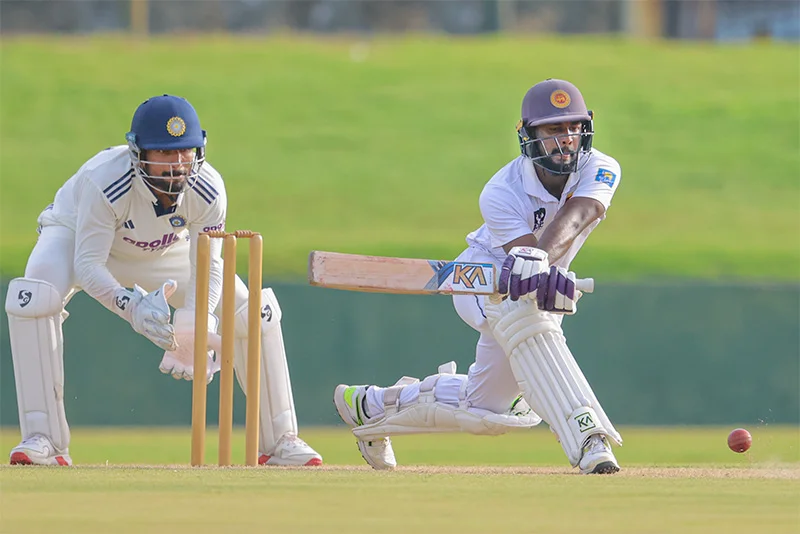
The Niroshan Dickwella experiment has proved short lived, with the national selectors deciding to move on and handing a maiden Test call up to 22-year-old Anjala Bandara, who is expected to take over the wicketkeeping duties for the two match Test series against Pakistan.
Dickwella’s recall after more than three years in the wilderness had raised quite a few eyebrows. The selectors defended their decision, arguing that he remained the finest wicketkeeper in the country. Few disputed that claim. The concerns, however, were never about his glovework but rather his ability to shut out the noise, keep his emotions in check and maintain discipline off the field. True to form, India’s fielders managed to get under his skin in the second innings of the Galle Test and the left-hander duly lost patience and threw his wicket away.
A fellow left-hander, Bandara’s journey to the national side has been anything but conventional. He first emerged from the little known Sirimavo Bandaranaike Vidyalaya in Matale before being snapped up by St. Anthony’s College, Katugastota. He eventually found his way to Mahanama College for his Under-19 cricket and now turns out for Colombo Cricket Club.
While Bandara has been prolific with the bat, boasting a formidable First Class average of 65, his work behind the stumps remains a work in progress. The selectors, however, believe he has made sufficient strides to be thrown into the deep end of Test cricket.
“We had a special programme for Anjala. In fact, we sent him to Mahesh Gunathilaka, one of the finest wicketkeepers produced by the country. He has worked on a few areas and we feel he is ready for Test match cricket,” Chairman of Selectors Kapila Wijegunawardene told The Island.
Wijegunawardene also confirmed that Pasindu Sooriyabandara would open the batting in Pakistan.
The former Royal College batter made his Test debut as a concussion substitute against India in Galle after Dinesh Chandimal was injured, but his introduction to the highest level was hardly a fairytale as he departed for a first ball duck. He made amends in the second Test, however, with impressive knocks of 80 and 92, showing that his baptism by fire had done little to dent his confidence.
Although Pathum Nissanka has been included in the squad, his availability remains subject to fitness. The prolific opener had been expected to return for the tri-nation series in Pakistan beginning later this week, but his recovery from the hamstring strain that ruled him out of the T20 series has taken longer than anticipated.
The Pakistan series will also mark Kusal Mendis’ first assignment as Test captain. His predecessor, Dhananjaya de Silva, who stepped down from the leadership, retains his place in the squad, although whether he makes the playing XI is another matter.
With competition for middle order places heating up, the former captain could find himself in a straight shootout with Kamindu Mendis for one of the remaining berths. It is an intriguing selection headache, particularly given that Dhananjaya was leading the side only a few weeks ago.
Another interesting inclusion is Eshan Malinga, who has largely been regarded as a white ball specialist. The selectors have now opened the door for him in the longest format, offering the young quick an opportunity to prove that his skills extend beyond the limited overs game.
by Reemus Fernando
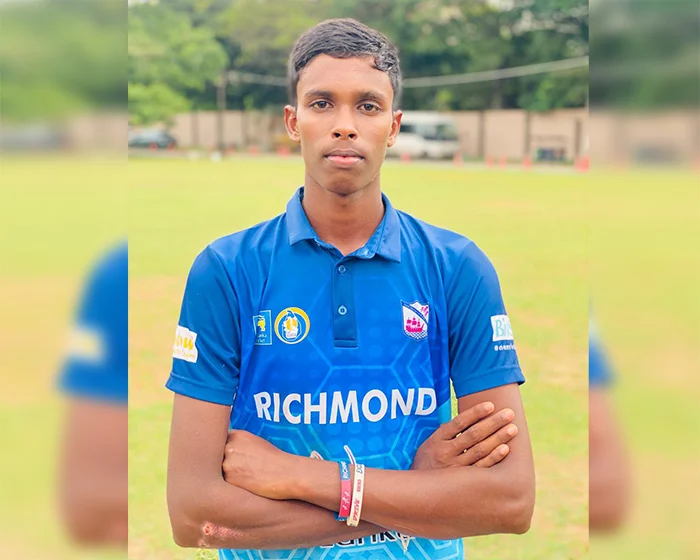
Richmond College are all but through to the quarter-finals of the Under-19 Division I Tier A Limited Overs Tournament after a nine-run win over Maris Stella College, Negombo, under the Duckworth-Lewis-Stern (DLS) method at the Army Grounds in Karandeniya on Monday.
It was Richmond’s third straight victory, and it puts them at the top of Group ‘B’ with one match remaining.
Batting first, Richmond posted 171 for nine in their allotted 50 overs, with Bevin Jayawardana top-scoring with a patient 55 off 88 balls. Punal Hansajith contributed 24 off 39 deliveries, while Risinu Rupasinghe made 22 and Ravinu Randinu added 18.
Maris Stella’s Malan Kadigamuwa led the bowling effort with three wickets for 37 runs in nine overs, while Rosel Perera claimed two wickets for 31 runs in his 10-over spell.
In reply, Maris Stella reached 127 for six in 42 overs against a revised DLS target of 136. Richmond therefore secured victory by nine runs under the method.
Punal Hansajith and Tenusha Nimsara claimed two wickets each to keep the Maris Stella batting line-up in check. Hansajith conceded just 20 runs in nine overs, while Nimsara gave away 14 runs in seven overs, with both bowlers maintaining tight control.
For Maris Stella Kavith de Silva scored 29 off 46 balls, while Gaveesha Induwara remained unbeaten on 24 off 38 deliveries. Manuja Nayanajith added 23 off 55 balls, and Yumeth Sathmira contributed 16.
In their previous encounters bowlers domnated for Richmond to beat Sri Sumangala College Panadura and St. Sebastian’s College Moratuwa comfortably.
Sri Sumangala were dismissed for 106 runs with Hiruk Akalanka, Tenusha Nimsara and Punal Hansajith claiming two wickets apiece. Akalanka returned figures of 2 for 21 in six overs, while Nimsara took 2 for 21 in five overs, including one maiden. Hansajith also claimed two wickets, conceding 24 runs in 5.3 overs. Hiruka Akalanka then lead the chase with a knock of 45run (in 46 balls with5fours and 2 sixes) to seal a six wickets win.
The match against St. Sebastian’s saw Tenusha Nimsara hog the limelight, taking a five-wicket haul to restrict the Moratuwa outfit to 115 runs.
Richmond had a few anxious moments in reply but got home with two wickets in hand.
In Group ‘A’ the contest is still open with S. Thomas’ College Mount Lavinia slightly ahead of others after Jaden Amaraweera scored a cracking 76 off 75 balls (7x4s, 4x6s) to lead them to six wickets win over Prince of Wales College, Moratuwa (153/8 in 50 overs) on Monday. S. Thomas’ (200/9 in 50 overs) had a DLS tie against Trinity (126?4 in 36) and their other match ended in a no decision.
While Mahinda were leading Group ‘C’ by Monday, Nalanda completed their quota of first round matches unbeaten in Group ‘D’.
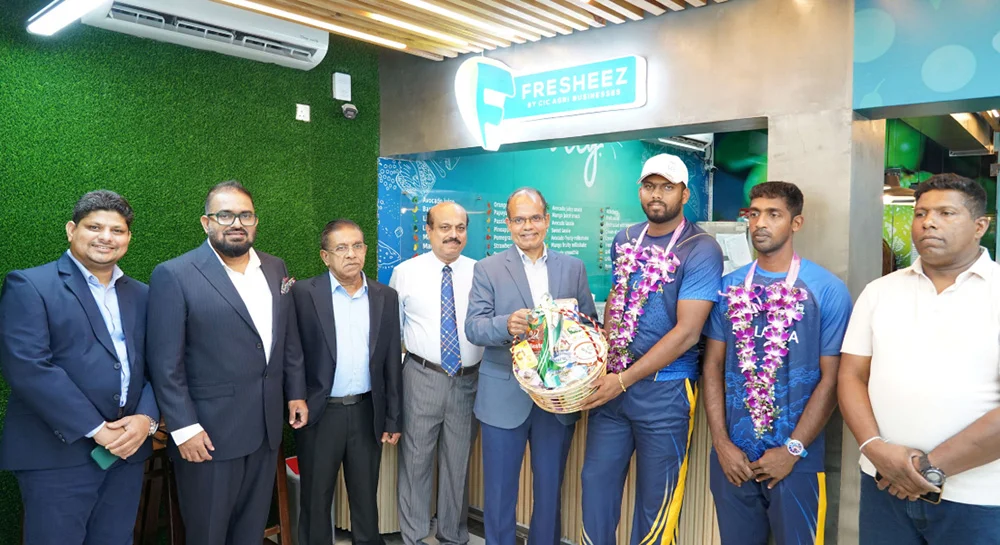
Diversified conglomerate CIC Holdings PLC (CSE: CIC) has partnered with Sri Lankan national athlete Rumesh Tharanga Pathirage as his Official Nutritional & Wellness Partner, supporting his journey towards the 2028 Olympic Games and his ambition to bring home Sri Lanka’s first ever Olympic gold medal.
The partnership reflects a shared commitment that extends beyond conventional sports sponsorship, with CIC standing alongside Rumesh through the years of preparation.
Rumesh Tharanga has established himself among the world’s leading javelin throwers following a landmark 2026 season. He set a Sri Lankan national record of 92.62 metres in Rome, claimed the Commonwealth Games title and became Sri Lanka’s first Diamond League champion. He strengthened his position as the world’s No. 1 ranked men’s javelin thrower by winning gold at the inaugural World Athletics Ultimate Championship in Budapest with a 91.09 metre final round throw. Most recently, he won Sri Lanka’s only gold medal at the Asian Games 2026 by winning the men’s javelin throw
For more than six decades, CIC has been part of the lives of Sri Lankans through its presence across agriculture, healthcare and wellness, personal care and other sectors. The partnership extends this longstanding role of nurturing Sri Lankan lives to supporting the journey of an athlete pursuing an ambition with significance for the entire nation.

Heavy showers above 100 mm are likely at some places in the Western, Sabaragamuwa, Southern, Central, and North-western provinces and in Anuradhapura district.

Sri Lanka, India caught in US-Iran ship crisis

Namal further remanded

IMF projects Lankan economic growth to moderate amidst mounting global uncertainties

Major Gen Pushpakumara assumes command of 56 Infantry Division

Dickwella axed, Bandara earns maiden Test call up

‘Dates have the highest sugar content to fight Coronavirus’

Sunday Island 27 December – Headlines

#SundayIsland 17th December – Headlines

Sunday Island – 28th March

Sunday Island Headlines – 21 March

Sunday Island – 21st February – Headlines
-

 Features6 days ago
The Sri Lankan who made Scottish history
-

 Sports6 days ago
Nissanka absence opens door for Sri Lanka’s young guns
-

 News5 days ago
NDB fraud Rs 60mn more than reported
-

 News5 days ago
Removing monk’s robes matter for Sangha to decide: Mahanayake Theras
-
 News6 days ago
Shiranthi R remanded until 13 Oct.
-

 Features6 days ago
Future of Sri Lanka’s state university system: Should it be shut down and reopened?
-

 News3 days ago
Sri Lanka escalates anti-graft drive with Shiranthi’s jailing
-

 News4 days ago
NPP govt. reminded of its responsibilities as US warship leaves Colombo