
News
ITAK demands immediate release of all findings related to Chemmani mass grave probe


The Ilankai Tamil Arasu Katchi (ITAK) yesterday demanded the immediate public release of all forensic reports, and DNA findings, related to the Chemmani mass grave investigation, warning that symbolic gestures of reconciliation will remain hollow without legal accountability.
In a strongly worded three-page letter to President Anura Kumara Dissanayake, the party urged urgent action to ensure truth, justice, and international collaboration in the ongoing exhumation process in Jaffna.
The letter, signed by senior party leaders C.V.K. Sivagnanam and M.A. Sumanthiran, raised concerns over the transparency of the current procedures and emphasised the need for independent international forensic oversight. The ITAK also called for the consolidation of legal cases filed in 1999 and 2025 and the return of remains held in Glasgow for further forensic analysis.
ITAK said that more than 65 skeletons, including those of infants, have already been recovered—pointing to the scale of atrocities allegedly committed in the area.
The party stressed that forensic transparency, proper victim identification, and prosecution of perpetrators are essential for genuine national healing and justice.
Full text of the ITAK letter: “We write on behalf of Ilankai Thamil Arasu Katchi to express profound concern regarding the ongoing exhumation at Chemmani. We urge urgent and decisive action to uncover the truth, ensure forensic protocols meet internationally recognised standards, and bring the perpetrators to justice.
“Chemmani has come to represent Sri Lanka’s unresolved legacy of enforced disappearances and extrajudicial killings extending into the mid-1990s. In 1998, Lance Corporal Somaratne Rajapakse convicted for the rape and murder of Tamil schoolgirl, Krishanthi Kumaraswarny, and family members, revealed at his sentencing hearing that between 300 and 400 Tamil civilians had been buried there. This disclosure prompted excavations in 1999 that yielded fifteen skeletons, two of which were identified as disappearances from 1996. Despite forensic confirmation of assault and execution prosecutions stagnated and no meaningful justice was delivered to the day.
“In early 2025, during redevelopment work at the Chemmani Ariyalai Siththuppaaththi Hindu crematorium in northern Jaffna human skeletal remains were uncovered, prompting the Jaffna Magistrate’s Court to formally declare the site a mass grave and order a court-supervised excavation under judicial supervision. As of today, approximately 65 skeletons including infants and children had been exhumed in two phases, accompanied by personal artefacts such as a school bag, toy, bangles, sandals and fragments of clothing. All remains are held at the University of Jaffna for forensic examination.
“These excavations, along with several other mass graves in the Tamil areas of the North and East, constitute clear evidence of war crimes and a genocidal campaign against the Tamil population in this country, a grave history that must be acknowledged in full.
“Truth seeking must serve as the foundation of any transitional justice process. Hundreds of families continue to seek answers, more than sixteen years after the war ended in 2009. These families are asking an imperative question about the fate of their missing loved ones
“The silence of successive regime is not merely a political failure but a grave moral one. Every year without truth undermines the possibility of national healing and closure. The fifteen bodies removed in 1999 are connected to the same criminal context as the current discoveries. However, the pending case in the Colombo Magistrate’s Court relating to that excavation has not been formally integrated with the present investigation. These must now be treated as part of a single criminal transaction. Only consolidation of both investigations can enable meaningful account ability,
Sri Lanka’s limited domestic forensic capacity and the history of opaque handling of mass graves make transparent protocols and credible international oversight indispensable Chain of custody must be documented meticulously
“Independent forensic experts of recognised international standing should be engaged to oversee excavation, identification and analysis. Interim and final reports must be publicly disclosed to victims’ families, civil society, international observers and the wider public.
“It has come to light that the fifteen bodies exhumed in 1999 were reportedly transferred to the University of Glasgow for analysis. To date, successive Sri Lankan governments have taken no meaningful steps to repatriate those remains, identify the victims or facilitate their proper last rites. Those remains must be urgently returned to Sri Lanka so they may be re-investigated under the same internationally monitored protocols applied to the current Chemmani excavation contributing but unified and coherent truth-seeking process.
“The earth at Chemmani is speaking again. Over forty skeletons, including infants, have emerged with personal artefacts that painfully affirm their civilian status and innocence. Yet many perpetrators remain at liberty. Symbolic gestures of reconciliation ring hollow without real legal action.
“We therefore respectfully but firmly urge Your Excellency to implement the following without delay:
1. Consolidate the legal cases related to the 1999 and 2025 exhumations into a single judicial and forensic inquiry under the Colombo and Jaffna Magistrate’s Courts.
2. Engage independent, internationally respected forensic experts to oversee all stages of the investigation, ensuring forensic integrity and public trust.
3. Publicize all interim and final forensic reports, DNA profiles and identification results, and facilitate access for victims’ families, civil society and international observers.
4. Repatriate the remains excavated in 1999, currently believed to be held in Glasgow, to they may be examined under the same protocols and returned to their families with dignity.
5. Allocate significantly enhanced financial and logistical resources to ensure that the current excavation is completed under international standards; hundreds of families continue searching for missing loved ones, and without truth and accountability, reconciliation remains a facade. Concurrently take steps to prosecute those responsible for these heinous crimes, which is essential for national healing.
These actions are essential to uphold Sri Lanka’s moral and legal obligations and to chart a credible path toward truth and justice.We remain ready to support constructively in facilitating these measures and ensuring their timely implementation.”




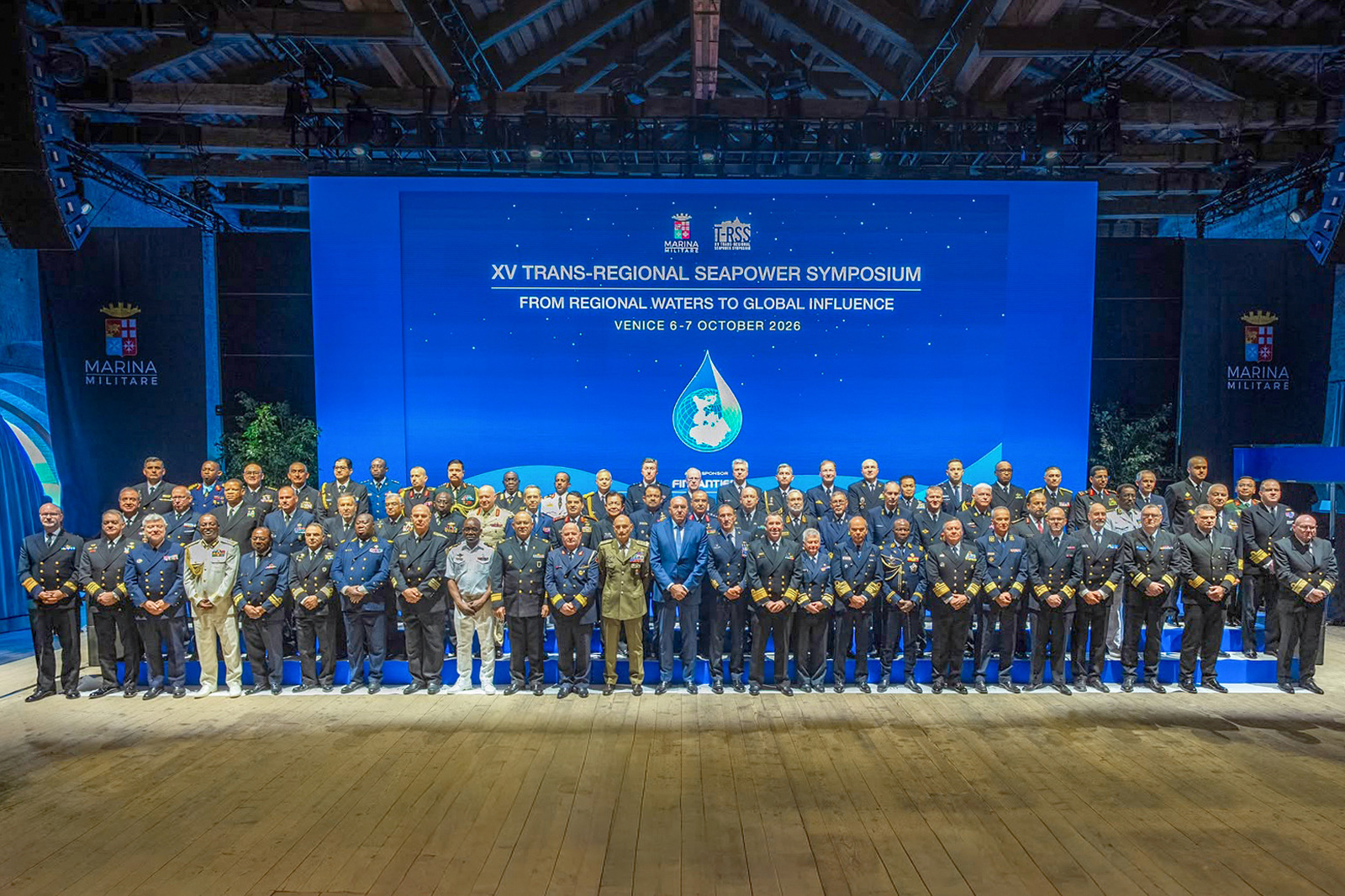
The Commander of the Sri Lanka Navy, Vice Admiral Damian Fernando attended the 15th edition of Trans-Regional Seapower Symposium, organised by the Italian Navy in Venice in Italy, on 6 and 7 October 2026.
The symposium was held at the Italian Navy‟s historic Arsenal in Venice under the theme “From Regional Waters to Global Influence: Generating Effects Across the Midland Seas of the World”.
Organised biennially by the Italian Navy since 1996, the symposium brings together heads of foreign navies, naval representatives, academics, industry representatives and scientific researchers to discuss maritime security and the role of regional maritime dynamics in shaping the global balance.
The sessions of the symposium aimed to present an analysis of the relevance and influence of regional dynamics on global balances and their relative implications within the maritime domain.
Thus, topics discussed included; ‘Geopolitical Background: Global and Regional Dynamics in Comparison,’ ‘Pivotal Role of Cooperation among Regional Alliances as Security Providers,’
‘Maritime Regional Security Complexes, Global Order and Sea-Based Flows – What Role for Navies?,’ ‘New Arctic Chessboard: Seapower, Resources and the Race for Connectivity,’ ‘Future-
Proof Capabilities: A Naval Force Designed to Operate Across Oceans, Act Within Regions and Deliver Effects on the Ground,’ ‘Future Seas: Industrial Scale, Decisive Mass and Innovation –
Securing the Maritime Domain’ and ‘Future-Proof Leadership: Preparing Maritime Commanders and Sailors for Complexity,’
Cooperation fostered through symposiums of this nature, which bring together a multitude of global maritime stakeholders, will enable the Sri Lanka Navy to respond collectively to maritime
challenges, in pursuit of maintaining a safe, secure, prosperous and a stable ocean region.
Latest News
Heavy showers about (100-150) mm are likely at some places in the Central, Sabaragamuwa, Uva and Southern provinces


WEATHER FORECAST FOR 13 October 2026
Issued at 2.00 p.m. on 12 October 2026 by the Department of Meteorology
A low-pressure area may form over the southeastern Bay of Bengal by 13 October.
Under the influence of this system, an increase in rainfall is expected over the island and the deep and shallow sea areas around the island during the next few days from tomorrow (13).
The general public, as well as the naval and fishing communities, are requested to be attentive to the future forecasts and bulletins issued by the Department of Meteorology in this regard.
Heavy showers about (100-150) mm are likely at some places in the Central, Sabaragamuwa, Uva and Southern provinces.
Fairly heavy showers above 75 mm are likely at some places in the other areas of the island. Showers or thundershowers will occur in most parts of the island.
The general public is kindly requested to take adequate precautions to minimize damage caused by temporary localized strong winds and lightning during thundershowers.
Misty conditions can be expected at some places in the Sabaragamuwa, Central and Uva provinces during the early hours of the morning.
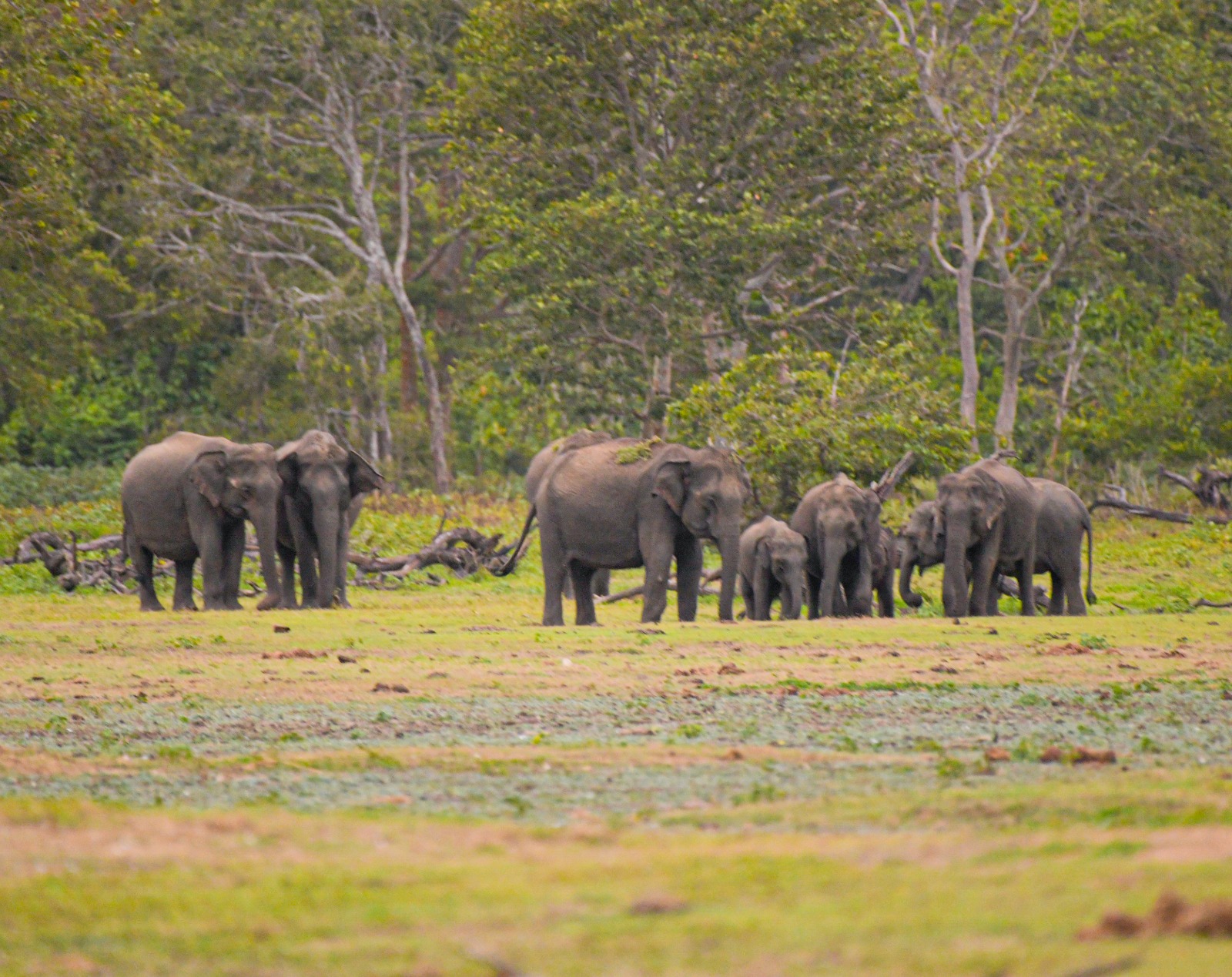
As part of the new government’s initiative to formulate scientifically grounded, long-term solutions to the human-elephant conflict, a programme aimed at sustainably fulfilling the natural food and water requirements of wild elephants within forest ecosystems is being successfully implemented.
Spearheaded by the Ministers of Environment, guided by the Secretary to the Ministry of Environment, and supported by all affiliated institutions, this initiative transforms tanks (reservoirs) and forest tracts in high-conflict areas into enriched zones for wild elephants.
To facilitate this forest enrichment drive, 113 forests have already been declared protected reserves under the Vanaspathi National Programme. The initial phase of establishing tank enrichment zones was launched around the Kala Wewa and Thabbowa reservoirs.
Accordingly, the Ministry of Environment and ‘Clean Sri Lanka’ jointly carried out an initiative to develop these reservoir
catchments into designated enrichment zones.
A year ago, an operation to eradicate invasive plant species that posed a severe environmental threat to the Thabbowa reservoir precinct was conducted with the comprehensive labour and
technical support of government officials, environmental scientists, the tri-forces, and residents.
Since the new government’s policy of “A Sustainable Biosphere, An Evergreen Life” is practically implemented at the ground level, officials from the Department of Wildlife Conservation and the Department of Forest Conservation have been continuously monitoring the ongoing progress and
field conditions of this collaborative project under ministerial directives.
During these field reviews, it was observed that following the removal of invasive flora, the tendency of wild elephants to wander into villages searching for sustenance has notably declined; instead, they increasingly frequent the naturally regenerated grasslands along the reservoir fringes.
Having proven this ecological model’s success through trials at Thabbowa and Kala Wewa, the Ministry of Environment has finalized all necessary blueprints to swiftly replicate it across other sensitive wetland systems and reserve zones where human-elephant conflict is prevalent.
By enriching wildlife habitats, this sustainable, eco-friendly, and scientific strategy protects human lives and cultivated farmlands while securing space for wild elephants in their native habitats, continuing to show promising results across high-conflict regions.

Navy Commander attends Trans-Regional Seapower Symposium in Italy

Heavy showers about (100-150) mm are likely at some places in the Central, Sabaragamuwa, Uva and Southern provinces

Elephant enrichment programme centred on the Thabbowa Reservoir proves successful
Showers above 75 mm are likely at some places in the Western, Sabaragamuwa, Central, Southern, Uva and North-Western provinces and in Anuradhapura and Mannar districts.

New prison regulations for monks serving jail terms soon: President’s Office

CP alleges NPP has taken the blame for illegal US sanctions on Iranian vessels

‘Dates have the highest sugar content to fight Coronavirus’

Sunday Island 27 December – Headlines

#SundayIsland 17th December – Headlines

Sunday Island – 28th March

Sunday Island Headlines – 21 March

Sunday Island – 21st February – Headlines
-

 Features5 days ago
The Sri Lankan who made Scottish history
-
 Features7 days ago
Preventing grievances from becoming communal
-

 Sports5 days ago
Nissanka absence opens door for Sri Lanka’s young guns
-

 News6 days ago
Gnansara Thera to be assigned to prison printing section: Officials
-

 News4 days ago
NDB fraud Rs 60mn more than reported
-

 News4 days ago
Removing monk’s robes matter for Sangha to decide: Mahanayake Theras
-

 Features5 days ago
Future of Sri Lanka’s state university system: Should it be shut down and reopened?
-

 News6 days ago
OIC of FCID summoned before Maligakanda Magistrate