
Latest News
Israel’s Netanyahu dissolves war cabinet

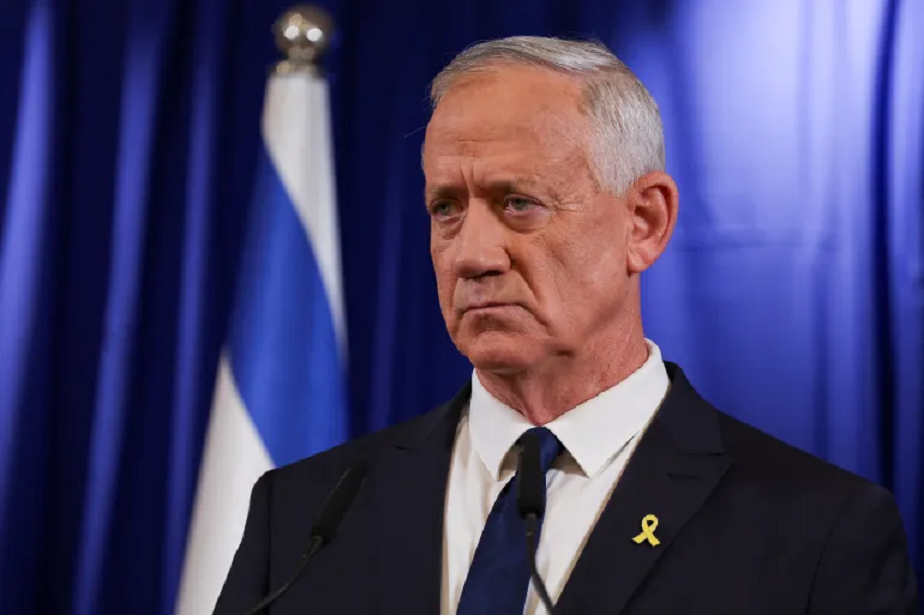
Prime Minister Benjamin Netanyahu has announced the end of Israel’s six-member war cabinet.
Reports on Monday said the Israeli leader had announced the decision at a meeting of the political security cabinet the previous evening. Netanyahu’s far-right coalition partners have been pushing for a new war cabinet to be established after the more centrist Benny Gantz quit the emergency government.
Nationalist-religious Finance Minister Bezalel Smotrich and National Security Minister Itamar Ben-Gvir, who have demanded Israel must continue its bombardment of Gaza despite calls for some restraint from allies including the United States, had called for a new war cabinet to be formed featuring coalition party leaders.
However, Netanyahu has reportedly turned them down.
“The cabinet was in the coalition agreement with Gantz, at his request. As soon as Gantz left – there is no need for a cabinet any more,” Netanyahu said, according to a report in The Jerusalem Post.
The Israeli premier is now expected to hold consultations about the Gaza war with a small group of ministers, including Defence Minister Yoav Gallant and Strategic Affairs Minister Ron Dermer, who had been in the war cabinet.
Gantz’s resignation from the government withdrew the only centrist power in the embattled leader’s far-right coalition, amid the months-long assault on Gaza.
Claiming that the Netanyahu government failed to present a post-war plan for the besieged and bombarded Palestinian territory was an obstacle to “true victory”, Gantz has called for an election, with the prime minister facing severe pressure amid calls for a deal with Hamas to secure the release of captives held in Gaza.
However, the Israeli leader is also under pressure from his hardline coalition partners.
According to Israeli media, Ben-Gvir appealed in a letter to Netanyahu last Thursday to expand the war cabinet. The letter reportedly said the Israeli war has over the past eight months been “conducted in secret”, through “limited forums that change their names and definitions in a loop, all for the purpose of sole control over decisions and avoiding discussion of other positions that would challenge the old conception”.
A new war cabinet with a heavy influence enjoyed by Smotrich and Ben-Gvir would have further tested relations with international partners, first and foremost the US, which has called for Israel’s military to refrain from a full ground invasion of the southern city of Rafah and for increased aid shipments.
At the same time, Washington continues to supply Israel with arms and there has been little hint that Netanyahu is ready to pull back from the onslaught in Gaza.
On Sunday, Netanyahu said “in order to reach the goal of eliminating the capabilities of Hamas, he made decisions that were not always acceptable to the military echelon” during the weekly cabinet meeting.
The war cabinet included Netanyahu, Gantz, Gallant, Dermer, Gadi Eizenkot, and Shas party leader Aryeh Deri. It is possible, i24News reported, that Netanyahu will continue to consult Gallant, Dermer, and Deri privately.
While such an arrangement would not have legal weight, it would allow the prime minister to continue the exclusion of Ben-Gvir and Smotrich from sensitive security discussions.
[Aljazeera]








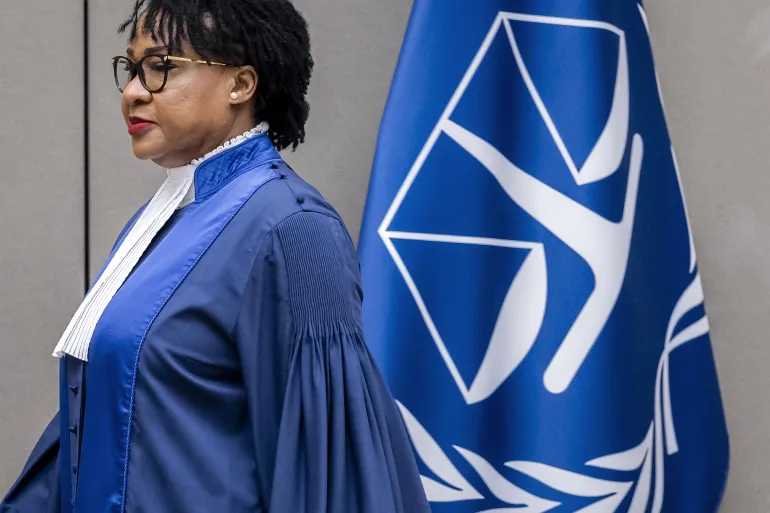
United States Secretary of State Marco Rubio has announced a new set of sanctions against the International Criminal Court (ICC), this time targeting the entity itself, as opposed to the tribunal’s officials or groups that provide support.
The announcement on Friday represented a major escalation from the administration of US President Donald Trump, which has vowed an “all of government” approach to dismantling the court.
“We will ban transactions with this rogue court, cutting off their resources and crippling their ability to operate against us because our message is clear: the United States and the American people are not subject to the jurisdiction of this fake ICC,” Rubio said in a video posted on social media. “Either the ICC will end its threats, or we will end the ICC.”
As justification for its actions, the administration has pointed to the court’s ongoing investigation into abuses committed in Afghanistan, which could ensnare US military and intelligence personnel, as well as the ICC’s arrest warrant for Israeli Prime Minister Benjamin Netanyahu and former Defence Minister Yoav Gallant for war crimes committed in Gaza.
Before Friday’s actions, the US had sanctioned ICC judges and prosecutors, a UN special rapporteur focusing on the occupied Palestinian territories and Palestinian rights groups that have provided evidence to the court.
Several rights groups have challenged those sanctions in US federal court, saying restricting how US citizens interact with the court treads on their constitutional freedoms. Sanctioned ICC judges have also launched legal challenges in the US.
[Aljazeera]
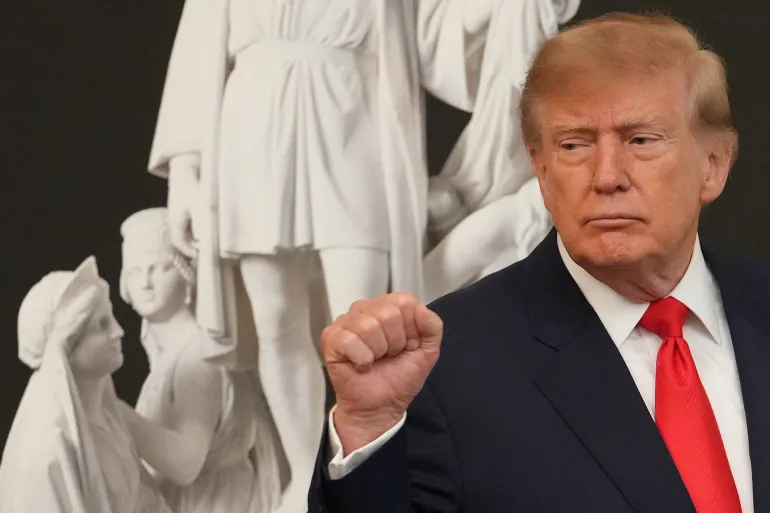
United States President Donald Trump said that Russia has agreed to supply 300,000 tonnes of diesel fuel to global markets amid discussions with Russian President Vladimir Putin.
“I have just concluded a highly successful discussion with President Vladimir Putin, of Russia, wherein it was agreed that Russia will immediately supply over 300,000 Tons of Diesel Fuel to the American and Global Marketplace, another 500,000 Tons during the month of November, and 1,000,000 Tons immediately thereafter,” Trump said in a post on his Truth Social platform.
The president added that Russia would deliver an additional 3 million tonnes of fuel “within a short period of time”. He said that the country would supply 500,000 tonnes in November.
An envoy for Russian President Vladimir Putin, Kirill Dmitriev, praised cooperation between Russia and the United States on diesel and energy in a post on X shortly after.
“Russia-US cooperation on diesel and energy will benefit the world,” Dmitriev wrote on X.
Petrol price pressures
The deal comes despite Ukrainian air strikes, which have taken more than half of the country’s oil refining capacity offline, according to claims made by Ukraine’s Ministry of Defence on Sunday.
The latest announcement comes a week after the G7 countries agreed to release 100 million barrels amid pressure from the White House.
Diesel prices have been elevated in recent months but have started to decline. The average price for a gallon is $6.27 ($1.66 per litre), according to the American Automobile Association (AAA), which tracks daily petrol prices. That’s down $0.10 from this time last week, but up $5.94 from this time one month ago.
[Aljazeera]
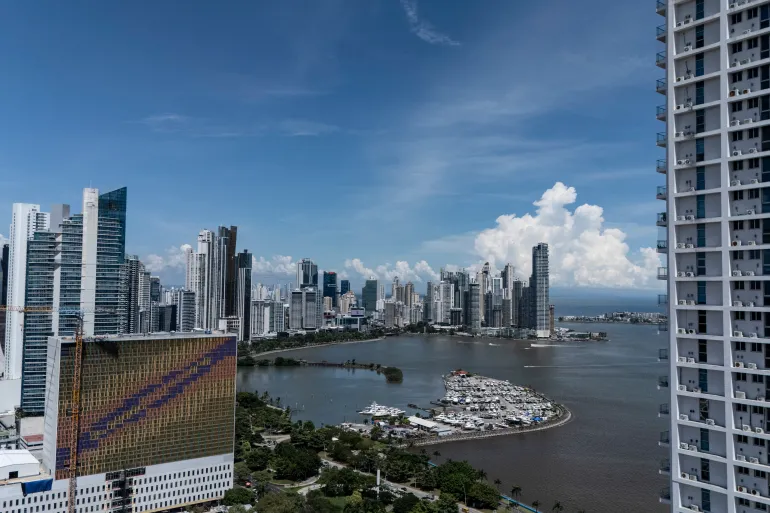
A magnitude 7.7 earthquake has hit southern Panama, triggering tsunami warnings across Central and South America.
The US National Weather Service issued tsunami warnings for Panama, Colombia, Ecuador, Nicaragua and Guatemala on Friday following the quake.
Chile’s naval Hydrographic and Oceanographic Service also issued a tsunami warning.
The US Geological Survey said the earthquake was centred about 10km (6 miles) southwest of the remote community of Pitaloza Arriba along the Pacific Ocean coast.
Residents of Panama City reported feeling tremors, with buildings shaking and people evacuating into the streets.
“We felt it very strongly. It knocked things over in the kitchen, but we’re okay, though we’re very scared,” 60-year-old Rosendo Dominguez, who is from Herrera province, where the earthquake struck, told The Associated Press news agency by phone.
“Everyone is outside, scared,” Dominguez added.
Videos shared by newspaper La Prensa showed the tower of a historic building had collapsed along with several balconies of a residential building in Penonome, a city about halfway between the epicenter and Panama City.
Panama’s ministry of education ordered schools closed.
There have been several destructive earthquakes in the region this year.
In June, twin quakes hit northern Venezuela, causing widespread devastation and killing at least 6,500 people.
In August, a magnitude 7.4 earthquake hit Colombia, killing at least 289 people.
[Aljazwwea]

Showers or thundershowers will occur in most parts of the island after 1.00 p.m.

NPP govt. reminded of its responsibilities as US warship leaves Colombo

CERT: Beware of foreign Uni. scams on social media

Shiranthi receives treatment at National Eye Hospital

PAFFREL, TISL checking whether govt. addressed their concerns as regards Anti-Corruption (Amendment) Bill

Baby elephant case: Suspended District judge removed from service

‘Dates have the highest sugar content to fight Coronavirus’

Sunday Island 27 December – Headlines

#SundayIsland 17th December – Headlines

Sunday Island – 28th March

Sunday Island Headlines – 21 March

Sunday Island – 21st February – Headlines
-

 Features6 days ago
The first woman in the foreign service or Ceylon Overseas Service it was then called
-

 News5 days ago
Geneva takes up Sallay’s case and govt. ignores opportunity to answer accusations
-

 Foreign News7 days ago
Ten injured after car crashes into rugby supporters in Australia
-

 News6 days ago
Nearly 20 Iranian tankers stranded off Lanka amid US sanctions
-

 Latest News7 days ago
Tharindu Rathnayake, bowlers secure Asian Games Bronze for Sri Lanka
-

 Features4 days ago
Preventing grievances from becoming communal
-

 Features5 days ago
Sri Lanka Cricket Bill: Governance reform is not yet a cricket strategy
-

 Sports2 days ago
Nissanka absence opens door for Sri Lanka’s young guns