
Foreign News
Israeli military’s ex-top lawyer arrested over leak of video allegedly showing Palestinian detainee abuse


The former top lawyer in the Israeli military has been arrested, as a political showdown deepens over the leaking of a video that allegedly shows severe abuse of a Palestinian detainee by Israeli soldiers.
Maj Gen Yifat Tomer-Yerushalmi resigned as the Military Advocate General of the Israel Defense Forces (IDF) last week, saying that she took full responsibility for the leak.
On Sunday, the story took a darker turn when she was reported as missing, with police mounting an hours-long search for her on a beach north of Tel Aviv.
She was subsequently found alive and well, police said, but was then taken into custody.
The fallout from the leaked video is intensifying by the day.
Broadcast in August 2024 on an Israeli news channel, the footage shows reserve soldiers at the Sde Teiman military base in southern Israel taking aside a detainee, then surrounding him with riot shields to block visibility while he was allegedly beaten and stabbed in the rectum with a sharp object.
The detainee was subsequently treated for severe injuries.
Five reservists were subsequently charged with aggravated abuse and causing serious bodily harm to the detainee. They have denied the charges and have not been named.
On Sunday, four of the reservists wore black balaclavas to hide their faces as they appeared at a news conference outside the Supreme Court in Jerusalem along with their lawyers, who demanded the dismissal of their trial.
Adi Keidar, a lawyer from the right-wing legal aid organisation Honenu, claimed his clients were subject to “to a faulty, biased and completely cooked-up legal process”.
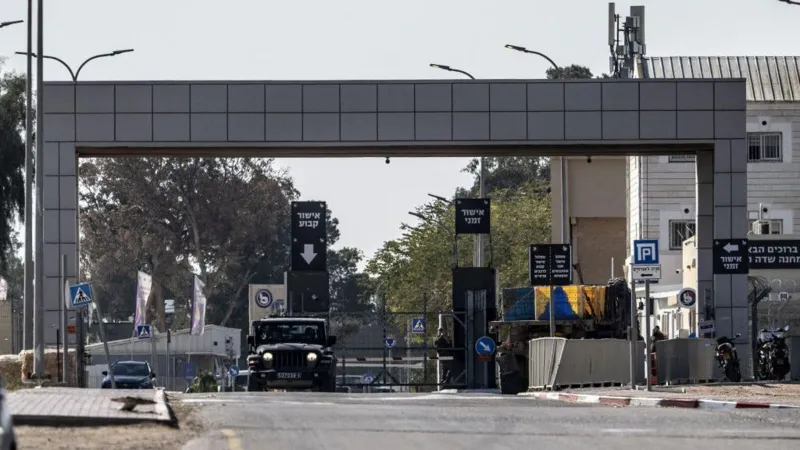
The leaked surveillance video was filmed at the Sde Teiman military base in southern Israel (BBC)
On Monday, it emerged the detainee at the centre of the case was released to Gaza in October as part of an exchange with Hamas of convicted prisoners and detainees held without charge by Israel for hostages held by Hamas since 7 October 2023.
Last week, a criminal investigation was launched into the leaking of the video.
Gen Tomer-Yerushalmi was put on leave while the inquiry took place.
On Friday, Defence Minister Israel Katz said she would not be allowed to return to her post. Shortly after that, Gen Tomer-Yerushalmi resigned.
In her resignation letter, she said she took full responsibility for any material that was released to the media from the unit.
“I approved the release of material to the media in an attempt to counter false propaganda against the army’s law enforcement authorities,” she said.
That is a reference to efforts by some right-wing political figures in Israel to claim that the allegations of severe abuse of the Palestinian detainee had been fabricated.
She added: “It is our duty to investigate whenever there is reasonable suspicion of acts of violence against a detainee.”
After her resignation, Katz issued a fierce condemnation of her conduct. “Anyone who spreads blood libels against IDF troops is unfit to wear the army’s uniform,” he said.
Prime Minister Benjamin Netanyahu echoed his defence minister’s words on Sunday, saying that the incident at Sde Teiman was “perhaps the most severe public relations attack that the State of Israel has experienced since its establishment”.
Hours later, the first reports began appearing in the Israeli media that Gen Tomer-Yerushalmi was missing, sparking fears that a political scandal had taken a turn towards tragedy.
A massive search effort was launched. Several hours later, she was found “safe and in good health” in the coastal area of Herzliya, Israeli police said.
Overnight, a police spokesperson announced that two people had been arrested on suspicion of “leaking and other serious criminal offences” as part of an investigation.
Israeli media reported that the pair were Gen Tomer-Yerushalmi and the former chief military prosecutor, Col Matan Solomosh.

The Sde Teiman incident has been a lightning rod for the division between the left and right in Israel.
On the right, the leaking of the video is denounced as a defamation of the Israeli military, all but amounting to an act of treason.
After Israeli military police went to Sde Teiman to question 11 reservists over the incident in July 2024, far-right protesters – including at least three lawmakers from Netanyahu’s governing coalition – broke into the facility to show their support.
On the left, Gen Tomer-Yerushalmi’s decision to enable the footage to be released is seen as the one time she lived up to the responsibilities of her post.
The video is regarded by the left as concrete evidence backing up multiple reports of abuse of Palestinian detainees since the Hamas-led 7 October 2023 attacks on Israel.
Last October, a report by a UN commission of inquiry alleged that thousands of child and adult detainees from Gaza had been “subjected to widespread and systematic abuse, physical and psychological violence, and sexual and gender-based violence amounting to the war crime and crime against humanity of torture and the war crime of rape and other forms of sexual violence”.
Israel’s government said it rejected the accusations of widespread ill-treatment and torture of detainees, and insisted that it was “fully committed to international legal standards”. It also said it had carried out thorough investigations into every complaint.
(BBC)

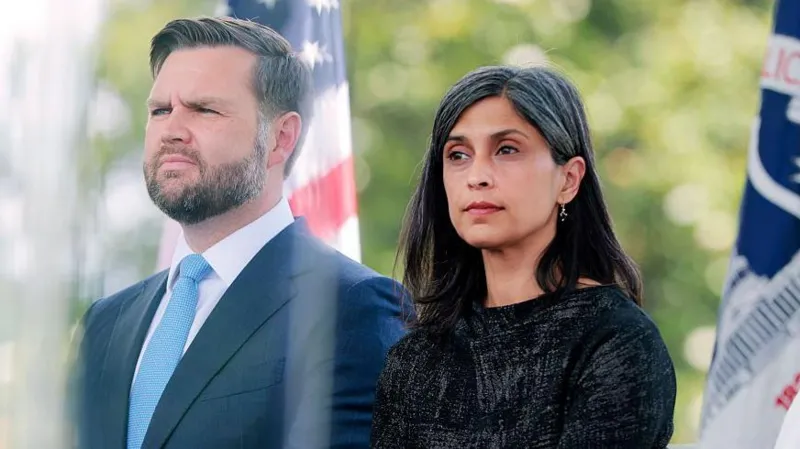
Usha Vance, the wife of Vice-President JD Vance, has announced she is pregnant with her fourth child.
In a post on X, the second lady said she is looking forward to welcoming a boy in late July.
“Usha and the baby are doing well,” a statement posted on Tuesday to the second lady’s social media account read.
Vance and his wife, Usha, 40, have three young children: Ewan, Vivek and Mirabel.
Usha Vance (née Chilukuri) was born and raised in the working-class suburbs of San Diego, California, to a mechanical engineer father and a molecular biologist mother who had moved to the US from Andhra Pradesh, India.
She met JD Vance as a student at Yale Law School in 2010, when they joined a discussion group on “social decline in white America”.
Before becoming second lady, Usha Vance had a legal career, including a job as a corporate litigator at firm Munger, Tolles & Olson in San Francisco. She also worked for conservative judges, Chief Justice John Roberts on the Supreme Court and appeals court judge Brett Kavanaugh, before he was appointed by Trump to the Supreme Court.
Usha Vance is the first to have a baby as second lady, though other first ladies have had children while their husbands were in office.
First lady Frances Cleveland, wife of President Grover Cleveland, gave birth to daughter Esther in the White House in 1893, followed by a second child, Marion, who was born outside the White House.
JD Vance has been one of the most vocal members of the Trump administration in calling for higher birth rates in the US.
“Let me say very simply: I want more babies in the United States of America,” he said in 2025.
(BBC)
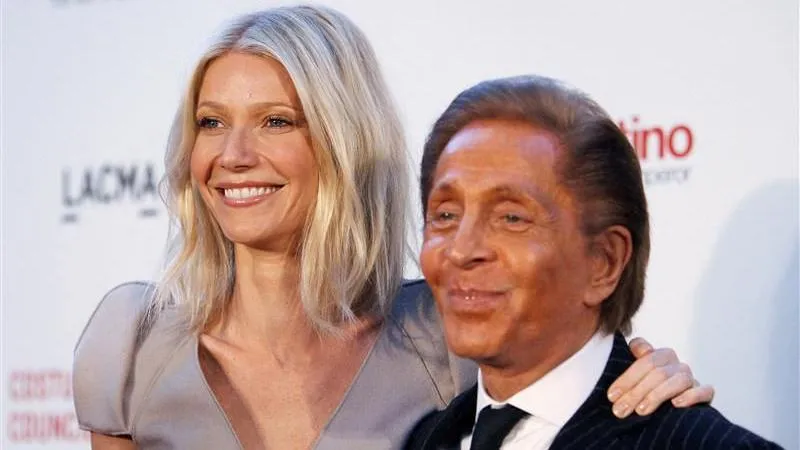
Italian fashion designer Valentino Garavani, known as Valentino, has died at the age of 93.
One of the giants of 20th Century fashion, Valentino’s creations were worn by celebrities and well-known figures including Elizabeth Taylor, Nancy Reagan, Sharon Stone, Julia Roberts and Gwyneth Paltrow.
He co-founded the Valentino fashion house in 1960 and ranked alongside Giorgio Armani and Karl Lagerfeld at the top of the profession.
In a statement posted on Instagram, the Valentino Garavani and Giancarlo Giammetti Foundation said: “He passed away peacefully in his Roman home, surrounded by the love of his family.”
The foundation said Valentino will be lying in state at Rome’s Piazza Mignanelli between 21 and 22 January.
Valentino’s funeral service will be held the following day at the Basilica of Saint Mary of the Angels and Martyrs, the foundation said.
Born in Lombardy in May 1932, Valentino was known for his collections that displayed luxury, wealth and opulence.
He moved to Paris to study at the Chambre Syndicale de la Couture Parisienne when he was just 17, and went on to work with designers Jacques Fath, Balenciaga, Jean Dessès and Guy Laroche.
His adoption of his signature colour “Valentino red”, inspired by a trip to Spain, helped elevate the brand to global fame with the debut of the iconic fiesta dress.
It became so meaningful for the house that for Valentino’s last collection in 2008 all the models wore red dresses for the finale.
Valentino designed the wedding dress of Princess Madeleine of Sweden when she married British-American financier Christopher O’Neill in June 2013.
In December 2023, he was honoured with the outstanding achievement award at the British Fashion Awards which were held at London’s Royal Albert Hall.

(BBC)
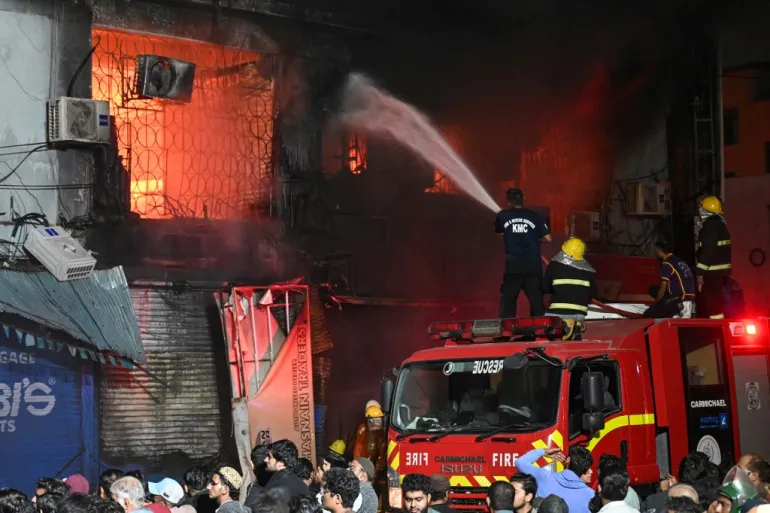
At least six people have been killed and about 20 injured when a fire tore through a shopping mall in Karachi, Pakistani officials say, as firefighters try to bring the blaze under control.
The fire broke out on Saturday at the Gul Plaza shopping mall, a densely packed commercial complex, and continued to burn for hours. By early Sunday, authorities said crews had managed to control about 30 percent of the fire.
South Deputy Inspector General Syed Asad Raza told the Dawn newspaper that the death toll had risen from an initial three to five. The Edhi Foundation, a medical complex, later confirmed a sixth death in a statement.
Rescue officials said the mall contains roughly 1,200 shops, raising fears that people could still be trapped inside. The Edhi Foundation said part of the building collapsed due to the intensity of the fire, complicating rescue efforts.
Garden subdivision police officer Mohsin Raza said initial findings suggested the fire started due to a short circuit in one of the shops before rapidly spreading throughout the complex.
He said the exact cause must be determined through a detailed investigation and warned that the structure needs to be secured to prevent further damage.
President Asif Ali Zardari and Prime Minister Shehbaz Sharif expressed condolences over the loss of life.
In a statement carried by PTV, Sharif ordered authorities to take “all possible measures” to protect lives and property, provide assistance to affected traders and ensure medical care for the injured.
Zardari urged the government of Sindh province, whose capital is Karachi, to offer “immediate and every possible assistance” and said: “No stone should be left unturned in providing the best medical facilities to the injured.”

[Aljazeera]

U – 19 world Cup: Rain disrupts New Zealand vs Bangladesh game in Bulawayo

U – 19 World Cup: Will Malajczuk’s 51-ball century helps Australia blow Japan away

Rodrigues holds nerve as Delhi Capitals hand Mumbai Indians third straight loss

Second lady Usha Vance announces she is pregnant with fourth child

Plans for 2026 on the journey towards a digital economy Under President’s review

Dry weather will prevail in most parts of the island.

‘Dates have the highest sugar content to fight Coronavirus’

Sunday Island 27 December – Headlines

#SundayIsland 17th December – Headlines

Sunday Island – 28th March

Sunday Island Headlines – 21 March

Sunday Island – 21st February – Headlines
-

 Editorial3 days ago
Illusory rule of law
-
 News4 days ago
UNDP’s assessment confirms widespread economic fallout from Cyclone Ditwah
-

 Business6 days ago
Koaloo.Fi and Stredge forge strategic partnership to offer businesses sustainable supply chain solutions
-

 Editorial4 days ago
Crime and cops
-

 Features3 days ago
Daydreams on a winter’s day
-

 Editorial5 days ago
The Chakka Clash
-

 Features3 days ago
Surprise move of both the Minister and myself from Agriculture to Education
-

 Features2 days ago
Extended mind thesis:A Buddhist perspective