
Life style
Is dark chocolate good for you ?

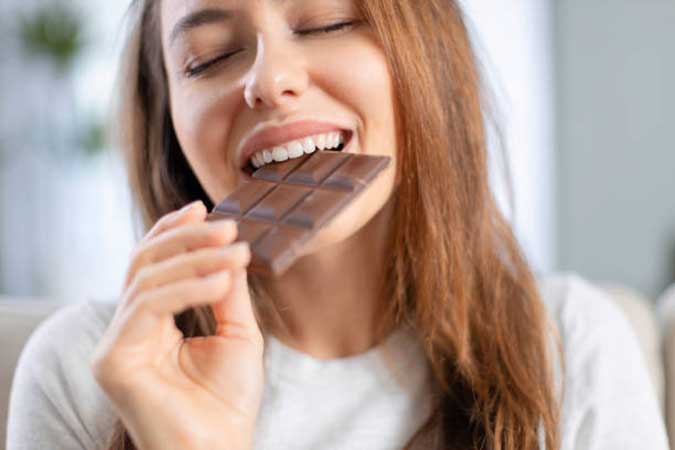
While researchers haven’t explicitly recommended eating chocolate to stave off heart disease, one paper concludes that regularly eating dark chocolate is likely to have net benefits to our health, and that the strongest evidence base pertains to heart health.
Humans have been consuming some form of chocolate for hundreds of years. For most of this time, it came in the form of liquid cacao, made from cacao beans.Some cultures – but not all – have since added sugar, milk and shiny packaging. Those still consuming cacao more traditionally, meanwhile, have ignited a debate over whether chocolate can be good for our health.
The Kuna Indians, for instance, who live on the San Blas Islands of Panama, have low blood pressure that doesn’t rise with age, low levels of heart attacks, strokes, diabetes and cancer, and they tend to die old, says Marji McCullough, senior scientific director of epidemiology research at the American Cancer Society.And contrary to the scientific consensus that excessive salt can increase blood pressure, their diet contains as much salt as the average US person’s.
To find out exactly what they consume on a daily basis, McCullough visited the Kuna Indians. She discovered that they were consuming around four cups of cocoa – cacao mixed with water and small amounts of sugar – every day.But McCullough can’t attribute the Kuna Indian’s great health to cocoa-drinking with any certainty – especially since they were also eating twice as much fruit and four times as much fish as the average US diet. Plus, they live more active lifestyles than we generally do in the West.
Many other observational studies have looked at the heart benefits of dark chocolate, but they may be biased because people who eat chocolate more frequently tend to have fewer concerns about their weight, says JoAnn Manson, professor of medicine at Harvard Medical School. She adds that they may also be healthier to begin with.In one study, researchers looked at the diets and health of 20,000 people, and found that eating up to 100g of chocolate – including milk chocolate – a day was associated with lower risk of heart disease and stroke. They controlled for other factors that might influence this, including smoking and exercise levels, but said there could be other explanations rather than the chocolate.
And then came a large clinical trial that could control for other possible causes, like diet and lifestyle. It was based on the hunch that the potential health benefits of cacao could be down to its high level of flavonoids, plant compounds also found in berries and tea.
The Cocoa Supplement and Multivitamin Outcomes Study, involving 21,000 people, found that taking 400 to 500mg daily cocoa flavanol supplements could reduce a person’s risk of dying from heart disease by reducing blood pressure and inflammation in the body.The scientists used supplements instead of actual cacao because the concentration of flavonoids can vary hugely across different chocolate brands, depending on the harvesting, manufacturing and processing, says Manson, who was also principal investigator of the trial.
Dark chocolate may have up to four times as many flavonoids as tea, but research shows that flavanol content is reduced during the manufacturing process.I don’t think any approach to increase flavanol content in chocolates will make them a ‘health food’ – Gunter Kuhnle As a consequence, there is currently no consensus about the amount of cocoa flavanols you’d need to see any health benefits, says Gunter Kuhnle, professor of nutrition and food science at the University of Reading.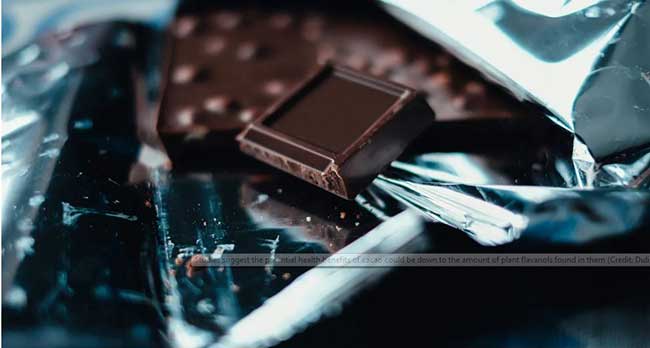
While the European Food Standards Authority (EFSA) says around 200mg of cocoa flavonoids, or 10g of dark chocolate is beneficial, more recent data suggests that about 500mg per day is more likely to make a difference to our health. That’s the equivalent of a little under one small 30g bar of chocolate.
“I don’t think any approach to increase flavanol content in chocolates will make them a ‘health food’,” Kuhnle says.
Dark chocolate also contains something else we don’t know much about. It’s one of the few sources – apart from coffee – of the plant molecule theobromine.While it is a psychoactive substance, theobromine – which is in the same family as caffeine – can give you a “smoother hit” than caffeine, says Chris Alford, professor in applied psychology at the University of the West of England. And the darker the chocolate, the stronger the hit.
“If you’re eating a lot of dark chocolate, you may get a genuine hit, and the theobromine may be nicer than the caffeine hit,” he says.
For those who are concerned that chocolate increases the risk of heart disease, some researchers say it actually doesn’t need to be avoided.Dark chocolate usually also contains sugar, but one way to avoid this is to opt for chocolate with a higher percentage cocoa than the proportion found in milk chocolate.
Chocolate’s dark side
Testing the effects of cocoa flavanol supplements also bypasses the other components of dark chocolate: sugar and saturated fat. Dark chocolate often contains cocoa butter, which is high in saturated fat, which has been linked to an increased risk of heart disease.
“The fats in chocolate all come from cocoa butter, but while evidence says stearic acid has a neutral effect on cholesterol, a third of fat in cocoa butter is saturated and deleterious to health,” says Aedin Cassidy, professor at the School of Biological Sciences at Queen’s University in Belfast.
While researchers haven’t explicitly recommended eating chocolate to stave off heart disease, one paper concludes that regularly eating dark chocolate is likely to have net benefits to our health, and that the strongest evidence base pertains to heart health.And eating little portions of dark chocolate could help tackle unhealthy eating habits, says Duane Mellor, dietician at Aston Medical School.
“Small amounts of chocolate won’t be harmful and may challenge your relationship with chocolate, because you can enjoy a small amount and not feel guilty. The bitterness tends to make it self-limiting.”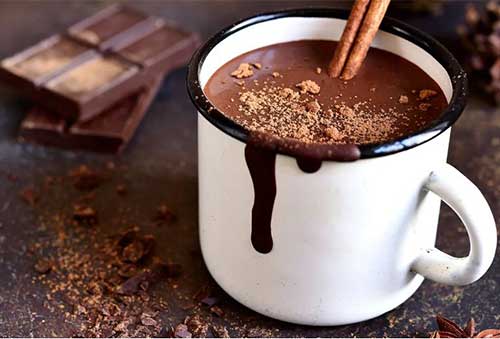
The problem is – the higher the cocoa flavonoid content of a chocolate bar, the more bitter the taste, and the more bitter the taste, the less marketable it is.
“There’s a conflict between the good bits of cocoa and what we need to put with it to make it edible and enjoyable,” says Mellor.
What if the process of preserving the taste of the cocoa bean also, incidentally, results in a healthier chocolate? To make matters more complicated, it’s possible that fat and sugar helps make the flavonoids in chocolate more bioavailable, which means they’re easier for the body to take in.
“Some of these flavanols are complex organic compounds, and one way we can make them available is sticking sugar onto them,” he says.
There just isn’t enough research for anyone to look at the cocoa flavanol and sugar content in chocolate to conclude where the sweet spot is.Also, there’s still no way of knowing how many cocoa flavanols you’re getting.
“Chocolate is not a health food, and, considering the amount of sugar and fat in most chocolates, it is likely that any benefit from flavanols are negligible compared to the adverse effects of overeating,” says Kuhnle.
The quest for taste
There seems to be a surge in smaller “bean-to-bar” companies producing higher percentage cocoa with a focus on preserving taste, rather than any possible health benefits.But what if the process of preserving the taste of the cocoa bean also, incidentally, results in a healthier chocolate?
Cocoa beans grown on the Solomon Islands in the Pacific are picked at the exact moment of ripeness, says Martyn O’Dare, co-founder of chocolate brand Firetree Chocolate. The farmers then break open the cocoa pods and start the six-day process of fermentation, before drying them out. Some of the dried beans are then sent to the UK, to Firetree, where they are roasted whole.
This was how it was originally done, but in the early part of the 20th Century, things changed, according to O’Dare.Chocolate companies relied on two crops from farmers – the main crop, harvested from November to January, and the mid-crop, from January to June, he says.
“The mid-crops were smaller and slightly inferior, and weren’t initially sold. Then, companies started buying them at a discount, and farmers realised they were selling good beans at a lower price, so started mixing in the mid-crop with the main crop,” he says.While you can find flavanols in many different foods alongside chocolate, studies suggest that dark chocolate can fit within a healthy diet
“This meant that chocolate companies were receiving different size beans, which would require different roasting times. So they decided to start breaking open the shells so they could roast just the nibs.”
Whether this story is hearsay or not, the truth remains that smaller chocolate-makers might be on to something: roasting the whole bean, rather than just the nibs, often involves roasting at a lower temperature for longer.
We know that if we cook vegetables too long, fewer nutrients stay intact. But whether the same can be said for dark chocolate and the fruit it comes from, the cacao bean, remains to be seen – more research needs to be done.Still, while you can find flavanols in many different foods alongside chocolate, studies suggest that dark chocolate can fit within a healthy diet.
“It’s reasonable to have high percentage dark chocolate several times a week as long as you’re avoiding excessive calories, but it shouldn’t be perceived as a health food you try to eat more of,” says Manson.
“Try to increase flavanols through diet, with tea, berries, grapes and other fruits, as well as a reasonable, moderate amount of high-cacao chocolate,” she says. (BBC)


June has long been celebrated as the month of brides, a season synonymous with romance, elegance and new beginnings . In Sri Lanka, where wedding are cherished as family occasions, every bride dreams of looking her absolute best on her special day. Few names in Sri Lanka are so closely associated with bridal beauty as Ramani Fernando, a pionear of Sri Lanka’s hair and beauty industry whose expertise has transferred countless brides over the decades. She has become a trusted authority on bridal styling, beauty trends and the act of creating timeless wedding looks. In this interview, Ramani Fernando shares her insights on the enduring appeal of June weddings, evolving bridal trends, and how today’s bride can achieve confidence and elegance on their big day!
(Q) Why is June traditionally known as the month of brides?
(A) June has long been associated with weddings because, historically, it was considered a month of prosperity, happiness, and new beginnings. In many cultures, it was believed to be an auspicious time to start married life. Over the years, this tradition has continued, making June one of the most popular wedding months around the world.
(Q) What makes June bridal unique in Sri Lanka?
(A) In Sri Lanka, June weddings often combine elegance with the beauty of the season. Brides tend to choose softer, lighter looks that complement the warm weather, while still embracing our rich cultural traditions. It’s a beautiful balance of timeless bridal glamour and modern sophistication.
(Q) What are the biggest beauty trends you are seeing this year in terms of dressing, hair, and makeup?
(A) This year, we are seeing a move towards effortless elegance. Brides are choosing natural, radiant makeup that enhances their features rather than masking them. Hairstyles are softer, with textured buns, romantic waves, and elegant ponytails. In fashion, classic silhouettes with modern details such as delicate embellishments and clean lines are very popular.
-

- Timeless elegance, unforgettable beginnings

Radiating grace, beauty and joy
(Q) How have bridal hairstyles and makeup evolved over the years?
(A) When I first started, bridal looks were much more structured, with heavier makeup and very intricate hairstyles. Today, brides prefer a more natural and personalised approach. The focus is on enhancing individuality while ensuring the bride looks timeless, both in person and in photographs.
(Q) How can brides balance tradition and contemporary beauty trends?

Radiant bride in yellow

Where elegance meets expertise – Ramani’s signature touch for modern brides
(A) The key is to stay true to who you are. I always encourage brides to respect traditions that are meaningful to them while incorporating modern elements that reflect their personality. A bride should feel authentic, comfortable, and confident rather than simply following trends.
(Q) Beyond makeup and hair, what helps a bride feel confident on her wedding day?
(A) Confidence comes from preparation, self-belief, and being surrounded by people who genuinely support you. When a bride feels comfortable in her own skin, is well-rested, and knows she is loved, that confidence shines through far more than any beauty treatment ever could.
(Q) How has the bridal industry changed since you first started your career?
(A) The bridal industry has evolved tremendously. Brides today have access to global inspiration, through social media, and are much more informed about beauty, fashion, and styling. There is also greater emphasis on personalisation, allowing every bride to create a look that reflects their unique story and personality.
(Q) What has been your most memorable bridal transformation?
(A) It is difficult to choose just one because every bride is special. However, the most memorable transformations are often those where a bride sees herself in the mirror and becomes emotional— not because she looks different, but because she feels like the very best version of herself. Those moments stay with me forever.
(Q) What continues to inspire you after decades in the bridal industry?
(A) The joy of being part of one of the most important days in a person’s life continues to inspire me. Every bride brings a new story, a new dream, and a new vision. Seeing the happiness, confidence, and excitement on a bride’s face is what keeps my passion alive even after all these years.
From Moscow to Colombo
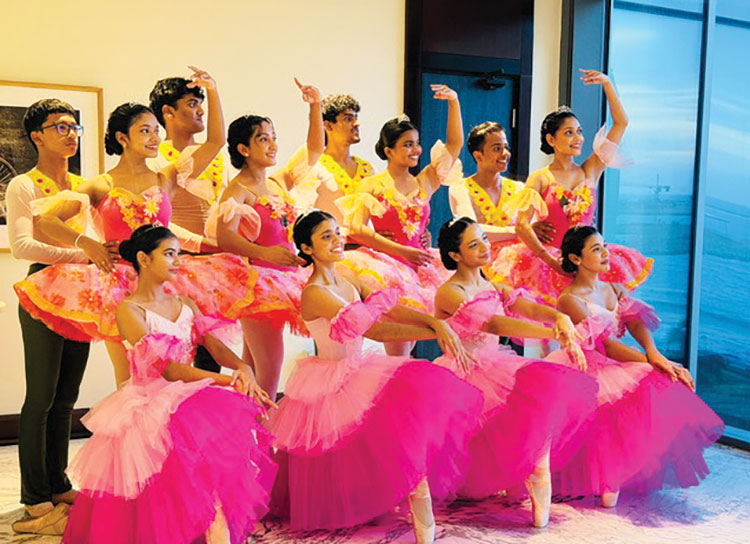
The Russian Classical Ballet concert “Once upon a silver stage, conducted by the Russian School of Ballet and dancing, will be presented on June 27, 2026,at Sri Lanka’s iconic Nelum Pokuna Mahinda Rajapakse theatre Colombo with grandeur, This significant event will provide students with the opportunity to showcase their talent to thier proud parents. The School, which started with four little girls wanting to be prima ballerinas, celebrates its success and achievements of 25 years in its Silver Jubilee celebrations at this remarkable event.
(Q) What can audiences expect from this year’s ballet concert?
(A)We are expecting Russian Classical Ballet enthusiasts, parents, Diplomats and Ballet critics.
(Q) How does this performances differ from previous productions?
(A) The Russian School is celebrating its 25th anniversary in Sri Lanka, and the teachers have prepared a mesmerizing performance of Russian Classical Ballet to celebrate and to make the occasion memorable
(Q) What are the highlights of the programme?
(A) Over 700 students from age 4 to 45 years will be on one stage showcasing their talents on Russian Classical Ballet who are currently taking lessons at The Russian School of Ballet & Dancing
(Q) What challenges were involved in bringing such a large scale production to the stage?
(A) Training such a large number of students with variation of age is a challenge. We also face a challenge when it comes to accommodate the students in a Theatre in Sri Lanka. We have to perform the same show twice to make amends for that challenge
(Q) The school is celebrating a significant milestones. How has the journey evolved are the past 25 years?
(A) It is a wonderful progress, for a school which initiated with four little girls and standing tall and strong with 700 students maintaining it’s standards by the management, teacher, students and parents support.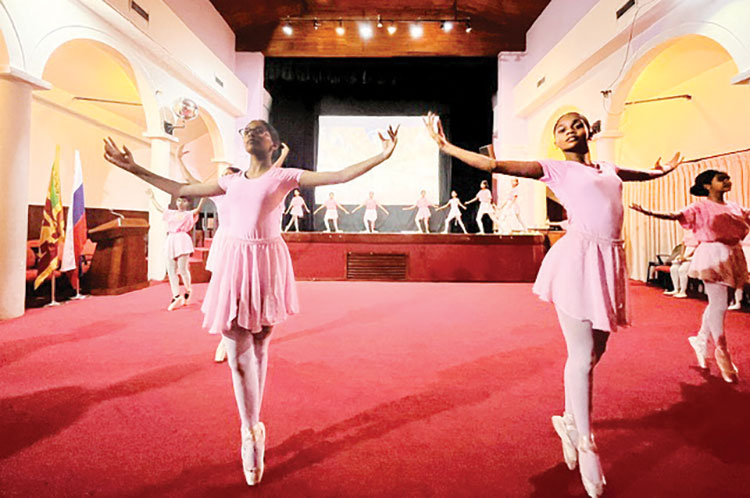
(Q) How has interest in ballet grown among Sri Lankan students over the years?
(A) It’s an amazing interest. We are conducting classes from Monday to Saturday, weekdays from 2.00pm to 6.00pm and Saturdays from 8.00am to 6.00pm, with 12 teachers working through the week. We also maintain a waiting list with at least 500 students annually. We have a huge demand for the art of Russian Classical Ballet in Sri Lanka, not only in Colombo, but outstation, too. We can only accommodate the students for Russian Classical Examination annually with the Vaganova syllabus
(Q) What role does Russian ballet training play in shaping young dancers?
(A) The training does not only shape them in dancing and techniques. They also shape the qualities, discipline and talentsof students from their childhood, especially for little girls to become ladies.
(Q) What makes Russian classical ballet unique compared to other dance forms?
(A) Russian Classical Ballet is an old form of dance and which is highly athletic, expressive and strictly disciplined style of Ballet that originated in the 18th century in Russia which is also the most prominent dance form in the world today. We are privileged to be able to learn and share the art form in Sri Lanka through the Cultural Section of The Embassy of Russian Federation in Sri Lanka to the Ballet lovers.
(Q) How does the school contribute to cultural ties between Sri Lanka and Russia?
(A) The school constantly shares it’s knowledge with Sri Lankan ballet lovers and enthusiastic though examinations, concerts, dance recitals, performances and universities. The Russian Cultural Centre in Colombo has brought down Bolshoi Dancers, Russian Classical Ballets. Younust Dancers. Classical Music Performers many times to Sri Lanka since late the1990s.
Over 1500 students annually examined for Russian Classical Ballet graded exams in Sril Lanka under the guidance of Dr Oxana Karnovich.
(Q) How does ballet help bridge cultural boundaries?
(A) Ballet is an universal art which speaks its own language. Ballet connect different cultures, facilitate cross-cultural communication, and foster mutual understanding.
(Q) Are there plans for international collaborations or performances abroad?
(A) Yes. We are already collaborated with the National Ballet Academy in Moscow under the patronage of Dr Oxana Karnovich -Oxana Karnovich of the Moscow State Academy of Choreography. Holding the position of Senior Lecturer at the Department of Choreography and the History of Ballet at the Moscow State Academy of Choreography, Dr Oxana Karnovich chaired the examinations, while imparting invaluable knowledge and expertise to aspiring dancers as well as our brilliant and growing staff of teachers. Oxana is also an Associate Professor at the Department of Vocal Art and Opera in the Moscow State Institute of Music. With a Ph.D. in Art History and Criticism, her extensive academic background enriches the knowledge and expertise of both our students and teachers, highlighting the dedication to preserve the artistic heritage of ballet.
By Zanita Careem
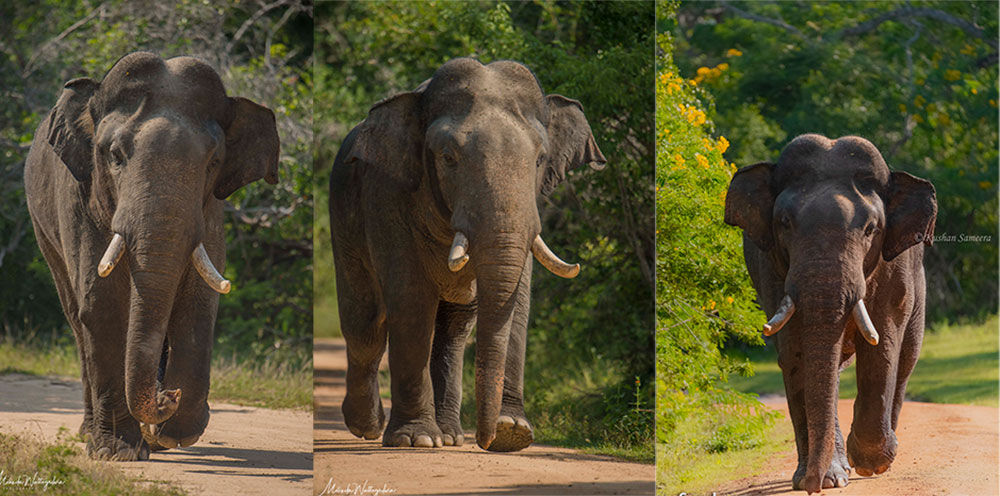
In the vast wilderness of southern Sri Lanka, where ancient forests merge with open grasslands and seasonal waterholes sustain an abundance of wildlife, few elephants have captured the imagination of nature lovers quite like Sando (T011).
A giant among giants, Sando is not merely another tusker roaming the forests of Ruhuna. He is a symbol of strength, dominance, resilience and mystery.
For years, his annual movements through the forests, bordering the Yala National Park, were eagerly anticipated by wildlife enthusiasts, safari operators, photographers and conservationists.
His arrival often signalled the beginning of a period of heightened excitement, within the park, where visitors hoped to catch a glimpse of one of Sri Lanka’s most iconic wild elephants.
Today, however, Sando’s whereabouts remain unknown.
His disappearance for nearly three years has sparked concern, speculation and heartbreak among those who have followed his remarkable journey through the wilderness. Yet despite the uncertainty, many refuse to abandon hope that the giant tusker still roams the forests of Ruhuna, hidden deep within landscapes rarely visited by humans.
According to wildlife enthusiast Chamdika Lakmal of Wild Tuskers of Sri Lanka, Sando represents one of the finest examples of Sri Lanka’s remaining wild tuskers.
He told The SundayIsland: “Sando is unlike most elephants we see in the southern region. His physical appearance, stature and confidence make him truly exceptional. Whenever he appeared, people knew they were witnessing a remarkable animal.’’
Sando primarily inhabited Blocks 3 and 4 of the Ruhuna National Park. During his annual musth period, usually between January and March, he undertook a well-documented journey through Buttala, Gonagan Ara and Galge before entering Yala National Park’s Block 1. These movements became familiar to many wildlife observers who followed his seasonal travels, year after year.
The annual migration was more than just a movement from one location to another. It was a dramatic display of nature’s hierarchy. Musth is a period of heightened testosterone levels in bull elephants, making them more aggressive and dominant. During this time, Sando transformed into an even more imposing figure.
Estimated to be between 35 and 45 years old, he was widely regarded as one of the most powerful bulls in the region. His immense size and fearless demeanour ensured that few rivals challenged him directly.
One of the most famous episodes, associated with Sando, involved a confrontation with Gamunu, another legendary tusker of Yala. The encounter reportedly resulted in Gamunu losing one of his tusks, further cementing Sando’s reputation as a dominant force among Sri Lanka’s wild elephants.
For many observers, however, Sando’s appeal extended beyond his strength.
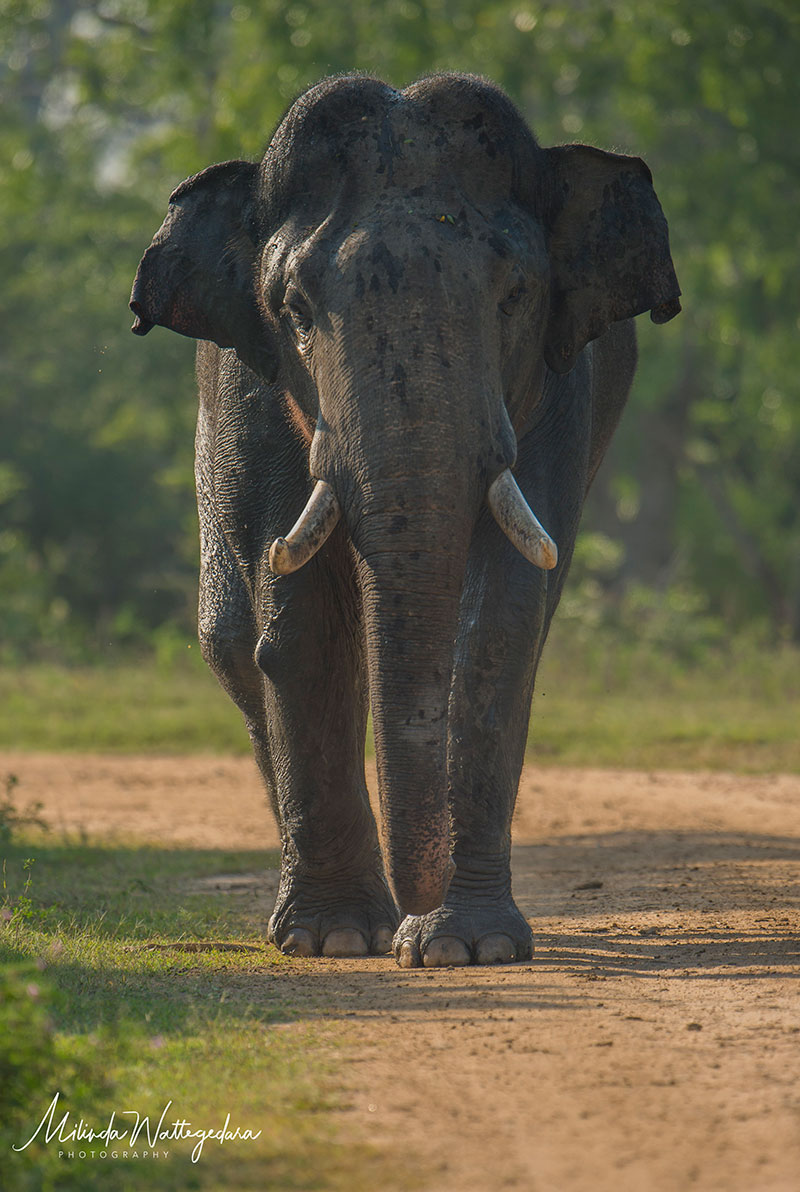
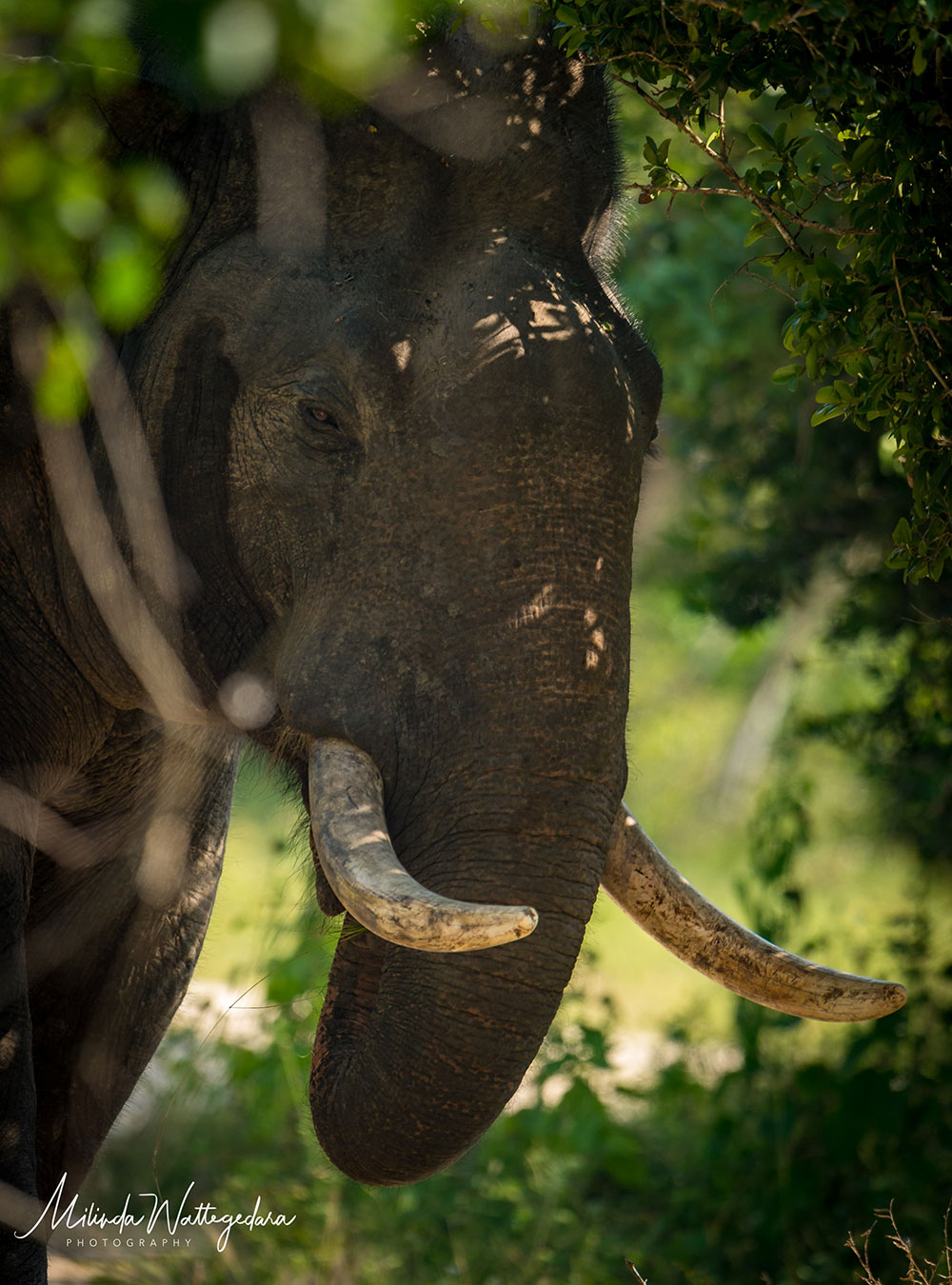
Unlike the typical “Ruhunu Getaw” elephants commonly seen in the southern dry zone, Sando possessed a distinctive physique. His body proportions and overall appearance gave him the look of an ancient war elephant, the kind depicted in historical chronicles carrying kings and warriors into battle.
“Whenever you looked at him, you felt as if you were seeing a living relic from Sri Lanka’s ancient past,” Chamidika said. “He had an extraordinary presence that photographs could never fully capture.”
Sri Lanka’s tuskers are themselves a rarity. Wildlife experts estimate that only a small percentage of the country’s male elephants possess tusks. This makes animals such as Sando particularly valuable from both ecological and cultural perspectives.
Historically, tuskers occupied a special place in Sri Lankan society. They featured prominently in religious ceremonies, royal processions and folklore. Even today, they remain powerful symbols of national heritage.
Their rarity, however, also makes them vulnerable.
Throughout Sri Lanka, wild elephants continue to face numerous threats, including habitat fragmentation, human-elephant conflict, poaching and accidental deaths. Expanding agricultural activities, infrastructure development and increasing human settlements have placed growing pressure on elephant habitats.
For tuskers, the risks can be even greater.
Their ivory makes them attractive targets for poachers, despite strict wildlife protection laws. Across Asia and Africa, ivory poaching has devastated elephant populations, and conservationists remain vigilant against similar threats in Sri Lanka.
These concerns intensified earlier this year when wildlife officials discovered the carcass of a tusker in the Kotiyagala area. The animal’s tusks had reportedly been removed by poachers. News of the discovery spread rapidly among wildlife enthusiasts.
Because Sando had not been seen for such a long period, many feared the worst. Could the carcass belong to the missing giant?
The possibility sent shockwaves through Sri Lanka’s wildlife community.
For many photographers and safari operators who had spent years documenting Sando, the prospect was devastating. Social media platforms were flooded with expressions of concern and calls for further investigations.
Yet the mystery deepened.
A year earlier, skeletal remains, believed to belong to a tusker, had also been discovered near Buttala. Once again, fears emerged that Sando’s fate had finally been uncovered.
However, officials from the Department of Wildlife Conservation later determined that the skull was significantly smaller than what would be expected from an elephant of Sando’s size. The remains, therefore, could not be conclusively linked to the missing tusker.
For conservationists, this finding offered a glimmer of hope.
Despite the absence of confirmed sightings, there have been occasional reports from remote sections of Yala and surrounding forests describing a large tusker bearing a striking resemblance to Sando. None of these observations have been verified, but they continue to fuel optimism among wildlife enthusiasts.
According to Chamidika, history provides reasons to remain hopeful.
“There have been several instances where dominant bulls disappeared from their known ranges for many years before returning unexpectedly. Until there is definitive evidence, we should not assume the worst.”
Indeed, wildlife records contain numerous examples of mature bulls vanishing from familiar territories only to reappear years later.
Such behaviour may be linked to changes in habitat use, competition, food availability or breeding opportunities. Elephants are highly intelligent and adaptable animals capable of travelling vast distances through landscapes that remain inaccessible to people.
As August approaches, anticipation once again builds among those who know Sando’s traditional routes. Reports from Athiliwewa, Pelwatta, Gonagan Ara and Buttala will be monitored closely for any sign of the missing giant.
For now, Sando’s story remains one of Sri Lanka’s most compelling wildlife mysteries.
His disappearance has highlighted not only the challenges facing elephant conservation but also the deep emotional connection many Sri Lankans share with their wildlife.
In an era when biodiversity is under increasing pressure, the fate of a single tusker has become symbolic of a much larger struggle to protect the nation’s natural heritage.
Whether Sando eventually emerges from the forests of Ruhuna or remains forever a mystery, his legacy is already secure. He represents the wild spirit of Sri Lanka’s elephants—powerful, resilient and endlessly captivating.
Until definitive evidence proves otherwise, conservationists, safari guides, photographers and elephant lovers across the country will continue to hope that somewhere in the vast wilderness of the south, the warrior tusker of Ruhuna still walks unseen, carrying with him one of the greatest untold stories of Sri Lanka’s wild places.
By Ifham Nizam

Munoz sends Colombia into World Cup knockouts with 1-0 win over DR Congo

Animal Welfare Draft Bill to be Gazetted
Legal provisions on marking voters using indelible ink during elections removed

Showers will occur in the Western, Sabaragamuwa and North-western provinces and in Galle, Matara, Kandy and Nuwara-Eliya districts

Court vacancy row throws Parliament into turmoil; sittings disrupted

Climate, pollution, forest loss now hitting economy: BASL chief

‘Dates have the highest sugar content to fight Coronavirus’

Sunday Island 27 December – Headlines

#SundayIsland 17th December – Headlines

Sunday Island – 28th March

Sunday Island Headlines – 21 March

Sunday Island – 21st February – Headlines
-

 News6 days ago
Creditor receives USD 2.5 mn as Lankan public bears loss from theft of Treasury funds
-

 News5 days ago
Creditor not yet paid
-

 News5 days ago
Consumers bearing 22% tax burden despite 18% VAT claim: Dr. Harsha de Silva
-

 Opinion7 days ago
Beyond diagnosis: A strategic design for 7% growth by 2029 (Part I)
-

 Features4 days ago
Nanda Pethiyagoda Wanasundara as three generations of family saw her
-

 Features3 days ago
Sri Lanka developing independent hydrographic capabilities
-

 Opinion6 days ago
SriLankan Airbus struck by lightning
-

 Latest News3 days ago
Sooryavanshi thumps fastest List A fifty as India A win tri-series