
Foreign News
Iranian film, It was Just an Accident, wins Palme D’Or at Cannes festival


An Iranian thriller film that explores corruption and state violence in the country has won the the Palme d’Or, the coveted top prize at the Cannes Film Festival.
It Was Just an Accident, directed by dissident Iranian filmmaker Jafar Panahi, was crowned at the world-famous festival on Saturday, hours after a power outage briefly threw the event off course.
The festival’s crowd burst into a roaring standing ovation for Panahi, who has endured years of travel bans and prison terms in Iran due to his provocative cinema, often produced in secret. He had been banned from leaving Iran for more than 15 years.
“Art mobilises the creative energy of the most precious, most alive part of us. A force that transforms darkness into forgiveness, hope and new life,” said jury president Juliette Binoche when announcing the award.
On stage, Panahi said what mattered most was the future of his country.
“Let us join forces,” Panahi said. “No one should tell us what kind of clothes we should wear, or what we should or shouldn’t do.”

Partly inspired by Panahi’s own experience in jail, It Was Just An Accident follows a man named Vahid (played by Vahid Mobasseri), who kidnaps a man with a false leg who looks just like the one who tortured him in prison and ruined his life. Vahid sets out to verify with other prison survivors that it is indeed their torturer, and then decide what to do with him.
Critics have praised the film as a clever, symbolic exploration of justice that blends dark humour with its intense themes.
The festival’s Grand Prix, or second prize, was awarded to Joachim Trier’s Norwegian family drama, Sentimental Value, his lauded follow-up to The Worst Person in the World.
Kleber Mendonca Filho’s Brazilian political thriller, The Secret Agent, won two big awards: best director for Fihlo and best actor for Wagner Moura.
The jury prize was split between two films: Oliver Laxe’s desert road trip, Sirat and Mascha Schilinski’s German, generation-spanning drama, Sound of Falling.”
Best actress went to Nadia Melliti for The Little Sister, Hafsia Herzi’s French coming-of-age drama.
Cannes also honoured Hasan Hadi’s The President’s Cake with a best first film award, marking the first time an Iraqi film has won an award at the festival.

The Cannes closing ceremony took place after a major power outage struck southeastern France on Saturday, knocking out traffic lights and forcing businesses to close along the main shopping street in the Alpes-Maritimes holiday region. Police suspect arson as the cause.
Geopolitical tensions were also a constant backdrop at the festival, with Russia’s invasion of Ukraine, the genocide in Gaza and US President Donald Trump’s proposal of tariffs on foreign-made films fuelling discussion.
More than 900 actors and filmmakers signed an open letter denouncing the genocide in Gaza, according to the organisers.
[Aljazeera]

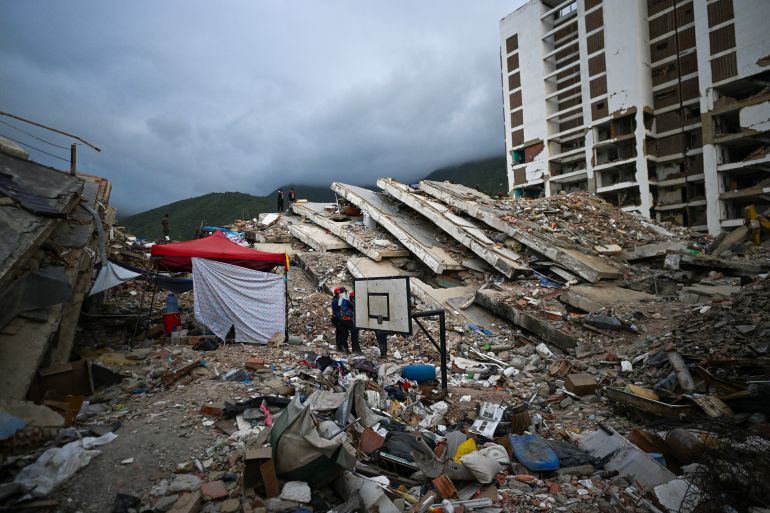
The World Bank has said that the powerful earthquakes that struck Venezuela in late June caused an estimated $19.6bn in physical damage, underscoring the country’s challenging path to recovery.
In a statement on Thursday, the World Bank said 47 percent of the damage occurred to residential buildings, while 27 percent occurred to infrastructure and 26 percent to non-residential buildings.
“The earthquakes have disrupted lives, damaged critical infrastructure, and created new challenges for Venezuela’s recovery,” Susana Cordeiro Guerra, the World Bank vice president for Latin America and the Caribbean, said in a statement. “Recovering effectively begins with reliable evidence.”
Government authorities have estimated that the magnitude 7.2 and 7.5 earthquakes that struck Venezuela on June 24 killed at least 5,000 people and injured nearly 17,000. An additional 18,000 remain homeless, as the country struggles to recover from the destruction amid persistent economic hardship.
Even before the disaster, the World Bank estimated that 76 percent of people in Venezuela, suffering from years of economic mismanagement and crushing US sanctions, were living in poverty.
“Without timely additional investment, the negative impact on productive capacity and living standards will slow the path to recovery,” said Cordeiro Guerra.
The World Bank says its estimate is meant to provide the Venezuelan government and those hoping to assist with recovery efforts with data on the scale of the challenges ahead.
The report, conducted using Global Rapid Damage Estimation (GRADE), says the areas of La Guaira state and Distrito Capital were most severely impacted. The estimate relies on local seismic data, remote-based earthquake modelling, satellite imagery, and damage reports from government and humanitarian groups.
While countries around the world have pledged support for Venezuela, it remains unclear where the funds for recovery might come from.
(Aljazeera)
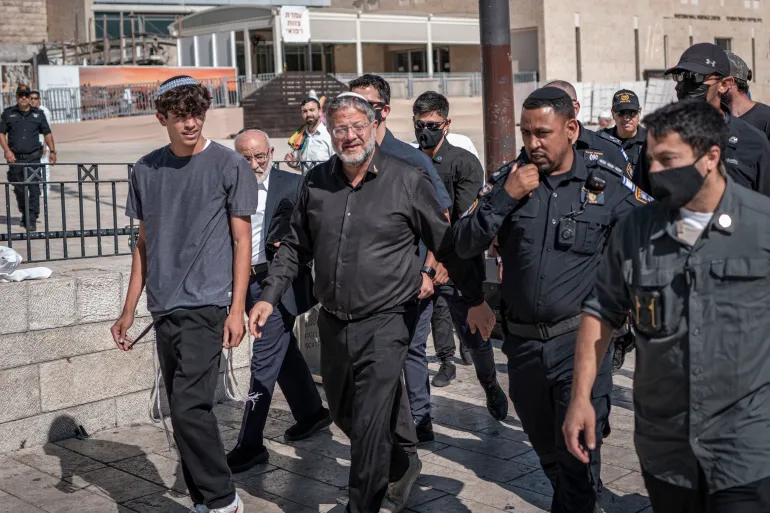
More than 4,200 Israeli settlers and members of far-right groups have stormed the Al-Aqsa Mosque compond in occupied East Jerusalem in one of the largest incursions this year as they mark a Jewish holiday, Palestinian officials say.
Far-right Israeli National Security Minister Itamar Ben-Gvir also entered the site under heavy police protection on Thursday for Tisha B’Av, a Jewish day of mourning that marks the destruction twice of an ancient Jewish temple believed to have stood at the site known to Muslims as Al-Aqsa and to Jews as the Temple Mount.
The Palestinian administration of the Jerusalem governorate said 4,288 Israelis had so far entered the compound.
This number was expected to keep rising until sundown, perhaps reaching 5,000, the governorate said, which would exceed the numbers recorded in previous years during the same Jewish holiday.
Palestinian officials said Israeli forces imposed tight restrictions at the mosque’s gates, barred large numbers of Palestinian worshippers and students from entering, and assaulted several worshippers.
Nour Odeh, Al Jazeera’s correspondent in Ramallah in the occupied West Bank, said Israeli authorities had “taken extreme measures in the Old City” of Jerusalem, including barring entry to the Al-Aqsa compound for all but the elderly and tightening checkpoints such as those at Qalandiya and around East Jerusalem.
Israeli settlers performed Talmudic rituals inside the compound, including prostrating themselves, singing and praying, the Jerusalem governorate said.
Israeli media reported that police allowed more than 1,000 Israelis to pray at the site on Thursday. While non-Muslims are allowed to visit Islam’s third holiest site, they are forbidden from praying there as part of a 1967 agreement.
Ben-Gvir said Jews visiting the site on Tisha B’Av “feel like the owners”, praising what he called “tremendous progress” there, the Haaretz newspaper reported.
[Aljazeera]
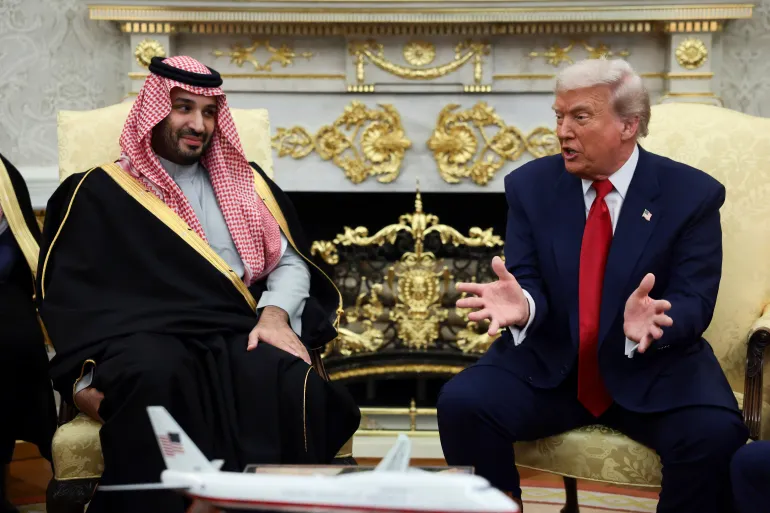
The United States and Saudi Arabia have reached a civilian nuclear cooperation deal, the administration of US President Donald Trump announced, as Washington and Riyadh push to deepen ties.
The US Department of Energy hailed the agreement as “historic” on Wednesday, saying that US companies will provide nuclear technology to the kingdom.
The deal consists of an accord under Section 123 of the Atomic Energy Act of 1954, known as a 123 agreement, “alongside an accompanying bilateral safeguards agreement”, the department said.
“These agreements reflect our two nations’ shared commitment to strengthening US-Saudi commercial relations, delivering prosperity at home and security to our allies abroad,” Energy Secretary Chris Wright said in a statement.
“Rest assured, these agreements uphold the highest standards of nuclear safety and nonproliferation, while relying on the world’s best nuclear technology and scientists, designed right here in the United States.”
Some US media reports have suggested that the deal will allow Saudi Arabia to enrich uranium domestically rather than import nuclear fuel from the US.
The Energy Department’s statement did not provide details on enrichment. If the reports are confirmed, the deal is likely to face opposition in Washington.
The statement called the agreement a “decades-long, multi-billion-dollar partnership” and said it will now be submitted to Congress for review.
Trump, together with Israel, launched a war on Iran in February to prevent the country from enriching uranium and acquiring a nuclear weapon, which Tehran denies seeking.
[Aljazeera]

US and Iran hit pause on strikes for second day

Showers will occur in the Western, Sabaragamuwa and North-western provinces and in Galle, Matara, Kandy and Nuwara-Eliya districts

Chamika, Colambage help Galle Gallants consolidate top spot

BASL challenges NPP MP to repeat false claims outside Parliament

Judges’ retirement age row: Govt.-BASL powwow on the cards

Organised motorcycle theft gang apprehended

‘Dates have the highest sugar content to fight Coronavirus’

Sunday Island 27 December – Headlines

#SundayIsland 17th December – Headlines

Sunday Island – 28th March

Sunday Island Headlines – 21 March

Sunday Island – 21st February – Headlines
-
 Features1 day ago
MBS: The Man of the Last Laugh
-
 Features1 day ago
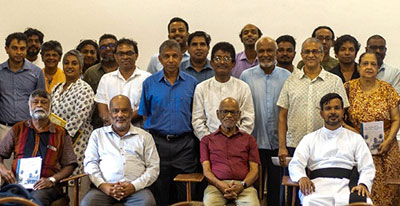
A Landmark Gathering of Minds: The Ceylon Journal Roundtable Revives the Spirit of Intellectual Dialogue
-
 Midweek Review5 days ago
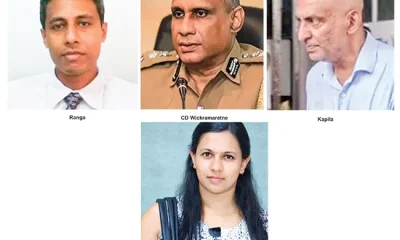
Three high-profile alleged suicides shaping key investigations
-
 Latest News1 day ago
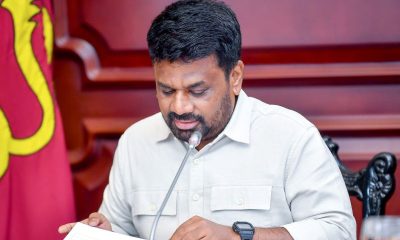
Develop a programme to allocate underutilised state land for investment by returning migrant workers – President
-
 Life style1 day ago
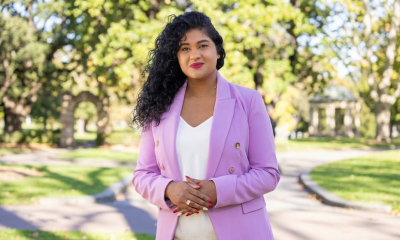
A proud Sri Lankan voice in Australian Parliament
-

 News2 days ago
Fort Magistrate orders arrest of MP Archchuna
-

 Editorial1 day ago
‘Cockroaches’ tame a mighty regime
-
 Editorial2 days ago
An indictment of all parties