
Business
Intrepid Colombo ranked one of the 50 Best Workplaces in Lanka for 2023

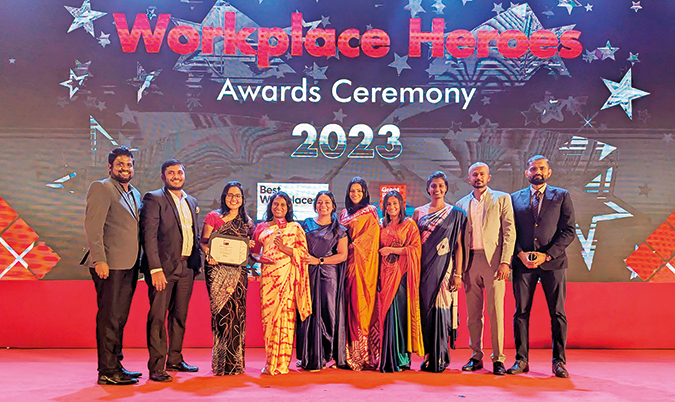
Intrepid Colombo, part of global travel brand Intrepid Travel, has been named on the prestigious 50 Best Places to Work list by independent analysts at Great Place to Work® in Sri Lanka.
This recognition is based on confidential survey data assessing employee experiences of trust, innovation by all, meaningful organization values, and leadership effectiveness. Organizations are also evaluated on how well they are creating a For All workplace experience, where all employees are welcomed and engaged.
Intrepid Travel is a global tour operator, providing sustainable experience-rich travel on all seven continents. The business was established in Melbourne, Australia in 1989 and has experienced global growth over the past 34 years.
This accolade comes just over one year after Intrepid Colombo received its Great Place to Work certification in 2022 and recognises the company’s success in creating a diverse, equitable and inclusive work environment. The company has also been certified as Best Place to Work for Women, in recognition of its initiatives to support women in the workplace. The majority of Intrepid’s senior leadership team in Colombo comprises female managers.
“Being named as a top workplace in Sri Lanka is testament to our team’s work to create a welcoming, dynamic and supportive workplace. This would not be possible without the incredible people we have working with us in Colombo and the support of our global team,” says Poornaka Delpachitra, Country General Manager of Intrepid Colombo.
“I’m incredibly proud of every team member and we’re excited to continue to grow our office, as well as bring more customers to Sri Lanka to experience everything our country has to offer.”
Intrepid Colombo was started back in October 2012 to provide IT development services to Intrepid. Since then, it has grown fast into a leading centre of excellence, supporting the global business with IT development and support, as well as supporting a range of other functions including finance, HR and customer service. The company also runs a successful travel and tourism business in Colombo, welcoming customers from all over the world on its small-group travel adventures. Intrepid Colombo has grown fast from a handful of staff to now being the largest of Intrepid’s offices with over 260 staff and tour leaders.
Some of the benefits that Intrepid Colombo’s staff enjoy include one free tour per year, plus five additional days leave to use towards this, enabling employees to experience trips for themselves, meet tour leaders and customers and have the opportunity to explore the world; flexible work schedules, ensuring team members can balance their work with other commitments; and twenty hours of volunteer leave each year to use towards causes that are important to them
Earlier in 2023, Intrepid featured on TIME’s 100 Most Influential Companies List. This global endorsement recognised the adventure travel company’s innovation in responsible travel and sustainability.





Business
Jaffna Teaching Hospital secures lifeline water supply via ADB-funded Thalaiyadi sea water desalination plant

It marks Sri Lanka’s first-ever large-scale SWRO desalination plant
By Sanath Nanayakkare
The Asian Development Bank (ADB)-funded sea water reverse osmosis (SWRO) desalination plant in Thalaiyadi has delivered a crucial operational boost to the Jaffna Teaching Hospital, securing a reliable supply of purified, low-calcium water for critical medical care and specialized equipment.
Speaking during a site briefing with ADB officials headed by Country Director Shannon Cowlin, National Water Supply and Drainage Board engineers, and media representatives, Hospital Director Dr. T. Sathiyamoorthy confirmed that a dedicated supply line from the plant was successfully connected earlier this year following three years of planning and requests.
With a 175-year legacy of excellence, this 1,550-bed facility serves as the premier healthcare institution in the Northern Province. Currently providing specialized services—including neurosurgery, open-heart surgery, kidney transplants, and bone marrow transplants—the hospital is positioning itself for elevation to National Hospital status under Ministry of Health guidelines.
Operating across a sprawling 13.5-acre compound, the institution functions much like a self-contained township, managing a massive daily footfall that underscores its role as a vital regional lifeline. The hospital accommodates over 1,500 in-patients on any given day, while its outpatient services face a relentless stream of visitors. Daily arrivals typically include 900 to 1,000 OPD patients, accompanied by up to 2,800 clinic visitors distributed across more than 30 specialized medical and surgical units.
When factoring in the wider operational ecosystem, the total daily population within the compound swells to approximately 10,000 people. This high-volume environment is sustained by a dedicated workforce of 2,400 healthcare professionals, alongside a daily influx of over 3,000 visiting relatives who pass through the facility to support recovering patients.

The Thalaiyadi seawater desalination plant
For decades, the hospital’s reliance on local groundwater presented severe operational bottlenecks. Jaffna’s limestone-heavy geology yields water with high calcium concentrations, causing severe mineral build-up that damaged millions of rupees worth of high-value equipment ranging from large-scale sterilizers to delicate endoscopic instruments.
The introduction of low-calcium desalinated water has immediately safeguarded key operational areas. The initial phase of the connection delivers purified water directly to high-priority sections, including operating theaters, intensive care units (ICUs), and main entrance public drinking facilities.
While the hospital’s total assessed daily demand stands at 1,500 cubic meters, desalinated water currently covers approximately 30% of total usage. The remaining 70% continues to depend on legacy systems due to internal piping networks that are nearly 60 years old. To resolve this, hospital management has floated tenders to overhaul internal distribution lines, enabling pure desalinated water to reach all wards.

Jaffna Teaching Hospital Director Dr. T. Sathiyamoorthy and ADB Country Director Shannon Cowlin during a meeting at the hospital premises
Engineers confirmed that the SWRO plant operates with a capacity of 24,000 cubic meters per day, guaranteeing ample volume for full hospital coverage. Furthermore, the ADB is structuring a new municipal wastewater treatment project for Jaffna, which will integrate the hospital and replace its aging internal waste treatment system.
Dr. T. Sathiyamoorthy stressed that clean piped water is vital to public health in Jaffna, where groundwater remains vulnerable to agricultural fertilizer runoff, commercial effluents, and historical pollution concerns such as the Chunnakam oil contamination incident. He noted that encouraging piped water consumption also reduces dependence on single-use bottled water, which risks microplastic degradation when exposed to the region’s intense heat.
The Thalaiyadi seawater desalination plant represents a major financial investment coupled with rigorous environmental management to protect the surrounding coastal ecosystem. Financially, the project carries a total capital cost of USD 55 million, anchored by a primary contract valued at LKR 14,559 million—structured across multiple currencies including USD 49 million, EUR 15 million, and INR 314 million, alongside local allocations.
Awarded to M/s Suez International under a comprehensive Design, Build, and 7-Year Operation framework, the project involves an operational expenditure of USD 0.55 per cubic meter, with management scheduled to transfer to the National Water Supply and Drainage Board (NWSDB) following the completion of the operational term in October 2031.
Simultaneously, extensive ecological safeguards have been integrated into the facility’s design to mitigate marine disruption. The offshore intake system is positioned away from sensitive habitats and utilizes low-velocity grilles to prevent fish entrainment, safeguarding the interests of the local fishing community. Furthermore, waste discharge is strictly regulated under Central Environmental Authority (CEA) and Marine Environment Protection Authority (MEPA) guidelines. Brine concentrate is sent through an offshore outfall equipped with specialized diffusers located more than 500 meters from the shore, ensuring rapid dispersion and limiting salinity impact to a tightly controlled 50-meter mixing zone.

For as long as we can remember, flying to Sri Lanka has meant relying on a handful of options — SriLankan Airlines direct services, useful but limited in schedule and market coverage, or a stop in Dubai, Doha, or Abu Dhabi. That is beginning to change, and this winter season marks one of the more significant shifts in our aviation connectivity.
A wave of carriers is launching direct services into Colombo and it is worth taking stock of what that means for the industry — not just as a matter of flight schedules, but as a matter of strategy.
Europe, reconnecting
British Airways returns to Colombo on 23 October, restoring a non-stop link to London Gatwick. The UK remains one of our strongest, most loyal source markets, and a direct flight removes a genuine point of friction.
Edelweiss Air, part of the Lufthansa Group, is increasing its Zurich service to three times weekly from 26 October — a route that brings with it high-spending Swiss and DACH-region traveller our wellness and upscale properties need.
And in December, French Bee launches a new seasonal service from Paris, opening a cost-conscious but committed segment of the French long-haul market.
A first for Vietnam
A notable development is the arrival of two Vietnamese carriers — Vietnam Airlines and VietJet — both launching direct Ho Chi Minh City services. This is the first time Sri Lanka has a direct link to Vietnam, and it opens a corridor of travellers who may come to see Sri Lanka and Southeast Asia as a natural pairing. Beijing Capital Airlines and Batik Air are expected to add further capacity later in the season, strengthening our reach into China and Malaysia.
The Vietnam route connects us to more than tourists. Vietnam is drawing strong foreign investment and has established itself as a major manufacturing and export hub. A direct Colombo–Ho Chi Minh City link gives us an easier way to engage with that — not only holidaymakers, but business travellers, investors, and trade delegations.
Australia, and the low-cost gap it fills
SriLankan Airlines flies non-stop to Melbourne and Sydney, so Jetstar isn’t opening a new corridor — it’s opening a new price point, the first low-cost carrier to fly non-stop between Melbourne and Colombo, operating three times weekly, year-round, on its Boeing 787 Dreamliner fleet, adding over 100,000 seats a year.
More than “budget”: what these new entrants actually offer
It is worth being precise about what these new services bring, because labels like “low-cost” and “seasonal” can undersell the product. Several of the low-cost and long-haul entrants in this line-up — Jetstar, VietJet, French bee among them — offer proper business-class or premium-economy-style cabins, not a basic recline seat, and all of them are flying modern, widebody aircraft.
Just as important is brand familiarity. Jetstar is a household name across Australia, French Bee It’s trusted by French travellers, and British Airways needs no introduction. Recognisable, trusted brands lower the barrier to trying a new destination. And on the loyalty side, travellers on nearly every one of these routes can redeem frequent flyer points which is a genuine draw for the kind of higher-value, repeat visitor we want more of.
The new carriers market Sri Lanka in its home country with sophistication and reach — glossy campaigns, in-flight promotion, and placement across a crowded travel marketplace reaching the audience we most want to reach.
Why this matters beyond the season
For years, the majority of our long-haul arrivals have transited through the Middle East. That has served us well, but it has also meant a meaningful share of our connectivity has depended on a region that has had its share of instability.
Direct flights change that picture. They cut travel time, appeal to time-conscious, high-value holidaymakers, and, importantly, they diversify our routes to market. This is not a case against our Gulf carrier partners, who remain vital to our connectivity. It is simply a recognition that resilience comes from diversity.
What it means for the season ahead
Securing these routes is only half the job. It now falls to us, as an industry, to support the flights — through targeted destination marketing in each of these new source markets, so that load factors and yields justify the investment these airlines have made in Sri Lanka. Several of these services are seasonal, and our task is not simply to see them through a single winter, but to build the demand that gives an airline the confidence to extend a route year-round. We should not lose sight of the fact that Sri Lanka does not have an off-season — we are a year-round destination and our marketing should say so. Getting this right is as much our responsibility as it is the airlines’.

By Ifham Nizam
Biodiversity is rapidly moving beyond the traditional boundaries of conservation to become an increasingly important economic and business issue, with Sri Lankan companies being urged to recognise nature not simply as an environmental responsibility but as an asset capable of influencing competitiveness, investment and access to international markets.
This was among the key messages at the opening plenary of the 11th Annual Technical Sessions of Biodiversity Sri Lanka (BSL), held on Tuesday at the Shangri-La Colombo under the theme “Beyond Borders: Partnering for Business to Prosper with Nature.”
The panel brought together leading figures from economics, business and biodiversity, including Dr. Nishan de Mel, Founder and Executive Director of Verité Research; Dr. Ruchira Somaweera, National Technical Executive (Ecology), WSP Australia and Adjunct Professor at Murdoch University; Siddarth Hirdaramani, Director, Hirdaramani Group and Director, Biodiversity Sri Lanka; and Shiranee Yasaratne, Senior Technical Advisor, Biodiversity Sri Lanka.
The discussion placed particular emphasis on the growing role of biodiversity science in business decision-making, with Dr. Ruchira Somaweera bringing an important scientific perspective to the question of how companies—large and small—should respond to the rapidly changing global biodiversity agenda.
Somaweera, a wildlife biologist with extensive international experience in scientific research, environmental consultancy and biodiversity conservation, currently provides expert advice on biodiversity conservation and environmental management through his work in Australia. He is also an Adjunct Professor at Murdoch University and contributes to international scientific and conservation initiatives.
His participation in the panel underscored an increasingly important reality for business: biodiversity cannot be addressed only through isolated conservation projects, but needs to be understood in terms of how companies interact with ecosystems, supply chains and natural resources.
Opening the discussion, Dr. Nishan de Mel said he had been invited to step outside his familiar field of economics and examine biodiversity from an economist’s perspective.
Drawing a parallel with biodiversity, de Mel said economists had traditionally developed sophisticated ways of measuring inflation, productivity, employment and economic growth, but had failed to adequately measure the natural systems on which economic activity depends.
“The single largest input into the world economy, the one without which no one can get anything done, appears not to get measured at all by economists, he said.
That missing element, he noted, was nature.
De Mel referred to research by the World Economic Forum and PwC which examined the dependence of 163 industries and their supply chains on nature and biodiversity. He said the research estimated that economic activities moderately or highly dependent on nature represented an enormous share of global economic output.
The significance of those figures, he stressed, was not that nature could simply be assigned a monetary value equivalent to global GDP. Rather, they represented the exposure of the global economy to the degradation of natural systems.
The concept of risk extending beyond the traditional boundaries of a company’s balance sheet was particularly relevant to the theme of the forum, “Beyond Borders”.
For Dr. Ruchira Somaweera, the scientific dimensions of that relationship between business and biodiversity are increasingly difficult for companies to ignore.
The panel’s decision to bring a leading wildlife biologist into a discussion dominated by business and economics reflected the changing nature of the biodiversity debate itself. Biodiversity is no longer being discussed solely as a matter for conservationists, wildlife specialists or environmental organisations.
Businesses are increasingly being asked to understand what ecosystems provide, how their operations affect those systems and what risks arise when biodiversity is degraded.
The moderator specifically turned to Somaweera after hearing how major international companies and buyers were increasingly concerned about environmental performance.
He raised the question of whether the business advantages of biodiversity were confined to large corporations dealing with sophisticated international buyers, or whether small companies and firms should also be taking biodiversity seriously.
The scientific perspective offered by Somaweera is therefore critical to ensuring that biodiversity is not reduced merely to a corporate branding exercise.
Earlier, Yasaratne explained how the business community’s approach to biodiversity had changed considerably over the past 11 years.
She recalled that when the platform was established, businesses were still trying to understand how they could engage with biodiversity and ecosystem issues.
‘At that time there was more philanthropic activity for biodiversity, she said, referring to popular initiatives such as tree-planting campaigns.
The emphasis, however, has increasingly shifted towards understanding the science behind biodiversity and the business implications of ecosystem degradation.
From the business perspective, Hirdaramani said Sri Lanka’s biodiversity and environmental credentials could provide a genuine competitive advantage.
He used the apparel industry to illustrate the point.
Sri Lanka cannot compete with countries such as Bangladesh, India, Vietnam and China purely on the basis of low production costs or manufacturing scale, he said. Labour costs are higher, the country’s manufacturing base is smaller and Sri Lanka does not possess the extensive domestic supply chains available in some larger manufacturing economies.
“What we do have is a very positive biodiversity environment,” Hirdaramani said.
He argued that Sri Lanka’s environmental credentials, together with its strong labour standards and social compliance, had helped create a reputation as a responsible manufacturing destination.
Hirdaramani said this could translate directly into business opportunities, particularly when competing for customers who are prepared to pay a premium for responsible production.
The discussion also highlighted another fundamental economic problem: natural capital is often depleted without being properly reflected in conventional measures of economic performance.
De Mel referred to the work of economist Professor Sir Partha Dasgupta, whose landmark review for the UK Treasury reframed the environmental challenge as an issue of asset depletion rather than merely pollution.
He argued that countries routinely account for the depreciation of physical infrastructure and machinery, but national accounts generally fail to properly reflect the depletion of forests, fisheries, watersheds and other natural assets.
The message emerging from the BSL panel was therefore that biodiversity must increasingly be incorporated into the way businesses understand risk, competitiveness and long-term value.

It’s still a queendom, but Sri Lanka are more than just Athapaththu now

Namibia T20I tri-series: Youth, depth and a continental dream take centre stage

Tharanga storms past 92m in Zurich

Iran, Qatar hold Hormuz talks amid int’l hopes dialogue with US will resume

Russell breaks world 100m hurdles record in Zurich

Sun directly overhead Kokkuvil, Nallur, Kodikamam and Nagar Kovil at about 12.11 noon today (28)

‘Dates have the highest sugar content to fight Coronavirus’

Sunday Island 27 December – Headlines

#SundayIsland 17th December – Headlines

Sunday Island – 28th March

Sunday Island Headlines – 21 March

Sunday Island – 21st February – Headlines
-

 Business7 days ago
SriLankan Airlines makes ShakthiSAT Mission possible for talented Sri Lankan student
-

 Features6 days ago
My secondary schooling after Royal Primary
-

 Features6 days ago
From the First to the 22nd: A short history of Amendment Politics and Reform Frustrations
-

 Latest News6 days ago
Tharanga edges out Chopra in 88m javelin battle
-

 News4 days ago
Missing doctor’s body found in Mahiyanganaya
-
 Features6 days ago
How Shelton Kodikara became first Professor of International Relations
-
 Features6 days ago
How St. John’s College Shaped Panadura for 150 Years
-

 News4 days ago
Australia declines to release Finance Secy Suriyapperuma’s citizenship details