
News
International terrorism expert tells govt. to rethink lifting ban on five Islamist organisations


By Rathindra Kuruwita
The Sri Lankan government must rethink the lifting of the ban on five Islamist organisations that were banned following the Easter Sunday attacks, international terrorism expert Prof. Rohan Gunaratna said on Friday at the launch of his book, ‘Sri Lanka’s Easter Sunday Massacre: Lessons for the International Community.’
The ban on the following Islamic organisations was lifted last week, subject to strict conditions: Jamiyathul Ansaari Sunnathul Mohomadiya (JASM), Sri Lanka Thawheed Jamma’ath (SLTJ), All Ceylon Thawheed Jamma’ath (ACTJ), Ceylon Thawheed Jamma’ath (CTJ) and United Thawheed Jamma’ath (UTJ).
Calling the lifting of the ban a “fatal error,” Gunaratna said: “If you look at National Thawheed Jamma’ath bomb maker Hastun and Sara Jasmin, his wife, they were radicalised by Sri Lanka Thawheed Jamma’ath (SLTJ). The first Sri Lankan to go abroad and fight for ISIS was an All Ceylon Thawheed Jamma’ath (ACTJ) member.”
Gunaratna said Sri Lanka must also not lift the ban of hardliner Islamic preachers and books.
“Both Zahran and his mentor Nawfer were radicalised by an Indian preacher known as PJ. He came to Sri Lanka six times, and finally we prevented him from coming in when the Indian High Commission warned us. If these preachers are allowed in, we will have a serious problem. What I found was that Zahran found it really hard to recruit among Sri Lankan Muslims because most do not accept the ISIS ideology,” he said.The Sri Lankan government must issue a white paper each time a terrorist attack takes place to ensure that there are no conspiracy theories, he said.
Dr. gunaratna added that his investigations had revealed that Zahran Hashim carried out those attacks because of ideological convictions. “Zahran would never have carried out those attacks for Gotabaya Rajapaksa or any Sinhalese leader contrary to some conspiracy theories,” he said.
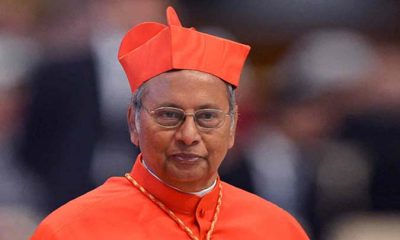
The Archbishop of Colombo Malcolm Cardinal Ranjith, who had done Sri Lanka a great service by preventing anti-Muslim violence in the aftermath of the Easter Sunday attacks, too, had started to believe in those conspiracy theories, Gunaratna said.
“The government has given him all the documents, and I hope he will change his views. His lawyer sat through all sessions of the Presidential Commission on the Easter Sunday attacks, and he knows the Sri Lankan intelligence agencies were not behind this. It is a false allegation to say Zahran was on the payroll of intelligence agencies,” he said.
Sri Lanka also needs a de-radicalisation programme to rehabilitate those who have fallen victim to extreme ideologies of all kinds, he said.
“There are extremists in all religions, and if we don’t get a de-radicalisation programme on track, we will face another attack,” he said.






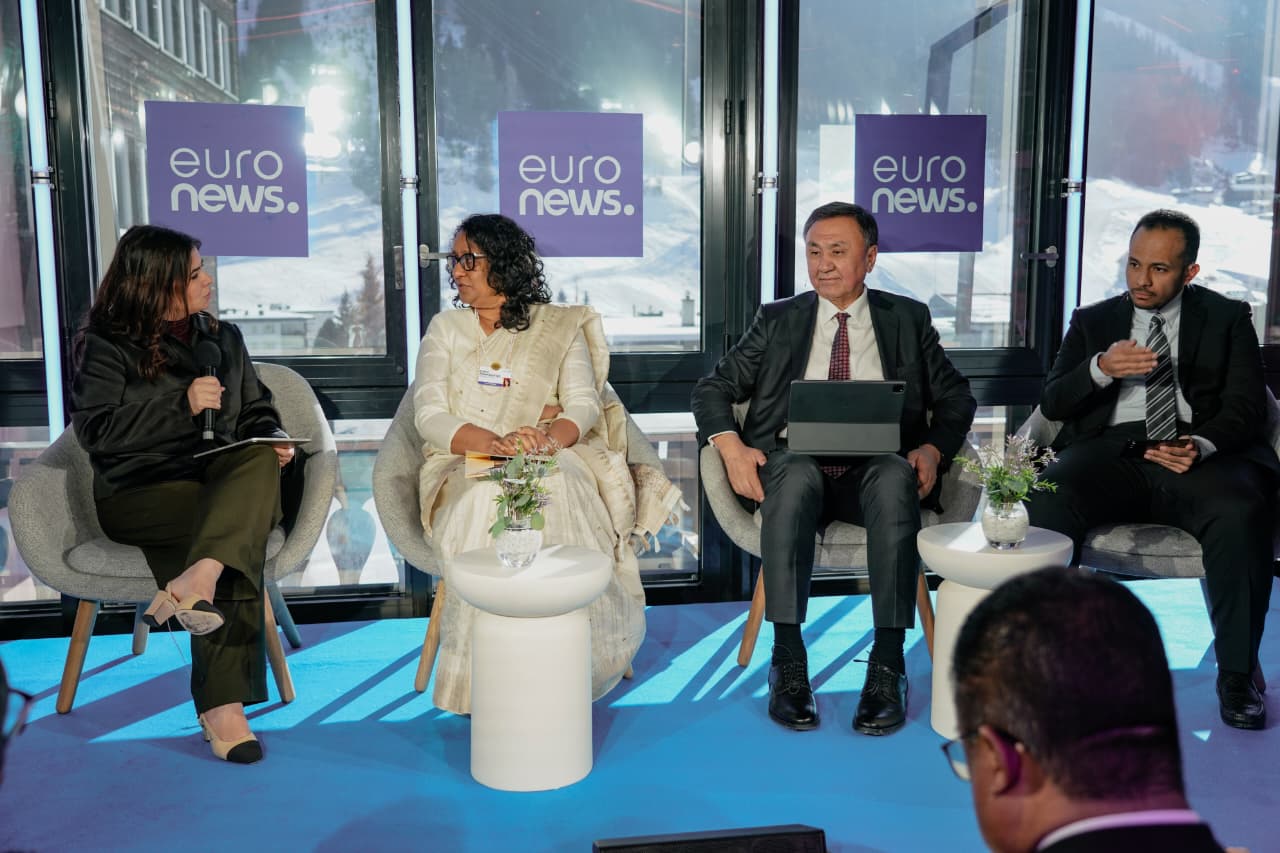
Prime Minister Dr. Harini Amarasuriya participated in a high-level dialogue titled “Tourism as Soft Power and Diplomatic Capital” held at the Euronews Hub, Piz Buin Davos, on the sidelines of the World Economic Forum on January 20.
The session explored how tourism functions as a strategic instrument of diplomacy by strengthening international trust, cultural exchange, and regional cooperation through mobility and people-to-people engagement. The Prime Minister shared the panel with Mr. Kuban Omiraliyev, Secretary General of the Organization of Turkic States and Mr. Meshari Alnahar – CEO Aseer Investment Company, Saudi Arabia.
Addressing global trends, the Prime Minister emphasized that Sri Lanka is an example of hope, recovery and resilience in a world of conflict demonstrating how tourism can play a critical role in a changing global environment particularly amid climate shocks, geopolitical instability, and uneven economic recovery. She noted that tourism is not only an economic sector but also a vital diplomatic bridge that supports livelihoods, builds relationships and connects people.
Drawing on Sri Lanka’s recent experience, she highlighted the country’s strong tourism recovery despite multiple crises, including the impact of Cyclone Ditwah. Transparent crisis management and strategic engagement with international partners helped sustain visitor confidence, resulting in record tourist arrivals even in challenging circumstances.
The Prime Minister also underscored the importance of green and climate friendly tourism infrastructure and underlined that Sri Lanka welcomes long term investment in tourism. She pointed out that tourism supports millions of jobs worldwide and that inclusive policies are essential to ensure fair opportunities, particularly for women and vulnerable communities.
[Prime Minister’s Media Division]
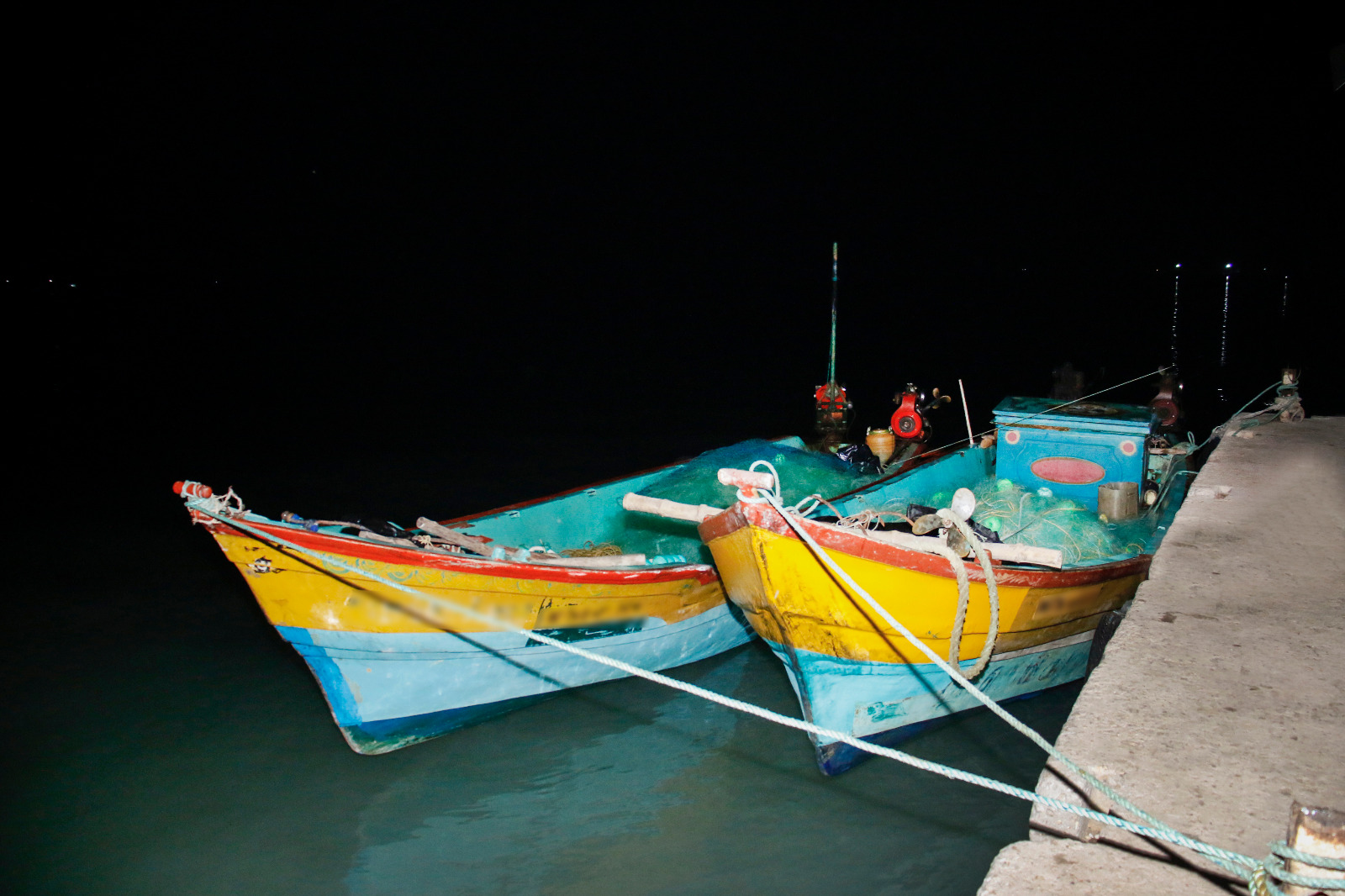
During an operation conducted in the dark hours of 20 Jan 26, the Sri Lanka Navy seized two (02) Indian fishing boats and apprehended seven (07) Indian fishermen while they were poaching in Sri Lankan waters, off Kovilan, Jaffna.
The seized boats and Indian fishermen was to be handed over to the Fisheries Inspector of Myliddy, Jaffna for onward legal proceedings.
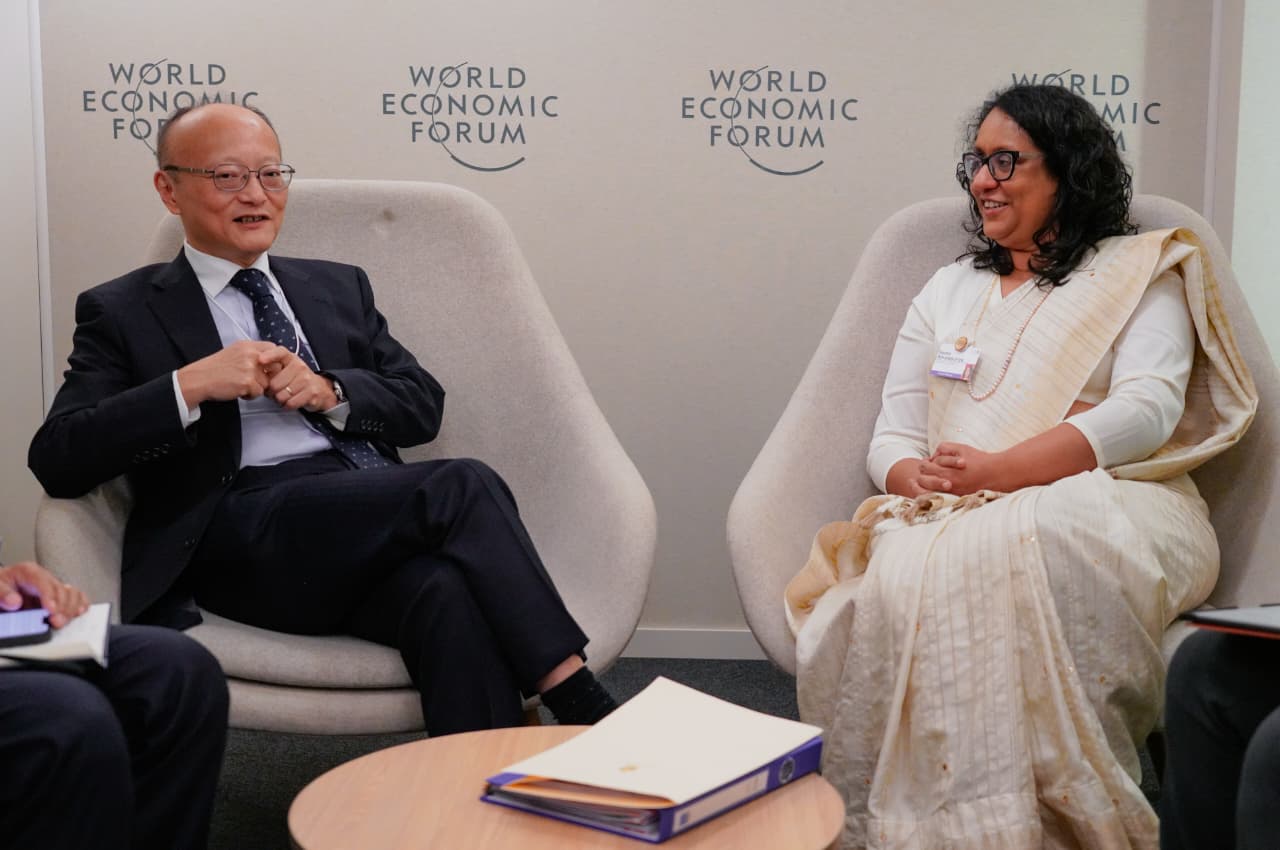
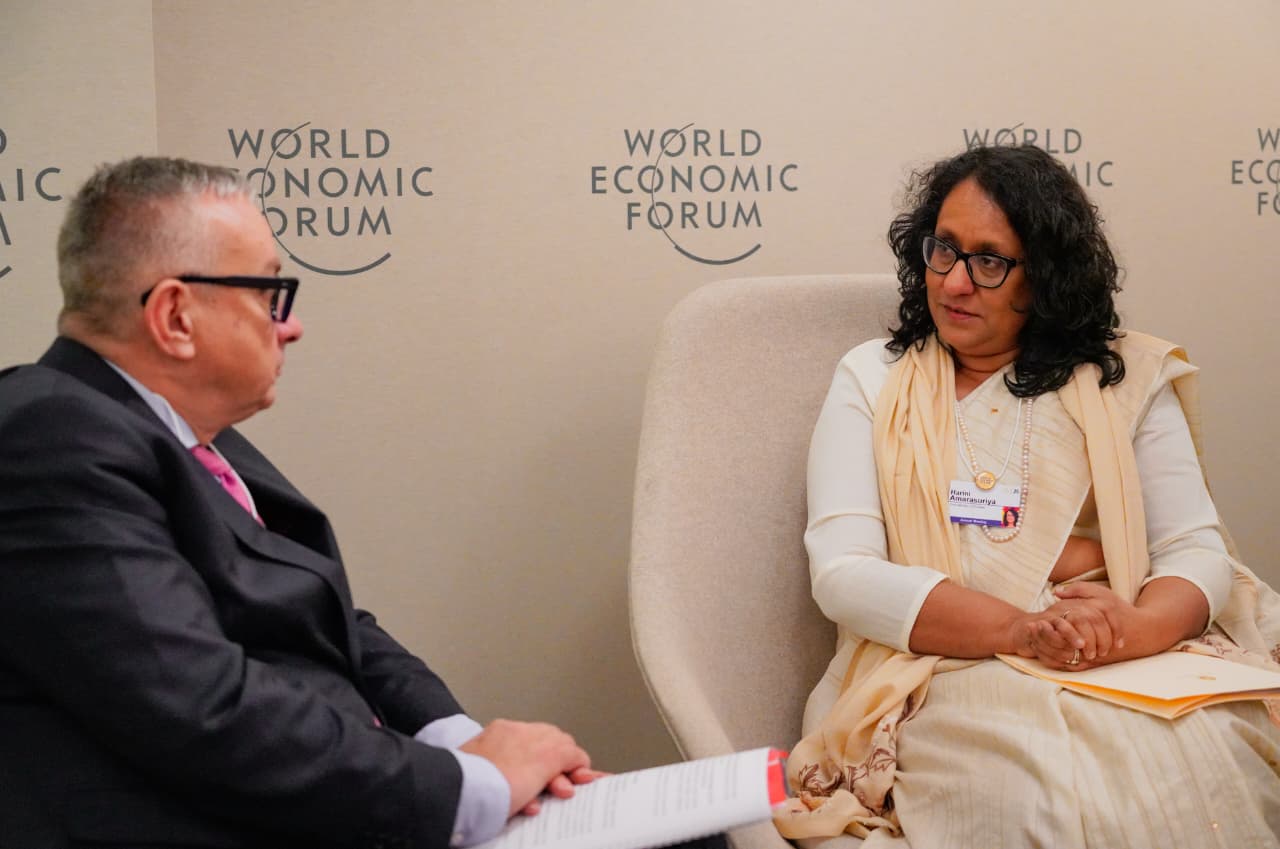
Prime Minister Dr. Harini Amarasuriya participated in a series of high-level bilateral meetings on January 20 on the sidelines of the 56th Annual Meeting of the World Economic Forum in Davos-Klosters, Switzerland.
The Prime Minister attended a productive bilateral meeting with Mr. Jozef Síkela, European Commissioner for International Partnerships. During the discussion, both sides focused on strengthening Sri Lanka–EU cooperation and advancing mutual interests.
Prime Minister Amarasuriya also met with Mr. Masato Kanda, President and Chairperson of the Board of Directors of the Asian Development Bank (ADB), at the WEF Congress Centre. The meeting provided an opportunity to discuss ongoing engagement and future collaboration between Sri Lanka and the ADB.
In addition, the Prime Minister held discussions with Mr. Hassan El Houry, Chairman of Menzies Aviation, where opportunities for collaboration in aviation services and connectivity were explored.
The Prime Minister also participated in a high-level dialogue at the Global Tourism Forum held at the Euronews Hub, Piz Buin, Davos, as part of the World Economic Forum engagements.
Dr. Anil Jayantha, Minister of Labour, and the Deputy Minister of Finance were also present at these meetings.
[Prime Minister’s Media Division]

ICC board votes to replace Bangladesh if they don’t travel to India

Sri Lanka is an example of hope, recovery and resilience in a world of conflict – PM

Brook needs to ‘regain trust of players’ after New Zealand nightclub incident

Navy seizes 02 Indian fishing boats poaching in northern waters

Prime Minister participates in high-level bilateral meetings at World Economic Forum

Dushmantha Chameera, Dhananjaya de Silva return for England ODIs

‘Dates have the highest sugar content to fight Coronavirus’

Sunday Island 27 December – Headlines

#SundayIsland 17th December – Headlines

Sunday Island – 28th March

Sunday Island Headlines – 21 March

Sunday Island – 21st February – Headlines
-

 Editorial4 days ago
Illusory rule of law
-
 News5 days ago
UNDP’s assessment confirms widespread economic fallout from Cyclone Ditwah
-

 Business7 days ago
Koaloo.Fi and Stredge forge strategic partnership to offer businesses sustainable supply chain solutions
-
 Editorial5 days ago
Crime and cops
-
 Features4 days ago
Daydreams on a winter’s day
-

 Editorial6 days ago
The Chakka Clash
-
 Features4 days ago
Surprise move of both the Minister and myself from Agriculture to Education
-

 Features3 days ago
Extended mind thesis:A Buddhist perspective