
News
Inter-Parliamentary Union adopts unanimous decision on arrest of Rishad Bathiudeen

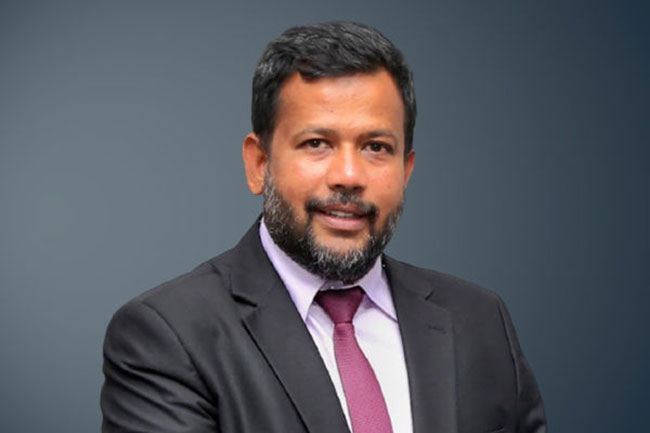
The Inter-Parliamentary Union (IPU), the largest international organisation of national Parliaments , which investigated the arrest and detention of Vanni District Parliamentarian Rishad Bathiudeen issued its decision on the matter yesterday (16).
The IPU expressed concerns that Bathiudeen was arrested under the Prevention of Terrorism Act in the absence of prompt processing of his fundamental rights application filed at the Supreme Court with the recusal of four Judges from hearing the case. The IPU also expressed concerns that no official information was made available to show that any concrete evidence existed to make Bathiudeen a suspect although he was granted bail by the Forts Magistrate Court following around 06 months from his arrest.
They also expressed deep concern that the PTA is still in operation in its present form without amendment or abolition. The United Nations monitoring bodies have repeatedly expressed grave concerns in respect of the PTA, and the Sri Lankan authorities had also expressed their commitment towards such amendments, but no move had been made to amend or abolish the PTA thus far.
The IPU called on the Sri Lankan Government to notify them of any moves to amend or abolish the PTA if any progress had been achieved. The organization also requested the Government to notify them of any credible evidence against Bathiudeen, if any existed. The IPU Governing Council further requested the Secretary General to notify all Parliamentary and prosecuting authorities of this decision marked LKA-77. The IPU Committee will continue examining the case and make further reports in due course.
Given below is the IPU decision in full
“The Governing Council of the Inter-Parliamentary Union, 1. Notes that the complaint concerning Mr. Rishad Bathiudeen is admissible, considering that the complaint: (i) was submitted in due form by a qualified complainant under Section I.1.(a) of the Procedure for the examination and treatment of complaints (Annex I of the Revised Rules and Practices of the Committee on the Human Rights of Parliamentarians); (ii) concerns an incumbent member of parliament at the time of the alleged facts; and (iii) concerns allegations of arbitrary arrest and detention, lack of due process in proceedings against parliamentarians, and violation of freedom of opinion and expression, which are allegations that fall within the Committee’s mandate.
“2. Thanks the Secretary General of the Sri Lankan Parliament for his communication and cooperation;
“3. Is concerned that Mr. Bathiudeen was detained for six months under the Prevention of Terrorism (Temporary Provisions) Act, No. 48 of 1979, in the absence of the prompt processing of his Fundamental Rights Application;
“4. Is also concerned that no official information has been made available to show on what concrete factual basis Mr. Bathiudeen is considered a suspect in the investigation, which may only give weight to the statement by the complainant that there is in fact no case against him;
“5. Calls on the competent authorities, therefore, to either swiftly charge Bathiudeen, if solid and credible evidence is available, or to abandon the case against him; and wishes to receive specific information on this point;
“6. Is deeply concerned that the Prevention of Terrorism (Temporary Provisions) Act, No. 48 of 1979, has not been abolished or amended as recommended on many occasions by United Nations human rights mechanisms and despite previous commitments made by the Sri Lankan authorities; recalls in this regard that the Act allows arrests for unspecified “unlawful activities” without warrant and permits detention for up to 18 months without the authorities bringing the suspect before a court, and that this has led to multiple abuses; calls on parliament, therefore, to use its powers to carry out a full review of this Act and to abolish or amend it in line with Sri Lanka’s international human rights obligations; and wishes to receive information in this regard, including on whether parliament wishes to receive IPU assistance to that end;
“7. Requests the Secretary General to convey this decision to the parliamentary and prosecuting authorities, the complainant and any third party likely to be in a position to supply relevant information;
8. Requests the Committee to continue examining this case and report to it in due course.”


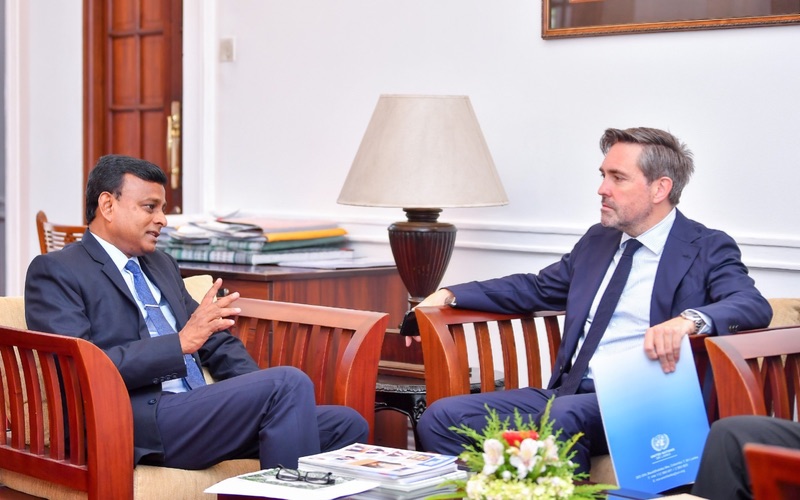
A meeting between UN Resident Coordinator Marc-André Franche and Chief of Staff to the President Prabath Chandrakeerthi was held on Monday (07) morning at the Presidential Secretariat.
Particular attention was given to the Government’s programme to resettle people who lost their homes due to Cyclone Ditwah.
The Government’s programme to address potential disasters that may arise in the future amid El Nino conditions was also discussed. The Chief of Staff to the President briefed the UN Resident Coordinator on the Government’s preparedness and plans to address such challenges.
Mr Franche stated that the United Nations was prepared to provide the necessary assistance to the Government to support the successful implementation of these programmes.
Partnerships and Development Finance Specialist at the United Nations Azam Bakeer Markar and UN Sri Lanka Humanitarian and Resilience Officer Wagisha Perera also participated in the discussion.
[President’s Media Division]
[ Cricbuzz]
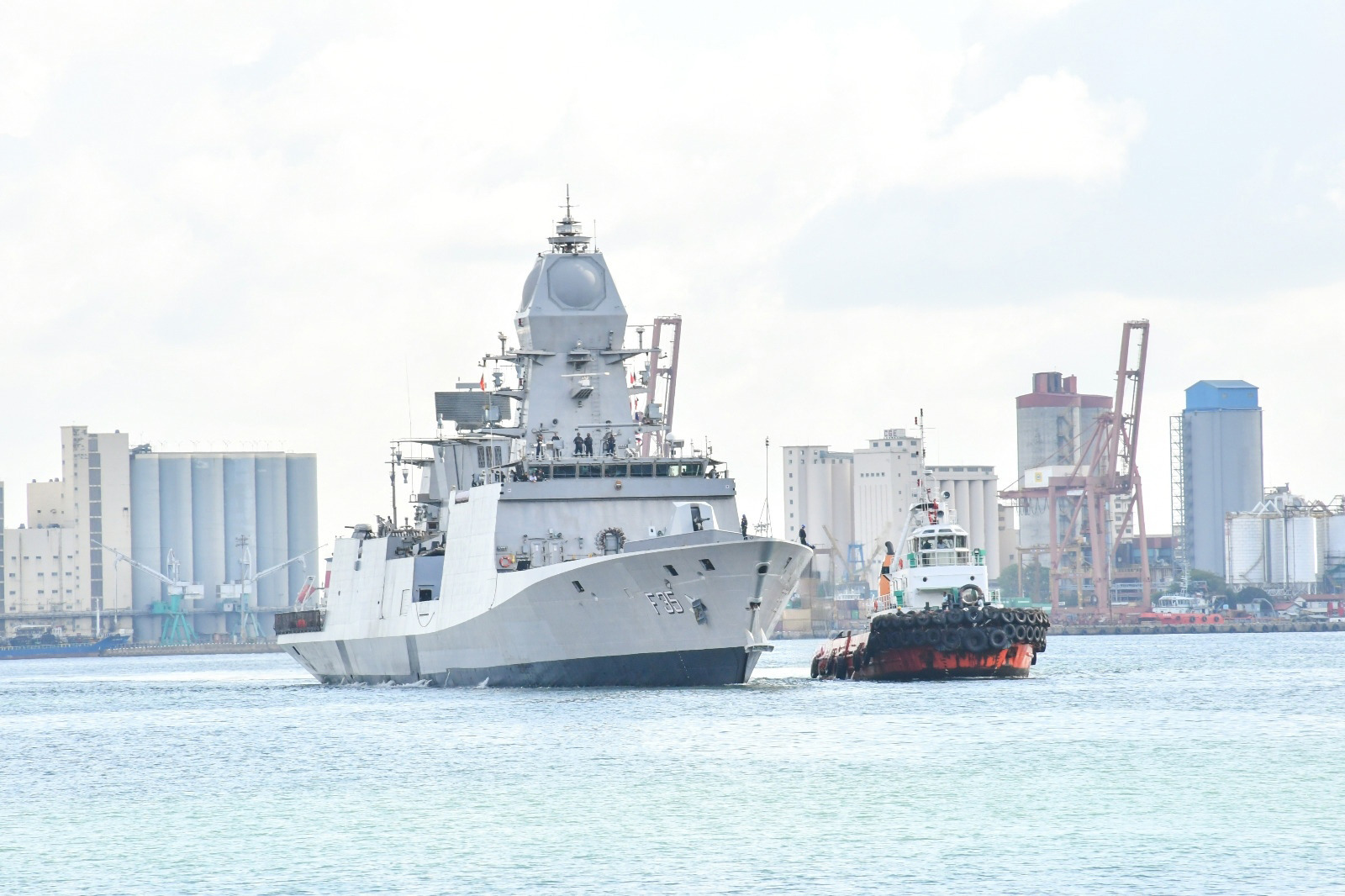
The Indian Naval Ship (INS) Udaygiri arrived at the Port of Colombo on an official visit today, 8 September 2026, where it was received by the Sri Lanka Navy in accordance with time-
honoured naval traditions.
INS Udaygiri is a 149.02m long Frigate, Commanded by Captain Vikas Sood. Meanwhile, the Commanding Officer of the visiting ship is scheduled to call on Commander Western Naval
Area, Rear Admiral Harsha De Silva at the Western Naval Command Headquarters.
Captain Sood served as the Defence Adviser at the Indian High Commission in Sri Lanka from July 2020 to October 2023.
During their stay in the island, the crew of INS Udaygiri will participate in several goodwill events organized by the Sri Lanka Navy to enhance camaraderie between the two forces.
The visiting personnel are also scheduled to visit prominent tourist and cultural locations across the island.
Additionally, Sri Lanka Navy personnel are expected to visit the ship for capability observation and knowledge sharing, and will conduct onboard training during its stay.

UN Delegation Meets Chief of Staff to the President

Afghanistan to host Zimbabwe, Bangladesh in ODI tri-series

Sandhu’s 6 for 7 seals Pakistan’s semi-final spot

INS Udaygiri makes port call in Colombo

Showers in the Uva, Central and Eastern provinces and in Polonnaruwa district

22A: Exclusion of 8 petitions questioned, action filed against SC Registrar, others

‘Dates have the highest sugar content to fight Coronavirus’

Sunday Island 27 December – Headlines

#SundayIsland 17th December – Headlines

Sunday Island – 28th March

Sunday Island Headlines – 21 March

Sunday Island – 21st February – Headlines
-

 News6 days ago
Denied of promotion to SC despite vacancies, justice Gurusinghe retires
-
 Latest News6 days ago
Grade 5 scholarship exam results released
-

 News6 days ago
22A: SC urged to suspend hearing, appoint full bench
-

 Midweek Review7 days ago
The local and global dynamics of Sri Lanka’s 22nd Amendment
-

 News4 days ago
Namal remanded until Sept. 18 over Airbus deal investigation
-

 Latest News3 days ago
Tharanga creates history with Diamond League crown in Brussels
-
 News6 days ago
Govt. seeks NATO assistance
-

 News7 days ago
40 professional organisations and TU oppose proposed 22A