
Editorial
Insult added to injury


Friday 3rd November, 2023
The latest VAT hike has come as a double whammy for the public, who are reeling from extremely high taxes and tariffs, not to mention the soaring cost of living. The SLPP politicians seem to be deriving some perverse pleasure from the predicament of the people, who rose against them and took them down a notch or two, last year.
SLPP MP Namal Rajapaksa has sought to shift the blame for the unprecedented increases in taxes tariffs, fuel prices, etc., to the public; tax cuts and state interventions to keep the petroleum prices low during the Gotabaya Rajapaksa government had come in for severe criticism in some quarters, and now they have been increased, he has said. He seems to think the people have got their comeuppance.
Let the SLPP politicians be told that there have been exponential increases in the prices of all goods and services not because the people were critical of the politically-motivated tax cuts and fuel price reductions during the Gotabaya presidency. The public is in the current predicament because the Rajapaksas and their cronies mismanaged the economy and bankrupted the country.
Unless the Gotabaya Rajapaksa administration had slashed taxes for political reasons, causing a sharp drop in state revenue, and then resorted to excessive money printing, which led to an increase in inflation and the devaluation of the rupee against all major foreign currencies, the economy could have been prevented from going into a tailspin. Gotabaya’s disastrous experiment with organic farming, and the resultant decrease in the national agricultural output also aggravated the situation.
Neither Namal nor any other member of the wealthy political families has been affected by the current economic crisis. Politicians may trade various allegations against one another liberally at the drop of a hat, but never do they demand to know how come the children of the political leaders with humble origins are living the life of Riley without any discernible sources of income. Even the children of some Marxist leaders who claim to be dependent on others for survival are studying in the capitalist West!
Most politicians, save a few, were out at the elbow when they took to politics, years ago. During elections, they themselves advertise their modest beginnings to endear themselves to the ordinary voters while claiming to have amassed no ill-gotten wealth, but they and their children are living in clover while the educated youth are either struggling to find jobs or paying unconscionably high taxes.
Doctors and university teachers are on the warpath, demanding that the government bring taxes down to affordable levels. Professionals employed in the private sector, too, have to part with sizeable chunks of their hard-earned salaries as taxes. Naturally, the flight of human capital is on the rise, and the youth are rebelling against the system.
The political leaders and their children, living high on the hog, had better stop trying to dupe the public, especially the youth, and provoking them in the process. Public resentment is welling up, and the possibility of it finding expression in another popular uprising cannot be ruled out. The least that the likes of Namal could do to prevent such an eventuality is to exercise control over their restless tongues.









Wednesday 4th February, 2026
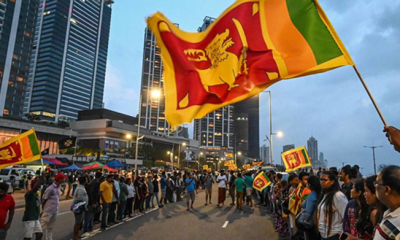
Another Independence Day has dawned. Elaborate arrangements have been made to celebrate it on a grand scale. The national flag will flutter at full mast majestically to the roll of drums and the blare of trumpets. A colourful parade and a fly-past will be among the day’s many attractions. A ceremony with such pomp and circumstance is an occasion for reflection.
Sri Lanka is celebrating the 78th year of Independence while emerging from its worst-ever economic crisis. There is a long way to go before it achieves full economic recovery. Much is being spoken about the need for economic reforms, and their importance cannot be overstated. But the question is whether they alone will help usher in national progress.
Since 1948, Sri Lanka has seen various political and economic reform movements. Its economy and political system have undergone radical changes during the past several decades. and reforms have yielded mixed results, with progress in some areas and setbacks in others. The current economic crisis and the ongoing recovery efforts have necessitated a national strategy to reform the economy. Experiments with political, constitutional and electoral reforms are far from over.
Successive governments have experimented with economic and political reforms. On the political front, the executive presidential system has survived several half-hearted attempts to abolish it and reintroduce the Westminster system. Politically-motivated amendments have made the Constitution look like a badly edited periodical, according to cynics. The electoral system has become an unholy mess. Provincial Council elections have fallen between two electoral systems, so to speak; at present, they cannot be held under either the Proportional Representation system or the Mixed Proportional system.
Meanwhile, the blame for the sorry state of affairs on all fronts has been laid solely at the feet of politicians. But it should be apportioned to the people, for it is they who elect governments. They vote in such a way that one wonders whether they are capable of making rational decisions and choices despite the country’s high literacy rate. True, politicians deserve the flak they receive for corruption, other malpractices and, above all, the country’s failure to achieve development, but it takes two to tango.
The state service has earned notoriety for inefficiency, incompetence, and delays. Decades of politicisation alone cannot be blamed for this situation. Sri Lankans’ attitude to work leaves much to be desired. The country is yet to develop a strong national work ethic, which is a prerequisite for enhancing national productivity and achieving development. Trade unions perennially make demands but rarely turn the searchlight inwards, much less concentrate on their duties and responsibilities.
The public apparently does not care much about civic duties and responsibilities. Tax compliance is extremely low, and indiscipline is widespread. Roads are characterised by utter chaos, and accidents, mostly caused by reckless driving, claim about seven or eight lives a day. Complaints of sexual harassment of women in buses and trains abound.
The focus of the government, the Opposition, the media, religious leaders and others is currently on educational reforms, which have apparently taken precedence over economic reforms. There are media reports about discussions on constitutional and electoral reforms as well. But there has been no serious discussion on the much-needed social reforms.
Social reforms are organised efforts aimed at not only promoting justice, equality and inclusion across political, economic, cultural and social spheres in a country but also helping bring about attitudinal changes and positive mindsets essential for a nation to adapt to changing times, face challenges, achieve its development goals and progress. It is time serious thought was given to social reforms.
Tuesday 3rd February, 2026
There has been no let-up in pro-government propagandists’ social media attacks on Attorney General (AG) Parinda Ranasinghe. AG’s Department Legal Officers’ Association has raised concerns over unfounded and baseless personal attacks on AG Ranasinghe and some other officers of his department. A resolution unanimously adopted by the association at a special general meeting on 29 Jan., 2026, states that the attacks appear to be part of a coordinated effort to pressure the AG and his staff, potentially undermining the department’s independence. It has warned that the systematic abuse of social media to create a false sense of public dissatisfaction, and that unchecked intimidation could cause lasting harm to the rule of law, justice system, and public trust in democratic governance. One cannot but agree with them that the ongoing vilification campaign against the AG and some of his subordinates is part of a sinister campaign that must be unreservedly condemned.
The JVP-NPP government has been acting in a manner that blurs the line between the party and the state. It is apparently working according to a plan to enable the JVP to arrogate to itself the powers of vital state institutions and perpetuate its rule. However, it is not alone in having striven to do so. The late President J. R. Jayewardene did everything in his power to place his party and himself above the state, and President Mahinda Rajapaksa made a similar effort to ensure the perpetuation of his party’s rule. Thankfully, both leaders failed in that endeavour.
The legal officers of the AG’s Department have reaffirmed their full confidence in AG Ranasinghe, underscoring that the AG is accountable to the law and appropriate legal channels exist for addressing anyone’s grievances. The AG’s Department, they have said in their resolution, will continue to act strictly in accordance with the law and admissible evidence, resisting pressure from public rhetoric or media-driven narratives. They have expressed their gratitude to the Bar Association of Sri Lanka, legal professionals, and members of the public who voiced support for AG Ranasinghe, noting his integrity and the department’s commitment to its workload despite resource shortages.
Now that the legal officers of the AG’s Department have vowed to ‘continue to act strictly in accordance with the law and admissible evidence’, how do they propose to prevent governments from using their institution to protect politicians.
One may recall that in August 2025, the Mount Lavinia Magistrate hearing a case against Minister Wasantha Samarasinghe, Deputy Minister of Labour Mahinda Jayasinghe and Mayor of Kaduwela Ranjan Jayalal, asked the Colombo Fraud Investigation Bureau why it had submitted the investigation report to the AG before recording statements from the suspects. The police could not provide an answer––for obvious reasons. How could they tell the court that they had done so at the behest of the powers that be? President’s Counsel Maitree Gunaratne, representing the aggrieved party, said the court order to arrest the suspects had been ignored, and that the police had sought instructions of the AG to mislead the judiciary. Subsequently, the Magistrate received a transfer. When the case was taken up again in September 2025, the court noted that the case file had already been referred to the Attorney General for advice!
Thus, while using the AG’s Department to delay the judicial process and prevent the arrest of ruling party politicians, the NPP-JVP government wants it to go all out to have Opposition politicians arrested even before investigations against them get underway in earnest. The aforesaid forgery case is scheduled to be taken up in a few weeks, and it will be interesting to see what the AG’s advice to the Fraud Bureau is.
Everyone who cherishes democracy and the rule of law must stand firmly with the beleaguered AG and his department and help stop the country’s drift towards autocracy.

Monday 2nd February, 2026
Ranil Wickremesinghe, following his fortuitous elevation to the presidency in 2022, famously likened the unnervingly daunting task of saving a nosediving economy to Grusha crossing a collapsing rope bridge across an abyss, carrying a baby, in The Caucasian Chalk Circle. Thankfully, he completed that perilous journey, and handed over the baby to his successor President Anura Kumara Dissanayake. One can only hope that the baby will be safe.
As if the task of looking after one baby were not enough, President Dissanayake and Prime Minister Dr. Harini Amarasuriya have embarked on a journey across a different rope bridge, carrying another baby—educational reforms. There was absolutely no need for them to do so in a hurry. The critics of the government’s desperate efforts to impose its educational reforms on other key stakeholders, especially teachers, as a fait accompli, have pointed out that the JVP-led NPP is trying to implement what one of its predecessors crafted. Claiming that the government is seeking credit for Wickremesinghe’s educational reforms, a trade unionist has said President Dissanayake is strutting around, in Ranil’s trousers. The problem is not who is wearing whose trousers; it is that they are shoddily tailored and being worn the wrong way, back to front and inside out with waistband at the wrong level.
The ongoing controversy over educational reforms has taken a dramatic turn, with former Director General of the National Institute of Education (NIE) Prof. Gunapala Nanayakkara implying that some NIE bigwigs took the incumbent government for a ride. On Friday, speaking at a seminar, organised by the United Republic Front, on the educational reforms, Prof. Nanayakkara said the educational reforms the NPP government was trying to implement were based on the so-called Sedera proposals, and they had failed for want of proper leadership. Neither the Education Ministry nor the National Education Commission nor the NIE had provided proper leadership for the educational reforms, he said, revealing something that must have made the bigwigs of the incumbent government and its apologists see red.
Prof. Nanayakkara disclosed that in 2022 and 2023, the NIE had crafted hundreds of modules at a cost of Rs. 223 million. Those who were responsible for the module project faced an audit query; they were required to furnish proof of official approval for the project, Prof. Nanayakkara said, claiming that the NIE officials had craftily smuggled those modules into the current educational reform package in a bid to obtain cover approval. They had also prepared a PowerPoint presentation of the educational reforms, but it had left everyone none the wiser, he noted. This may be the reason why the government has not been able to meet the Opposition’s demand that a comprehensive document on its educational reforms be made public.
Interestingly, if Prof. Nanayakkara’s aforesaid claim is true, then one can argue that the modules at issue were prepared during the previous government, and therefore the Opposition, which bashes the incumbent government for a link to an adult website in the Grade 6 English module, is barking up the wrong tree. Or, is it possible that some modules were prepared during the current dispensation? The Education Ministry should reveal when the modules were prepared.
Prof. Nanayakkara’s claims are of crucial importance; they have shed light on another dimension of the educational reforms controversy. A separate probe should be conducted into the preparation of so many modules at a staggering cost, allegedly without formal authorisation. The government, however, cannot claim the assertion that some NIE bureaucrats took it for a ride in extenuation of its culpability, for it plunged head first into implementing the ill-conceived education reforms and has defended them ardently both in and outside Parliament. Now that it has given its imprimatur to the education reforms and started implementing them, there is no way it can disown the reform baby, as it were, much less absolve itself of the blame for them by throwing some NIE officials under the bus.

BCB receives investigation report on sexual misconduct allegation

Trump confirms talks with Iran as US military shoots down Iranian drone

Shower will occur in the Northern, North-central, Eastern and Uva provinces and in Nuwara-Eliya and Matale districts

House erupts over suspension of Deputy Secretary General

78th Independence Day celebrations at Bogambara Stadium

Colombo-Kandy railway line to be fully restored this year – Minister Bimal

‘Dates have the highest sugar content to fight Coronavirus’

Sunday Island 27 December – Headlines

#SundayIsland 17th December – Headlines

Sunday Island – 28th March

Sunday Island Headlines – 21 March

Sunday Island – 21st February – Headlines
-
 Opinion5 days ago
Sri Lanka, the Stars,and statesmen
-
 Business6 days ago
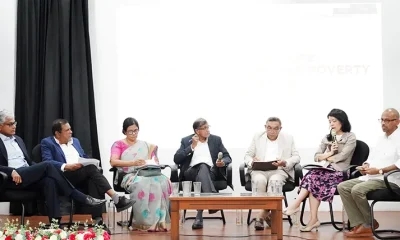
Climate risks, poverty, and recovery financing in focus at CEPA policy panel
-

 Business4 days ago
Hayleys Mobility ushering in a new era of premium sustainable mobility
-

 Business1 day ago
SLIM-Kantar People’s Awards 2026 to recognise Sri Lanka’s most trusted brands and personalities
-
 Business4 days ago
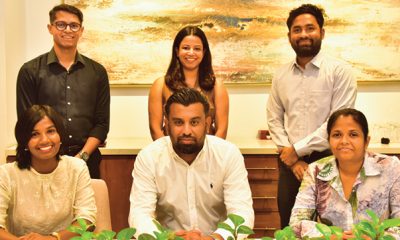
Advice Lab unveils new 13,000+ sqft office, marking major expansion in financial services BPO to Australia
-
 Business4 days ago
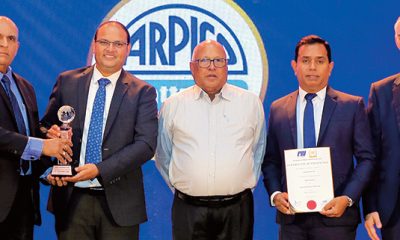
Arpico NextGen Mattress gains recognition for innovation
-
 Business3 days ago
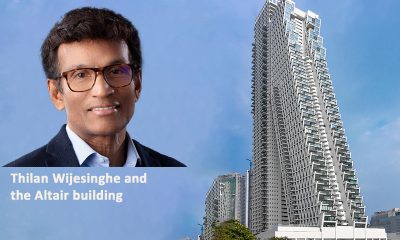
Altair issues over 100+ title deeds post ownership change
-

 Business3 days ago
Sri Lanka opens first country pavilion at London exhibition