
Foreign News
Inspired by Xi, Chinese women chasing their cosmic dreams

When the countdown began, the world seemed to fall silent, and everyone held their breath. The only sound that echoed through the air was Zhang Runhong’s steady voice: “Ten, nine, eight… three, two, one, ignition!”
Zhang is an “01” commander at the Xichang Satellite Launch Center in southwest China’s Sichuan Province. She is responsible for coordinating all stages and systems involved in a rocket launch mission and ultimately issuing the final countdown and ignition commands.
She is the first Chinese woman to hold this crucial position.
“The ’01’ commander is so cool!” These words resonated with Zhang when she first participated in a satellite launch as a junior staff member in 2006. From that moment on, she set her sights on becoming the one at the console — and she never hesitated to share her ambition to become an “01” commander.
Even in front of Chinese President Xi Jinping, she voiced her dream with confidence. In early 2018, when Xi, also general secretary of the Communist Party of China Central Committee and chairman of the Central Military Commission, visited the military base where Zhang worked and met with staff members, she said to him: “Chairman, I have a goal — to become our country’s first female ’01’ commander.”
Xi responded with delight. “The ’01’ commander shoulders a vital scientific mission. If you succeed, it would be a milestone for women in our country,” he said. “I hope you will achieve your goal soon.”
But the path was far from easy. A commander must master technical knowledge across more than 20 subsystems and nearly 200 positions at the launch site, along with extensive hands-on experience. Every command must be issued with absolute precision in timing, as any delay could miss the narrow launch window.
Determined to prove herself, Zhang cut her hair short, carried 100-pound fueling hoses just like her male colleagues, climbed the nearly 90-meter-tall launch gantry, and inspected swing arms suspended high above the ground.
She systematically studied different systems and positions in her spare time, covering her room’s walls with pneumatic and electrical diagrams. Night after night, she stayed up late poring over technical manuals, protocols and contingency plans.
After participating in 80 launch missions, her opportunity finally came with the 81st. At midnight of Nov. 1, 2018, at the age of 36, Zhang made history as China’s first female “01” commander, directing the launch of a Long March-3B rocket that successfully carried the 41st BeiDou navigation satellite into orbit.
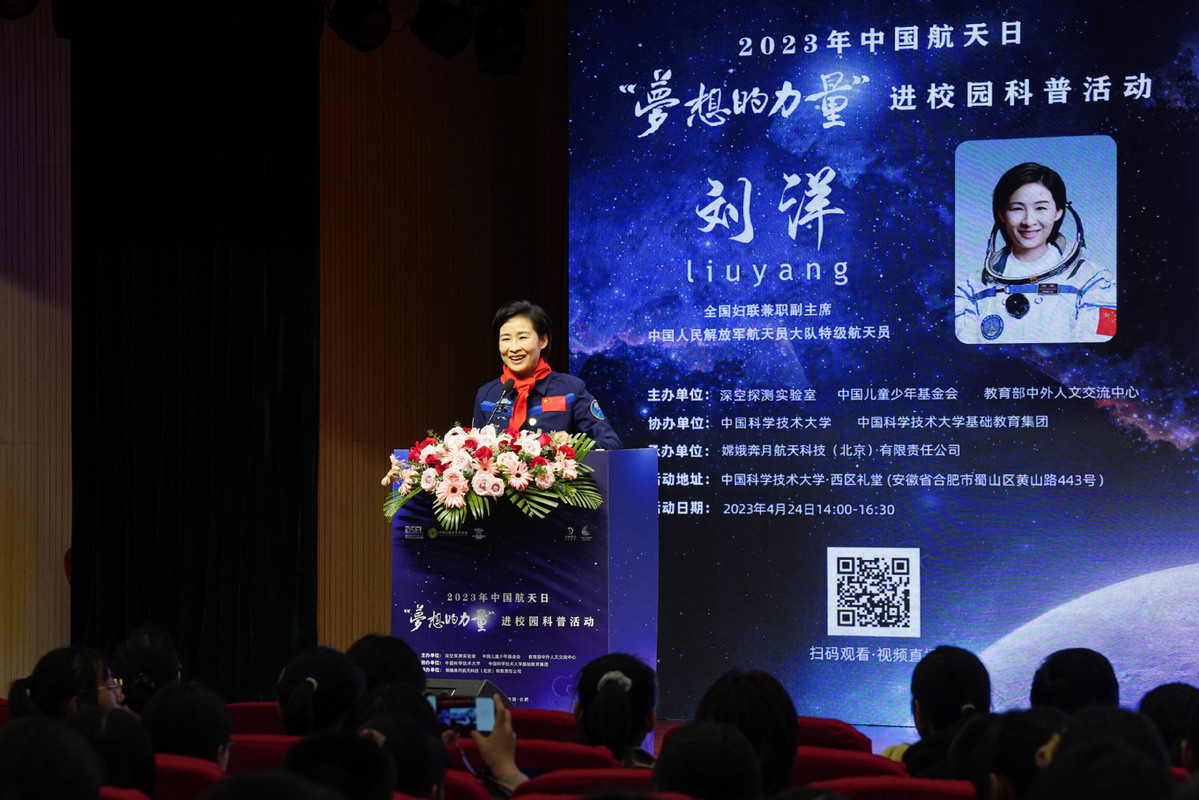
Zhang is not alone in her exploration of the universe. In June 2012, Liu Yang became China’s first female taikonaut, completing a 13-day space mission.
“You are truly a heroine, an example of how women hold up half the sky,” Xi praised Liu when he met her months later on the sidelines of the annual session of the national legislature, calling her an “ambassador” representing Chinese women.
In June 2022, Liu embarked on her second space mission aboard Shenzhou-14.
“As the Chinese people pursue a happy life, every Chinese woman has the opportunity to excel in life and make their dream come true,” President Xi said when he addressed the Global Leaders’ Meeting on Gender Equality and Women’s Empowerment at the UN headquarters in New York a decade ago.
Under Xi’s leadership, the cause of women in China has flourished since 2012, achieving historic breakthroughs and comprehensive progress. Efforts to promote gender equality and women’s all-around development have been incorporated into key policy documents and national development plans.
In particular, China now has about 2.8 million women working in the research and development sector, more than double the number in 2012. Women account for 45.8 percent of the country’s science and technology workforce.
Wang Yaping, China’s second female taikonaut, noted that Chinese women are contributing significantly to sci-tech innovation, thanks to institutional and policy support from the country.
China will do more to enhance gender equality as its basic state policy, give play to women’s important role as “half the sky” and support them in realizing their own dreams and aspirations in both career and life, Xi said in the 2015 UN speech.
Xi has repeatedly cited the Chinese proverb “women hold up half the sky” to emphasize women’s equal participation in society and encourage them to break barriers in both their careers and mindsets.
Inspired by this call, women across China — Zhang, Liu, Wang and countless others, are taking bold strides toward their dreams, reaching for the stars.
[Xinhua]

Foreign News
Naqvi casts uncertainty on Pakistan’s participation in T20 World Cup after Bangladesh ouster
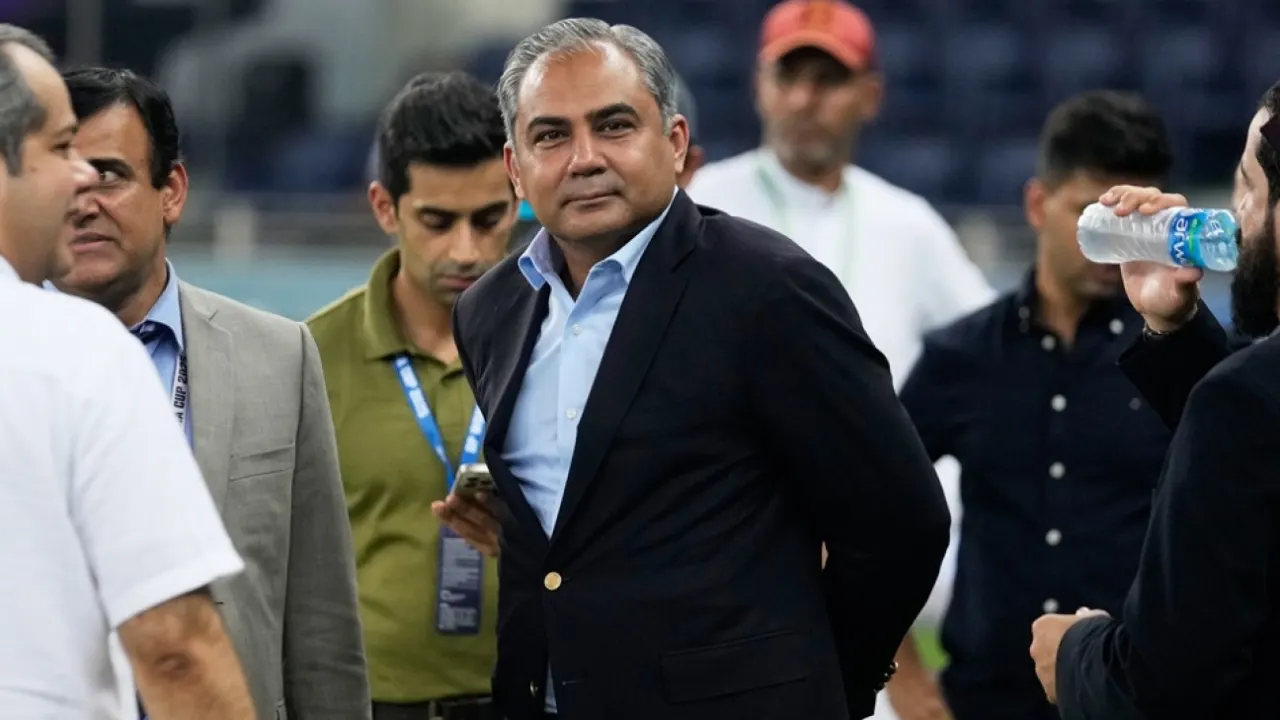
Pakistan’s participation at the upcoming Men’s T20 World Cup 2026 has been thrown into uncertainty after the PCB chairman Mohsin Naqvi said a final decision would be made after talking to Pakistan’s government. Speaking shortly after the ICC officially removed Bangladesh from the T20 World Cup owing to their refusal to play in India, Naqvi accused the ICC of “double standards” favouring India, and termed what happened to Bangladesh “an injustice”.
“Our stance on World Cup participation will be what the government of Pakistan instructs me,” he said. “The Prime Minister is not in Pakistan right now. When he returns, I’ll be able to give you our final decision. It’s the government’s decision. We obey them, not the ICC.”
Over the past week or so, Pakistan has firmly thrown its support behind Bangladesh in their dispute with the ICC demanding a venue outside of India to play their T20 World Cup matches. At an ICC meeting last week, the PCB was understood to be the only board to back the BCB in their stance. The tournament is jointly hosted by India and Sri Lanka, but Bangladesh’s games were all scheduled in India. Bangladesh, however, have said it is no longer safe for them to play in India after the BCCI, on January 3, instructed Kilkata Knight Riders to release Mustafizur Rahman rom their IPL 2026 squad.
Though no reason was stated for that directive, it came amid deteriorating relations between India and Bangladesh. On January 4, the BCB wrote to the ICC after consultation with the government that the Bangladesh team would not travel to India for its T20 World Cup matches due to security concerns, a stance it stuck to through several subsequent discussions with the ICC.
The ICC has repeatedly refused Bangladesh’s request, and earlier this week gave them an ultimatum demanding them to accept the schedule as it was, or face being removed from the tournament. On Saturday, with Bangladesh sticking to their position, the ICC formally announced Bangladesh would not be part of the T20 World Cup, and would be replaced instead by Scotland.
Naqvi was critical of the decision, calling it an injustice to Bangladesh. “I think Bangladesh has been hard done by,” he said. “You can’t have double standards. You can’t say for one country [India] they can do whatever they want and for the others to have to do the complete opposite. That’s why we’ve taken this stand, and made clear Bangladesh have had an injustice done to them. They should play in the World Cup, they are a major stakeholder in cricket.”
While there have been local, unverified reports that the PCB would refuse to participate in the World Cup in solidarity with Bangladesh should they be removed, the PCB has declined to confirm to ESPNcricinfo when approached. Naqvi’s comments to the media on Saturday was the first time anyone at the PCB has directly addressed the issue, where he repeatedly said the decision was no longer in the hands of the PCB.
“If the government of Pakistan says we mustn’t play, then maybe the ICC will bring in a 22nd team (after Scotland). It’s up to the government.”
No specific reason was given by Naqvi other than to support Bangladesh, as to why government permission would now be required for an event that starts in two weeks. Last year, both BCCI and PCB, with the approval of ICC, signed up to a hybrid model agreement by which both countries would play each other on neutral territory for all global events in the 2024-27 rights cycle.
Pakistan play all their games in Sri Lanka for this event (which already was a co-hosted event) and are scheduled to play the opening game of the tournament, against Netherlands on February 7. They are scheduled to play India on February 15 in Colombo in their group stage clash.
[Cricinfo]
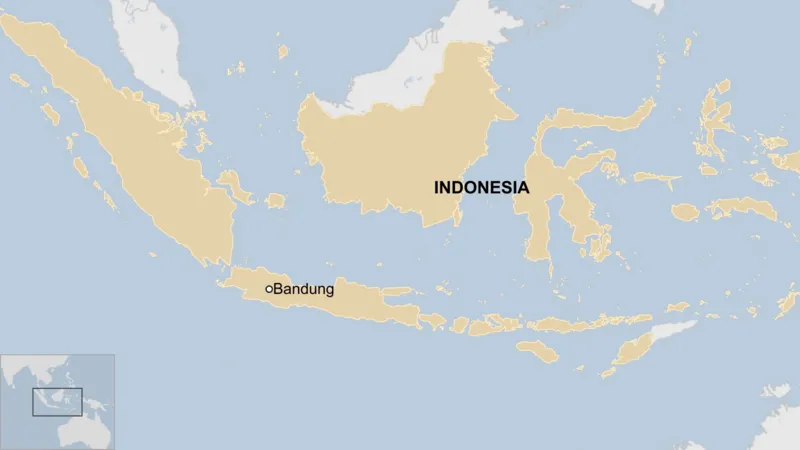
At least seven people have died and more than 80 others are missing after a landslide hit Indonesia’s West Java province, officials said.
The landslide occurred in the West Bandung region, south-east of the capital Jakarta, following days of intense rainfall.
More than thirty homes were destroyed after “landslide material buried residential areas, causing fatalities and affecting local residents”, Indonesia’s disaster mitigation agency said in a statement.
Flooding, landslide and extreme weather alerts have also been issued for the broader region.
The landslide hit the village of Pasirlangu around 02:30AM on Saturday [24] (19:30 GMT).
Two dozen people were evacuated safely from the affected region, according to Abdul Muhari, communication chief of the National Search Agency.
Images shared by local news outlets showed homes buried under mud and debris.
[BBC]

Former Canadian Olympic snowboarder and alleged drug kingpin Ryan Wedding has been arrested in Mexico and will be extradited to the US after years on the run, FBI Director Kash Patel has said.
Wedding, who had been on the FBI’s Ten Most Wanted Fugitives list, is accused of running a transnational drug trafficking operation that moved tonnes of cocaine across international borders.
Wedding, 44, was also wanted on murder charges. US officials had said they believed Wedding was living in Mexico under the Sinaloa drug cartel’s protection.
The head of Canada’s federal police force, which assisted in the investigation, spoke alongside Patel on Friday to praise the law enforcement operation.
Wedding is accused of running a vast drug trafficking operation responsible for importing some 60 metric tonnes of cocaine a year.
The organisation operated across North America, as well as several countries in Latin America and the Caribbean, and was also the largest supplier of cocaine to Canada, bringing in an estimated $1bn a year.
Before he was arrested, Wedding was accused of killing a federal witness in a case against him. Officials say he has also ordered the murders of several others.
Wedding is now facing a slew of felony charges, including witness tampering and intimidation, murder, money laundering and drug trafficking.
The FBI had previously placed a $15m (£11m) reward for information leading to his arrest. Patel declined to comment on whether anyone would be claiming the reward money.
US officials have released limited details regarding how Wedding was captured, except to say that his arrest took place on Thursday night in Mexico City.
Mexico’s top security official, Omar García Harfuch, said in a post on X that Patel had visited Mexico City on Thursday, and departed with two fugitives on the FBI’s 10 Most Wanted list.
He did not name the men arrested, but said one was a “Canadian citizen who voluntarily surrendered” at the US embassy in Mexico.
The Associated Press, citing an unnamed Mexican Security Cabinet member, reported that Wedding is the Canadian who turned himself in at the US embassy.
In his remarks at a news conference, Patel described Wedding as a “modern-day Pablo Escobar”, referring to the Colombian cartel leader. US officials have also compared him to Mexican drug dealer Joaquín “El Chapo” Guzmán.
“When you go after a guy like Ryan Wedding, it takes a united front,” Patel said, thanking Canadian and Mexican authorities for their help in the investigation.
Patel also thanked the FBI Hostage Rescue Team, who participated in taking Wedding into custody.
In an interview with Vanity Fair, Patel praised the team, which had also been involved in the capture of Venezuelan President Nicholas Maduro weeks earlier.
“This was a complex, high-stakes operation with zero margin for error,” Patel told the magazine.
“I was on the ground with our team in Mexico and witnessed extraordinary teamwork, precision, and trust between our agents and partners in Mexico.”
Wedding’s aliases include “El Jefe,” “Giant,” “Public Enemy,” “James Conrad King,” and “Jesse King”, the FBI said. He has reportedly had plastic surgery to change his appearance while on the run.
Officials allege that he launched his criminal enterprise following his release from a US federal prison in 2011, where he was serving a sentence for cocaine distribution.
Authorities allege he has ordered dozens of murders across the globe, including in the US, Canada and Latin America.

It is unclear to whom the medals belong. Wedding competed for Canada in the 2002 Olympic Games in Salt Lake City, but did not win any medals. He came in 24th place in the men’s giant parallel slalom ski event.
In November, the FBI seized his rare 2002 Mercedes CLK-GTR, which had been valued at $13m.
Patel also spoke about the recent arrest of another man in Mexico who had been on the FBI’s most wanted list.
American man Alejandro Castillo was wanted for the murder of his ex-girlfriend. According to the FBI, he has been in hiding in Mexico for nearly 10 years, and will now be extradited back to North Carolina for trial.
(BBC)

Royal Navy of Oman Ship ‘AL SEEB’ leaves island

Gold tops $5,000 for first time ever, adding to historic rally

Showers will occur in the Northern, North-central, Eastern, North-western, Western, Sabaragamuwa and Uva provinces and in Matale, Matara, Galle and Nuwara-Eliya districts

U – 19 World Cup: Andrew, McKenzie deliver West Indies comfortable win

U – 19 World Cup: Bowlers, Hogan help Australia breeze past South Africa

Abhishek blasts 14-ball fifty to hand India unassailable 3-0 lead against New Zealand

‘Dates have the highest sugar content to fight Coronavirus’

Sunday Island 27 December – Headlines

#SundayIsland 17th December – Headlines

Sunday Island – 28th March

Sunday Island Headlines – 21 March

Sunday Island – 21st February – Headlines
-
 Business21 hours ago
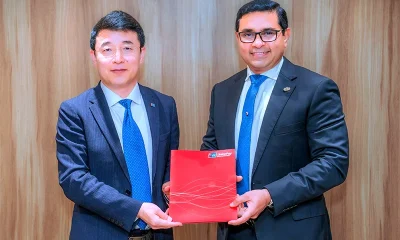
ComBank, UnionPay launch SplendorPlus Card for travelers to China
-
 Business2 days ago
ComBank advances ForwardTogether agenda with event on sustainable business transformation
-
 Opinion7 days ago
American rulers’ hatred for Venezuela and its leaders
-

 Opinion5 days ago
Remembering Cedric, who helped neutralise LTTE terrorism
-
 Business5 days ago
CORALL Conservation Trust Fund – a historic first for SL
-

 Opinion4 days ago
A puppet show?
-
 Opinion2 days ago
Conference “Microfinance and Credit Regulatory Authority Bill: Neither Here, Nor There”
-

 Opinion7 days ago
History of St. Sebastian’s National Shrine Kandana