
News
Initial restricted discussions between SL and members of ad hoc group of bondholders concluded

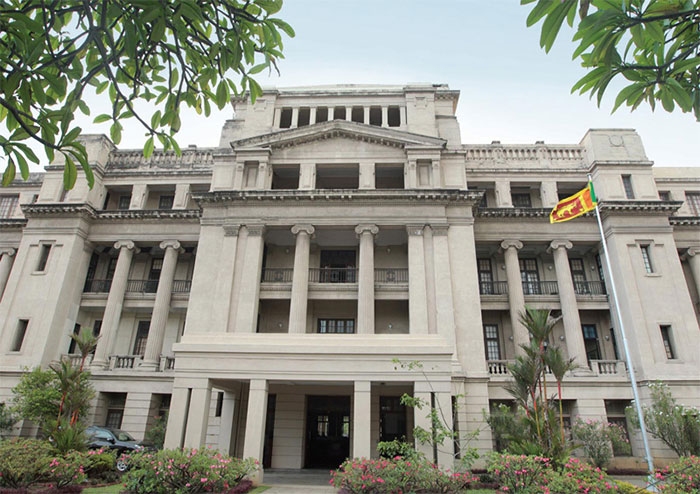
The government of Sri Lanka has announced that it held restricted discussions over the past three weeks (the “Restricted Period”) with nine members of the steering committee who agreed to take part in the restricted discussions (the “Steering Committee”) of the Ad Hoc Group of Bondholders (the “Group”, and together with Sri Lanka, the “Parties”) of its International Sovereign Bonds (“ISBs”). Sri Lanka was joined by its legal and financial advisors, Clifford Chance and Lazard, respectively, and the restricted members of the Steering Committee were joined by the Group’s legal and financial advisors, White & Case and Rothschild & Co, respectively. The Steering Committee as a whole comprises ten of the largest members of the Group, with the Group controlling approximately 50% of the aggregate outstanding amount of ISBs. Despite constructive discussions, the Parties did not come to an agreement on restructuring terms. The Steering Committee did not agree to an extension of the restricted discussions upon expiration of the current Restricted Period.
During the Restricted Period, Sri Lanka, the Steering Committee and its advisors met during a two-day working session in London on 27 and 28 March 2024 (the “Meetings”) to discuss the Group’s latest debt treatment proposal, sent to Sri Lanka’s advisors on 11 March 2024 (the “Group’s March Proposal”). Prior to the meetings, on 25 March 2024, Sri Lanka had also sent, through its advisors, its own debt treatment proposal to the Group’s advisors (“Sri Lanka’s Proposal”) which was rejected by the Steering Committee. Both the Group’s March Proposal and Sri Lanka’s Proposal are attached in the Annex hereto.
Prior to the Meetings, staff at the International Monetary Fund (the “IMF”) provided their preliminary and informal assessment of both Parties’ proposals’ consistency with Sri Lanka’s IMF-supported program (the “IMF-Supported Program”) parameters and debt sustainability objectives. The IMF staff assessment included an analysis of the sum total of restructuring proposals (for official and private creditors) based on agreed deals with certain creditors and the Sri Lankan authorities’ restructuring scenario for other creditors. On that basis, the IMF staff concluded that the debt treatment scenario included in Sri Lanka’s Proposal was consistent with the IMF-Supported Program debt sustainability targets, while the scenario included in the Group’s March Proposal was not. IMF staff noted that these were preliminary assessments and the IMF staff would provide final assessments only after the Parties had reached a tentative agreement in principle.
During the Meetings, it was agreed that the primary basis for the discussions would be the Group’s March Proposal. Sri Lanka articulated the main reservations it had in relation to the Group’s proposed Macro-Linked Bond (“MLB”) – while members of the Steering Committee articulated the reasons why they believed the terms of their MLB proposal were fair and reasonable.
The Steering Committee also suggested the possible introduction of a Governance Linked Bond, which Sri Lanka said it would consider subject to being provided with more details of this proposal. Such details on the possible structure of a Governance Linked Bond were subsequently shared with Sri Lanka’s advisors on 3 April 2024.
The discussions narrowed down to four features of the MLB:
1. The baseline parameters of the instruments proposed by the Group were calibrated by reference to the Group’s “alternative baseline”, rather than Sri Lanka’s IMF-Supported Program baseline.
2. The balance of risks between Sri Lanka and holders of its ISBs – While the Group had already updated its original MLB structure to include a scenario where Sri Lanka might underperform IMF-Supported Program GDP projections, Sri Lanka invited the Group to consider a structure that would provide greater protections to Sri Lanka in such a scenario.
3. The test for triggering upward/downward adjustments in the MLB.
4. The share of additional value in an upward adjustment scenario – Sri Lanka invited the Group to consider lower bondholder allocation in the scenario in which the country outperformed IMF-Supported Program GDP projections and satisfied the upward adjustment test in the MLB.
Over the course of the Meetings, the Parties came closer to a meeting of minds on Items 1 and 2, with the Steering Committee willing to agree to Sri Lanka’s request for amendments in relation to these two key structural aspects, subject to Sri Lanka (i) agreeing to a consent fee (with the Steering Committee proposing a fee of 1.8% of the outstanding principal amount of the ISBs) with a view to offsetting the Group’s perceived reduction of the market value of their proposal as result of such amendments and (ii) agreeing with the Group’s proposal on Items 3 and 4.
Following the Meetings, on 3 April 2024, the Group shared an updated version of its debt treatment proposal (the “Group’s April Proposal”), which addressed Items 1 and 2 in the manner described above. The Group’s April Proposal is also attached in the Annex hereto. The Group’s April Proposal is yet to be assessed by the IMF staff.
While recognising the efforts made by the Group in accommodating some of its key observations, Sri Lanka reiterated its reservations regarding the structure of the MLB trigger test and the cashflows associated with the baseline and upside scenarios (Items 3 and 4).
Sri Lanka would like to thank the Steering Committee, the Group and their advisors for their constructive stance, and looks forward to continued engagement in good faith as soon as feasible, with a view to reaching common ground in the next few weeks, ahead of the second review of the IMF-Supported Program being considered by the IMF Executive Board



Former first lady Shiranthi Rajapaksa, wife of former President Mahinda Rajapaksa was produced before the Hulftsdorp court, after being arrested by officers of the Commission to Investigate Allegations of Bribery or Corruption (CIABOC) and produce
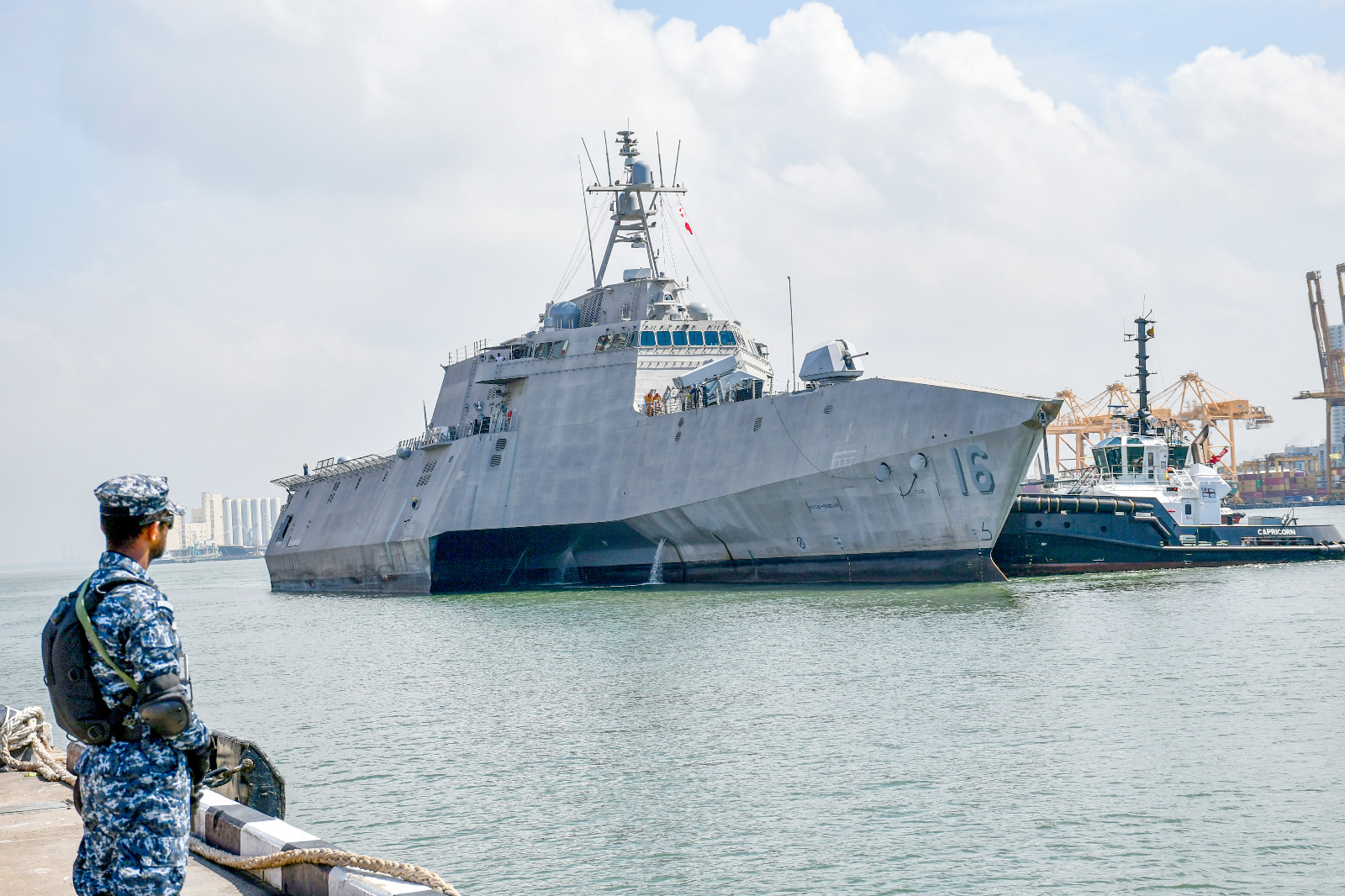
The U.S. Navy ship USS Tulsa (LCS 16) arrived at the Port of Colombo this morning, 7 October 2026 for replenishment purposes.
The visiting ship was welcomed by the Sri Lanka Navy in accordance with naval traditions.
The 127.7-metre-long platform is a Littoral Combat Ship commanded by Commander BM Wanier. Commissioned on 16 February 2019, USS Tulsa has since been in service with the US Navy.
The ship previously made a port call in Sri Lanka on 27 August 2025.
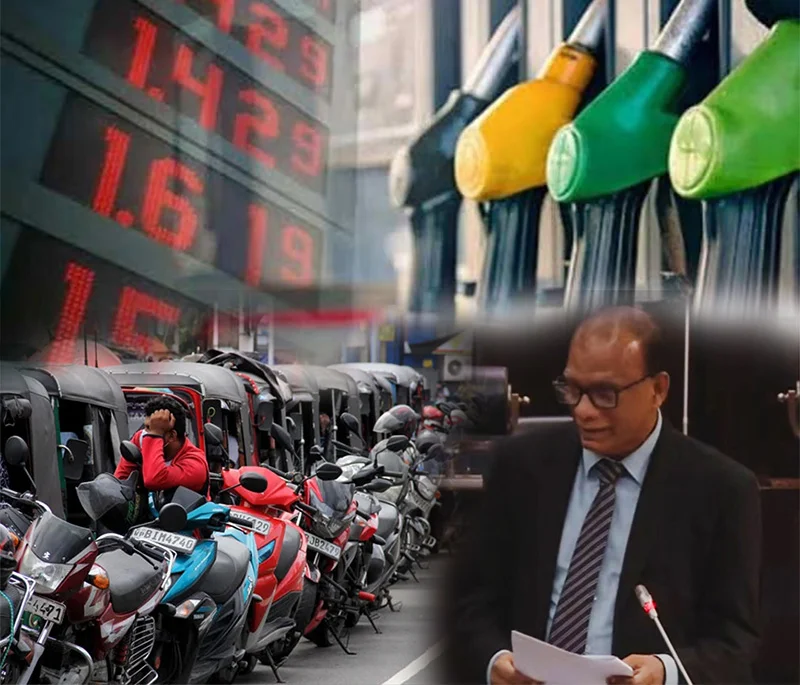
Govt. tells fuel distributors to maintain stocks to ensure uninterrupted supplies
by Saman Indrajith and Norman Palihawadane
The government had instructed private fuel distributors to maintain minimum stocks and ensure uninterrupted supplies to the market, Energy Minister Anura Karunathilaka told Parliament yesterday (06).
Karunathilaka said the Ministry of Energy Secretary had notified the relevant companies of the requirement, following a reduction in supplies by some private distributors, amid higher international fuel prices.
The Minister said private companies had informed the government that they were facing losses because international prices had risen while fuel was being sold, locally, at prevailing prices. As a result, some companies had reduced the volumes released to the market.
The reduced supplies had increased the burden on the Ceylon Petroleum Corporation (CPC), whose share of the diesel market had risen from about 54% to 82%, the Minister said.
“The CPC currently holds an 82% share of the market,” he said, adding that it had increased its supplies, compared with February, to compensate for the reduction by private distributors.
Karunathilaka said the government could not, under the existing agreements with private companies, specify the quantities they should supply to individual filling stations. However, it could require them to maintain minimum stocks in the country.
The Minister said the Energy Ministry had already instructed companies that had failed to maintain the required stocks to take steps to prevent supply disruptions.
The Minister attributed the queues reported at some filling stations to reduced supplies from private distributors, as well as normal variations in fuel distribution. He also said demand for CPC fuel had increased because private companies generally did not provide fuel to dealers on credit, while the CPC offered a three-day credit facility.
“We expect that, as the Ceylon Petroleum Corporation takes on this additional burden, the problem will ease to some extent by Wednesday or Thursday,” Karunathilaka said.
He said instructions had also been issued to increase supplies to CPC filling stations. A special discussion on the issue is scheduled for today (07), with officials of the Energy Ministry and CPC expected to participate,
along with President Anura Kumara Dissanayake.
Meanwhile, Petroleum Dealers’ Association officials have called for an early solution to the supply issue. Association Chairman D.V. Shantha Silva said queues had been reported at many filling stations, mainly those operated by private distributors.
He said the situation was not due to an overall shortage of fuel, but was linked to reduced orders by Lanka IOC, Sinopec and R.M. Parks amid concerns over losses incurred on fuel sales.
The Ceylon Petroleum Private Tanker Owners Association has urged motorists to refrain from panic buying, saying there was no nationwide disruption to fuel supplies.
The government earlier increased fuel prices and introduced a per-litre diesel subsidy following concerns raised by distributors over rising international prices.

Former first lady Shiranthi Rajapaksa arrested by CIABOC

U.S. Navy ship USS Tulsa arrives in Colombo for replenishment visit

Smriti Mandhana appointed India captain across formats

Ronaldo apologizes for Portugal walkout; says Jesus broke promise

Showers in the Western, Sabaragamuwa, Central, Uva, North-western and Southern provinces and in Anuradhapura and Mannar districts

Fuel crunch looms

‘Dates have the highest sugar content to fight Coronavirus’

Sunday Island 27 December – Headlines

#SundayIsland 17th December – Headlines

Sunday Island – 28th March

Sunday Island Headlines – 21 March

Sunday Island – 21st February – Headlines
-

 News7 days ago
US-assisted ‘Ice’ detection: NPC to examine IGP’s move to transfer drug-busting team
-

 Editorial6 days ago
Colombo Port drug bust: The plot thickens
-

 Editorial7 days ago
Drug busting, transfers and trust deficit
-

 Features4 days ago
The first woman in the foreign service or Ceylon Overseas Service it was then called
-
 News7 days ago
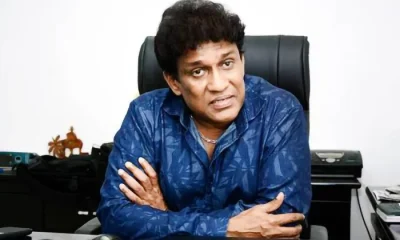
Sri Lankan facing death penalty in Saudi Arabia: Mano G appeals to Crown Prince
-

 Editorial5 days ago
Fuelling discontent and protest
-

 News3 days ago
Geneva takes up Sallay’s case and govt. ignores opportunity to answer accusations
-

 Latest News5 days ago
Tharindu Rathnayake, bowlers secure Asian Games Bronze for Sri Lanka