
News
Indo-Lanka talks: Trinco issue, foreign reserve crisis on agenda

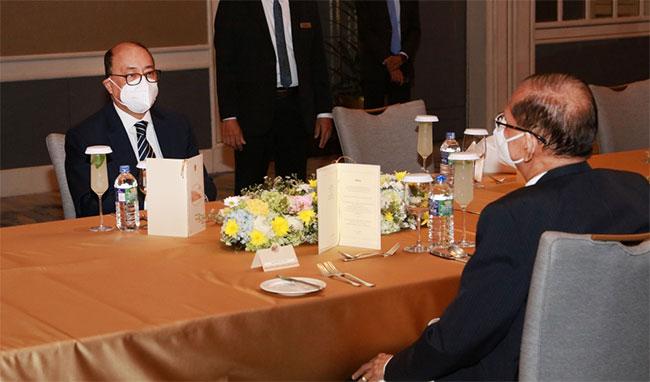
Why was the Minister tasked by Prez to settle the ‘oil tank farm’ problem not involved …
By Shamindra Ferdinando
Foreign Minister Prof. G.L. Peiris says that although the further development of Trincomalee oil tank farm was on the agenda during the recently concluded three-day visit undertaken by Indian Foreign Secretary Harsh Vardhan Shringla, it has not been decided how to proceed with the project.
Declaring that India hadn’t pressured the government over the issue at hand, Prof. Peiris said a consensus could be reached on the Trincomalee project in a way beneficial to both countries.
The Minister said so when The Island sought his response to the growing criticism of the incumbent government’s handling of the controversial Trincomalee oil tanks project and recent heated exchanges in Parliament between Energy Minister Attorney-at-Law Udaya Gammanpila and members of the main Opposition Samagi Jana Balavegaya (SJB).
Shringla, who last served as India’s top diplomat in Washington, recently succeeded Vijay Keshav Gokhale.
Referring to a series of meetings, Shringla had with President Gotabaya Rajapaksa, Premier Mahinda Rajapaksa, Finance Minister Basil Rajapaksa and himself during the Oct 2-5 period, Prof. Peiris emphasised that the Trincomalee oil tank farm was subject to two agreements finalised in the 80’s during President JRJ’s tenure and in 2003.
Shringla also met Foreign Secretary Admiral (retd). Prof. Jayanath Colombage and Defence Secretary General (retd.) G.D.H. Kamal Gunaratne.
Prof. Peiris had served the UNP Cabinet at the time the then Premier Ranil Wickremesinghe’s administration entered into the second agreement. Prof. Peiris stressed that the further development of the project would be discussed taking into consideration two existing agreements.
Eldos Mathew Punnoose, Head – Press, Information and Development Cooperation at the Indian High Commission in Colombo, dealt with a range of issues taken up during the high profile visit. Referring to Shringla’s visits to Kandy, Trincomalee and Jaffna, signifying their cultural, economic and historical importance, respectively, the Indian HC spokesperson said: “In Kandy, the visiting Foreign Secretary offered prayers at Sri Dalada Maligawa. In Trincomalee, the Foreign Secretary visited the Oil Tank Farms, a symbol of the potential and strong energy partnership between the two countries, where LIOC briefed him about the development undertaken by it at the Lower Tank Farms and its advantages to Sri Lanka’s economy. During his visit to Jaffna, the Foreign Secretary inspected the Jaffna Cultural Centre and interacted with the Governor of the Northern Province, several Members of Parliament, academicians and business leaders.”
Prof. Peiris said that various interested parties deceived the public as regards newly appointed Indian Foreign Secretary’s visit to Colombo. The FM strongly denied accusations that the visit was meant to finalise a deal on the Trincomalee oil tank farm. “Instead, the entire gamut of issues was taken up,” Prof. Peiris said, asserting the possible amendments to existing agreements.
Reference was made to such amendments when Prof. Peiris addressed the media at the SLPP office, Battaramulla early this week.
Prof. Peiris, who succeeded SLPP’s first Foreign Minister Dinesh Gunawardena, on Aug 16, declared that the recently concluded talks dealt with a range of issues, including strengthening of Sri Lanka’s foreign reserves. Prof. Peiris said that the matter received special attention with various alternatives discussed in line with overall objectives.
He was of the opinion that India was ready to make major investments here, with the primary focus on producing medicine and the computer industry.
The Indian HC spokesperson said that at the meeting with the Finance Minister both sides agreed to proceed with joint projects, including those under the loan and grant assistance extended by India.
“The Foreign Secretary held wide-ranging and comprehensive discussions with the Minister of Foreign Affairs and his counterpart on all areas of mutual interest, including on the need to face the challenges posed by the Covid-19 pandemic together to mitigate its economic impact,” the spokesperson said.
Prof. Peiris said that Indian Ocean security, counter-terrorism and training for Sri Lankan armed forces, too, had been on the agenda. Interestingly, a statement issued by the President’s Media Division (PMD), following President Gotabaya Rajapaksa’s meet with Shringla referred to two issues that hadn’t been touched by the Foreign Ministry here and the Indian High Commission, in its press release issued on Oct 5.
The PMD quoted President Rajapaksa as having told Shringla that Sri Lanka wouldn’t allow the use of its territory in any way that threatened India’s security. The assurance has been given having explained the country’s relationship with China.
The PMD also quoted President Rajapaksa as having said that the responsibility for resolving the Trincomalee oil tank farm issue had been given to the Minister in charge of the subject.
However, Shringla hadn’t met Minister Gammanpila during his three day stay here. The Energy Minister on a number of occasions said that efforts were meant to address the issue at hand in a way not inimical to Sri Lanka.
A trade union grouping has declared what it has termed a sellout, an accusation strongly countered by Foreign Minister Prof. Peiris. Those who had been opposed to foreign investment in vital sectors continue to hinder the much required progress on the economic front, Prof. Peiris said, urging the critics to be mindful of politically motivated campaigns.
Prof. Peiris, who had been present when Shringla met Premier Mahinda Rajapaksa on Oct 4 at Temple Trees, said that the relations with India would be further strengthened with the signing of an inter-governmental MoU for the USD 15 mn ‘Buddhism grant.’
Prof. Peiris said that India also agreed to support the maintenance of the India built Jaffna Cultural Centre. Foreign Minister Peiris described the inaugural flight on Oct 20 from Sri Lanka to Kushinagar which would further bolster cultural links between the two countries a significant. Shringla also held political talks with the Tamil National Alliance (TNA) delegation led by Member of Parliament and Leader of TNA R. Sampanthan; Tamil Progressive Alliance (TPA) delegation led by Member of Parliament Mano Ganesan and Ceylon Workers Congress (CWC) delegation led by State Minister for Estate Housing and Community Infrastructure Jeevan Thondaman.
The Indian spokesperson quoted Foreign Secretary as having reiterated India’s longstanding support for the reconciliation that addresses aspirations of the Tamil community for equality, justice, peace and dignity within a united Sri Lanka and in accordance with the 13th Amendment.
Prof. Peiris also appreciated the inauguration/handing over of four development cooperation projects implemented by India. The projects had been implemented at the Vadamaradchi Central Ladies College and Saraswathi Central College in Pussellwa, Kandy, handing over of 1235 houses built under Indian Housing Project Phase III and handing over of houses built under the Model Village Housing Project in Vavuniya District.

By Shamindra Ferdinando
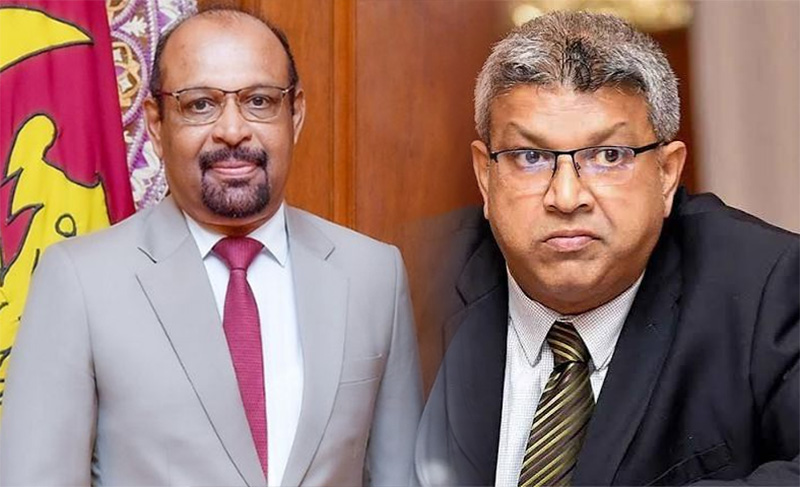
Justice and National Integration Minister Harshana Nanayakkara said yesterday that the Cabinet was studying a set of recommendations made by a Committee, led by retired Supreme Court judge Sithambarampillai Thurairaja, PC, regarding a systematic, fair and transparent mechanism for granting presidential pardons to convicted prison inmates.
Attorney-at-law Nanayakkara said so when The Island raised the issue in the wake of the ongoing controversy over prison authorities compelling General Secretary of the Bodu Bala Sena (BBS) Ven. Galadodaaththe Gnanasara to wear civilian attire when produced in court.
The Minister declined to elaborate but said the Cabinet of Ministers was yet to reach consensus on the recommendations. The NPP government, on 25 June 2025, appointed Thurairaja’s committee to study the provisions of the Article 34(1) of the Constitution, along with other statutory acts and judicial rulings.
Justice Thurairaja handed over his report to Justice and National Integration Ministry Secretary Ayesha Jinasena, PC.
The other members of the Committee were Deputy Minister of Mass Media Dr. Kaushalya Ariyarathne, Additional Secretary to the Ministry of Justice and National Integration Piyumanthi Peiris, Additional Solicitor General Nerin Pulle, Senior Deputy Inspector General of Police (SDIG) Legal Asanga Karawita, Chairperson of the Bureau of Rehabilitation Professor Wasantha Subasinghe, Specialist Dr. Chiththahari Abayanayake, former Acting Commissioner of Prisons Nishan Dhanasinghe, Acting Commissioner General of Prisons Prasad Hemantha Kumara, Senior Assistant Secretary (Legal) to the Ministry of Justice and National Integration Roshani Hettige, and Senior Assistant Secretary to the Ministry of Justice and National Integration Chandima Welikala.
The government called for guidelines regarding presidential pardon over a year before the Supreme Court rescinded, in September this year, the presidential pardon granted by Maithripala Sirisena to Ven Gnanasara serving a six-term of rigorous imprisonment for contempt of court. That pardon was granted in May 2019, the third controversial release by Sirisena during his presidency.
President Sirisena pardoned an ex-LTTE terrorist and also the Royal Park murderer Don Shramantha Jude Anthony Jayamaha, in 2016 and 2019, respectively. The Supreme Court, in June 2024, annulled the pardon granted to Jayamaha and ordered his arrest though he still remains free having fled overseas no sooner he was granted the pardon.
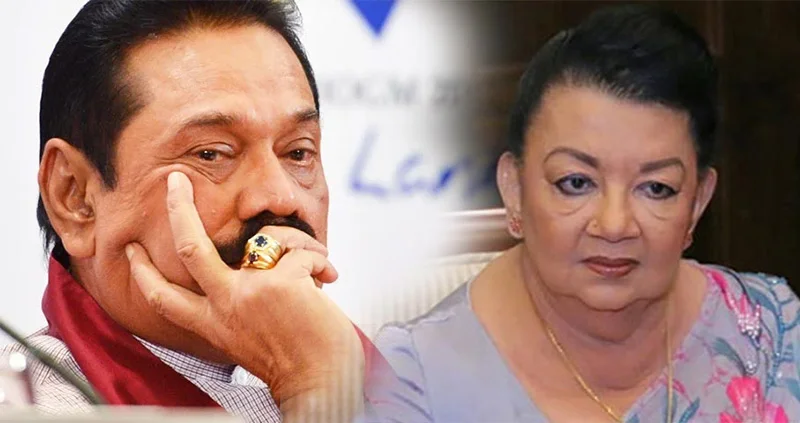
Former President Mahinda Rajapaksa was admitted to a private hospital yesterday morning (12).
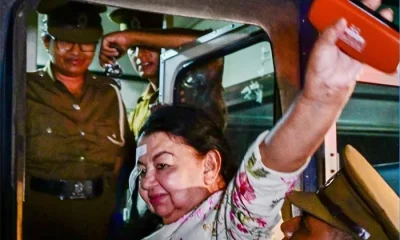
Meanwhile, former First Lady Shiranthi Rajapaksa, who is currently in remand custody at Welikada Prison, has been admitted to the Cardiology Unit of the National Hospital in Colombo.

“JVP did not bomb Dalada Maligawa; it seized weapons from security personnel stationed there”
By S. K. Samaranayake
Most Venerable Tibbotuwawe Sri Sumangala Mahanayake Thera of the Malwathu Chapter yesterday said the President has assured that a final decision on new prison regulations would be taken withn two weeks and until then whenever bhikkhus were produced before court, they must be allowed to wear robes. The monk said the Mahanayaka Thera has written to the Commissioner General of Prisons about their decision.
The Mahanayake Thera said so when SJB MPs, led by General Secretary Ranjith Madduma Bandara, paid a courtesy call on him.
During the meeting, the Mahanayake Thera expressed the following views:
“Currently, a massive campaign is underway on social media to insult and disrespect the Maha Sangha. Some individuals carrying out these attacks are not linked to any political party. We expected the government to intervene and completely put an end to this, which is entirely possible. Laws should be introduced to control this. The insults directed at monks must be stopped immediately. We cannot accept these acts, no matter who commits them. We even saw fabricated images circulated on social media depicting the President in robes and monks in lay attire. Such disrespect is completely unacceptable and must be curbed.
“We also know that some individuals currently representing Parliament have past ties to the Sasana. All we ask is for the mudslinging and insults targeting monks to be halted immediately. Certain elements continue to spread falsehoods about the government. Before this administration came to power, they claimed temples were finished, Buddhism was over, and the Perahera wouldn’t take place. But didn’t they just conduct the Kandy Perahera brilliantly?
“Various people are even complaining about the Casket (Karanduwa) of the Dalada Maligawa. In particular, we saw former Diyawadana Nilame Niranjan Wijeratne criticising the matter. Much of what he said was false. During his tenure, the previous casket was coated in lacquer, which nobody talks about. Replacing the old brass casket with a golden casket is a very commendable step what is wrong with that? Just as items from royal eras are retired and modern equivalents are put to use, the older casket has been given due respect and securely housed. There is no issue there. Some people claim the JVP bombed the Maligawa too. Nothing of the sort happened; it was LTTE terrorists who bombed the temple. The JVP merely seized weapons from the security personnel stationed there.”
Meanwhile, speaking during the visit, SJB General Secretary Ranjith Madduma Bandara and other parliamentarians charged that the current administration is laying the groundwork to turn the country into a secular state.
“It is impossible to introduce new laws for monks within two weeks; it takes much longer,” Bandara noted. “The President has the authority to issue an interim directive that any monk presented to court must appear in robes, but he chooses not to do so because he does not want to. Everyone who speaks out against this is targeted and smeared on social media, driven by a network of 2,000 to 3,000 social media operators tied to the government who attack and insult me. Even during the case of Father Mathew Peiris, who committed murder, his clerical cassock was not stripped. Inside the prison religious leaders were respected.
“The public base of this current government is rapidly eroding as a result of their actions, which is why they are attempting to strike at Buddhism to secure minority votes. Any government is constitutionally bound to protect the Buddha Sasana. We will not allow them to destroy Buddhism and turn this country secular; we will defend Buddhism to the very last, and all Sri Lankans must step forward for this cause.”
Following their meeting at the Malwathu Chapter, the delegation proceeded to the Asgiri Mahavihara, where they met the Mahanayake Thera of the Asgiri Chapter, Most Venerable Warakagoda Sri Gnanaratana Mahanayake Thera, and Anunayake Venerable Narampanaye Sri Ananda Thera to brief them on the current situation.
The delegation included SJB Parliamentarians Ranjith Madduma Bandara, Kins Nelson, Sujeewa Senasinghe, A.C. Alahapperuma, Rohana Bandara, Suranga Ratnayake, Rohini Kaviratne, Chandrani Kirielle, alongside prominent figures such as Lakshman Kiriella, Wasantha Yapa Bandara, Ranjith Aluwihare, and Professor Upul Dissanayake.

Heavy showers (100-150) mm likely at some places in the Western, Sabaragamuwa, Central, Uva and Southern provinces showerss above 75 mm are likely in the other areas of the island.

Presidential pardons: Govt. studying Justice Thurairaja’s recommendations – Minister

Mahinda and Shiranthi hospitalised

Monks must be allowed to wear robes when produced in court: Mahanayake Theras

Jt. Opp. seeks presidential pardon for Ven. Gnanasara

Shiranthi’s anticipatory bail application rejected

‘Dates have the highest sugar content to fight Coronavirus’

Sunday Island 27 December – Headlines

#SundayIsland 17th December – Headlines

Sunday Island – 28th March

Sunday Island Headlines – 21 March

Sunday Island – 21st February – Headlines
-

 Features5 days ago
The Sri Lankan who made Scottish history
-

 Sports5 days ago
Nissanka absence opens door for Sri Lanka’s young guns
-

 News6 days ago
Gnansara Thera to be assigned to prison printing section: Officials
-

 News4 days ago
NDB fraud Rs 60mn more than reported
-

 News4 days ago
Removing monk’s robes matter for Sangha to decide: Mahanayake Theras
-

 Features5 days ago
Future of Sri Lanka’s state university system: Should it be shut down and reopened?
-
 News6 days ago
OIC of FCID summoned before Maligakanda Magistrate
-
 News5 days ago
Shiranthi R remanded until 13 Oct.