
News
Indo-Lanka FTA to be revived and upgraded – Prez

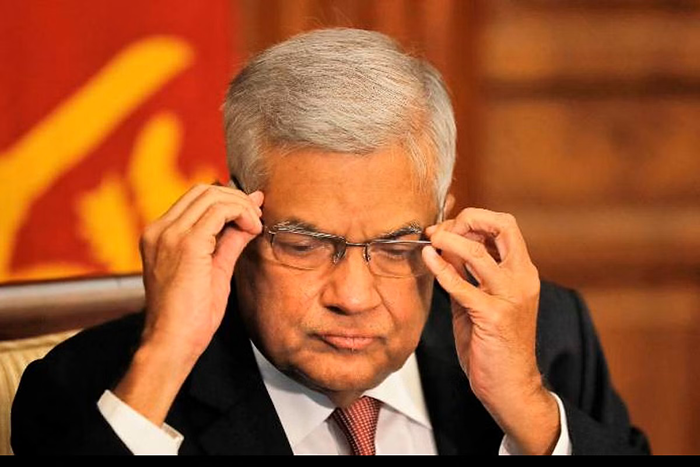
By Meera Sirinivasan The Hindu
Sri Lanka will revive its Free Trade Agreement with India and upgrade it to a “a comprehensive economic and technological partnership”, President Ranil Wickremesinghe has said, signalling Colombo’s willingness to revisit a stalled pact.Addressing the Sri Lanka-India Society, Wickremesinghe said his government would take steps for better trade integration with India.
“We will revive and upgrade the Free Trade Agreement into a comprehensive economic and technological partnership. We started that in 2018 and 2019,” he said referring to the Comprehensive Economic Partnership Agreement (CEPA) that was later known as the Economic and Technical Cooperation Agreement (ETCA). Both versions of the proposed agreement sparked stiff resistance within Sri Lanka, as critics feared it would impact Sri Lankans’ job prospects with more competition from Indians.
“We look forward to trade integration in many areas with the RCEP [the China-led Regional Cooperation Economic Partnership], with the EU, but the cornerstone of this is to achieve trade integration with India,” Wickremesinghe noted.
The current Indo-Sri Lanka Free Trade Agreement (ISFTA) came into effect in 2000 and several rounds of bilateral discussions later, Colombo and New Delhi are yet to reach an agreement on its upgraded version. Wickremesinghe, as Prime Minister between 2015 and 2019, attempted to sign an upgraded trade pact with India, but was unsuccessful.Mr. Wickremesinghe reiterated that his government is looking into India’s bilateral development cooperation projects in Sri Lanka and set up an international trade office for negotiations. The “slow” pace of the projects has remained a concern for New Delhi.
Speaking of areas with potential for bilateral cooperation, Wickremesinghe referred to the “long-term energy solution”, the power grid connection between India and Sri Lanka, offshore wind energy, the solar power plant at Sampur and the renewable energy projects on three islands of Jaffna Peninsula. “We have a tremendous scope of potential renewable energy, and India has stepped in first,” he said.
Citing the Trincomalee Oil Tank Farm project, being developed with Indian assistance, as having “big potential”, President Wickremesinghe said Sri Lanka would further develop itself as a logistics hub. “Together with India, Adani Group has already taken over part of the West terminal [at the Colombo Port,” he said, underscoring the scope for private investment both ways. (The Hindu)


The Ministry of Industries and Entrepreneurship Development has recommended the establishment of Sri Lankan Standards, i.e. the import testing methodology for imported tires used for passenger cars and pneumatic tires for three-wheelers with the aim of ensuring a fair competitive environment for local
manufactures and ensuring consumer safety and security.
Taking into the said recommendations, “Import and Export (control regulations N0.08 of the 2026)” has been enacted to amend the existing regulations by means of the Extraordinary Gazette Notification No. 2508/27 dated 2026-10-01, prescribing Sri Lanka standard 1212 for the import of passenger types (HS Code 4011.10.90) and Sri Lanka standard 1347 for the import of
pneumatic tires for three – wheeled vehicles (HS Code 4011.90.10).
Accordingly, the Cabinet of Ministers has approved the resolution furnished by the President in his capacity as the Minister of Finance, Planning, and Economic Development to submit the aforementioned regulations to Parliament for approval.
Approval of the Cabinet of Ministers was granted at their meeting held on 02.06.2025 to introduce a new act to promote and providing legal provisions for facilitating the Public Private Joint Enterprises within Sri Lanka as well as the establishment of the National Agency for Public Private Partnership Joint Enterprises.
Accordingly, the Legal Draftsman has formulated the relevant draft bill and the Attorney General has given his clearance to the said draft bill.
The Cabinet of Ministers approved the resolution furnished by the President in his capacity as the Minister of Finance, Planning and Economic Development to publish the said
draft bill in the government gazette notification and thereby submit it to the Parliament for its concurrence.
Regulation, development and control of indigenous medical sector in Sri Lanka comprised of Ayurvedha, Sidhdha, Unani, Local Therapies are carried out under the provisions of Ayurvedha Act No. 31 of 1961.
Although amendments were made to the act from time to time as per the requirements, the necessity of further amending the Ayurvedha Act has been identified to enable efficiently maintaining all activities of local medical field productively, further formalizing the regulation of the sector, taking actions to providing licenses applicable to export of local medicines, and achieving the progress and sustainable development goals in the local medical sector.
Based on the said factors, the Cabinet of Ministers granted approval to the resolution furnished by the Minister of Health and Mass Media to direct the Legal Draftsman to formulate a draft bill to amend the Ayurvedha Act No. 31 of 1961.

Import and Export (Control) Regulations No. 08 of 2026
Draft Bill of the Public Private Partnership Enterprises Act to be gazzetted
Amendment of the Ayurvedha Act No. 31 of 1961

Cabinet nod to amend the Sri Lanka Development Administration Institute Act No. 9 of 1982
Establishment of the National Higher Performance Centre
State patronage for the cremation ceremony of the late deputy prelate (Anu Nayaka Thero) of the Sri Laka Ramangya Maha Nikaya, Gatambe Rajopawanramadhipatha, Siri Chandawimala Wanshalankara, Chandrakeerthi Sri Amarawansha, Sadhdharmawageeshwara, Shasanashobhanna Most Venerable Keppetiyagoda Siriwimalabhidhana Thero

‘Dates have the highest sugar content to fight Coronavirus’

Sunday Island 27 December – Headlines

#SundayIsland 17th December – Headlines

Sunday Island – 28th March

Sunday Island Headlines – 21 March

Sunday Island – 21st February – Headlines
-

 Features3 days ago
Kotahena:A Small Enclave, An Extraordinary Legacy
-

 News7 days ago
Sri Lanka, India caught in US-Iran ship crisis
-
 News4 days ago
Asgiri Mahanayake calls for immediate release of Gnanasara Thera
-

 News3 days ago
Record 1,600 students take Russian Classical Ballet examination in Sri Lanka
-
 News6 days ago
AC President recuses himself from hearing prison attire case pertaining to Gnanasara Thera
-
 News5 days ago
Naval officer testifies Yoshitha received Rs. 5.15 mn in salaries during SLN service
-

 Latest News7 days ago
Heavy showers above 100 mm are likely at some places in the Western, Sabaragamuwa, Southern, Central, and North-western provinces and in Anuradhapura district.
-

 News3 days ago
Karannagoda pushed for £24,536 for Yoshitha’s UK training, Court told