
News
India’s third mission to the Moon to be launched in August 2023

BY S VENKAT NARAYAN
Our Special Correspondent
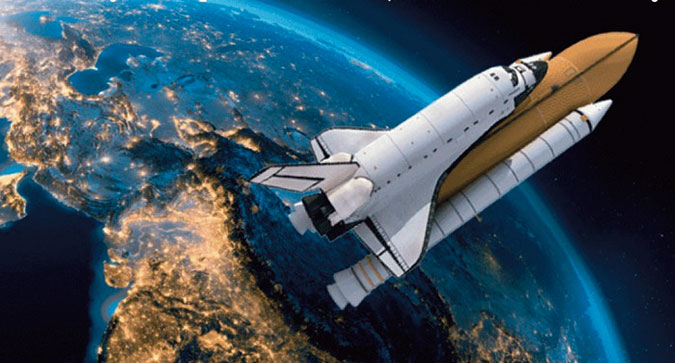
NEW DELHI, October 21: India’s third mission to the Moon Chandrayaan-3 is likely to be be launched in August 2023, Indian Space Research Organisation (ISRO) Chairman S. Somnath said here on Thursday.He explained that, while mission parameters will remain the same, there are several changes being made to the design. “The design and engineering are significantly different [compared to Chandrayaan-2] to make it more robust and avoid the problems from last time,” he said on the sidelines of a conference.
The Chandrayaan-3 mission is a follow-up of Chandrayaan-2 of July 2019, which aimed to land a rover on the lunar South Pole. It was sent aboard the country’s most powerful geosynchronous launch vehicle, the GSLV-Mk 3. However, lander Vikram, instead of a controlled landing, ended up crash-landing on September 7, 2019, and prevented rover Pragyaan from successfully travelling on the surface of the moon.Had the mission been successful, it would have been the first time a country landed its rover on the moon in its maiden attempt.
The legs that will hold the body of the craft on landing have been made more rugged, there are improved sensors and algorithms to identify sites where the lander can successfully descend safely, and better instrumentation that will provide more resilient back-up systems, said Dr. Somnath.On Sunday, October 23, ISRO is expected to launch 36 satellites aboard its heaviest rocket LVM3 — earlier known as the GSLV Mk3. These satellites belong to British start-up OneWeb and will launch from the spaceport in Andhra Pradesh’s Sriharikota.Telecom major Airtel has a significant stake in OneWeb. A successful mission will greatly improve ISRO’s prospects in the commercial space launch sector where it can use its heaviest rockets to launch heavy payloads.
“There is also a second set of satellites [of OneWeb] that will be launched in February next year,” he added.
Preparations for India’s maiden manned mission into space or Gaganyaan are progressing with an expected launch date of December 2024. “They are going on slow and steady. It requires several critical steps to be crossed. There will be two unmanned missions and four abort missions before we decide on sending the manned mission. Of course, all of them have to be fully successful,” Dr Somnath said.Abort missions refer to test flights to test whether the rocket can carry a module into space and return safely.


(AFP ) Millions of Sri Lankans enjoyed a government-ordered extra day off on Wednesday as the island nation battles an energy crisis triggered by the Middle East war.
Rail and bus stations were largely deserted as most state institutions, schools and universities shifted to a four-day working week.
“I am really enjoying the mid-week break because it is a fully paid holiday,” said housing ministry official Prarthana Perera, 40.
Her office, like many government departments in Battaramulla — the capital’s main administrative hub — was closed.
Banks operated on shorter hours, while many private firms introduced work-from-home arrangements, industry bodies said, urging members to help curb energy use.
Sri Lanka has already raised fuel prices by a third since the United States and Israel began bombing Iran, triggering retaliatory attacks that have disrupted global energy supplies.
About half of Sri Lanka’s electricity is generated by coal and diesel.
The cabinet has set a target of cutting electricity consumption by 25 percent, ordering street lamps switched off and asking civil servants to use table fans instead of power-hungry air conditioners.
Shipping executive Varuna Perera welcomed the day off but was uncertain of its impact.
“It will not be effective in the long term,” Perera said. “But the government will have a breather for a couple of weeks, to save some energy.”
Environmental lawyer Ravindranath Dabare was more sceptical, arguing the move would have limited impact as those needing government services would have to travel on other days.
“We can’t close hospitals… the doctors and health officials can’t work from home,” Dabare said.
The influential Chamber of Commerce said it had urged members to follow government guidelines or adopt remote work where possible, if
“business continuity can be effectively maintained”.
And Sri Lanka’s leading technology firm WSO2 made working from home mandatory for its 500 employees on Tuesdays and Thursdays.
“This is our way of contributing to the national cause,” WSO2 spokeswoman Zaithoon Bin-Ahamed told AFP.
Media Minister Nalinda Jayatissa said the government had yet to assess the impact of the energy-saving measures, but expected broad compliance.
Sri Lanka has been running coal and diesel power plants at full capacity to meet electricity demand.
President Anura Kumara Dissanayake urged electric vehicle owners not to charge their cars overnight, as they would add a surge to an already strained grid.
He asked motorists instead to plug in during the day, when excess solar power is available.
Officials said the country’s diesel stocks are sufficient to last until mid-May, while petrol could last a week longer.
The government is seeking oil supplies from Russia and hopes to tap Iran for crude oil, Jayatissa said.
Political commentator Kusal Perera said the crisis also presented scope to boost productivity across the state sector.
“They must use this opportunity to have a national dialogue on improving productivity,” he told AFP. “We have to address the inefficiency in the public sector.”
By Amal JAYASINGHE
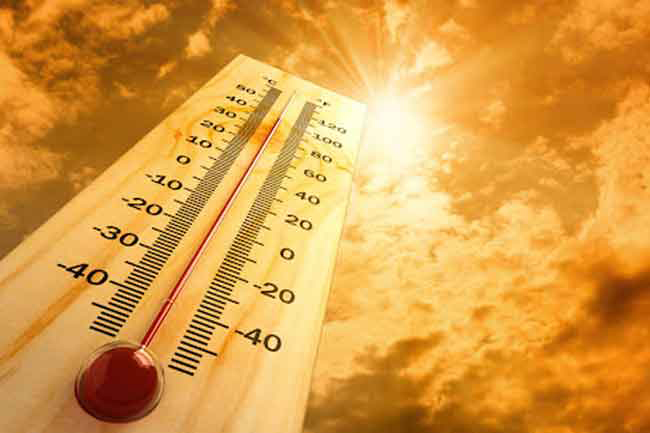
Sri Lanka is set to experience continued hot weather conditions until May, the Department of Meteorology has warned.
Additional Director General of Meteorology Ajith Wijemanna said the current heatwave is expected to ease only slightly once the southwest monsoon sets in toward the latter part of May.
Wijemanna explained that the island is currently in the first inter-monsoon period, characterised by low wind speeds and shifting wind directions, which contribute to rising temperatures. Reduced cloud cover and the sun’s direct position over the country are causing increased heating of land and sea, generating heat waves and warmer atmospheric conditions.
He cautioned that the hottest period of the day will be between 11:00 a.m. and 4:00 p.m., urging the public to limit outdoor activities during these hours.
Authorities also advised drinking plenty of water, wearing light-colored clothing, and avoiding prolonged exposure to direct sunlight, particularly for children and the elderly.The Meteorology Department further noted that rainfall may remain limited in the coming months, with drier conditions possible due to climate variability.
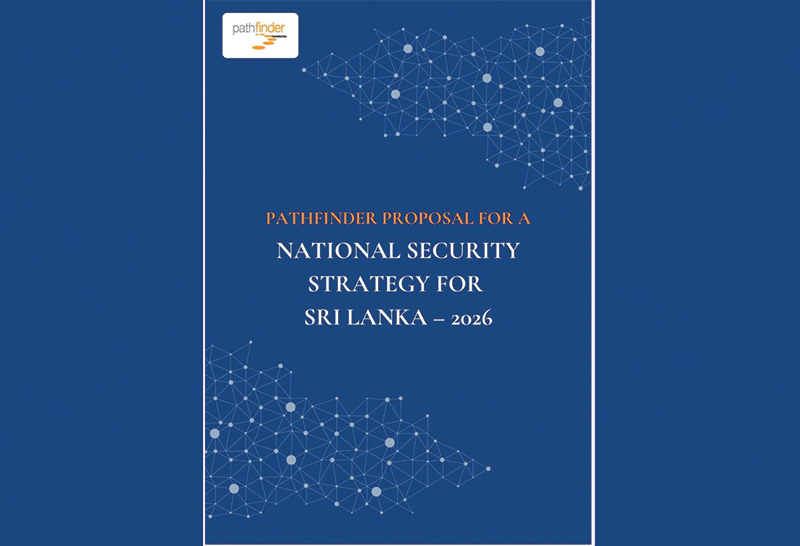
The Pathfinder Foundation launched a proposal for a National Security Strategy for Sri Lanka—2026, emphasising the urgent need for a comprehensive and state-led national security framework.
The proposed strategy contends that an effective National Security Strategy (NSS) must be based on a robust National Security Policy, which provides the long-term framework for protecting the country’s sovereignty, stability, and development in an increasingly uncertain global environment. The Pathfinder Foundation’s initiative, developed through consultations with academics, retired military officers, legal experts, and policy specialists, seeks to stimulate national discussion and support the formulation of an official state policy. The launch event was attended by those involved in preparing this proposal, heads of local think tanks, and media representatives.
Chairman of the Pathfinder Foundation, Amb. (Retd.) Bernard Goonetilleke, in his presentation of the report, emphasised that many major and middle powers, including the United States, China, the Russian Federation, the United Kingdom, Germany, Sweden, and Japan, have developed formal national security strategies. He pointed out that several South Asian and Southeast Asian countries, including India, Pakistan, Bangladesh, Nepal, Malaysia, Thailand, and Singapore, also rely on NSS, whereas Sri Lanka still lacks a single, officially adopted National Security Policy (NSP) or a National Security Strategy to guide long-term strategic planning.
The report highlights key strategic priorities across several sectors, including good governance, internal security, cybersecurity, energy and food security, health security, human capital development, and environmental protection. It also employs the internationally recognised DIME framework (Diplomacy, Information, Military, and Economy) to guide the coordinated use of national power in advancing Sri Lanka’s interests. Among its main institutional recommendations are establishing a fully legislated National Security Council, creating a National Security Secretariat, and officially appointing a National Security Advisor to coordinate policy and implementation across the government.
The full text of the report is available https://pathfinderfoundation.org/publications, and your comments a/ welcome via pm@pathfinderfoundation.org

Philippine transport strikers say Marcos Jr failing to control oil prices

One ant for $220: the new frontier of wildlife trafficking

Three Lebanese journalists killed in Israeli strike, say broadcasters

Showers will occur at a few places in the Sabaragamuwa province and in Colombo, Kaluthara, Galle, and Matara districts after 2.00 pm

War-linked power crunch pushes Lanka to four-day week

Lanka to swelter through April and May, Met Dept warns

‘Dates have the highest sugar content to fight Coronavirus’

Sunday Island 27 December – Headlines

#SundayIsland 17th December – Headlines

Sunday Island – 28th March

Sunday Island Headlines – 21 March

Sunday Island – 21st February – Headlines
-

 News4 days ago
Senior citizens above 70 years to receive March allowances on Thursday (26)
-

 Features1 day ago
A World Order in Crisis: War, Power, and Resistance
-

 Features6 days ago
Trincomalee oil tank farm: An engineering marvel
-

 News2 days ago
Energy Minister indicted on corruption charges ahead of no-faith motion against him
-

 News3 days ago
US dodges question on AKD’s claim SL denied permission for military aircraft to land
-

 Features6 days ago
The scientist who was finally heard
-

 Business3 days ago
Dialog Unveils Dialog Play Mini with Netflix and Apple TV
-

 Sports2 days ago
SLC to hold EGM in April