
News
India’s role vital in equitable global distribution of Covid-19 vaccines


BY S VENKAT NARAYAN Our Special Correspondent
NEW DELHI, December 27:
As the Covid-19 pandemic-ravaged world enters 2021, it is looking to India for the large-scale production and supply of coronavirus vaccines, Indian Pharmaceutical Alliance (IPA) Secretary General Sudarshan Jain has said.
“India contributes 60 per cent of the vaccine production to the world. India is going to play a vital role in equitable distribution of vaccines around the world,” Jain told PTI news agency.
As the pandemic hit the world in 2020, Indian pharma industry rose to the occasion, and was able to manufacture and maintain supply chains even during the lockout period, and exported medicines such as HCQ and paracetamol to more than 150 countries, keeping its image of ‘Reliable Pharmacy of the World’.
The world is again looking at India as a beacon of hope to manufacture and supply the huge number of vaccines needed to tackle the pandemic.
While Indian companies such as Zydus, Bharat Biotech and Gennova are developing indigenous vaccines, other domestic companies are collaborating with global companies such as Serum Institute of India (SII) with AstraZeneca, Dr Reddys with Sputnik and Biological E with J&J, he added.
“India will also be a benchmark in vaccine distribution and will be using technology to ensure targeted and phased distribution. India has always believed that global cooperation and coordination is fundamental to meet the COVID situation,” Jain said.
Currently, three Covid-19 vaccines candidates of Bharat Biotech, SII and Pfizer are under active consideration of India’s drug regulator. There is hope that early licensure is possible for all or any of them, according to the Indian Health Ministry.
Indian Drug Manufacturers’ Association (IDMA) Executive Director Ashok Kumar Madan said: “We are sure with all the attention given by the government, vaccines will too be available for use from January 2021 onwards. These vaccines are being approved by our Drugs Controller as per the stringent international norms. We take pride that almost 70 per cent of the World Health Organisation (WHO) vaccine procurements are from India”.
Indian firms have used different platforms to produce the vaccines. Scientists in these firms have the capability to produce the vaccine to counter the mutated forms in a short time, he added.
On the availability of the AstraZeneca-Oxford vaccine, Serum Institute of India (SII) CEO Adar Poonawalla told PTI that, based on the trial results in India and the UK, and if approvals from regulatory bodies are in place in time, “then we can expect the vaccine to be available in India by January 2021 (only if it is proven immunogenic and efficacious)”.
As part of various partnerships and collaborations for vaccine candidates, SII will keep aside 50 per cent of whatever quantity of the vaccine candidates are produced for India and the remaining quantity will go to low- and middle-income countries, he noted.
“So far, under at-risk manufacturing, we have already stockpiled 50 million doses. Currently, our capacity is 60-70 million doses per month, which will increase further up to 100 million doses of the vaccine per month by February 2021. However, we will progress to mass production only after it is proven efficacious and immunogenic for mass use,” Poonawalla said.
About the price of the vaccine, he said: “We want the vaccine to be affordable and accessible to all. The Government of India will receive it at a far more affordable price of US$ 3-4, since they will be buying in a larger volume. The priority is going to be India and the GAVI countries, after which only, the private market will open up where the pricing would be USD 6-8 per dose”. GAVI stands for Global Alliance for Vaccines and Immunizations.
Poonawalla said Covishield is an extremely viable and vital vaccine for India and other low-and-middle-income countries. Its efficacy in terms of affordability and composition makes it easier to transport and store for long periods at 2-8°C i.e. normal refrigerator temperatures. For countries with warm climates, this will help to ensure equitable distribution and sustainable affordability.
“Add to that, we have a long-standing relationship with the Jenner Institute at the University of Oxford for our various other vaccine initiatives. We are hopeful that it will be an efficacious and immunogenic vaccine viable for mass use,” he added.
Zydus Group Chairman Pankaj R Patel said: “We are committed to offering a safe and efficacious vaccine to fight the pandemic and our researchers have been working tirelessly to make this happen”.
The outcomes for the Phase I/II clinical trials of ZyCoV-D vaccine have been submitted to the DCGI (Drugs Controller General of India). The company hopes to start the Phase III trials, which will be conducted on 30,000 volunteers across the country, he added.
“We have the capabilities to manufacture over 120 million doses to start with, and shall ramp up depending on the demand. Our focus right through the year has been to support patients with access to critical medicines, diagnostics and other medical essentials in an affordable way to fight Covid-19 and this will continue to be a key factor in our vaccine launch as well,” Patel said.
In September, billionaire philanthropist Bill Gates said that India’s willingness to play a ‘big role’ in manufacturing Covid-19 vaccine and to supply to other developing countries will be a critical part in containing the pandemic globally.
Recently, Bharat Biotech Chairman and Managing Director Krishna Ella said that people who are infected should also take a vaccine, and India is well prepared regarding the logistics for the vaccine distribution as it has a very robust immunisation system.
Another domestic pharma firm, Aurobindo Pharma, has entered the vaccine fray by inking an exclusive licence agreement with US-based company COVAXX, to develop, commercialise and manufacture a vaccine to fight Covid-19 for India and UNICEF.
Joining hands in efforts to help with the availability of the vaccine, Wockhardt, in early December, said it is in discussions with a number of global Covid-19 vaccine developers to offer drug substance as well as fill and finish manufacturing facilities to them.
“2021 will be a year of transformative measures that have been set into motion across the industry. Resilience-strengthening efforts through aspects like digital transformation, securing manufacturing and supply chains, will continue,” Cipla President and Global CFO Kedar Upadhye said.
According to the World Health Organization (WHO), the first human cases of Covid-19, the disease caused by the novel coronavirus, subsequently named SARS-CoV-2 were first reported by officials in Wuhan City in China, in December 2019.

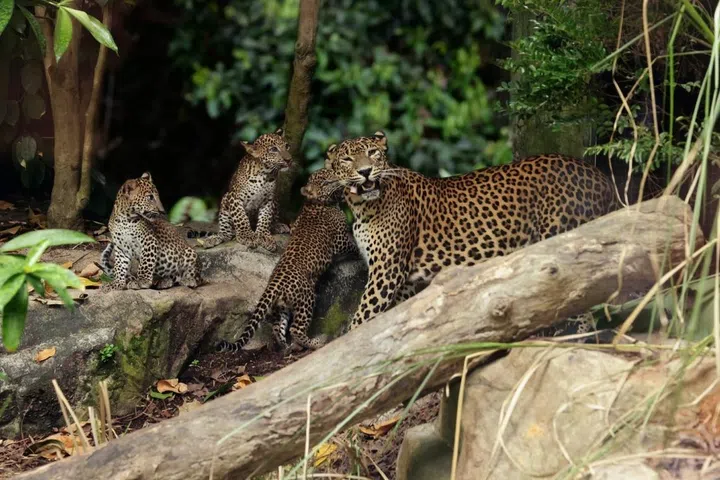
Three Sri Lankan leopard cubs that were born at the Singapore Zoo on Jan 1 have now made their public debut at the facility.
The two males and one female, born to mother Yala and father Asanka, are the first of their species yo be born at the Singapore Zoo. The last successful birth in Singapore was recorded at the Night Safari three decades ago.
The triplets, which are the pair’s first litter, are among around 80 Sri Lankan leopards in zoos worldwide.
The species is listed as vulnerable on the International Union for Conservation of Nature (IUCN) Red List, with fewer than 800 individuals estimated to remain in the wild.
Visitors can now see the triplets at the Wild Africa exhibit, said the Mandai Wildlife Group in a statement on April 16.
The cubs can be found in the exhibit with their mother daily until mid-May and, subsequently, every Wednesday, Saturday and Sunday.
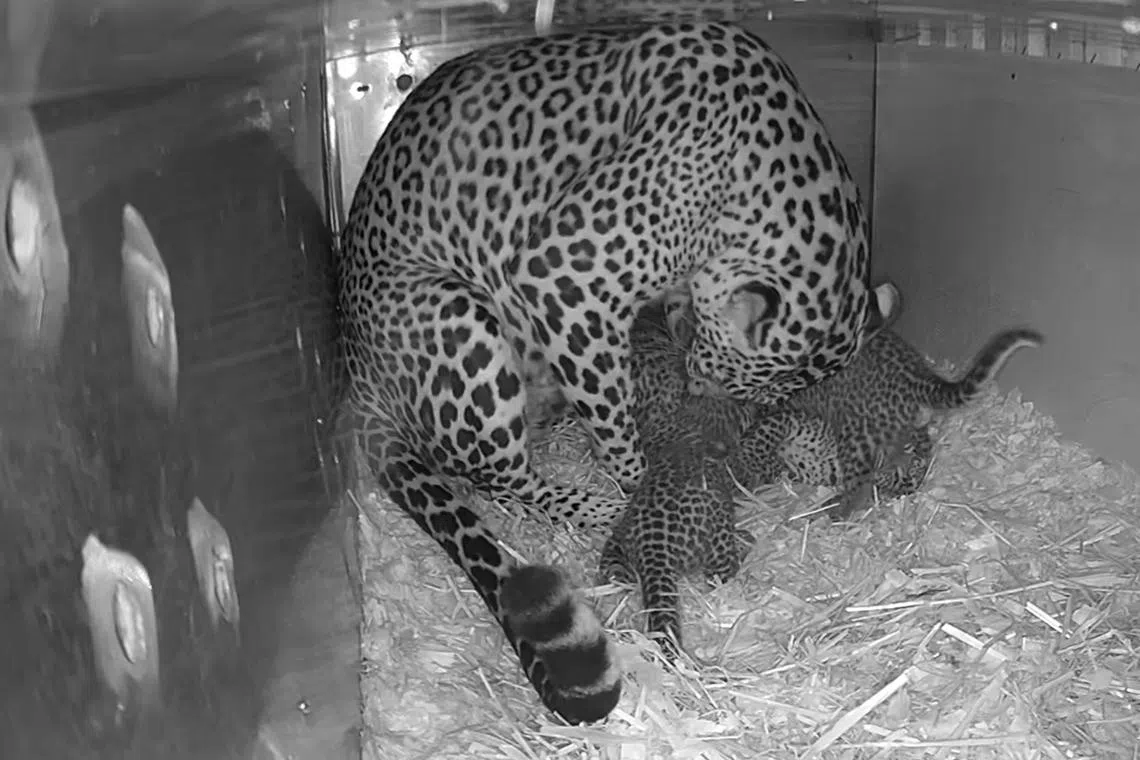
Yala with her cubs in their nest box, a month after their birth on Jan 1. (Straits Times)

A leopard cub investigating a piece of meat suspended from a tree – one of the several enrichment items in the Wild Africa exhibit designed to keep the cats mentally and physically stimulated. (Straits Times)
Mandai Wildlife Group curator Anand Kumar said it took nearly three years and close collaboration across continents to bring together a compatible pair of Sri Lankan leopards.
(Straits Times)
https://www.straitstimes.com/singapore/singapore-zoos-first-sri-lankan-leopard-cubs-make-their-public-debut?ref=top-stories

The Sri Lanka Navy has seized a local multi- day fishing trawler, it’s four man crew together with a consignment suspected to be narcotics off the Southern Coast of the island.
The vessel is presently being escorted to the Dikowita fisheries harbour for further investigations and legal proceedings.
Latest News
Heat Index at Caution Level in the Northern, North-central, North-western, Western, Sabaragamuwa, Eastern and Southern provinces and in Monaragala district


Warm Weather Advisory
Issued by the Natural Hazards Early Warning Centre
Issued at 3.30 p.m. on 15 April 2026, valid for 16 April 2026.
The Heat index, the temperature felt on human body is likely to increase up to ‘Caution level’ at some places in the Northern, North-central, North-western, Western, Sabaragamuwa, Eastern
and Southern provinces and in Monaragala district.
The Heat Index Forecast is calculated by using relative humidity and maximum temperature and this is the condition that is felt on your body. This is not the forecast of maximum temperature. It is generated by the Department of Meteorology for the next day period and prepared by using global numerical weather prediction model data.
Effect of the heat index on human body is mentioned in the above table and it is prepared on the advice of the Ministry of Health and Indigenous Medical Services.
ACTION REQUIRED
Job sites: Stay hydrated and takes breaks in the shade as often as possible.
Indoors: Check up on the elderly and the sick.
Vehicles: Never leave children unattended.
Outdoors: Limit strenuous outdoor activities, find shade and stay hydrated.
Dress: Wear lightweight and white or light-colored clothing.
Note:
In addition, please refer to advisories issued by the Disaster Preparedness & Response Division, Ministry of Health in this regard as well. For further clarifications please contact 011-7446491

Singapore Zoo’s first Sri Lankan leopard cubs make their public debut

Sri Lanka Navy seize multi day fishing craft suspected of smuggling narcotics

‘Sent to be killed’: How Russia forces migrants to fight in Ukraine

Babar Azam 71* helps Peshawar Zalmi extend lead at top

Trump threatens to fire Fed chair Jerome Powell if he doesn’t leave in May

Royal Challengers Bengaluru top the table after bowlers help thump Lucknow Super Giants

‘Dates have the highest sugar content to fight Coronavirus’

Sunday Island 27 December – Headlines

#SundayIsland 17th December – Headlines

Sunday Island – 28th March

Sunday Island Headlines – 21 March

Sunday Island – 21st February – Headlines
-

 News5 days ago
CEB orders temporary shutdown of large rooftop solar systems
-

 Features5 days ago
From Royal College Platoon to National Cadet Corps: 145 years of discipline, leadership, and modern challenges
-

 Business7 days ago
Israeli attack on Lebanon triggers local stock market volatility
-

 Business7 days ago
HNB Assurance marks 25 years with strategic transformation to ‘HNB Life’
-

 Latest News4 days ago
PNS TAIMUR & ASLAT arrive in Colombo
-

 News6 days ago
Anura Solomons passes away
-

 Features5 days ago
CIA’s hidden weapon in Iran
-

 Latest News3 days ago
Prasidh, Buttler set up comfortable win for Gujarat Titans