
Latest News
India smell victory after 15-wicket day on a tough Eden Gardens pitch

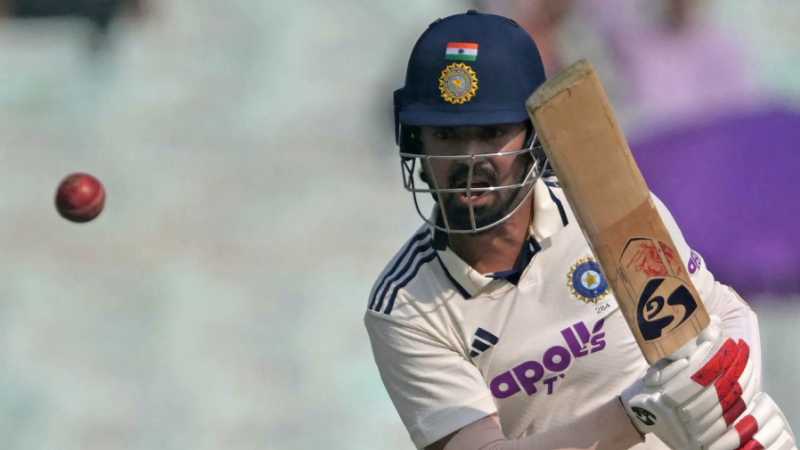
India started the second day 122 runs behind in the first innings with nine wickets in hand. Less than six dramatic hours of cricket later, they were sensing a win, having reduced South Africa to effectively 63 for 7 in their second innings. Fifteen wickets fell on the day, Shubman Gill retired with a neck spasm, 39 remained the top score in the Test, and 57 the top partnership. This was the lowest top score in the first two innings of a Test in India, and the lowest in any Test since Durban 2010-11 between the same sides.
Absolutely nobody predicted the pitch would turn out to be so difficult to bat on. It looked like a normal Indian track, good for batting for first two days, but the top surface began to come off in the second half of the first day. On the second day, it became near unplayable. Even the fast bowlers drew generous help to take 11 of the 26 wickets to fall.
The pitch might seem at odds with India’s public utterances after the series loss to New Zealand last year that they want to play on more balanced surfaces, but commentator Dinesh Karthik said on air that it was not watered on the day before the Test, which comes across as unusual.
What wasn’t unusual was that the best player on this moving day was Ravindra Jadeja, who scored 27 largely trouble-free runs before his old-fashioned technique of hiding the bat behind the pad got him out lbw to Simon Harmer.
Harmer himself showed all the hype was real, that he is now a vastly improved bowler to the one that showed up in India 10 years ago, taking 4 for 30 to keep South Africa in arrears of only 30 after being bowled out for 159 on the first day. Jadeja, though, showed 30 was plenty with an unerring unbroken spell of 13-3-29-4 as South Africa ended the day on 93 for 7.
When the day began, and indeed even after the wicketless first hour, it looked like India were setting themselves up for a decisive first-innings lead. KL Rahul, the top-scorer in the match, and India’s new No. 3 Washington Sundar put together the joint-highest partnership of the match. Introduced only in the second hour of the day, Harmer produced immediate results, turning one past Washington’s edge and the next onto the edge.
At 75 for 2, India were 84 behind South Africa, still a comfortable position to be in. Gill, whose neck seemed to be in some discomfort in the morning warm-ups, then went into a spasm as soon as he swept Harmer for four.
While Rahul, Rishabh Pant and Jadeja – 39, 27 and 27 – looked good in their own individual ways, the eventual wicket-taking delivery was always around the corner. Rahul made the mistake of following Keshav Maharaj’s extravagant turn, Jadeja was done in by the natural variation, and Pant fell to extra bounce for Corbin Bosch.
Maharaj will be disappointed he went at over four an over, but the combination of Harmer and Marco Jansen made light of India’s batting depth, which generally is the case on such pitches. In Kagiso Rabada’s absence, Jansen’s analysis of 15-4-35-3 kept South Africa alive in the Test. India lost their last four wickets for 36.
By the time India started bowling for the second time, with a little over half an hour to tea on day two, it made complete sense to open with spin. Jasprit Bumrah, who got a five-for in the first innings, did open the bowling, and from the end where bowlers had generated uneven bounce, but it wasn’t long before South Africa were facing spin from both ends with little breathing time or space.
Kuldeep Yadav took the wicket of Ryan Rickelton with what turned out to be the last ball of the middle session, one that didn’t turn and also had the batter playing back when he should have been forward.
Kyle Verreynne copped flak for trying to slog-sweep Axar Patel, but there weren’t many scoring opportunities on that pitch with in-out fields. A similar attacking strategy came off for Jansen for a while as he scored 13 but even he get a feather on a sweep off Kuldeep.
The catching of both sides remained sensational with Rahul capping the day off with a low slip catch off a deflection of the keeper Pant. Temba Bavuma defended well and threw in the occasional sweep to end the day unbeaten on 29 off 78, but it seemed he still had a lot to do with the bat to give South Africa a shot at a win.
Brief scores:
South Africa 159 and 93 for 7 (Temba Bavuma 29*; Ravindra Jadeja 4-29) lead India 189 (KL Rahul 39, Simon Harmer 4-30, Marco Jansen 3-35)by 63 runs
(Cricinfo)

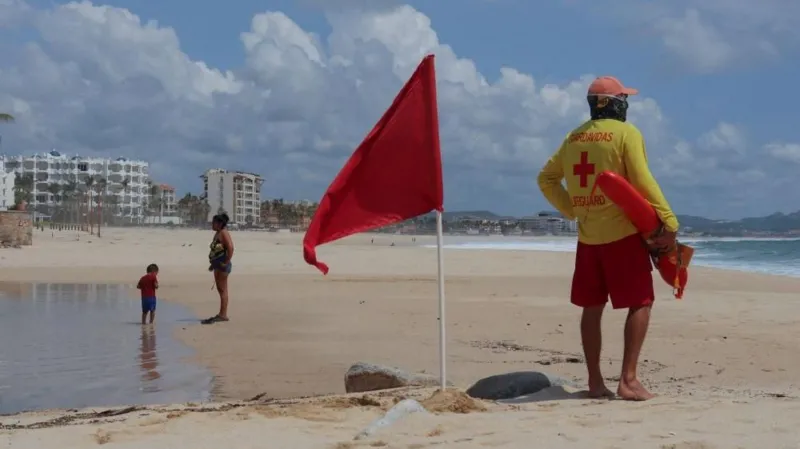
People living on the northern Pacific coast of Mexico are bracing for the arrival of Hurricane Polo, which is forecast to make landfall later on Monday or early on Tuesday.
The category three storm, with maximum sustained winds near 115 mph (185 km/h), is expected to move over the state of Baja California Sur, a region popular with tourists and home to the resort destination of Los Cabos.
Meteorologists at the US-based National Hurricane Center (NHC) have warned of heavy rainfall which could lead to life-threatening flooding and mudslides, especially in areas of steep terrain.
Residents on Sunday stocked up on essentials such as drinking water and food as the storm approached.
The NHC warned of the storm surge Hurricane Polo could unleash, which it said could be accompanied by large and destructive waves.
In Cabo San Lucas, famous for its natural rock arch, the authorities restricted access to the beaches. Some restaurants also closed in the town, which acts as a base for sport fishers and whale watchers.

The regional government of Baja California Sur has ordered schools to remain closed on Monday as a preventive measure.
Governor Víctor Manuel Castro Cosío said temporary shelters had been opened should residents need to be evacuated.
The federal authorities have also deployed thousands of members of the navy and the army along with specialised machinery.
Polo has been slowly moving towards Mexico’s coast line.
Meteorologists said it was being fuelled by extremely warm waters caused by the El Niño climate phenomenon.
(BBC)
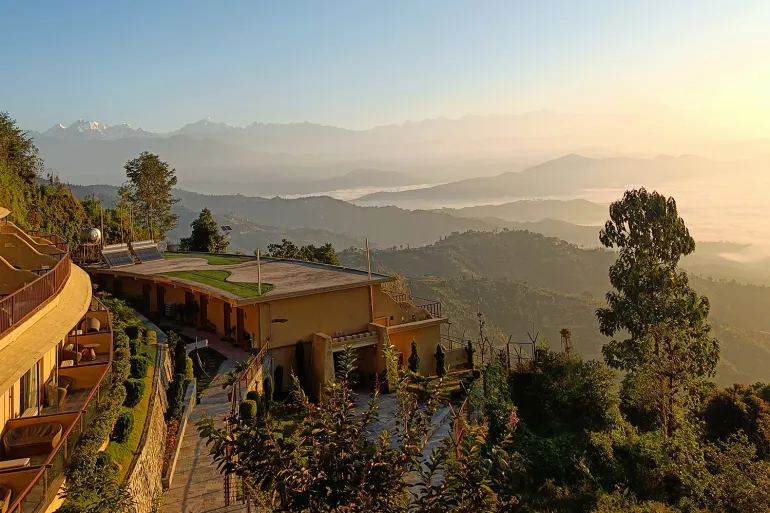
Like every year, Pushpraj Rimal, a tour planner and taxi driver in Nepal’s capital, Kathmandu, was looking forward to September for his business to boom.
But what he got instead was a series of cancellations by tourists after catastrophic floods last month killed more than 1,450 people and destroyed key highways, deeply impacting the Himalayan nation heavily dependent on tourism.
“It is still a lockdown kind of situation,” the 42-year-old told Al Jazeera nearly a month after the disaster.
Pushpraj, who speaks Nepali and Hindi, works on commission for several hotels and trekking companies in Kathmandu and the scenic town of Pokhara, known for its lake nestled in the Annapurna mountain range. Pokhara also serves as a base for Himalayan trekkers.
Nepal’s tourist season peaks after the monsoon ends in August and the skies are clearer. Tourism attracts thousands of international travellers, accounting for nearly 8 percent of Nepal’s gross domestic product and employs more than 1 million people.
Last year, Nepal saw more than 1.15 million tourists visiting the country, nearly a third of them during the September-November season.
But the floods this year, triggered by a glacial mountain collapse along the Nepal-Tibet border in the north, have pushed tourists away from the unaffected areas as well.
“I had rented two cars for two months, but I have done one fourth of the business I usually do in a season. Tourists generally start pouring in from September, but most of them have cancelled this year,” he said.
“I will get no commissions from the hotels or trek organisers, nor has the taxi business worked well. … I am now waiting for the season to end.”
Rimal has two children, Hema, 14, and Rahul, 12, whom he had promised a tablet this Dussain, a prominent Hindu festival that usually falls in October. “But it seems impossible now. I will have to break their hearts and my promise to them for the very first time.”
(Aljazeera)

World javelin leader Rumesh Tharanga lived up to his reputation to win Sri Lanka a highly anticipated gold medal, beating wet weather and track conditions at the Asia Games in Nagoya Japan a little while ago.
He took the lead with a massive 88.33 metres effort in his penultimate throw before sealing the contest with 88.55 metres throw.
He beat a strong field inclusive of reigning Olympic champion Arshad Nadeem of Pakistan. (Reemus Fernando)

Mexico’s Pacific coast braces for Hurricane Polo

Washout against Afghanistan sends India into semi-finals

‘Still a lockdown’: Deadly floods hit Nepal tourism as peak season begins

Tharanga wins highly anticipated Asian Games gold

Tharanga on cusp of Asian Games Gold

Rain threat looms over lopsided India vs Afghanistan quarter-final

‘Dates have the highest sugar content to fight Coronavirus’

Sunday Island 27 December – Headlines

#SundayIsland 17th December – Headlines

Sunday Island – 28th March

Sunday Island Headlines – 21 March

Sunday Island – 21st February – Headlines
-

 News6 days ago
Mastermind Naufer Moulavi among 15 found guilty
-

 Midweek Review6 days ago
Thileepan’s fast unto death: An authentic narrative that many missed
-

 News7 days ago
Protest against setting up of cement factory in highly populated area near BIA
-

 Editorial7 days ago
Trouble beginning in earnest
-

 Latest News5 days ago
Showers above 100 mm are likely at some places in the Western, Sabaragamuwa, Central and North-western provinces and in Galle and Matara Districts
-
Editorial6 days ago
Big Bad Bills
-

 News7 days ago
Police may seek clarification from US
-

 News7 days ago
Govt. confident of 2/3 majority despite NPP split speculation