
Latest News
India sight victory after Gill buries England with runs

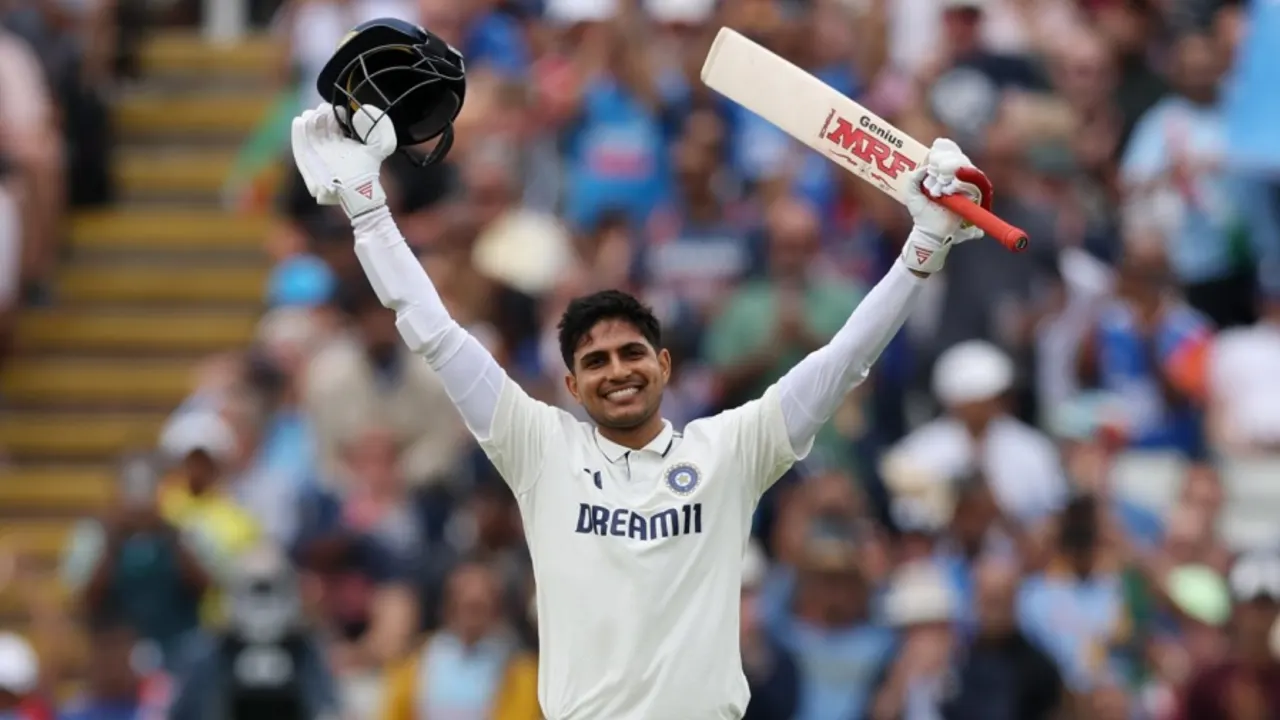
India need seven fifth-day wickets to beat England at Edgabaston and head to Lord’s with the series level. It would be a first Test win as captain for Shubman Gill, who followed his 269 in the first innings with 161 in the second, declared at drinks to set a world-record target of 608, then watched Mohammed Siraj and Akash Deep prise out England’s top order.
The fourth day was dominated by intrigue about the timing of India’s declaration, which arrived far later than many expected and left England facing an ideological problem. After a single draw – and that one prompted by two days of rain – in the last three years, would they finally tone down their approach with the bat and accept that winning was off the table?
The answer will only become clear tomorrow, with two of the three wickets that fell on Saturday evening owing to Akash’s skill rather than their batters’ attacking intent. By the close, Ollie Pope was clinging on after a working-over from India’s seamers, and the notion that England could score more than 500 runs on the final day seemed academic.
Siraj had Zak Crawley to thank for his early strike. Crawley endured a miserable day, dropping a catch to reprieve Rishabh Pant, and after playing out a maiden in the first over of England’s second innings – as though setting the tone for a more watchful approach – he was suckered into a hard-handed drive which flew to slip.
Deep was sublime with the new ball, adding two second-innings wickets to his four in the first. He cramped Ben Duckett for room with a ball that angled into the left-hander from around the wicket and then decked in off the seam to induce a chop-on, then found late movement away to beat Root on the outside edge and clean him up.
India came close to a fourth wicket, with Pope characteristically frenzied early in his innings, and the only blemish on their bowling effort came in the form of two burned reviews in the first ten overs. But if Gill is still getting to grips with the DRS, he has proved across these first two Tests that he is a far, far better player than his average heading into this tour might have suggested.
Gill’s latest hundred – his third of the series, and eighth overall – came wrapped in gift wrap, and adorned with a gold bow. He scored more than half of his runs off England’s spinners, who hardly turned a ball between them on a lifeless pitch, milked singles at will with the field spread, and treated occasional bouncer barrages with utter disdain.
He seized his opportunity to reassert his dominance after grinding England into the dirt in the first innings, and broke a number of records along the way. Gill is the first player in the format’s history, spanning more than 2,500 matches, to score 200 and 150 in the same match; only once has a batter scored more than his 430-run aggregate in a single Test.
Gill had walked in to the backdrop of gloomy skies on the fourth morning, after Brydon Carse had induced an outside edge from Karun Nair, and survived an lbw review off his sixth ball thanks to an inside edge. But he was soon into his work, playing late to steer boundaries away behind square on the off side, and after a sharp first spell, the stiff Carse was not seen again.
After KL Rahul, who batted fluently for 55, was cleaned up by Josh Tongue’s full outswinger, Pant made his intentions clear by charging down the pitch to slap his fourth ball back over Tongue’s head for six. Dropped on 10 by Zak Crawley, Pant threw his bat – quite literally, twice losing grip of it – during his 65, flogging both Tongue and Shoaib Bashir.
Ben Stokes ran out of ideas – and fit bowlers – as the same pair toiled away after the lunch break. The wisdom of Tongue’s short-ball ploy to Gill was proven by a flurry of six, four and four off consecutive balls, followed by another six and a flat-bat for four in his next over which took him past 50.
Pant’s dismissal – caught at long-off, while his bat flew to midwicket – brought some respite, with Ravindra Jadeja curiously ponderous after a promotion to No. 6. But Gill marched relentlessly on, nudging Bashir off his hips to reach his third hundred in four innings before hitting Chris Woakes’ first three balls after tea for six, four and four.
Jadeja had 25 off 68 at tea but switched gears straight after, skipping down and launching his first ball of the evening session back over Bashir’s head for six. He celebrated with his trademark sword-swish after cutting Joe Root for four to reach fifty, while Gill freed his arms by launching Root and Bashir into the stands.
Gill miscued a return catch to Bashir on 161, but the declaration was still on ice: Nitish Kumar Reddy walked to the crease to pantomime boos from the Eric Hollies Stand, then a chant of “boring, boring India”. After Reddy holed out second ball, Washington Sundar lofted over cover to take the lead to 600; when the clock ticked past five, the signal finally arrived.
Brief scores:
England 407 in 89.3 overs and 72 for 3 in 16 overs (Ben Duckett 25, Ollie Pope 24*, Harry Brook 15*; Akash Deep 2-36) need 536 more runs to beat India 587 in 151 overs and 427 for 6 dec in 83 overs (Yashasvi Jaiswal 28, KL Rahul 55, Karun Nair 26, Shubman Gill 161, Ravindra Jadeja 69*, Rishabh Pant 65; Josh Tongue 2-93, Shoaib Basheer 2-119)
[Crickinfo]

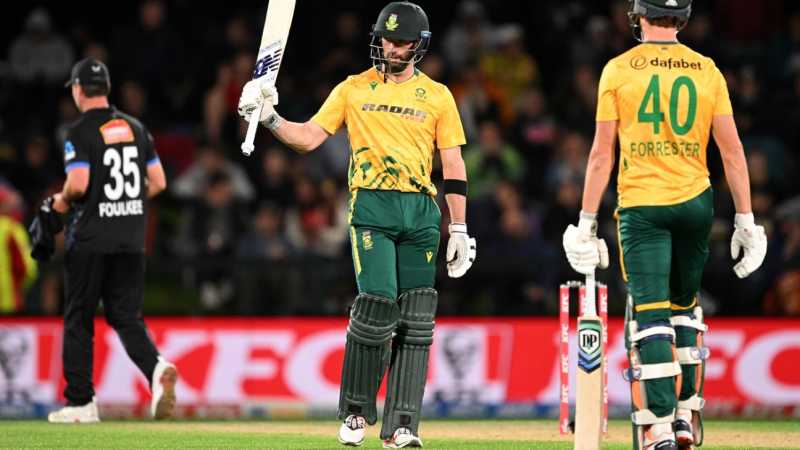
South Africa won their first away T20I series under Shukri Conrad, and second successive bilateral series, with a convincing performance over New Zealand in Christchurch. Put in to bat, they posted the highest total of the series of 187 for 4- and defended it with a six-player attack to seal the series 3-2.
After poor batting performances in the second and third T20Is,2 South Africa went from good to better in the next two. Three of South Africa’s four highest partnerships of the series came in this match, and they have unearthed a potential future star in Connor Esterhuizen. He scored back-to-back fifties in matches four and five and anchored their efforts in the decider. While Zak Foulkes and Josh Clarkson were economical, the rest of their attack conceded at over nine runs an over. Offspinner Cole McConchie’s 0 for 48 was the most expensive.
New Zealand were without their first choice top five and also had to do without Tom Latham, who was due to lead them but fractured his thumb in the third T20I. They were never really in the chase against a disciplined South African effort. None of their batters scored more than Bevan Jacobs’ 36 and they only had one partnership which threatened: 52 between Jimmy Neesham and Jacobs for the fifth wicket.
Overall it was a messy affair on both sides, with nine dropped catches in the game, the most for any men’s T20I as per ESPNCricinfo’s ball-by-ball data logs since June 2018
Rubin Hermann has been involved in half of South Africa’s top stands and looked set for a big one today. Early in his innings, Hermann took down Ben Sears no matter what length he bowled and took 14 runs off four balls. Later, he showed his strength against spin when he joined Esterhuizen in targeting McConchie. But then Hermann did not hit a boundary for 12 balls and needed to take it on. When Sears went hard length, Hermann pulled but got his timing wrong and skied the ball towards mid-off. Nick Kelly ran from mid-on, made his ground and then stuck out one hand to take a superman catch, flying low to the ground. Hermann was out for 39, and the second-wicket partnership was broken on 59.
While Hermann’s promise only peeped through, Esterhuizen went from excellent to exceptional and topped up his maiden international half-century from game four with a new career-best: 75 off 33 balls in the finale. His on-side dominance was on display, as he scored 52 runs in that half of the ground, including five of his six sixes. The biggest ones came off McConchie who he hit back over his head, then over midwicket and over square leg. In total, Esterhuizen scored 21 runs off 8 balls but wasn’t shy to show what he could do against the quicks either. In the last two overs, he took 25 runs off Kyle Jamieson and Sears. His innings ended when he tried to send a Sears full toss to Neesham with two balls to go and he ended the series with a total of 200 runs, 100 more than his nearest competitor, Devon Conway.
It’s been a tough few months for Jason Smith. He only played one game at the T20 World Cup, despite being a first-choice pick in the squad and has not managed to get one score over 20 in five innings on this tour. And then things seemed to become tougher. Smith was at extra cover when Dane Cleaver, on 1, backed away from a Gerald Coetzee ball and smashed it to him. It was hit hard and could have taken some holding onto but Smith let it burst through his hands. Luckily for him, three overs later, the chance to do better came. Ottneil Baartman drew a leading edge from a Cleaver and the ball looped to him at point. He made no mistake and Cleaver was dismissed for 22. New Zealand were 46 for 2 after the powerplay and well behind the chase.
Contrastingly, Coetzee has had a wonderful 10 days after missing out on T20 World Cup selection and recovering from a torn pec muscle. He finished as the joint leading wicket taker, and the one with the lowest economy rate in the series. In today’s match, he didn’t concede a boundary until the final ball he bowled, and by then New Zealand were out of the game. Coetzee bowled two overs with the new ball, for 11 runs, and should have Cleaver’s wicket and then returned for the 17th and 19th overs. His penultimate over was a mix of quick short balls with the odd change of pace and cost two runs. Reward came in his last over, when he had Josh Clarkson caught off a leading edge at cover and McConchie caught at long-on trying to clear the ropes off a cross seam ball. Coetzee finished with 2 for 21 in four overs.
Brief scores:
South Africa 187 for 4 in 20 overs (Tony de Zorzi 12, Wiaan Mulder 31, Rubin Hermann 39, Connor Esterhuizen 75, Dian Foresster 21*; Zak Foulkes 1-22, Ben Sears 2-37, Josh Clarkson 1-14) beat New Zealand 154 for 8 in 20 overs (Tim Robinson 25, Dane Cleaver 22 , Nick Kelley 14, Bevan Jacobs 36, James Neesham 24, Josh Clarkson 13; Gerald Coetzee 2-21, Wiaan Mulder 2-28, Ottneil Baartman 2-33, Keshav Maharaj 1-35)by 33 runs
(Cricinfo)

Russia has launched the largest aerial attack on Ukraine over a 24-hour period since the war began, hitting cities across the country with 948 drones.
Ukraine’s Air Force said 556 drones had been fired since 09:00 local time (07:00 GMT) on Tuesday, in an unusual daytime attack which killed at least three people and injured dozens.
In the western city of Lviv, the 16th century Bernardine monastery – part of a Unesco World Heritage site in the city centre – was damaged, local officials said.
In the neighbouring Ivano-Frankivsk region, a maternity hospital was hit.
Those strikes came after an overnight Russian attack left five people dead. Ukraine said 392 drones and 34 missiles were fired.
In his video address on Tuesday evening, Ukrainian President Volodymyr Zelensky said the scale of the latest attacks “clearly shows that Russia has no intention of really ending this war”.
Russia’s military has not publicly commented on the attacks.
A video posted earlier on Tuesday by Lviv authorities showed a fire burning through the roof of a residential building near the Bernardine monastery.
Separate footage posted on social media showed a drone flying lower over the city and hitting the residential building.
Lviv regional head Maksym Kozytskyi said 32 people were injured in the Russian attack.
In the city of Ivano-Frankivsk, two people were killed and another four – including a six-year-old child – were injured, local officials said.
Various buildings – including a maternity hospital – were damaged in the regional capital.
Ternopil – another western Ukrainian city – was also targeted on Tuesday. A number of direct hits were reported by regional authorities, but no casualties.
In the central Ukrainian city of Vinnytsia, one person was killed and 13 injured, regional head Nataliya Zabolotna said.
In the overnight Russian attacks, five people were killed when Russia targeted 11 Ukrainian regions.
Ukraine’s Air Force said it had managed to shoot down most of the Russian drones and missiles – but admitted that there were multiple direct hits across the country.
Yurii Ihnat, spokesman of the Ukrainian Air Force, said late on Tuesday that a “large number of drones” had entered Ukrainian airspace from the north of the country, “effectively moving in columns”.
“The geography of the strikes during the daytime was broader than at night… It can be said this was one of the largest attacks within a 24-hour period,” he said.
While more than four years of war have left virtually no corner of Ukraine untouched, the west of the country has been hit comparatively less intensely and frequently than other areas nearer the Russian border in the east.
Russia launched a full-scale invasion of Ukraine in February 2022, and the war continues unabated, with Moscow launching near-daily attacks on cities across the country.
Also on Tuesday, the governor of Russia’s western Kursk region said one man was killed and 13 people were injured in a Ukrainian drone attack on an agricultural enterprise.
Talks brokered by the US and aimed at reaching at a peace settlement have stalled since the start of the US-Israeli war with Iran in late February.
“Amid the news the world is drowning in every day, we will not let Ukrainian grief get lost, become just another statistic, a headline that will be casually skipped over,” wrote Ukraine’s First Lady Olena Zelenska on social media.
(BBC)

Esterhuizen, bowlers lead South Africa to 3-2 series win

IPL captains’ meeting: What’s on the agenda?

Russia launches 948 drones at Ukraine in largest attack over 24-hour period

Oil at $150 will trigger global recession, says boss of financial giant BlackRock

Showers will occur at several places in the Western and Sabaragamuwa provinces and in Galle and Matara districts after 2.00 pm

Senior citizens above 70 years to receive March allowances on Thursday (26)

‘Dates have the highest sugar content to fight Coronavirus’

Sunday Island 27 December – Headlines

#SundayIsland 17th December – Headlines

Sunday Island – 28th March

Sunday Island Headlines – 21 March

Sunday Island – 21st February – Headlines
-

 Features3 days ago
Trincomalee oil tank farm: An engineering marvel
-

 News7 days ago
Bailey Bridge inaugurated at Chilaw
-

 News6 days ago
CIABOC tells court Kapila gave Rs 60 mn to MR and Rs. 20 mn to Priyankara
-

 News7 days ago
Pay hike demand: CEB workers climb down from 40 % to 15–20%
-

 Features6 days ago
Science and diplomacy in a changing world
-

 Features3 days ago
The scientist who was finally heard
-

 News5 days ago
Colombo, Oslo steps up efforts to strengthen bilateral cooperation in key environmental priority areas
-
 News20 hours ago
Japanese boost to Sri J’pura Hospital, an outright gift from Tokyo during JRJ rule