
News
India, Pakistan foreign ministers trade heated barbs on ‘terror’

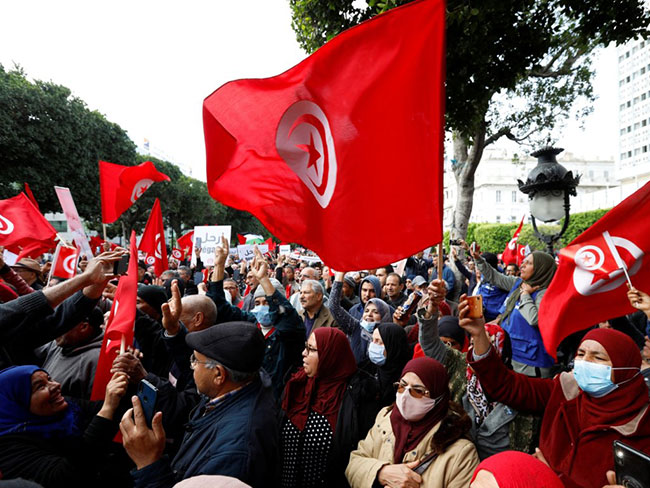
Pakistani minister calls India’s Modi the ‘butcher of Gujarat’ after his counterpart accuses Pakistan of being an ‘epicentre of terrorism’.
Pakistan’s Foreign Minister has called India’s Prime Minister the “butcher of Gujarat” after his counterpart accused his country of being the “epicentre of terrorism” as the nuclear-armed neighbours engage in a war of words at the United Nations, Al Jazeera reported yesterday (16).
The heated exchange between Pakistan’s Bilawal Bhutto-Zardari and India’s Subrahmanyam Jaishankar came after the UN Security Council adopted a statement on Thursday, warning of the increasing dangers of terrorism,
The South Asian rivals have strained political ties, especially over the Himalayan region of Kashmir, which was split between the two in 1947. Since then, they have fought three wars and had several skirmishes along their tense border.
New Delhi accuses Islamabad of harbouring armed fighters who launch attacks on its soil, including the 2008 Mumbai attacks that left 175 people dead, including nine attackers.
The Mumbai attackers were allegedly members of the Pakistan-based Lashkar-e-Taiba armed group. Indian investigators say their actions were directed over the phone by handlers in Pakistan.Talking to reporters after the UN meeting, Jaishankar called Pakistan the “epicentre of terrorism”.
“My advice is to clean up your act and try to be good neighbour,” he said.
“Hillary Clinton, during her visit to Pakistan, said that if you keep snakes in your back yard you can’t expect them to bite only your neighbours, eventually they will bite the people who keep them in the back yard,” he added.
Earlier, Jaishankar, without naming Pakistan, told the UN Security Council that “India faced the horrors of cross-border terrorism long before the world took serious note of it” and has “fought terrorism resolutely, bravely and with a zero-tolerance approach”.
When Bhutto-Zardari was asked to respond to Jaishankar’s allegation, he said the Indians continue to say “Muslim and terrorist together”, whether in Pakistan or in India.
Pakistan’s top diplomat said Jaishankar should remember that “Osama bin Laden is dead, [but] the butcher of Gujarat lives and he is the Prime Minister of India”.
India’s Hindu nationalist Prime Minister Narendra Modi was Chief Minister of the state of Gujarat when religious riots, in 2002, killed nearly 2,000 people – most of them Muslims.
Modi was accused of turning a blind eye to the violence. Until his election as Prime Minister, in 2014, he was denied entry to the United States.
Bhutto-Zardari said his country had lost far more lives to terrorism and that he, himself, was a victim, referring to his mother and former Prime Minister Benazir Bhutto, who was assassinated by a suicide bomber in 2007. Bhutto was the first woman elected to lead a Muslim-majority country in 1988.
“As a Muslim, as a Pakistani, as a victim of terrorism, I believe it is time that we move away from some of the Islamophobic narrative framing of this issue that took place after the awful attacks of September 11, 2001, because what we witnessed from that date up until now is that terrorism, of course, knows no religion, knows no boundaries,” Bhutto-Zardari said.
“Why would we want our own people to suffer? We absolutely do not,” he added.
Abdul Basit, research fellow at S Rajaratnam School of International Studies in Singapore, told Al Jazeera the “debate on terrorism cannot be reduced to Pakistan-bashing on platforms like the UN”.
“In bringing the attention back to counterterrorism challenges, India is focusing heavily on Pakistan as the main sponsor of terrorism in South Asia, which has been one of the usual tactics by India’s ruling Bharatiya Janata Party (BJP),” he said.
Qandil Abbas, professor of international relations at Quaid-e-Azam University in Islamabad, said Bhutto-Zardari’s comments “should be seen from the lens of recent differences between India and Pakistan, which emerged after India revoked … autonomy of Indian-administered Kashmir”.
“Pakistan was expecting that the Indian decision will be condemned and international community will support the stance presented by Pakistan. However, it was not to be,” he told Al Jazeera.
“Additionally, despite Pakistan’s partnership with America and the Western bloc the in so-called ‘war on terror’, India continued to receive more importance,” he added.


The Bar Association of Sri Lanka (BASL) yesterday called on all political parties, represented in Parliament, to allow their members to vote on the proposed 22nd Amendment to the Constitution according to their conscience, stressing that the responsibility for deciding whether the Bill should be enacted now rests with Parliament.
In a statement issued after the Supreme Court’s determination on the 22nd Amendment Bill, BASL President Rajeev Amarasuriya and General Secretary Nalin de Silva have said the SC’s determination should not be interpreted as an endorsement of the proposed constitutional amendment as a matter of policy.
The BASL has said the SC’s jurisdiction, under Articles 120, 121 and 123 of the Constitution, was to determine the constitutional requirements for the enactment of the Bill, including whether the Bill, or any of its provisions, required approval at a referendum under Article 83.
“The determination is therefore not a determination as to whether the proposed amendment is good or bad policy, desirable or undesirable, wise or unwise, or whether Parliament ought to enact it,” the BASL said.
Full text of the BASL statement: The Supreme Court has now delivered its Determination on the Twenty-Second Amendment to the Constitution Bill and determined that the Bill does not require the approval of the People at a Referendum.
In terms of Articles 120, 121 and 123 of the Constitution, the jurisdiction of the Supreme Court in relation to the Bill is to determine the constitutional requirements for its enactment, including importantly whether the Bill, or any provision thereof, requires the approval of the People at a Referendum by virtue of Article 83.
The Determination is therefore not a determination as to whether the proposed Amendment is good or bad policy, desirable or undesirable, wise or unwise, or whether Parliament ought to enact it.
This distinction is also evident from Sri Lanka’s previous constitutional amendments. During the 48 year history of the second republican Constitution there have been many amendments which passed constitutional muster but nevertheless had a negative effect on democracy, constitutionalism, the independence of the judiciary and the rule of law.
The question that now arises is whether Parliament ought to enact the proposed Amendment. That responsibility rests with Parliament and with each individual Member of Parliament when they vote on the Bill.
In making that decision, Members of Parliament should be mindful of the possible and probable consequences the 22nd Amendment will have on our nation. They should also consider the lack of transparency and a proper consultative process in the introduction of the 22nd Amendment. As representatives of the people they should also consider the concerns that have been expressed in relation to the proposed Amendment by a broad cross-section of society including the Maha Nayakes of the Three Nikayas, the Catholic Bishops’ Conference in Sri Lanka, the Church of Ceylon, the Bar Association of Sri Lanka, the Judicial Service Association, the Commonwealth Lawyers Association, LAWASIA, the International Association of Judges, the United Nations Special Rapporteur on the Independence of Judges and Lawyers, the French National Bar Council, and more than 40 Professional Associations and Unions, including the Government Medical Officers’ Association and other leading professional bodies.
Accordingly, the Bar Association of Sri Lanka calls upon all the political parties in Parliament to allow the Members of Parliament to speak and vote on the 22nd Amendment according to their conscience.
The responsibility now lies with Members of Parliament, when called upon to vote, to take a principled position according to their conscience giving due consideration to their constitutional responsibility, their representative capacity and most importantly their duty to the sovereign People of Sri Lanka.

SL to regain access to international financial and capital markets next year in line with IMF projections
Sri Lanka is on course to regain access to international financial and capital markets around 2027, in line with the International Monetary Fund’s (IMF) current economic projections, IMF Mission Chief Evan Papageorgiou said yesterday.
Papageorgiou said the IMF’s core assumptions under Sri Lanka’s economic programme continued to envisage the country returning to international capital markets in 2027.
“Our previous assumption that Sri Lanka will go back to capital markets still stands. We still have a good trajectory to achieving this in 2027 or thereabouts, and that should be the goal,” he said.
Papageorgiou stressed that Sri Lanka could not rely solely on domestic sources of financing to build long-term economic resilience and would need a diversified funding strategy.
“Every country needs to have a good ability to access funds both in domestic markets, as it already has, as well as international markets for eurobonds and other modes,” he said.
He said a return to international capital markets would have significant implications for Sri Lanka’s external debt composition, while strengthening foreign exchange reserves would remain essential as the country prepares to meet future debt-servicing obligations.
The IMF’s assessment comes amid improving international investor sentiment towards Sri Lanka and positive developments in the country’s sovereign credit ratings.
Papageorgiou cited Fitch’s recent upgrade of Sri Lanka’s credit rating as a positive development, saying global investors were increasingly viewing the country from a more constructive perspective.
Sri Lanka remains under the IMF’s Extended Fund Facility (EFF) programme, which is scheduled to continue until March 20, 2027. Regaining access to international capital markets remains a key milestone under the country’s broader economic recovery.
The IMF has stressed the importance of rebuilding Sri Lanka’s foreign exchange buffers and maintaining stability in domestic financial markets as the country approaches substantial external debt repayments.
A sustained improvement in these areas would help strengthen the country’s capacity to return to international markets while safeguarding macroeconomic stability, the IMF has indicated.
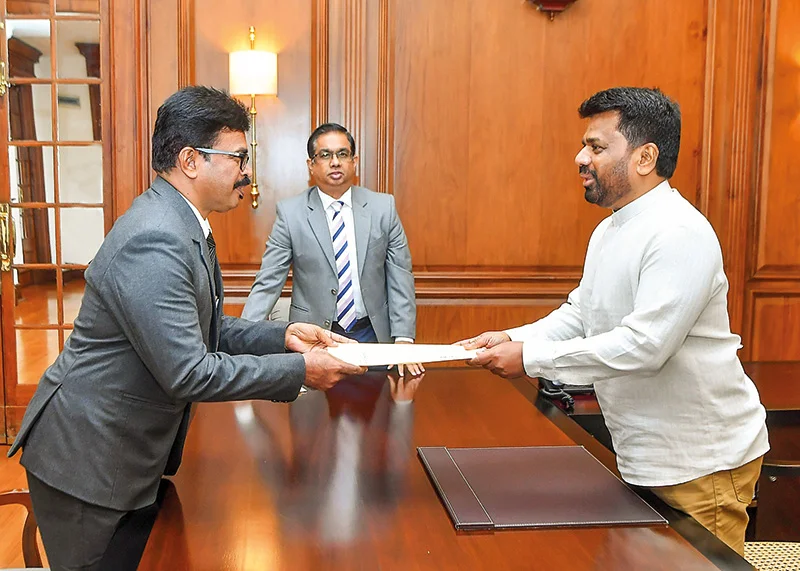
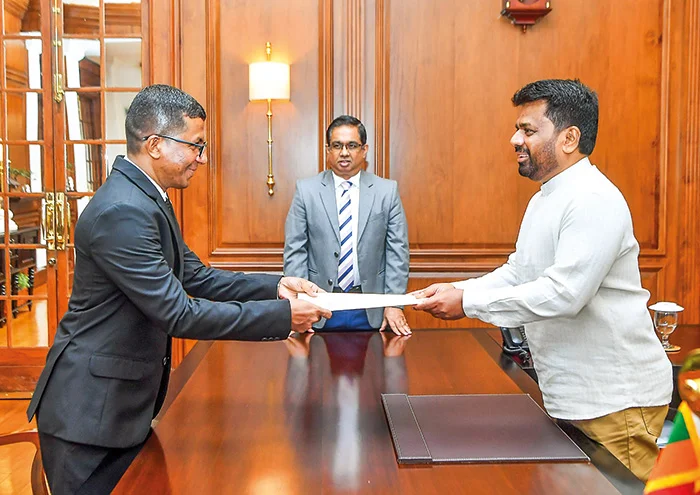
President Anura Kumara Dissanayake yesterday (23) handed over appointment letters to three Special Grade officers of the Judicial Service as High Court Judges, at a ceremony held at the Presidential Secretariat, according to the President’s Media Division (PMD).
The new appointees are Perumal Sivakumar, District Judge of Jaffna; Anandi Kanagaratnam, Senior Assistant Secretary of the Judicial Service Commission; and Gnanesha Lalith Kannangara, District Judge of Colombo.
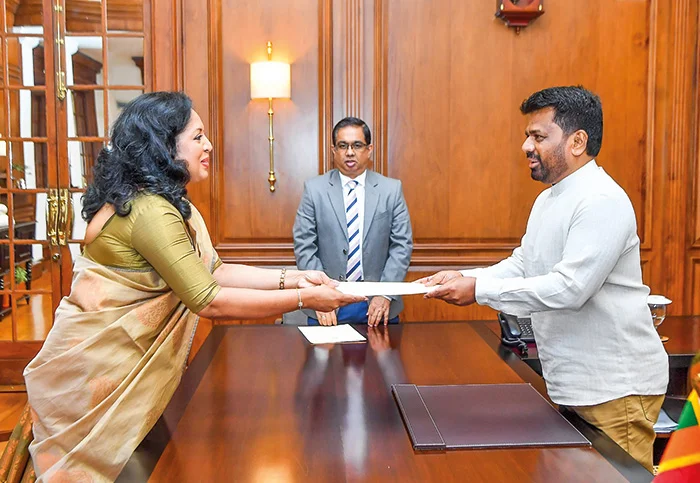
The three senior Judicial Service officers will take up duties as High Court Judges following their appointments.
The appointments were made from among Special Grade officers of the Judicial Service, the PMD said.

Showerss above 100 mm are likely at some places in the Western, Sabaragamuwa, Central and North-western provinces and in Galle and Matara Districts

Mirabai Chanu wins Asian Games silver as Ri breaks weightlifting record

Trump greets China’s Xi Jinping on arrival for three-day US

BASL calls for conscience vote on 22nd Amendment

IMF: Sri Lanka on course for 2027 market return

President appoints three new judges to High Court

‘Dates have the highest sugar content to fight Coronavirus’

Sunday Island 27 December – Headlines

#SundayIsland 17th December – Headlines

Sunday Island – 28th March

Sunday Island Headlines – 21 March

Sunday Island – 21st February – Headlines
-

 News5 days ago
Shanakiyan urges urgent action over reported death sentence for Lankan in Saudi Arabia
-

 News6 days ago
Bid for Basil’s extradition nears final stage: Police
-

 News4 days ago
Namal Rajapaksa Buddhist gambit fails, bail denied
-

 Features4 days ago
Why the spelling Sri Lankan names in English vary
-

 Features4 days ago
Three bands, a new identity: Sri Lankan wolf snake recognised as distinct species
-
 Business4 days ago
SLIIT holds largest-ever convocation
-

 News4 days ago
Govt monitors reported Saudi death sentence – Foreign Ministry
-

 Business4 days ago
All-new Bolero MaXX Pik-Up unveiled in Lanka