
Latest News
India lose seven in the final session, Australia snatch 2-1 series lead

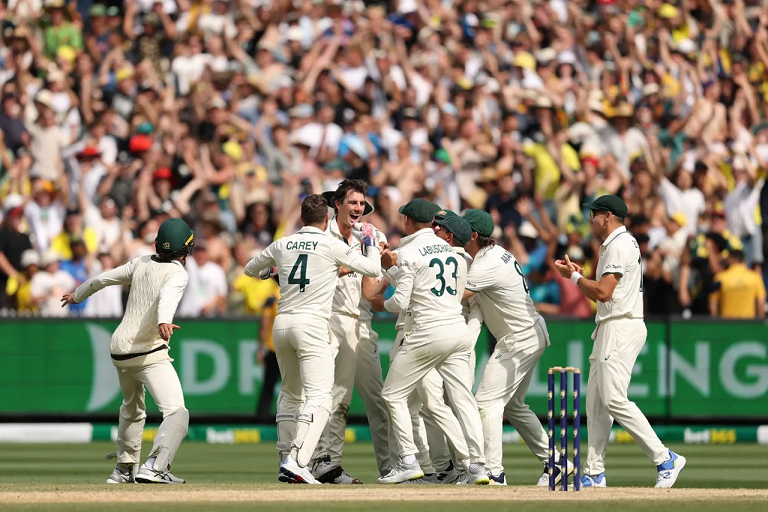
Early in the final hour at the MCG, Australia won an epic Test that had been played in front of a record crowd to take a 2-1 lead in the Border Gavaskar Trophy, having snared seven wickets in the final session when it appeared India were on track to save the game. Yashasvi Jaiswal defied the home side for 208 deliveries before falling to the herculean Pat Cummins while hometown star Scott Boland made three key incisions to secure one of Australia’s most significant victories of recent history.
Nathan Lyon claimed the final wicket, when he pinned Mohammed Siraj lbw, sparking wild celebrations for the home side: a margin of 184 runs did not do justice to the tension and drama of the final day and the importance of the result to this Australia team who have turned their fortunes around after the crushing opening defeat in Perth.
After India had slid to 33 for 3, Jaiswal and Rishabh Pant added 88 in 32 overs to take India into the final session with seven wickets in hand, but Travis Head burgled the wicket of Pant and Australia seized their moment as India lost 7 for 34. The quick bowlers were immense, Mitchell Starc bowling in the mid-140kph region despite a back niggle, while Cummins and Boland added further chapters to previous MCG heroics. Cummins earned the Johnny Mullagh Medal as Player of the Match for an outstanding all-round Test in which he also contributed 90 runs alongside his six wickets.
There was a dose of controversy, too, when Jaiswal’s rearguard was ended via the DRS after he gloved a pull down the leg side against Cummins. Snicko did not register anything, but third umpire Sharfuddoula ruled he had seen a clear deflection, which matched what was shown on TV. Jaiswal appeared to know he had hit it but spoke with the umpires on the way off. It meant India’s lower order had 21 overs to survive and it proved too much.
The defeat means India’s hopes of reaching the World Test Championship final are now out of their hands, but in terms of this series they can still retain the Border-Gavaskar Trophy with victory in Sydney. For Australia, a win in the final Test – and a 3-1 margin – would secure their spot in the WTC final alongside South Africa who qualified yesterday with their own gripping victory over Pakistan.
The final day dawned with Australia nine down and they opted to continue batting which added just a further six runs but removed four overs from the day’s allocation. Lyon became the fifth wicket for Jasprit Bumrah, retaining his record of having the most Test runs without making a half-century. It all meant that India needed 340 in 92 overs and talk of the Gabba 2021 was never far away.
India were very cautious early on against some extremely testing new ball bowling; Rohit Sharma later said they set out wanting to lay a platform for a chase but it always looked a long shot. Australia were made to wait for their opening incisions before, as has so often been the case, it was Cummins who came to the fore. He had the struggling Rohit edging to gully, where Mitchell Marsh took a sharp catch, and five balls later squared up KL Rahul with a superb delivery which ended in the hands of first slip.
In the final over before lunch, Starc was rewarded for battling through the pain barrier when he lured Virat Kohli into his latest drive outside off, the edge reaching Usman Khawaja. The wicket ended a controversial time in Melbourne for Kohli, and made it clear that there was no realistic chance of India chasing down the target.
Jaiswal and Pant played very solidly through the afternoon to repel everything Australia threw at them. Jaiswal, who dropped three catches yesterday, including a vital chance off Marnus Labuschagne, survived a tight lbw appeal against Starc on 31 and brought up his second fifty of the match off 127 balls.
Shortly after tea, India were 121 for 3. Head, who was used partly to improve Australia’s over rate which risked WTC points deductions, dropped a ball short outside off stump and Pant went for the pull, finding Marsh at long-on who took an excellent catch. It gave Australia an opening. And belief.
Cummins quickly returned to Boland and he soon made a delivery jump at Ravindra Jadeja to take the shoulder of the bat through to Carey. In the next over from Lyon, India’s first-innings rescuer, Nitish Kumar Reddy, edged a delivery which went straight on and Steven Smith took a superb catch, low to his left at slip. Australia had taken 3 for 9 to crack the innings wide open.

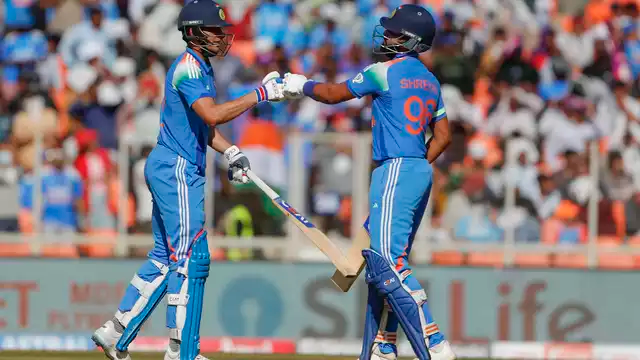
Squad for the first three ODIs: Shubman Gill [C], Rohit Sharma, Virat Kohli, Shreyas Iyer [VC], KL Rahul [WK], Nitish Kumar Reddy, Axar Patel, Naman Dhir, Anshul Kamboj, Gurnoor Brar, Ruturaj Gaikwad, Arshdeep Singh, Ishan Kishan [WK], Mohammed Siraj, Prasidh Krishna*, Kuldeep Yadav
Squad for fourth and fifth ODIs: Shreyas Iyer [C], Rohit Sharma, Virat Kohli, Tilak Varma, Ishan Kishan [WK, VC], Nitish Kumar Reddy, Axar Patel, Naman Dhir, Auqib Nabi, Gurnoor Brar, Ruturaj Gaikwad, Arshdeep Singh, Kumar Kushagra [WK], Mohammed Siraj, Yash Thakur, Kuldeep Yadav
[Cricbuzz]
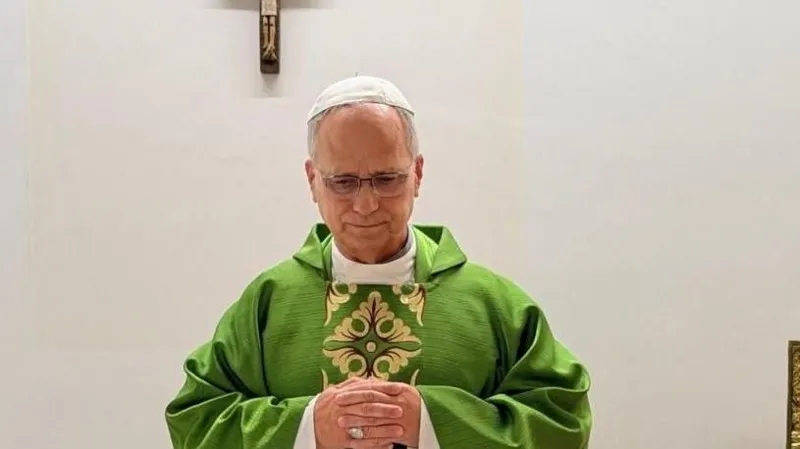
Pope Leo XIV has been pictured celebrating Mass from hospital, in the first images of him released by the Vatican since he underwent lung surgery.
The 71-year-old pontiff was diagnosed with lung cancer after the surgery at Rome’s Gemelli Hospital on Tuesday afternoon, which the Vatican said had been “successful” and proceeded without complications.
The images shared on Friday showed the Chicago-born Pope wearing a green robe while standing behind a makeshift altar on the tenth floor of the hospital.
Pope Leo “celebrated with the medical and nursing staff” and thanked workers for their service, the Vatican press office said.
On Friday, the Pope’s doctors said tests had shown “a steady improvement in his general condition” since his procedure.
His doctors said that a chest X-ray indicated “good recovery of the operated lung”.
The whole lower lobe of the Pope’s right lung was removed “to ensure the procedure was radical”, the Vatican said following the surgery.
“After the operation, the Pope awoke normally and returned after a brief period of observation to his room,” it said earlier, before he spent a “peaceful night” at the hospital.

Pope Leo first announced that he would be having the operation during his weekly Sunday prayers, telling the crowd in St Peter’s Square that doctors had found a “well-contained” nodule on his lung “at an early stage” and advised him to have it removed.
Nodules are quite common and not necessarily cancerous, but after it was examined the medical team confirmed it was, “as suspected by pre-operative tests”, the Vatican said. He was diagnosed with lung adenocarcinoma.
The Vatican has stressed that the Pope had shown no symptoms of infection or illness prior to the procedure.
[BBC]
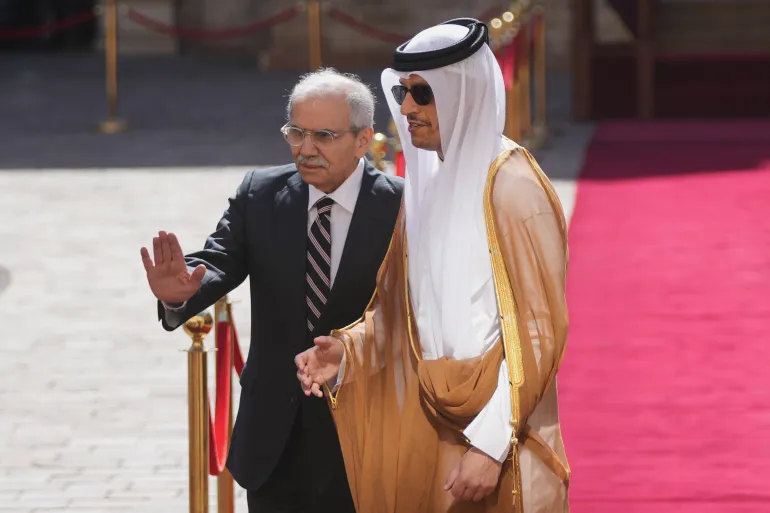
Qatar’s prime minister has announced plans to set up what he described as a “massive” solar plant in Lebanon to help ease its energy crisis.
Sheikh Mohammed bin Abdulrahman bin Jassim Al Thani made the announcement during his visit to Beirut on Friday, after meeting his Lebanese counterpart, Nawaf Salam.
“We have agreed to establish a comprehensive framework for cooperation in the energy sector and to present viable solutions,” Sheikh Mohammed said.
QatarEnergy has reached an agreement with French company TotalEnergies to jointly develop a solar power plant in Lebanon as an initial project.
The aim is to develop a major investment project “that would benefit the Lebanese economy, as well as the Qatari companies and entities participating in it”, he added.
Prime Minister Salam said he would put the plans for Lebanon’s electricity sector to the Lebanese Cabinet soon.
“The Qatari side will fund, implement and activate the project without any cost on the Lebanese state,” Lebanon’s leader said, adding that such a move is important because of the country’s financial crisis.
Lebanon’s state electricity company is one of the biggest sources of debt, haemorrhaging about $40bn over past decades with a bloated workforce and outdated infrastructure. The company provides only a few hours of electricity a day and the state, until a year ago, took advances from the Central Bank when diesel fuel ran out.
Sheikh Mohammed said Doha stands in “solidarity with the Lebanese people” and the entire region “in this dire hour”. Lebanon has been struggling with multiple energy crises in recent years and the situation has been compounded by the country’s financial collapse and Israel’s ongoing assault.
Earlier in the day, the Qatari PM also met Lebanon’s president and parliament speaker.
Among the topics discussed was the situation in southern Lebanon, where Israel continues its assault, capturing dozens of towns and villages.
Sheikh Mohammed said “Israeli violations within the Lebanese territories” were a large part of his talks.
He said that Israel should withdraw from Lebanon and cease its attacks, adding that Qatar is working in coordination with the United States to help lay the groundwork for future reconstruction in southern Lebanon to allow displaced people to return to their homes.
Israeli attacks on southern Lebanon have continued despite a ceasefire agreed in June. Under the agreement brokered by the US, the Lebanese government is to disarm Iran-backed Hezbollah. In return, Israeli forces will gradually withdraw from southern areas that they occupy. However, Hezbollah is not part of the agreement and has refused to disarm until Israel withdraws from the country.
Lebanese authorities say Israeli attacks have killed more than 4,300 people in the country since March. About 1.2 million people were also displaced in Lebanon at the height of the war.
Although most have returned home since the June ceasefire, more than 300,000 people remain displaced, according to the International Organization for Migration.
Lebanon’s PM Salam thanked Qatar for its “continuous” support during some of Lebanon’s “darkest hours”.
[A;jazeera]

Iyer to lead in last two New Zealand ODIs, Kushagra earns maiden call-up

Pope pictured for first time since surgery and cancer diagnosis

Qatar announces ‘massive’ solar plant project in Lebanon

Samagi Spice Exports to launch Ceylon Cinnamon based beverage range

Asian Cup in Saudi Arabia could be postponed by a year amid Houthi attacks

Houthi missile attack on Yemeni presidential palace kills five, minister says

‘Dates have the highest sugar content to fight Coronavirus’

Sunday Island 27 December – Headlines

#SundayIsland 17th December – Headlines

Sunday Island – 28th March

Sunday Island Headlines – 21 March

Sunday Island – 21st February – Headlines
-

 News6 days ago
Sri Lanka escalates anti-graft drive with Shiranthi’s jailing
-

 News7 days ago
NPP govt. reminded of its responsibilities as US warship leaves Colombo
-

 Latest News7 days ago
Farhan, Sadaqat help Pakistan ace 183 chase to go 1-0 up
-

 Latest News5 days ago
Farhan and Sadaqat help Pakistan seal series in style
-

 News6 days ago
Iranian ships stranded, Lanka fears US sanctions
-

 Latest News3 days ago
Nissanka’s return headlines Sri Lanka’s Test squad against Pakistan
-

 Features5 days ago
Intake 16: 45 years of duty and honour
-
 News7 days ago
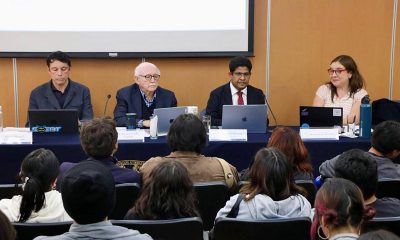
Interdicted top House official Kularatne receives special recognition in Mexican Parliament