
Latest News
India flex batting muscle before collapse to set New Zealand 107

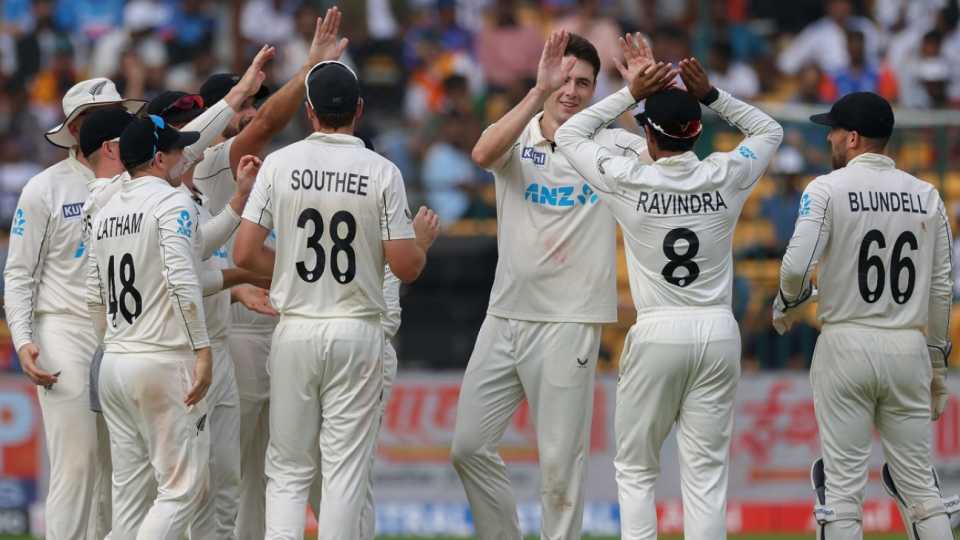
Test cricket showed off in all its glory as India, led by the impish Sarfaraz Khan and Rishabh Pant, threatened to pull off the unthinkable in an audacious manner, but the second new ball claimed seven wickets for 62 runs to leave New Zealand 107 to win their first Test in India in 36 years. That is incidentally the lowest target defended in India, but on a rank turner in Mumbai in 2004-05.
This was Test cricket shorn of all of its niceties. The bowlers were under extreme pressure from Sarfaraz and Pant, who added 177 in 35.1 overs, as India tried to become only the second team to win a Test from a sub-50 first innings. This same approach resulted in a collapse when the second new ball started to nip around. This was high-variance Test cricket. India lost 17 wickets for 108 runs to the first and the third new balls, but scored 400 for 3 in 80 overs in between.
India’s quick scoring rate meant the second new ball was New Zealand’s absolute last roll of the dice. Had they failed to cause any damage with the new ball, the best they could have hoped for was a draw. Keeping in mind how they had been pummeled and made to look toothless for 80 overs, it was a show of remarkable skill and persistence with the new ball to roar back into the match.
In under 20 overs, they drew 43 false shots from India, having done so only 72 times in the first 80 overs. Much of it was down to Sarfaraz, swinging his bat hoping to blast the new ball, but who dare question that approach when he scored 150 showing similarly scant regard to the bowling. Pant himself tried to hit his way out, gloving a sweep off Tim Southee, slog-sweeping him out of the stadium, but then playing on the 6’6″ William O’Rourke with the replacement ball on 99, his seventh dismissal in the 90s to go with six hundreds.
O’Rourke was fiery, 3-3-0-3 at one point with the new ball, before Matt Henry found just the optimum seam to take out the last three. It showed just how far you fall behind when you get bowled out for 46. Sarfaraz and Pant carried on from the 231 for 3 on day three, and managed to one-up the progress. Team-mates at the Under-19 World Cup, they were innovative and thrilling.
Sarfaraz turned his first Test hundred into a 150, his 11th first-class score of 150 or more out of his 16 hundreds. Pant, who missed the keeping duties with a knock on his surgically repaired knee from his life-threatening road accident, matched him in audacity. However, his running hampered, he turned at least two couples into singles as he approached the hundred. He walked back with a wistful look at the sky.
If Sarfaraz toyed with the bowling with late-cuts and ramps while ducking and weaving, Pant slog-swept fast bowlers and charged at them to hit them past mid-off. His five sixes took him past Kapil Dev and placed him sixth in the list of top six hitters for India in Tests.
Before the new ball, the only time New Zealand came close to a wicket was a run-out opportunity at Pant’s end, but Tom Blundell reprieved him for the second time in the match by leaving his base to collect a wide throw, seemingly unaware of the opportunity at his end. Pant was on only 6 then.
As Pant felt his way into the innings, scoring 12 off the first 24 balls he faced, Sarfaraz took only six balls in the morning to bring out his cheekiness: a nonchalant ramp off O’Rourke’s first ball of the day. When they reinforced the field with a deep third and a deep point, Sarfaraz still bisected them.
Soon Pant joined him. They showed little regard for the field-sets, no fear of making mistakes, and the New Zealand bowlers again failed to provide Tom Latham any control. The biggest disappointment was Ajaz Patel, who turned the ball less than the part-timer Rachin Ravindra.
It seemed the seam bowlers wanted to trap Sarfaraz lbw, but that only kept giving him easy singles on the leg side. When the keeper came up to the stumps to root Pant to the crease, the visitors were rewarded with an edge but the dying pitch didn’t have enough in it to make it carry. Soon, though, he lofted Southee from the crease for a six back over his head.
In the eighth over of the day, Sarfaraz punched Southee to deep cover for what would have been a single for any other batter, but he had sent all the fielders back with his late-cuts. The boundary brought up an emotional hundred.
When Ajaz got one to kick at Pant from the rough, the glove absorbed a lot of the impact and the ball went straight down. He now decided he had to attack. In one dramatic Ajaz over, he hit two sixes. Then he survived an inside edge and an outside edge in the same over. The inside one saved him from lbw, and his back pad denied New Zealand a catch off the outside edge. Pant still managed to hit one more four in the over, India’s 47th boundary, more than the runs they scored in the first innings.
A shower brought them some relief, but India kept attacking before the new ball, taking their run rate back up to five an over. At first, it appeared New Zealand had exhausted all their luck in getting the conditions to bowl India out for 46 and in getting Rohit Sharma out in the second innings. For now, everything just started going past the bat or falling safe.
Sarfaraz survived seven various kinds of false shots before he finally lobbed one to cover as the ball seamed away from him. Pant, not quite at home himself against the new ball, tried a sweep before actually dropping jaws on the floor with the slog-swept six to go into the 90s.
Then came O’Rourke, who had been ramped for four first ball in the morning. This time his first ball nipped back and kicked at Pant to take the fatal bottom edge to silence the crowd. His extra bounce and seam movement away also accounted for KL Rahul. Then one came slowly off the surface to take the toe end on a Ravindra Jadeja pull.
Henry bowled an unbroken 10-over spell to keep a lid on the scoring and take the last three wickets to go with his first innings’ five. While the India fans had gone from praying for the rain to stop to now hoping for biblical thunderstorms, India didn’t seem pleased when they were asked to go off early for bad light, which did later turn into a massive storm. The new ball was moving, and India were hoping for some damage under artificial lights.
Brief scores:
New Zealand 402 and 0 for 0 need another 107 to beat India 46 and 462 (Sarfaraz Khan 150, Rishab Pant 99, Virat Kohli 70, Rohit Sharma 52; William O’Rourke 3-92, Matt Henry 3-102)
(Cricinfo)

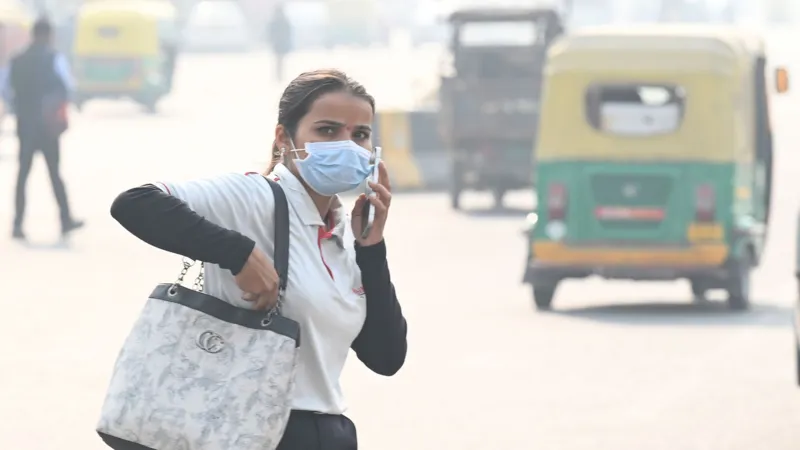
Seven million people’s cancer could be prevented each year, according to the first global analysis.
A report by World Health Organization (WHO) scientists estimates 37% of cancers are caused by infections, lifestyle choices and environmental pollutants that could be avoided.
This includes cervical cancers caused by human papilloma virus (HPV) infections which vaccination can help prevent, as well as a host of tumours caused by tobacco smoke from cigarettes.
The researchers said their report showed there is a “powerful opportunity” to transform the lives of millions of people.
Some cancers are inevitable – either because of damage we unavoidably build up in our DNA as we age or because we inherit genes that put us at greater risk of the disease.
But researcher Dr Isabelle Soerjomataram said “people are surprised to hear” that nearly four in 10 cancers can be prevented as it is “a substantial number”.
The International Agency for Research on Cancer, part of the WHO, analysed 30 preventable factors known to increase the risk of cancer.
These include smoking and ultraviolet (UV) radiation which can directly damage our DNA; obesity and too little physical activity which alter inflammation and hormones in the body to raise cancer risk; and air pollution which can wake up dormant cancer cells.
The agency’s report also looked at nine cancer-causing infections including HPV, hepatitis viruses which lead to liver cancer and the stomach bug H. pylori.
The team used data on cancer cases from 2022 and from the 30 risk factors a decade earlier – across 185 countries – to perform their statistical analysis.
The big three contributors to more than 18 million cancer cases around the world were found to be:
- smoking tobacco which caused 3.3 million cancers
- infections causing 2.3 million cancers
- alcohol use leading to 700,000 cancers

However, the overall figures mask a nuanced picture of cancer risk around the world.
There is a stark sex-divide with 45% of men’s cancers being preventable compared with 30% in women, partly down to higher levels of smoking among men.
In women living in Europe, the top three preventable causes of cancer are smoking, closely followed by infection and then obesity.
While in sub-Saharan Africa, infections dominate and account for nearly 80% of preventable cancers in women.
This means any measures to tackle these cancers would need to be tailored to each region or country.
“This landmark study is a comprehensive assessment of preventable cancer worldwide, incorporating for the first time infectious causes of cancer alongside behavioural, environmental, and occupational risks,” said Soerjomataram, the deputy head of the IARC Cancer Surveillance Unit.
“Addressing these preventable causes represents one of the most powerful opportunities to reduce the global cancer burden.”
The report, published in the journal Nature Medicine, showed lung cancer (linked to smoking and air pollution) stomach cancer (linked to H. pylori infection) and cervical cancer (linked to HPV infection) made up nearly half of all preventable cases of cancer.
Dr Andre Ilbawi, team lead for cancer control at WHO, said the study was “good news” as it showed something could be done and he pointed to the success of countries that have introduced policies to tackle smoking or vaccinate against HPV.
“The percentage of preventable cancers can change over time and our goal is to get it as close to zero as possible,” he said.
[BBC]
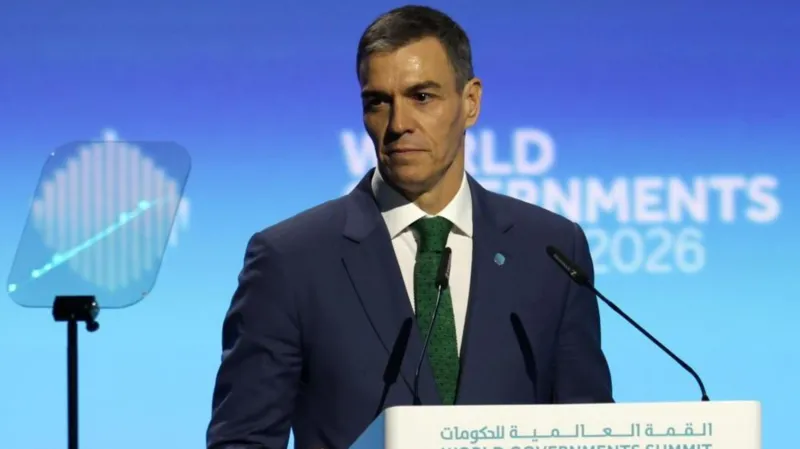
Spain has become the latest European country to make plans to ban social media for children under the age of 16.
“We will protect them from the digital Wild West,” Prime Minister Pedro Sánchez said at the World Governments Summit in Dubai on Tuesday.
The ban, which still needs parliamentary approval, is part of a raft of changes that include making company executives responsible for “illegal or harmful content” on their platforms.
Australia became the world’s first country to bring in a ban last year, with others watching – and judging – its success.
France, Denmark and Austria have also announced that they are considering their own national age limits.
The UK government has launched a consultation on whether to implement a ban for under-16s.
Social media companies have argued that the bans would be ineffective, difficult to implement and could isolate vulnerable teenagers. Reddit is challenging Australia’s ban in the High Court.
“Today, our children are exposed to a space they were never meant to navigate alone,” Sánchez said, describing social media as a place of “addiction, abuse, pornography, manipulation [and] violence. “We will no longer accept that. We will protect them.”
Sánchez first mooted a possible ban in November, but on Tuesday, the plan was fleshed out.
Under the changes, social media platforms would be required to have effective age verification systems, “not just check boxes, but real barriers that work,” the prime minister explained, in a possible reference to the loopholes Australian children use to bypass checks – including simply using a photo of an adult.
The new laws would also criminalise manipulating algorithms to amplify illegal content.
“This is something created, promoted, and disseminated by certain actors whom we will investigate, as well as the platforms whose algorithms amplify disinformation in exchange for profit,” Sánchez said.
“Hiding behind code and claiming that technology is neutral is no longer acceptable.”
There would also be a new system designed to track “how digital platforms fuel division and amplify hate”. No further details were given on how this would work.
Another measure, Sánchez said, would be to “investigate and prosecute the crimes committed by Grok [X’s AI tool], TikTok, and Instagram”.
The European Commission has launched an investigation into Grok over concerns it was used to create sexualised images of real people.
The UK has announced its own investigation into Grok and on Tuesday in France, the offices of X were raided by the Paris prosecutor’s cyber-crime unit as it looked into allegations of offences including unlawful data extraction and complicity in the possession of child pornography.
X is yet to respond to either investigation – the BBC has approached it for comment. It has previously characterised the French investigation as an attack on free speech.
[BBC]
Latest News
Join hands in unity, determination and brotherhood to build the beautiful shared dream of ‘A Thriving Nation – A Beautiful Life’ – President
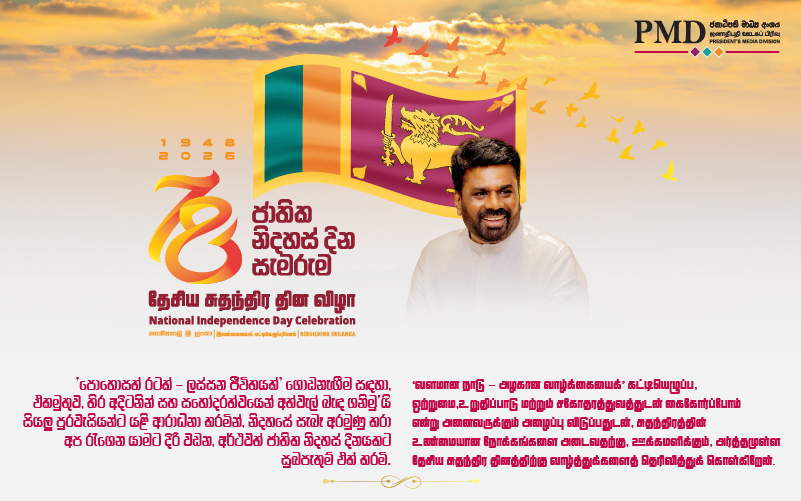
President Anura Kumara Dissanayaike in his Independence Day message called upon all Sri Lankans to join hands in unity, determination and brotherhood to build the beautiful shared dream of ‘A Thriving Nation – A Beautiful Life’
The full text of the President’s message:
“We commemorate the 78th National Independence Day at a historic moment when, despite numerous challenges, our country is moving steadily forward while regaining economic stability. As Sri Lankans, through our collective struggle, we have within a short period of approximately eighteen months succeeded in achieving tangible economic progress. Amidst adversity, acting collectively and with determination, we have been able to position Sri Lanka on the international stage as a nation branded by a clean and principled political culture, a beautiful country rising with integrity.
Our next foremost objective is to ensure that the macroeconomic gains we have achieved flow to communities of all ethnicities across all provinces of Sri Lanka. We firmly believe that without this, it will be impossible to realise the true rhythm and essence of the new development process we are building.
Recently, we were compelled to confront the largest natural disaster of our time. While the experience of this calamity was painful, the strong foundations we have built over the past eighteen months have enabled us, with the support of all stakeholders, to move forward successfully in the process of recovery and restoration.
Throughout the period since independence, our nation has often missed golden opportunities to steer the country in the right direction, to achieve our national aspirations, and to live together in unity. This time, however, we are determined not to repeat those mistakes. With unwavering resolve, we are striving to elevate our country into a more advanced, resilient and dignified State than it has ever been. I wish to emphasise that this endeavour is being carried out while safeguarding our proud culture, our ancient history and our invaluable heritage, standing firmly upon them.
I hold an unshakable faith that by realising in the twenty-first century, the dream of a proud nation that was born in the twentieth century but later became blurred, we can build Sri Lanka into the developed, prosperous and virtuous country that our people expect, and thereby certainly create the new era for which we have long aspired. In this endeavour, we place our firm confidence in the strength of all our citizens, in their collective spirit and in their unwavering character.
As we reclaim for our nation the victories that were lost in the past century, I once again invite all citizens to join hands in unity, determination and brotherhood to build the beautiful shared dream of ‘A Thriving Nation – A Beautiful Life’. With this call, I extend my warm wishes for a meaningful National Independence Day that inspires us all to advance towards the true objectives of freedom”.

Shower will occur in the Northern, North-central, Eastern and Uva provinces and in Nuwara-Eliya and Matale districts

House erupts over suspension of Deputy Secretary General

78th Independence Day celebrations at Bogambara Stadium

Colombo-Kandy railway line to be fully restored this year – Minister Bimal

FCID records statements from Shiranthi and Namal

The dawn of another Independence Day

‘Dates have the highest sugar content to fight Coronavirus’

Sunday Island 27 December – Headlines

#SundayIsland 17th December – Headlines

Sunday Island – 28th March

Sunday Island Headlines – 21 March

Sunday Island – 21st February – Headlines
-
 Opinion5 days ago
Sri Lanka, the Stars,and statesmen
-
 Business6 days ago
Climate risks, poverty, and recovery financing in focus at CEPA policy panel
-

 Business4 days ago
Hayleys Mobility ushering in a new era of premium sustainable mobility
-

 Business1 day ago
SLIM-Kantar People’s Awards 2026 to recognise Sri Lanka’s most trusted brands and personalities
-

 Business4 days ago
Advice Lab unveils new 13,000+ sqft office, marking major expansion in financial services BPO to Australia
-

 Business4 days ago
Arpico NextGen Mattress gains recognition for innovation
-

 Business3 days ago
Altair issues over 100+ title deeds post ownership change
-

 Business3 days ago
Sri Lanka opens first country pavilion at London exhibition