
News
India COVID-19 cases cross 7 million as experts warn of complacency

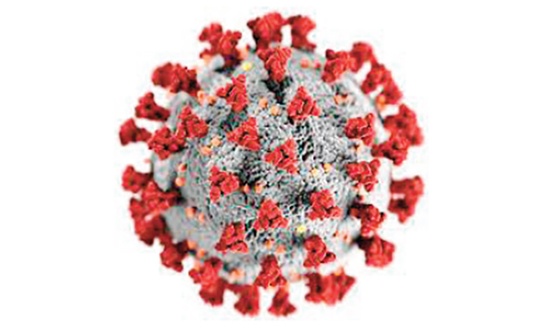
India’s confirmed coronavirus toll crossed 7 million on Sunday with a number of new cases dipping in recent weeks, even as health experts warn of mask and distancing fatigue setting in, agency reports from New Delhi said yesterday.
The Indian Health Ministry registered another 74,383 infections in the past 24 hours. India is expected to become the pandemic’s worst-hit country in coming weeks, surpassing the U.S., where more than 7.7 million infections have been reported.
The ministry also reported 918 additional deaths, taking total fatalities to 108,334.
The number of people who have died of COVID-19 has remained relatively low in South and Southeast Asia — from India to Vietnam and Taiwan — compared to European countries and the United States, said Dr. Randeep Guleria, a government health expert
“We have been able to keep the curve rise slow, but I do agree that we have not been able to get it to move aggressively down. That’s related to our population density, diversity of our country and socioeconomic challenges in our country,” said Guleria, referring to India’s burgeoning population of nearly 1.4 billion.
Some experts say though that India’s death toll may not be reliable because of poor reporting and health infrastructure and inadequate testing.
India aims to provide vaccines to 250 million people by July 2021, Health Minister Harsh Vardhan said last week. He said that the government was planning to receive 450 million to 500 million vaccine doses and would ensure “equitable access”.
India saw a steep rise in cases in July and added more than 2 million in August and another 3 million in September. But it is seeing a slower pace of coronavirus spread since mid-September, when the daily infections touched a record high of 97,894.
It’s averaging more than 70,000 cases daily so far this month. India has a high recovery rate of 85% with active cases below 1 million, according to the Health Ministry.
Health officials have warned about the potential for the virus to spread during the upcoming religious festival season, which is marked by huge gatherings in temples and shopping districts.
A crucial factor will be people wearing masks and maintaining a safe distance.
Dr. S.P. Kalantri, a hospital director in the village of Sevagram in India’s worst-hit western Maharashtra state, said that people in his village had stopped wearing masks, maintaining distance or washing their hands regularly. He added that the sick were still being brought in to his hospital.
India’s meager health resources are poorly divided across the country. Nearly 600 million Indians live in rural areas, and with the virus hitting India’s vast hinterlands, experts worry that hospitals could be overwhelmed.
“If we are able to have good behavior in terms of physical distancing and masks, maybe by early next year we should be able to come to a new normal. COVID-19 will not finish but it will be under reasonable control with travel and other things becoming much more easier and people relatively safer,” said Guleria.
Retired virologist Dr. T. Jacob John said there was increasing tendency among Indians not to wear masks or maintain distancing.
Social media have compounded the problem by propagating misinformation and fake cures. “And the result of this is that people have gotten fed up and have started making their own conclusions,” John said.
Nationwide, India is testing more than 1 million samples per day, exceeding the World Health Organization’s benchmark of 140 tests per 1 million people. But many of these are antigen tests, which look for virus proteins and are faster but less accurate than RT-PCR, which confirm the coronavirus by its genetic code.
With the economy contracting by a record 23.9% in the April-June quarter, leaving millions jobless, the Indian government is continuing to relax lockdown restrictions that were imposed in late March. The government in May announced a $266 billion stimulus package, but consumer demand and manufacturing are yet to recover.
A large number of offices, shops, businesses, liquor stores, bars and restaurants have reopened. Restricted domestic and international evacuation flights are being operated along with train services.

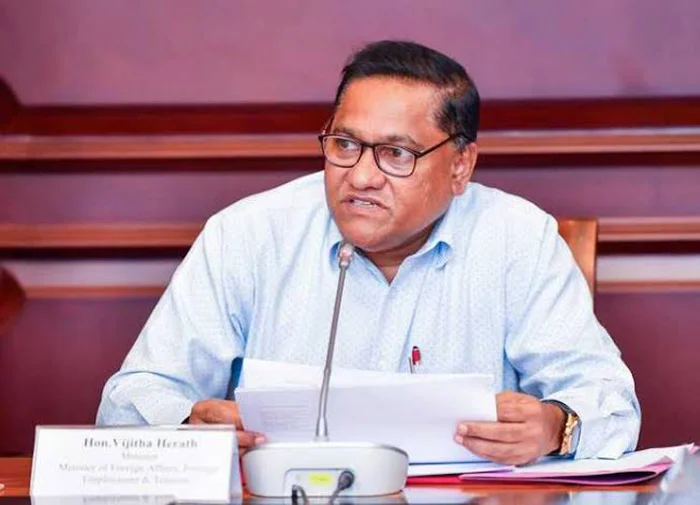
Foreign Affairs Minister Vijitha Herath said that Sri Lanka and India would sign three agreements on defence cooperation today (09) during the official visit of Indian Defence Minister Rajnath Singh.
The agreements will cover cadet training and joint programmes, cooperation between the two countries’ defence colleges and the free maintenance of 24 40 mm L70 anti-aircraft weapons supplied by India to Sri Lanka during the 2000 to 2006 period.
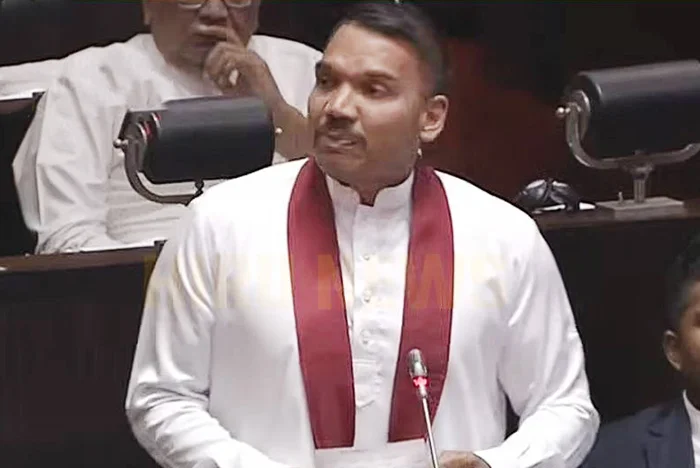
Remanded SLPP National Organiser and MP Namal Rajapaksa yesterday accused the government of misleading the public with unfulfilled promises and urged it to focus on reducing the cost of living and easing the economic hardships faced by the people.
Addressing Parliament after being brought from remand custody, Rajapaksa said the government had come to power promising to address the problems of farmers and ensure a reasonable price for paddy, but had failed to deliver on those pledges.
“During this period, 400,000 metric tonnes of rice have been imported,” he said.
He also raised concerns over the impact of drought conditions, claiming that water levels in 74 major reservoirs had fallen by 34 percent of their capacity. Villagers in some areas, he said, were struggling to obtain drinking water, with some having to wait 20 to 25 days for supplies.
Rajapaksa also questioned whether the Government had fulfilled promises made to people affected by Cyclone Ditwah, including compensation for damaged roofs and other property. He called on the Government to honour its pledge to provide US$1 million in assistance to disaster-hit Nepal, warning that failing to keep commitments to the international community would damage Sri Lanka’s reputation.
He criticised proposed tougher road-use regulations, saying the Government should first consider how practical the measures would be.
Turning to education, Rajapaksa accused the Government of failing to honour its pledge to establish 50 new universities, claiming that its actions had so far been limited to laying foundation stones for two-storey school buildings.
He also criticised the Government’s handling of the health sector, saying it had promised to improve the doctor-patient ratio but had instead become embroiled in disputes with the Government Medical Officers’ Association (GMOA).
“Today there are no life-saving medicines in hospitals,” he alleged, while claiming that dengue cases had reached 100,000. He also criticised President Anura Kumara Dissanayake for advising people to drink coriander (koththamalli) rather than seeking hospital treatment.
“How long are you going to run this country on lies? Keep in mind that empty lies will not solve the problems of the people,” Rajapaksa said.
Rajapaksa was brought to Parliament in a prison bus at around 9.20 am, under special security arrangements, to attend the parliamentary sitting.
Prisons Commissioner and Media Spokesman Senaka Pallathenna, said Rajapaksa had been brought to Parliament at the request of the Speaker.
The Secretary General of Parliament had written to the Commissioner General of Prisons the previous day requesting arrangements for Rajapaksa to attend parliamentary proceedings.
Rajapaksa, who is in remand custody in connection with an ongoing case, declined to comment on his situation when journalists questioned him at the Parliament entrance, saying he would make his statement inside the chamber.
Notably, he made no reference to his arrest or the case during his parliamentary speech.
News
Chartered Institute of Media Professionals of Sri Lanka Bill inconsistent with the Constitution- SC
by Saman Indrajith
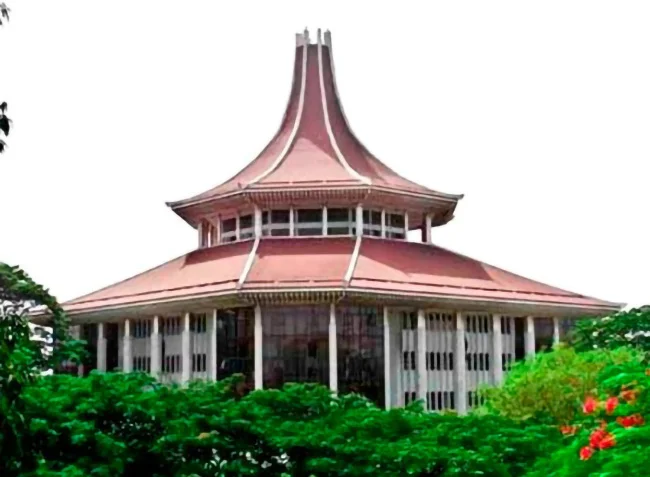
The Supreme Court has determined that three clauses of the Bill, titled the Chartered Institute of Media Professionals of Sri Lanka, are inconsistent with the Constitution, Speaker Dr. Jagath Wickramaratne told Parliament yesterday (08).
The determination was made in response to a constitutional challenge under Article 121(1).
The Court held that Clause 3(1) is vague and inconsistent with Articles 12(1) and 14(1)(g) of the Constitution. It can therefore be passed only with the special majority required under Article 84(2), unless the clause is deleted.
Clause 4(o) was also found to be inconsistent with Articles 12(1) and 14(1)(g). It would require a special majority unless amended in accordance with the changes proposed by the Court.
The Court further ruled that Clause 5(4)(b) is inconsistent with Article 12(1) and may be passed only with the special majority stipulated in Article 84(2). The inconsistency would cease if the clause is amended as directed by the Court.
The remaining provisions of the Bill were found to be consistent with the Constitution.
Speaker Wickramaratne subsequently directed that the full Supreme Court determination be printed in the Official Report of Parliament.

Legacy of enforced disappearances: Vital facts conveniently forgotten to whitewash LTTE and India

Quicks, rotate them and look after them

Priority areas for deepening Japan-SL economic ties

Three more Indo-Lanka agreements on defence to be signed today

Navigating Sri Lanka’s Israeli Dilemma

From Bally’s to the Backstreet: Inside the business of Casinos and Cards – II

‘Dates have the highest sugar content to fight Coronavirus’

Sunday Island 27 December – Headlines

#SundayIsland 17th December – Headlines

Sunday Island – 28th March

Sunday Island Headlines – 21 March

Sunday Island – 21st February – Headlines
-

 News6 days ago
Denied of promotion to SC despite vacancies, justice Gurusinghe retires
-

 Latest News7 days ago
Grade 5 scholarship exam results released
-

 News6 days ago
22A: SC urged to suspend hearing, appoint full bench
-

 News4 days ago
Namal remanded until Sept. 18 over Airbus deal investigation
-

 Latest News3 days ago
Tharanga creates history with Diamond League crown in Brussels
-

 News6 days ago
Govt. seeks NATO assistance
-

 News7 days ago
40 professional organisations and TU oppose proposed 22A
-

 News7 days ago
Ai-CHA expands Lankan footprint with new Negombo outlet