
News
India and Lanka commit to more cooperation in education and skills training

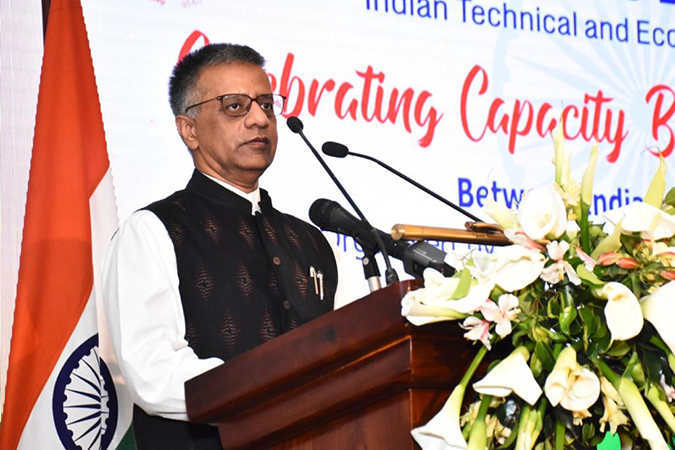
ITEC Day Celebration by High Commission of India
To mark 58 years of capacity building partnership between India and Sri Lanka through Indian Technical and Economic Cooperation (ITEC), High Commission of India in Colombo celebrated ITEC Day 2022 on Sept 28.
An Indian High Commission release said: Education Minister Susil Premajayantha and Secretary to the Ministry of Education Nihal Ranasingha graced the occasion as the Chief Guest and the Guest of Honour respectively. The event was attended by over 100 participants, which included ITEC alumni from Sri Lanka, officials and professionals from diverse sectors who have participated in various training courses in India under ITEC programmes.
In his address, the Minister of Education lauded the historically close relations between India and Sri Lanka for more than 2000 years. He appreciated India for the ITEC slots and the annual scholarships offered to Sri Lankan nationals, and thanked India for the financial support extended to Sri Lanka in recent months. The Minister highlighted the scope for further cooperation between India and Sri Lanka in the field of higher education, skill development and capacity building, especially from India’s STEM (Science, technology, engineering, and mathematics) and IT sectors. He also referred to the comprehensive National Education Policy of India and its benefits for students and educators.
Indian High Commissioner Gopal Baglay noted the enormous interest shown by Sri Lankan officials for the ITEC programme over the years. He emphasised the importance of ITEC cooperation and remarked that “sky is the limit” for India-Sri Lanka partnership in education and skills training. High Commissioner highlighted India’s endeavour to help Sri Lanka in the education sector, including in higher education through partnership between higher education institutes in India and Sri Lanka, besides the current 402 ITEC slots and around 700 scholarships offered every year.
The participants reminisced and shared their experiences of ITEC training in India and appreciated the holistic content of the different ITEC programmes. Prof. Ilmi Ganga Hewajulige, Additional Director General R&D of Sri Lanka’s Industrial Technology Institute, who had undergone ITEC training programme on ‘Science, Technology and Innovation Policy’ at the Indian Institute of Sciences (IISC),Bengaluru described the programme as ‘a package of knowledge and experience’. She added that the information gathered on policy drafting and I-STEM were highly informative and the learnings had already been put to use in Sri Lanka as Sri Lanka’s National Science Foundation (NSF) has started a similar concept on I-STEM to have collaboration with the Indian system. Rishad Akram Rafi, Manager of Cyber Security & Compliance at Sunshine Holdings Plc., who attended Young Leaders Neighborhood Fellowship Programme at the St. Stephen’s college, New Delhi highlighted the lectures and experience he received in India in diverse fields ranging from Economics, constitutions, Policy planning, Political science, Healthcare & Law. Sasija Gayeshini Silva, Deputy Director of Education, Zonal Education Office at Chilaw, who attended the ITEC course on “Design Thinking Approach for Innovative Organizations” conducted by Jaipuria Institute of Management, Noida said that the ITEC training motivated her to work for her motherland with renewed energy. Chathurdi Udari Withange, Career Counsellor at University of Colombo,who attended the ITEC training program conducted by Swami Vivekananda Yoga Anusandhana Samsthana (SVYASA), Bengaluru termed the training as “life changing” experience and mentioned that she will use the training to help others to find their inner peace and happiness through Yoga. The participants also remarked that the training modules were synchronised with modern technologies and were social relevant.
ITEC is a flagship programme of the Government of India launched in September 1964 for extending technical assistance and enhancing capacity building of friendly developing countries. It has emerged as an important vehicle for India’s contribution to human resource development of partner countries with over 200,000 persons from 160 fellow developing countries having participated in the programme. Sri Lanka is currently allotted 402 training slots annually for the ITEC programme. Every year Indian diplomatic Missions celebrate this South-South partnership all over the world as ‘ITEC Day’.







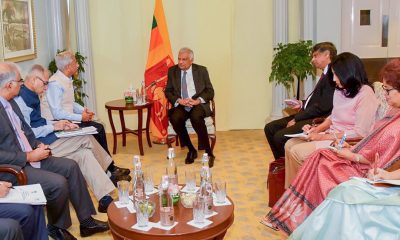


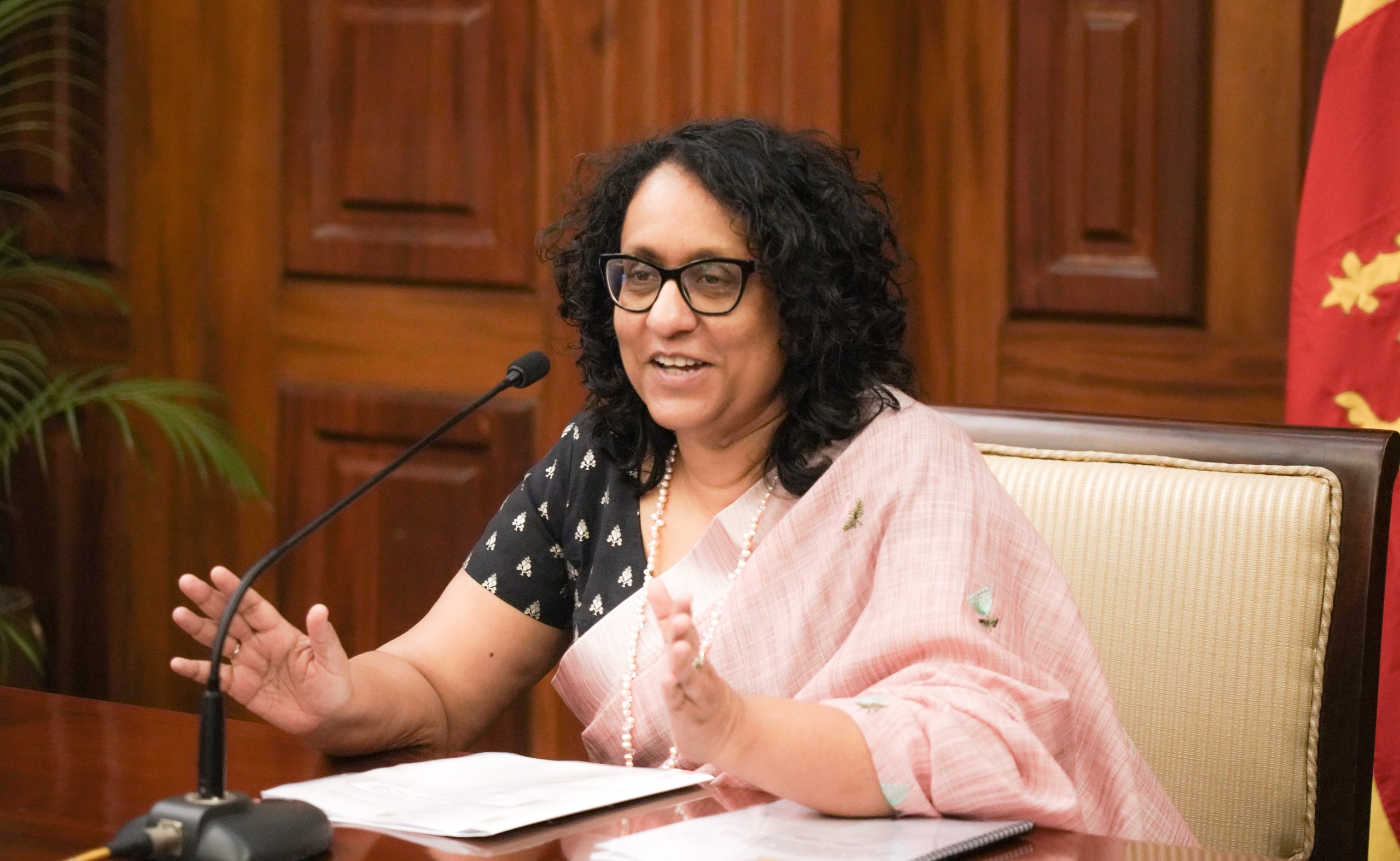
Prime Minister Dr. Harini Amarasuriya emphasized that addressing the drug issue in the country must be treated as a national priority, highlighting that it must deliver results at the ground level.
A meeting to brief the Prime Minister on the National Strategic Plan for the Management, Treatment and Rehabilitation of Persons with Substance Use Disorders (SUD) 2026–2030 was held with the participation of officials from the Ministry of Health and Mass Media and other key stakeholders on 13th of March at the Temple Trees.
The discussion focused on the proposed national strategy developed to address the growing health, social and economic challenges associated with substance use disorders in Sri Lanka. The strategic plan aims to strengthen prevention, treatment, rehabilitation and reintegration services through a coordinated and evidence-based national approach.
During the meeting, attention was drawn to existing gaps in early identification of substance use disorders, continuity of care, community-based follow-up and reintegration of recovering individuals into society. The plan proposes several key interventions, including strengthening screening and symptomatic treatment at primary healthcare and outpatient levels, improving hospital-based treatment and follow-up services, expanding residential rehabilitation facilities, and enhancing community-based rehabilitation and relapse prevention programmes.
Special emphasis has also been placed on providing targeted support for vulnerable groups, including children and adolescents, pregnant women, mothers with children and prison inmates.
Speaking on the importance of strengthening the national response to drug issues, the Prime Minister Dr. Harini Amarasuriya noted that the drug menace has evolved into a serious social crisis that threatens social stability and security of families and the nation as a whole highlighting that law enforcement and rehabilitation in this regard must be given equal priority.
The Prime Minister further underscored the importance of including public awareness initiatives and responsible media reporting as key components of the national strategy.
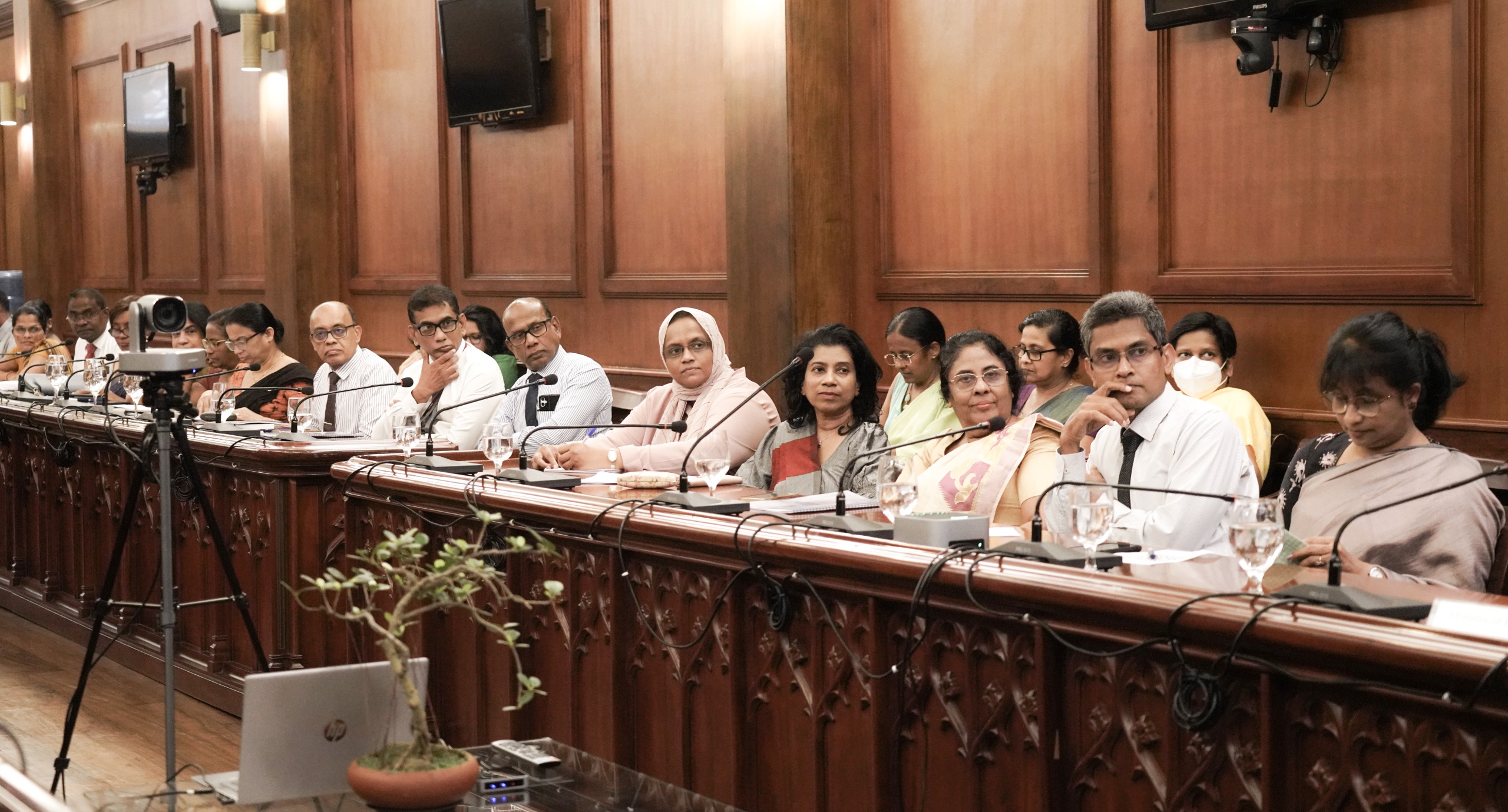
The meeting was attended by the Secretary to the Prime Minister Pradeep Saputhanthri, Secretary to the Ministry of Health Dr. Anil Jasinghe, officials from the Department of Prisons, Bureau of Rehabilitation, Sri Lanka Police Ministry of health, Ministry of Public Security and Parliamentary Affairs, Ministry of Justice and National Integration ,Ministry of Defense, Ministry of Education, Ministry of Women and Child Affairs and other relevant department and ministries.
[Prime minister’s Media Division]

In light of the prevailing geopolitical developments in Middle East, the petroleum product supply chain has been adversely affected. At the same time, the demand for fuel has increased abnormally, resulting in a depletion of the country’s existing fuel stock. Therefore, it has become necessary to carefully manage the available fuel reserves in order to sustain the nation’s economic activities.
Furthermore, it has recently been observed that certain groups have been illegally purchasing fuel in excessive quantities. The Government of Sri Lanka intends to prevent such improper consumption and ensure an uninterrupted fuel supply for the day-to-day needs and economic activities of the general public.
Accordingly, a QR code system will be implemented with effect from 06.00 a.m. on 15.03.2026.
Fuel will not be issued by any operating filling station in the country without a valid QR code from 06.00 a.m. on 15.03.2026.
Steps to Obtain the QR Code
- Users who have already registered for the QR Code
- Users whose vehicle ownership and registered mobile number remain unchanged since their initial registration may download their QR Code from the website https://fuelpass.gov.lk/ starting from midnight on 14.03.2026, using the ‘Vehicle Login’ button.
- Users whose vehicle ownership or registered mobile number has changed since their last registration are required to re-register their details through the website https://fuelpass.gov.lk/ starting from 6.00 a.m. on 15.03.2026, using the ‘Vehicle Registration’ button.
- Users who have not previously registered for the QR Code and users with newly registered vehicles at
the RMV - Registration can be completed starting from 06.00 a.m. on 15.03.2026 through the
website https://fuelpass.gov.lk/, using the ‘Vehicle Registration’ button.
The number of litres allocated for each category of vehicle is stated below.
A special fuel issuance system will be implemented for vehicles required to support national production and essential services.
| Vehicle Class | Capacity control volume for fuel pass
(L) |
| Buses | 60 |
| Motor cycle | 5 |
| Van | 40 |
| Motor car | 15 |
| Motor Lorry | 200 |
| Land Vehicles | 25 |
| Three Wheeler | 15 |
| Special Purpose Vehicle | 40 |
| Quadricycle | 5 |
[Sri Lanka Transport Board will issue fuel to the private buses].

The National Water Supply and Drainage Board (NWSDB) on Friday said the largest groundwater source discovered in Sri Lanka so far had been identified during tube-well drilling near the Pitabeddara Police Station.
Indrajith Gamage, geologist in charge of the Southern Province, said the source recorded a continuous flow of about 10,000 litres (10 cubic metres) per minute, marking the first instance in the country where a groundwater source of that magnitude had been found.
He noted that the previous largest groundwater source was discovered in the Madhu area, which recorded a flow of about 7,000 litres per minute.
According to the NWSDB, the tube well was drilled following geological studies of rock layers and the identification of underground water through fractures in rock strata using specialised technical instruments.
The Board said steps would be taken to distribute water from the newly discovered source to residents facing shortages in Pitabeddara, Morawaka and surrounding areas.

‘Gruesome’ war bets fuel calls for crackdown on prediction markets

Three more Iran football team members change minds over asylum

Trump urges UK and other nations to send warships to Strait of Hormuz

Addressing the drug issue in the country must be treated as a national priority – PM

QR code system will be implemented for fuel with effect from 06.00 a.m. today (15th)

Showers will occur at several places in the Western, Sabaragamuwa, Central, North-western and Uva provinces and in Galle, Matara, Mannar and Anuradhapura districts after 2.00 pm.

‘Dates have the highest sugar content to fight Coronavirus’

Sunday Island 27 December – Headlines

#SundayIsland 17th December – Headlines

Sunday Island – 28th March

Sunday Island Headlines – 21 March

Sunday Island – 21st February – Headlines
-

 News6 days ago
Repatriation of Iranian naval personnel Sri Lanka’s call: Washington
-
 Features6 days ago
Winds of Change:Geopolitics at the crossroads of South and Southeast Asia
-

 News5 days ago
Prof. Dunusinghe warns Lanka at serious risk due to ME war
-

 Sports4 days ago
Royal start favourites in historic Battle of the Blues
-

 Sports3 days ago
The 147th Royal–Thomian and 175 Years of the School by the Sea
-

 News3 days ago
Historic address by BASL President at the Supreme Court of India
-
 Business4 days ago
BOI launches ‘Invest in Sri Lanka’ forum
-
 News4 days ago
CEBEU warns of operational disruptions amid uncertainty over CEB restructuring