
Features
Improving rural economy


By Dr. C. S. Weeraratna (csweera@sltnet.lk)
Prof. N.A. De S Amaratunga in his piece “Is government in self-destructive mode? in The Island of 22 Jan. said more than 60% of people who voted for this government were poor rural people and he has emphasized the need to focus on these people. The livelihood of nearly 70% of those living in rural areas is farming. As per the policy manifesto of President Gotabaya Rajapaksa, ‘Vistas of Prosperity and Splendour’ (‘Rata Hadana Saubhagyaye Dekma’), one of the main objectives of the government is creating a people-centered economy through rural development. The Finance Minister in his budget speech presented recently, too, emphasized the importance of improving the Rural Economy. Thus, the government has emphasized the need to improve the rural economy.
The previous governments launched various programmes, such as “Api Wawamu-Rata Nagamu” and Divineguma “to increase rural economy by promoting national food production. But the fact that we spend around Rs. 300 billion annually to import food indicate that these programmes have not been effectively implemented. According to some newspapers a National Agriculture Policy would be formulated within the next three months. In 2007 a National Agriculture Policy was formulated by a team of experts. The publication titled “National Agricultural Policy for food and export agricultural crops and floriculture” by the Ministry of Agricultural Development and Agrarian Services covered 20 policy statements with the aim of solving many problems in the farmimg/agriculture sector which have a negative effect on the rural economy. We are not short of agriculture policies but what is lacking is their effective implementation. If the recommendations in these agricultural policies were effectively implemented we would not be spending around Rs. 300 billion annually, to import food, including crops, such as green gram.
Around 30% of land is used for cultivation of food crops and plantation crops. About 2 million smallholder farmers living in rural areas cultivating nearly 900,000 ha. under food crops such as cereals, legumes etc., contribute a substantial fraction of the country’s food requirement. Approximately, 800,000 ha are under planation crops such as tea, rubber and coconut, and about 20% of exports is the result of those working in these estates. Thus, those in rural areas including estates contribute to the economy of the country to a great extent.
Sri Lanka is a land of villages and there are around 14,000 of them. A majority of the population, nearly 80 percent, live in villages and estates. According to recent estimates, about 30 percent of the total households in rural districts of Sri Lanka live below the poverty line. Headcount Index reported for Badulla and Moneragala districts is around 37%, and the values reported for Matale, Puttalam, Hambantota, Kegalle and Ratnapura were 30, 31, 32, 32 and 34 percent respectively. . Nutrition surveys conducted in the recent past indicate high prevalence of malnutrition among those in rural areas which may have been caused by chronic poverty. A socio-economic survey conducted in the recent past indicates that although the rural sector has the ability to engage in productive activities, there are many constraints.
Wild elephants roaming in the rural villages causing death to many and destroying property aggravate the socio-economic hardships the rural sector has to face affecting the health, education and many other aspects of the rural population.
Around 70,000 people in many districts of the country are affected by a chronic kidney disease (CKDu). They are mostly in the rural areas of the country and are affected socially and economically. The patients in the final stages of CKDu have to go for dialysis which again affects the economy of rural people . In some families both parents have died and their children are helpless.
Pest attacks which destroyed large extents of cultivated crops cause considerable problems to farmers. According to press reports, the sena caterpillar called “Fall Armyworm” (Spodopteria Frugipedera) is destroying thousands of acres of maize in Ampara, causing severe difficulties to the farmers. In addition Brown Plant Hopper attacks are reported in some areas during some months. Paddy crop in Siyabalanduwa is affected by an unidentified disease.
In spite of the country receiving around 100 billion cubic meters of water annually, there are frequent water shortages, mostly in the rural areas where there are around 12,000 tanks. Most of them are silted reducing the water holding capacity of these tanks causing rural communities to face a shortage of water which seriously affects crop production and various domestic activities.
Those farmers, who manage to get a good crop of rice/vegetables are unable to sell it for a reasonable price. Very often farmers are forced to destroy their produce due to the inability to market their produce at reasonable prices. Marketing of agricultural products at a profit to the farmer is an issue which the authorities need to take cognizance of.
Unemployment is rampant in rural areas. Current data is not available but youth unemployment rate (age 15 – 24 years) corresponding to the first quarter 2020 is 26.8 percent. With the COVID-19, thousands of people who were employed abroad have come back to Sri Lanka increasing the percentage of unemployment, mainly in rural areas.
All these issues cause untold hardships to thousands of farmers and have a negative impact on the rural economy. No effective actions appear to have been taken by the relevant authorities to find appropriate solutions to these problems. Those representing the farming community in Parliament appear to be not concerned about the plight of our farming population who have voted them to power.
There is no centralized planning in farming in the country which sometimes leads farmers to cultivating the same crop/s, ultimately resulting in gluts. Previous governments attempted to solve this problem but they appear to have failed miserably.
If the authorities are genuinely keen to improve the rural economy, they need to address these issues. The villagers must be assisted to improve their economic activities and make them more productive. Research need to focus on these issues and all technological knowledge generated by researchers must reach the villagers. There has been rhetoric on rural economic development during the last few years. It is meaningful and effective actions that are necessary.




Long End Street is not a summation of Short End Streets. Eighteen short-term crises and no long-term growth in sight!
For quite some time, there has been no agency of government dealing with long-term economic and social policy questions. Nor have universities been of any help. There has been a National Planning Department in the Ministry of Finance but we have not seen any worthwhile reports from them. M. D. H. Jayawardena, in 1956, presented in Parliament the Six-Year Programme of Investment. Soloman Bandaranaike established a National Planning Council and a Planning Department, with Princy Siriwardena as its Director. They wrote the Ten-Year Plan, better known for its readability than its depth of analysis or policy content. Ten years or so later Dudley Senanayake established a Ministry of Planning and Employment with Gamani Corea (later of high international repute) as its Permanent Secretary. The Ministry was responsible for some useful analytical work and the development of a bureaucracy responsible for plan implementation. The latter was the work of a brilliant member of the Ceylon Civil Service, Godfrey Gunatilleke, who also worked in the Ministry. The major pre-occupation of the Ministry turned out to be the annual government budget and the management of direly scarce foreign exchange, all short term considerations. They set up a bureaucratic mechanism to evaluate capital expenditure in the government budget. The Ministry won plaudits for its Foreign Exchange Budget, some analytical wok on the economy, including population projections as well as education, in both schools and universities. As the 1970s wore on, planning earned a bad press and the new government of 1971 disbanded most of that and created a Department of National Planning in the Ministry of Finance, which survives to date.
A part of the purpose of this narrative has been to bring out that, all along, government has had no outfit of economists and sociologists whose job was to study long term changes in our society and the economy and in the rest of the world and propose solutions for consideration by governments. (A brilliant exception was the work on education, that was directed by Jinapala Alles, who had graduated in chemistry and was a fast learner and was at great ease with numbers. He was also an effortless leader of a small team of self-selected competent and enthusiastic public servants.) The government depended on the Central Bank for advice on long term development of the economy. Princy Siriwardena was seconded for service in the Planning Secretariat; similarly, Gamani Corea was from the Bank. Later, he was replaced with H.A.de S. Gunasekera, likely the most brilliant economics teacher in the University of Ceylon. He taught monetary economics, essentially short term. (His favourite economist Keynes famously wrote, “In the long run we are all dead”.)
When the Ministry of Planning and Employment was established in 1965, government plundered the Central Bank to staff it: Gamani Corea, R. M. Seneviratne, N. Ramachandran, Nihal Kappagoda and G. Usvatte-aratchi. Later, W. M. Tillekeratne and A. S. Jayawardena both long term employees of the Central Bank, were appointed as the chief economist of government. Jayawardena still later became the Governor of the Bank. Several other employees of the Bank, including J. B. Kelegama, P. B. Karandawela, P. B. Jayasundera worked at high levels in successive governments and that practice continued when Mahinda Siriwardena became the Secretary to the Ministry of Finance when Anura Dissanayake became the Minister of Finance. It is mysterious that the government saw no need for specialist advisers who would identify long term economic and social problems and solutions therefor, look out for markets and technology and warn of impending pitfalls, in contrast to our mighty neighbour which had a Planning Commission that handled long term problems and a Central Bank which had learnt to handle masterly, monetary problems.
Pitambar Pant, Montek Singh Ahluwalia, Manmohan Singh, I. G. Patel and Raghu Ram Rajan were most distinguished economics policymakers and central bankers. Japan benefited greatly from the work of MITI. So did Korea from its counterpart. This is not to argue that had there been an outfit of that sort, Sri Lanka would now be rich but to warn that the Central Bank is neither equipped nor fit to fight those battles. If you scan the Central Bank Act of 2023, you will find stabilisation the most frequently recurring theme. Clause 6 reads ‘The primary object (objective?) of the Central Bank shall be to achieve and maintain domestic price stability.’ The most generous reading that the Bank may have anything to do with economic development is in Clause 6 (4) ‘In pursuing the primary object (objective?), the Central Bank shall take into account, inter alia, the stabilisation of output towards its potential level.’ Lawyers may have a field day with that and economists may beg for its meaning.
Amarananda Jayawardena was the last Governor of the Central Bank who had understood that the central bank was equipped to handle short term problems and that not always valiantly, and that it had neither the tools nor the resources to plan and engineer long term development. As Governor, he did not speak for the government on long term economic and social problems, although prior to assuming duties as Governor of the Bank, he had been the chief economist of the government. Jayawardena knew all too well the nature of the tools and the resources he had and how far he could confidently aim and shoot. It was simply silly to produce a Five-year Road Map (no matter how colourful the accompanying graphics), when a central bank mainly used transactions in the short-term financial assets market to move interest rates and the demand for money. The Bank of England, for most of the 20th century, used Commercial Paper with two ‘good names’ at its Discount Window. Short-term and long-term rates of interest, normally, behave in a predictable relationship, although occasionally, and in volatile times, that relationship may become inverted. (I am not well read on recent Fed and the Riks Bank market operations.)
The economists at the Central Bank are experts in monetary policy and are rarely knowledgeable about economic growth. An exception was S. B. D. de Silva and he found writing a half page note to the Centra Bank Bulletin (monthly) stultifying. He left the Bank quite young and continued studying economics until the very end of his life. As undergraduates they may have read on economic growth and development but as professionals in the central bank, it is unlikely that they kept working on problems in that area. They may also have learned, some time, that there has been no central bank credited with spearheading economic development in any country. Therefore, to pretend that they can advise the government on economic planning, is a hobby which they would be wise to desist from.
We did a splendid job of saving our new born children and their mothers as indicated in low infant mortality and maternal mortality rates. We scored an even more resounding victory in educating all our children. If we have any claim to any civilizing missions in the 20th century, these two stand out. Beside them, we have been mostly failures. The economy has advanced only laggardly. It has miserably failed to exploit excellent opportunities to sell in burgeoning markets, output employing a healthy and educated labour force. Japan, South Korea, China, Vietnam, south India, Ethiopia, Rwanda and several other countries, all (except Japan) late comers to the game compared to Sri Lanka, succeeded in doing just that. It is wrong to blame governments alone for poor economic growth, as many do. Most economic activity in this country is run by the private sector and leaders there have made poor use of opportunities.
When ministers of government and its employers collect bribes, private sector persons pay bribes. The markedly rapid economic growth in Andhra Pradesh, Telangana, Karnataka, Tamil Nadu and Keralam and poor growth in Madhya Pradesh, Uttar Pradesh, Bihar and many others in the north east are under the same central government dispensation, sharply pointing to differences in the quality of business leadership in the two groups. ‘Big business’ here run betting shops, supermarkets, hospitals, import and market household equipment, banks and insurance companies and, most ambitiously maintain construction companies. (In the widely watched IPL cricket matches 2026, Sri Lanka advertised regularly a Betting Centre!) Tourism in this country is the business of small-scale enterprises with low productivity. The ubiquitous kade with a stock-in-trade of less than one hundred thousand rupees, borrowed from a relative or a friend, is a sign of rampant unemployment and not of budding entrepreneurship. When you go to consult a doctor in a private hospital in Colombo and wait endless hours, count the number of men and women employees idling, supervised by a proportionately large number of idling supervisors. Where are the large-scale manufacturing and service companies, selling the world over, where economies of scale abound in the 21st century? So far as I recall, there has been no Initial Public Offering (IPO) of shares in the Colombo Stock Market during the last 7 years. Nor have multinational companies established here any large factories or offices.
Is the air we breathe deathly to enterprise?
by Usvatte-aratchi

By the time Sir Keir Rodney Starmer resigned, polls showed that he had become the least popular Labour Prime Minister in living memory. His fall was all the more striking because his political beginnings had once suggested a very different trajectory. As a teenager in the Labour Party Young Socialists, and later as editor of the Marxist journal Socialist Alternatives, he had stood firmly on the radical left. As a human rights lawyer he opposed the illegal invasion of Iraq, earning a reputation for principle and moral clarity.
It was this early radicalism that his supporters later weaponised, presenting him as a unifying leftwing figure in the aftermath of the coup against the Labour Party leader Jeremy Corbyn. The right-wing of Labour, having spent years undermining Corbyn (including through a coordinated campaign that framed him, falsely, as anti-Semitic) found in Starmer a vessel through which they could reclaim the party while reassuring the membership that continuity with the Corbyn surge remained intact.
In his resignation speech, Starmer claimed to have inherited a politically, morally and financially bankrupt Labour Party. Yet the record shows that Corbyn had revived the party’s grassroots, drawing tens of thousands of new members back to a party embodying the tradition of Keir Hardie. The oligarchy closed ranks against this leftist heavyweight, using Starmer and the Labour right wing as their weapon. Starmer’s “Changed Labour” was not a renewal but a repudiation, embracing the very Thatcherite revisionism that had hollowed Labour out in the first place.
A Britain battered by decades of neoliberal restructuring formed the backdrop to Starmer’s rise. The cumulative effects of Maggie “milk-snatcher” Thatcher’s programme, deepened by Blair, Cameron, May, and Johnson, combined with the convulsions of Brexit to produce a profound economic, social, and political crisis. The Conservative Party imploded under the weight of its own contradictions. Starmer, offering managerial calm, an a Corbyn-lite manifesto, rode the wave of Tory collapse to a landslide victory.
But once in office, he revealed himself as a Blairite in sombre tones: a Thatcherite in Labour clothing. Within weeks he slashed winter fuel payments for pensioners, inaugurating a harsh antiworkingclass agenda. He embraced the Israeli government even as it carried out genocide in Gaza. The former human rights lawyer now used antiterror legislation to suppress dissent, particularly protests against the genocide. His immigration rhetoric, invoking an “island of strangers,” echoed the poisonous cadences of Enoch Powell.
Throughout his premiership he remained pofaced, showing little emotion even when forced into humiliating Uturns by public outrage. He displayed no visible sorrow at the mass killing of children in Gaza. Only at the prospect of losing office did he appear moved. He was, in the words of Saki, a man with “the soul of a meringue,” a mediocrity whose obedience to the oligarchic class and to Zionist backers embodied what Hannah Arendt called the banality of evil. His legacy – and that of the Tories who preceded him – is a nation distrustful of politicians of whatever hue, open to the pseudo-anti-elite, deception of the billionaire-backed racist far-right
His resignation leaves Britain at a crossroads – will it follow the fascistic path of Nigel Farage’s Reform Party, or will it go down the green-red road of Zach Polanski and Corbyn? Even replacing Starmer with the newly-elected Andy Burnham will only provide more-of-the-same Tory policies – Burnham went on record saying his first foreign visit as Prime Minister would be to Israel. These are the same policies that created a visceral hatred of Starmer and opened the gates for Reform’s surge.
When news of his resignation broke, a friend told this writer that the one who had engineered the exit of Jeremy Corbyn had been unable to complete two years in office. He added, ‘Rajakam kalath kalakam palade”-– even if you reign, your deeds will bear consequences.
And, so ends the Starmer era, not with the dignity of a statesman, but with the hollow thud of a project built on betrayal, opportunism, and the abandonment of the very principles he once claimed to uphold.
by Vinod Moonesinghe

 The name Hemaka Wijeratne may not be familiar with readers but he is an award-nominated music producer and, since his childhood, he has been involved in the field of music.
I’m told that he has good experience and practical knowledge of music, such as EDM /Hip Hop /Urban RnB/Traditional Music /Retro Music and Pop.
What’s more, he has learnt about a variety of new musical and recording production software technologies.
Hemaka, whose stage name is YAKA (now does that ring a bell!), started his music career in 2014, and has worked with leading producers and artistes, including Bathiya & Santhush (former Music Producer /Engineer) and also at Illnoize Studio – IRAJ Productions.
He was nominated for the People’s Choice Award at the 2017 YES FM Awards and also for Best Blockbuster Film Music at the Lux Film Awards.
Notably, American rapper Tech N9ne shared and commented on a track Hemaka mixed and mastered.
In addition, Indian rap stars Paal Dabba and Vengayo reached out to Hemaka, allowing him to establish connections with top Indian film mixer Shadab Rayeen, leading to more international collaborations.
Hemaka attended President’s College, Kotte, where he was highly active and deeply passionate about drama and music.
In the interval between his O/L and A/L exams, he began hosting his own DJ sessions and producing beats, using music production soft wear (FL Studio).
After completing his A/Ls, Hemaka pursued a Higher Diploma in Graphics and Media Production, while continuing to advance his career in audio production.
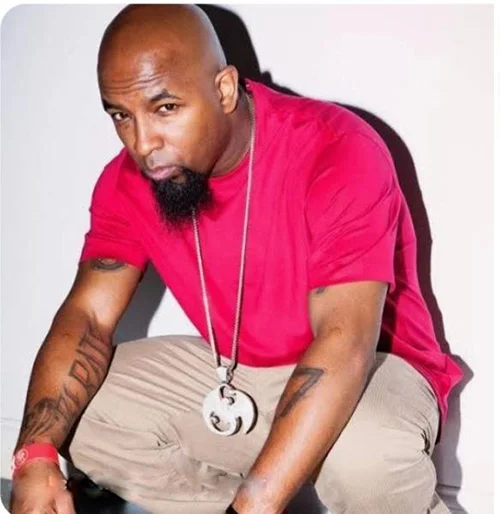
American rapper Tech N9ne shared and commented on a track Hemaka mixed and mastered
This talented, versatile artiste began his musical journey, working alongside award-winning producer and composer Pasan Liyanage, before collaborating with the renowned duo Bathiya and Santhush (BNS), in 2014, and, a few years later, he joined IRAJ Productions.
Throughout this time, Hemaka composed music for films, TV commercials, movie soundtracks, and corporate songs, covering all aspects of audio production, including recording, mixing, and mastering.
His portfolio features prominent hit productions, such as ‘McDonald’s 555,’ ‘Yan Yan Api Arpico Shopping,’ and the film Prawegaya.
Having gained extensive experience working with both local industry leaders and international artistes, he established his own production company, HITBOX, in 2018.
Additionally, he has worked as a beta tester for Output Audio and Pitch Innovations.

Central bankers live on Short End Street; Economic planners live on Long End Street

Social media collective:Govt. trying to restrict freedom of expression

SL needs an education system focused on global job market

A Requiem for Keir Starmer rule

With dengue raging, Namal asks what happened to much-touted ‘Clean Sri Lanka’ initiative

Body found near Teldeniya hospital: Suspect arrested in Jaffna

‘Dates have the highest sugar content to fight Coronavirus’

Sunday Island 27 December – Headlines

#SundayIsland 17th December – Headlines

Sunday Island – 28th March

Sunday Island Headlines – 21 March

Sunday Island – 21st February – Headlines
-

 News6 days ago
Creditor receives USD 2.5 mn as Lankan public bears loss from theft of Treasury funds
-

 News5 days ago
Creditor not yet paid
-
 News5 days ago
Consumers bearing 22% tax burden despite 18% VAT claim: Dr. Harsha de Silva
-

 Opinion7 days ago
Beyond diagnosis: A strategic design for 7% growth by 2029 (Part I)
-

 Features4 days ago
Nanda Pethiyagoda Wanasundara as three generations of family saw her
-

 Features3 days ago
Sri Lanka developing independent hydrographic capabilities
-

 Opinion6 days ago
SriLankan Airbus struck by lightning
-

 Latest News3 days ago
Sooryavanshi thumps fastest List A fifty as India A win tri-series