
Opinion
‘Important’ question of identity: Ethnicity and religion


by Susantha Hewa
No person who speaks a language and moves in society can think of living a ‘normal’ life without using the word “I” perhaps hundreds of times every day, and we are pretty sure that every time one uses it one refers to the same entity, “I”, which one considers ‘solid and unvarying’. However, this is to forget that each person has numerous identities and it is the context in which one finds oneself, thinks and acts that determines ‘which identity’ he or she “wears” at any given moment.
If a hale and hearty physician, who is at work, in a ward, were struck by some debilitating illness, and laid in a bed, he would suddenly undergo a change of his ‘identity,’ from that of a doctor to a patient, in his own mind, and in relation to his fellow workers, and the entire system, which had up to now defined his position as a physician. This is not to deny that he is no longer a doctor; only he has now a predominant identity of a sick person who feels helpless and earns the sympathy of others and whose safety is in the hands of others with whom he had worked and enjoyed a sense of power and prestige. Take another example. A powerful patriarch, who is the sole breadwinner and, so to speak, the unchallenged authority in a family, would dramatically change his identity if he gets paralyzed and confined to bed.
A less dramatic and a more widespread instance of this shift of identity is seen when people retire. The lowering of self-esteem may set in gradually when his former relations get less tangible and less stable. In other words, one’s ‘identity’ seems to be a changing image, which is a complex combination of a relational web with the outside world – not an inherent fixed ‘self’.
They say “no man is an island” to suggest that no man is self-sufficient. Perhaps, it is equally true that no man can afford the luxury of being completely self-defined, discounting his constantly changing relations with others and the social milieu in which he finds himself. Perhaps, contrary to what most are accustomed to believe, there is no static “self” to anybody living – not even to a person condemned to living in a dark cell for the rest of his life, provided he retains a semblance of sanity in such an awful condition. His sense of self will be changing as a result of whatever little communication he has with the outside world – for example, if someone comes to push a plate of food through a small opening into his cell every day. Of course, his ‘identity’ would be much less variable than that of a person who is out there, for example, of a teacher who will be shifting from a ‘teacher’ to a pedestrian, passenger, customer, neighbour, husband, father, tax-payer, patient, etc., even in the course of a single day. In the case of the person confined to the dark cell, his predominant identity would be that of a castaway, who might get a remote feeling of a ‘social being’ at moments he is able to catch a glimpse of the person who brings his plate of food.
The circumstantial nature of one’s identity is often illustrated when, for example, we see how different we can be when we are in different settings. A child would be surprised to see his father, who is a clerk, a very different person when he sees him at his office. Perhaps, stage-fear is a classic instance where a person’s awareness of his ‘solid identity’ becomes dramatically brittle when, for example, he is invited to speak a few words before an audience, specially so, if he is not an experienced public speaker. The dry mouth, shaky hands and the wobbly legs are the first signs of his automatic shift of identity, in relation to the audience. Many of us, standing before an audience, become steady, within the first few minutes, as we establish our relationship with those staring at us, provided that nothing disastrous happens, leading to a total loss of composure. That is to say, in so far as the terrain, or the environment, is familiar, we assume and maintain our circumstantial identity with ease and grace. When you confront the ‘other’, as you do when you stand before an audience, your ‘identity’ dissolves until you find your new coordinates in relation to the audience, perhaps as an entertainer, agitator, preacher, etc., according to how you play the game.
As we can see, our ‘identities’ are constructed in the way we notice our closeness to and distance from the others around us. An interesting and a more explicit illustration of this idea is expressed when the two American social psychologists, William J. McGuire and Claire V. McGuire write, “One perceives oneself in terms of characteristics that distinguish oneself from other humans, especially from people in one’s usual social milieu…a woman psychologist in the company of a dozen women who work at other occupations thinks of herself as a psychologist; when with a dozen male psychologists, she thinks of herself as a woman” (Content and Process in the Experience of Self). While you enjoy your annual office outing you feel a surge of camaraderie in a lowering of differences, which evaporates when you are back in office the following day sternly situated in the usual pecking order.
The most harmful, tenacious and, at the same time, deceptive of our identities are the so-called ‘ethnic’ and ‘religious’ identities. Of course, there have been confrontations between various identity groups: between employers and employees; between leaders and followers; between teachers and students, etc. However, none of these identities are as ‘defining’ and ‘conclusive’ as the fake notions of belonging to an ‘ethnic’ or ‘religious’ group despite the pure accidental nature of such identities. A ‘Sinhala’ person may give his life for the sake of the ‘Sinhalese race’ perhaps without knowing that he had been born to Tamil speaking parents and later adopted by a Sinhala speaking family! So is the case with religious fervour.
Should we label ourselves in terms of religion, race, ethnicity, etc.? Can’t one live a happier life without wearing, so to speak, ‘uniforms’ or ‘identities’ that don’t mean anything meaningful? Let’s take, for example, the feeling that one is Buddhist, Christian or Hindu? What is the essential feel of being a Sinhalese, Tamil or Muslim?
Let’s take a Buddhist. What is the nature of the feel of being a Buddhist? Of course, there is no single core-feeling that all Buddhists at all ages, at all times and at all places, share. An adult’s sense of being a Buddhist is a cultivated feeling which differs from one to another, depending on many factors, like age, one’s childhood experiences in relation to religion, level of education, intellectual growth, level of exposure to his inherited religion and also other religions and cultures, employment, later developments in life, experiences that either reinforce or erode acquired religious convictions and economic conditions and even one’s sense of ‘social status’, class, etc. As such, there is no essential fixed feeling of being a Buddhist. So is the case with being a Christian, Hindu or Muslim. During the lifetime of a Buddhist, the so called ‘Buddhist identity’ is in a flux. What’s more, such tenacious perceptions are based on nothing more than a sense of belonging to a community rather than a life based on the religion’s teachings. Apart from specific rituals, any average person, irrespective of his religion, has the same notions of ‘good and bad’, which are acquired from the broader social, economic and cultural context. The labelling only serves the nurturing of illusive and temporary sense of belonging and a superfluous sense of alienation from others. We are better off without them, surely.


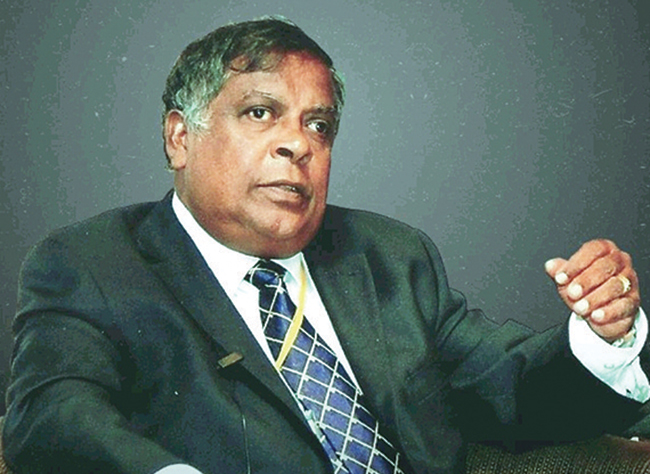
Mr. Tuli Cooray, former Deputy Director General of the Board of Investment of Sri Lanka (BOI) and former Secretary General of the Joint Apparel Association Forum (JAAF), passed away three months ago, leaving a distinguished legacy of public service and dedication to national economic development.
An alumnus of the University of Colombo, Mr. Cooray graduated with a Special Degree in Economics. He began his career as a Planning Officer at the Ministry of Plan Implementation and later served as an Assistant Director in the Ministry of Finance (Planning Division).
He subsequently joined the Greater Colombo Economic Commission (GCEC), where he rose from Manager to Senior Manager and later Director. During this period, he also served at the Treasury as an Assistant Director. With the transformation of the GCEC into the BOI, he was appointed Executive Director of the Investment Department and later elevated to the position of Deputy Director General.
In recognition of his vast experience and expertise, he was appointed Director General of the Budget Implementation and Policy Coordination Division at the Ministry of Finance and Planning. Following his retirement from government service, he continued to contribute to the national economy through his work with JAAF.
Mr. Cooray was widely respected as a seasoned professional with exceptional expertise in attracting foreign direct investment (FDI) and facilitating investor relations. His commitment, leadership, and humane qualities earned him the admiration and affection of colleagues across institutions.
He was also one of the pioneers of the BOI Past Officers’ Association, and his passing is deeply felt by its members. His demise has created a void that is difficult to fill, particularly within the BOI, where his contributions remain invaluable.
Mr. Cooray will be remembered not only for his professional excellence but also for his integrity, humility, and the lasting impact he made on those who had the privilege of working with him.
The BOI Past Officers’ Association
jagathcds@gmail.com
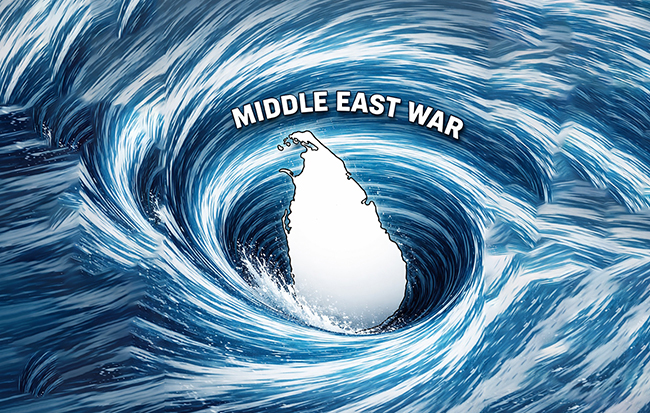
“As a small and open country, Singapore will always be vulnerable to what happens around us. As Lee Kuan Yew used to say: “when elephants fight, the grass suffers, but when elephants make love, the grass also suffers“. Therefore, we must be aware of what is happening around us, and prepare ourselves for changes and surprises.” – Prime Minister Lee Hsien Loong, during the debate on the President’s Address in Singapore Parliament on 16 May, 2018, commenting on the uncertain external environment during the first Trump Administration.
“When elephants fight, it is the grass that suffers”
is a well-known African proverb commonly used in geopolitics to describe smaller nations caught in the crossfire of conflicts between major powers. At the 1981 Commonwealth conference, when Tanzanian President Julius Nyerere quoted this Swahili proverb, the Prime Minister Lee Kuan Yew famously retorted, “When elephants make love, the grass suffers, too”. In other words, not only when big powers (such as the US, Russia, EU, China or India) clash, the surrounding “grass” (smaller nations) get “trampled” or suffer collateral damage but even when big powers collaborate or enter into friendly agreements, small nations can still be disadvantaged through unintended consequences of those deals. Since then, Singaporean leaders have often quoted this proverb to highlight the broader reality for smaller states, during great power rivalry and from their alliances. They did this to underline the need to prepare Singapore for challenges stemming from the uncertain external environment and to maintain high resilience against global crises.
Like Singapore, as a small and open country, Sri Lanka too is always vulnerable to what happens around us. Hence, we must be alert to what is happening around us, and be ready not only to face challenges but to explore opportunities.
When Elephants Fight
To begin with, President Trump’s “Operation Epic Fury”.
Did we prepare adequately for changes and surprises that could arise from the deteriorating situation in the Gulf region? For example, the impact the conflict has on the safety and welfare of Sri Lankans living in West Asia or on our petroleum and LNG imports. The situation in the Gulf remains fluid with potential for further escalation, with the possibility of a long-term conflict.
The region, which is the GCC, Iraq, Iran, Israel, Jordan, Syria and Azerbaijan (I believe exports to Azerbaijan are through Iran), accounts for slightly over $1 billion of our exports. The region is one of the most important markets for tea (US$546 million out of US$1,408 million in 2024. According to some estimates, this could even be higher). As we export mostly low-grown teas to these countries, the impact of the conflict on low-grown tea producers, who are mainly smallholders, would be extremely strong. Then there are other sectors like fruits and vegetables where the impact would be immediate, unless of course exporters manage to divert these perishable products to other markets. If the conflict continues for a few more weeks or months, managing these challenges will be a difficult task for the nation, not simply for the government. It is also necessary to remember the Russia – Ukraine war, now on to its fifth year, and its impact on Sri Lanka’s economy.
Mother of all bad timing
What is more unfortunate is that the Gulf conflict is occurring on top of an already intensifying global trade war. One observer called it the “mother of all bad timing”. The combination is deadly.
Early last year, when President Trump announced his intention to weaponise tariffs and use them as bargaining tools for his geopolitical goals, most observers anticipated that he would mainly use tariffs to limit imports from the countries with which the United States had large trade deficits: China, Mexico, Vietnam, the European Union, Japan and Canada. The main elephants, who export to the United States. But when reciprocal tariffs were declared on 2nd April, some of the highest reciprocal tariffs were on Saint Pierre and Miquelon (50%), a French territory off Canada with a population of 6000 people, and Lesotho (50%), one of the poorest countries in Southern Africa. Sri Lanka was hit with a 44% reciprocal tariff. In dollar terms, Sri Lanka’s goods trade deficit with the United States was very small (US$ 2.9 billion in 2025) when compared to those of China (US$ 295 billion in 2024) or Vietnam (US$ 123 billion in 2024).
Though the adverse impact of US additional ad valorem duty has substantially reduced due to the recent US Supreme Court decision on reciprocal tariffs, the turbulence in the US market would continue for the foreseeable future. The United States of America is the largest market for Sri Lanka and accounts for nearly 25% of our exports. Yet, Sri Lanka’s exports to the United States had remained almost stagnant (around the US $ 3 billion range) during the last ten years, due to the dilution of the competitive advantage of some of our main export products in that market. The continued instability in our largest market, where Sri Lanka is not very competitive, doesn’t bode well for Sri Lanka’s economy.
When Elephants Make Love
In rapidly shifting geopolitical environments, countries use proactive anticipatory diplomacy to minimise the adverse implications from possible disruptions and conflicts. Recently concluded Free Trade Agreement (FTA) negotiations between India and the EU (January 2026) and India and the UK (May 2025) are very good examples for such proactive diplomacy. These negotiations were formally launched in June 2007 and were on the back burner for many years. These were expedited as strategic responses to growing U.S. protectionism. Implementation of these agreements would commence during this year.
When negotiations for a free trade agreement between India and the European Union (which included the United Kingdom) were formally launched, anticipating far-reaching consequences of such an agreement on other developing countries, the Commonwealth Secretariat requested the University of Sussex to undertake a study on a possible implication of such an agreement on other low-income developing countries. The authors of that study had considered the impact of an EU–India Free Trade Agreement on the trade of excluded countries and had underlined, “The SAARC countries are, by a long way, the most vulnerable to negative impacts from the FTA. Their exports are more similar to India’s…. Bangladesh is most exposed in the EU market, followed by Pakistan and Sri Lanka.”
So, now these agreements are finalised; what will be the implications of these FTAs between India and the UK and the EU on Sri Lanka? According to available information, the FTA will be a game-changer for the Indian apparel exporters, as it would provide a nearly ten per cent tariff advantage to them. That would level the playing field for India, vis-à-vis their regional competitors. As a result, apparel exports from India to the UK and the EU are projected to increase significantly by 2030. As the sizes of the EU’s and the UK’s apparel markets are not going to expand proportionately, these growths need to come from the market shares of other main exporters like Sri Lanka.
So, “also, when elephants make love, the grass suffers.”
Impact on Sri Lanka
As a small, export dependent country with limited product and market diversification, Sri Lanka will always be vulnerable to what happens in our main markets. Therefore, we must be aware of what is happening in those markets, and prepare ourselves to face the challenges proactively. Today, amid intense geopolitical conflicts, tensions and tariff shifts, countries adopt high agility and strategic planning. If we look at what our neighbours have been doing in London, Brussels and Tokyo, we can learn some lessons on how to navigate through these turbulences.
(The writer is a retired public servant and can be reached at senadhiragomi@gmail.com)
by Gomi Senadhira
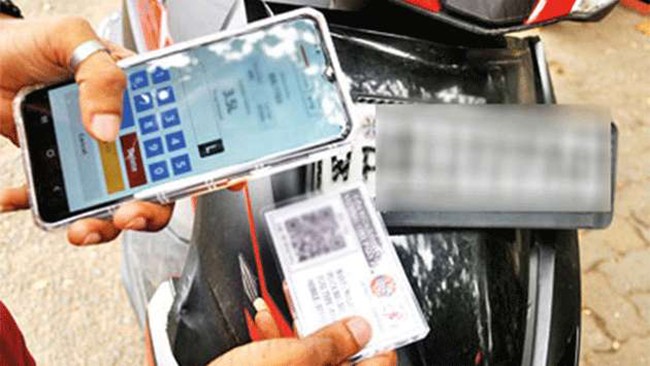
The introduction of the QR code–based fuel quota system can be seen as a timely and necessary measure, implemented as part of broader austerity efforts to manage limited fuel resources. In the face of ongoing global fuel instability and economic challenges, such a system is aimed at ensuring equitable distribution and preventing excessive consumption. While it is undeniable that this policy may disrupt the daily routines of certain segments of the population, it is important for citizens to recognize the larger national interest at stake and cooperate with these temporary measures until stability returns to the global fuel market.
At the same time, this initiative presents an important opportunity for the Government to address long-standing gaps in regulatory enforcement. In particular, the implementation of the QR code system could have been strategically linked to the issuance of valid revenue licenses for vehicles. Restricting QR code access only to vehicles that are properly registered and have paid their revenue dues would have helped strengthen compliance and improve state revenue collection.
Available data from the relevant authorities indicate that a significant number of vehicles—especially three-wheelers and motorcycles—continue to operate without valid revenue licences. This represents a substantial loss of income to the State and highlights a weakness in enforcement mechanisms. By integrating the fuel quota system with revenue license verification, the government could have effectively encouraged vehicle owners to regularise their documentation while simultaneously improving fiscal discipline.
In summary, while the QR code fuel system is a commendable step toward managing scarce resources, aligning it with existing regulatory requirements would have amplified its benefits. Such an approach would not only support fuel conservation but also enhance government revenue and promote greater accountability among vehicle owners.
Sariputhra
Colombo 05

One ant for $220: the new frontier of wildlife trafficking

Three Lebanese journalists killed in Israeli strike, say broadcasters

Showers will occur at a few places in the Sabaragamuwa province and in Colombo, Kaluthara, Galle, and Matara districts after 2.00 pm

War-linked power crunch pushes Lanka to four-day week

Lanka to swelter through April and May, Met Dept warns

Pathfinder Foundation launches Proposal for a National Security Strategy for Sri Lanka

‘Dates have the highest sugar content to fight Coronavirus’

Sunday Island 27 December – Headlines

#SundayIsland 17th December – Headlines

Sunday Island – 28th March

Sunday Island Headlines – 21 March

Sunday Island – 21st February – Headlines
-

 News4 days ago
Senior citizens above 70 years to receive March allowances on Thursday (26)
-

 Features1 day ago
A World Order in Crisis: War, Power, and Resistance
-

 Features6 days ago
Trincomalee oil tank farm: An engineering marvel
-

 News2 days ago
Energy Minister indicted on corruption charges ahead of no-faith motion against him
-

 News3 days ago
US dodges question on AKD’s claim SL denied permission for military aircraft to land
-

 Features6 days ago
The scientist who was finally heard
-

 Business3 days ago
Dialog Unveils Dialog Play Mini with Netflix and Apple TV
-

 Sports2 days ago
SLC to hold EGM in April