
News
Implementation of National policy on prevention of child abuse 21 years late– COPE

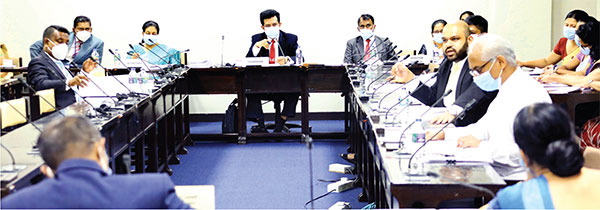
TNA MP Shanakiya Rasamanickam questioning officials of the National Child Protection Authority during last Friday’s COPE investigation
Chairman of the parliamentary watchdog committee – COPE (Committee on Public Enterprises), Prof. Charitha Herath had instructed the relevant authorities of the National Child Protection Authority (NCPA) coming under the Ministry of Education to expedite the implementation of a national policy which was one of the primary responsibilities of the Authority, parliament sources said.
Prof Herath issued the instructions at the COPE committee meeting held on Friday, Feb 12.
The COPE committee disclosed that the NCPA had been established in 1998 to formulate a national policy on the prevention of child abuse and the protection of children.
However, the ommittee pointed out that the implementation of a national policy had not been carried out accordingly paving the way for a delay of 21 years. The Committee emphasised the importance of expediting the implementation of the national policy which had been already approved.
MPs Jagath Pushpakumara, Eran Wickramaratne, Premnath C. Dolawaththa, Shanakiya Rasamanickam and officials representing the NCPA were present on the occasion.
It was also brought to the Committees’ attention that annual reports of the Authority for the years 2016, 2017, 2018 and 2019 had not been submitted to Parliament so far. Expressing displeasure at the delay, the COPE Chairman instructed the Secretary to the Ministry of Education and the Secretary to the Ministry of State to immediately look into the matter and submit the relevant annual reports to Parliament within two months.
It was revealed that Rs. 9 million had been spent on creating a database for the authority in 2016, 2017 and a grant of Rs. 1.2 million had also been provided by the Department of Computer Studies, the University of Colombo to develop a software. The COPE committee emphasised that although it was important to prepare such a database, there should be a proper methodology as regards the utilisation of state funds. Thus, the Committee instructed the Secretary to the Ministry to immediately conduct an internal investigation and submit a report thereon urgently.
Although a legal framework had been introduced to regulate the transportation of school children as a measure to prevent child abuse, the COPE committee pointed out that it had not yet been implemented. The Chairman of the The Committee instructed to expedite the implementation of the regulations by employing the newly appointed graduates.
The Committee also raised concerns over the difficulties faced by the victims due to delays in hearing child abuse cases. Emphasis was placed on the importance of developing a system to set a timeframe for finishing such cases.
It was revealed that although 3,165 child protection committees had been set up in schools to prevent child abuse, only 2,392 of them were active. The Committee recommended that action be taken to ensure that all of them were active.
It was also revealed that the Authority had received 89,405 complaints between 2011 and 2020 and as at 31.01.2021, the number of unresolved complaints brought forward was 40,668. The Committee stated that it was unfortunate to have only one person working in the Law Enforcement Division to handle complaints. The Committee also directed that the Law Enforcement Division be strengthened to expedite the process of handling complaints accordingly.
The need to investigate and regulate all orphanages in Sri Lanka was also discussed at length. The Chairman recommended that the Authority prepare a new programme for the purpose and take immediate action to obtain all the basic data.
The Committee directed that steps be taken to develop a comprehensive database.


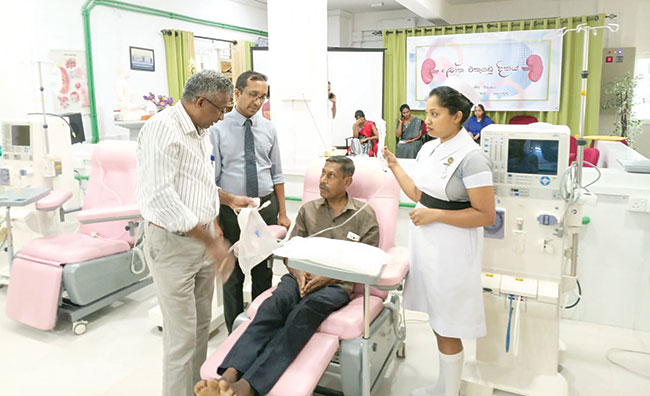
A special awareness programme to mark World Kidney Day was held on March 12 at the Susantha Marapana Dialysis Unit of the Kegalle District General Hospital.The event was organised by the staff of the Kidney Unit under the guidance of Specialist Nuwan Aravinda Bartholomeusz.
Addressing the gathering, Dr. Bartholomeusz said the unit currently operates 12 dialysis machines and provided treatment to around 90 patients with the support of dedicated medical staff.
He also highlighted a major gap in regional healthcare services, noting that there were no hospitals with dialysis units between Homagama Base Hospital and Ratnapura Teaching Hospital. Establishing a dialysis unit in a hospital within this region would greatly benefit rural communities, he said.
Several specialists addressed the programme, sharing insights on challenges faced by kidney patients and the importance of prevention and care. Among the speakers were Specialist Gayani Samarasinghe on diabetes management, Specialist Amalka Munasinghe on nutrition, and Specialist Rohitha Gunaratne on the role of physical activity in maintaining health.
The event was presided over by Deputy Director of the hospital, Chathura Tikiriratne.
A highlight of the programme was the introduction of a specialised dialysis support bag by Kelun Lifesciences, located in the Pallekele Investment Promotion Zone. The product, designed to assist dialysis patients in managing their treatment requirements at home, was introduced by Demonstrator Sudharman Wijayasundara under the guidance of the company’s Executive Director I. Sathiyamoorthy.
Prominent philanthropist N. Marapana, who has extended support and facilities to the dialysis unit, also attended the programme.
by SK Samaranayake
Govt. focusing on importers rather than producers
The government led by the National People’s Power (NPP) has yet to fulfil its key promises made to local manufacturers prior to coming to power, the Sri Lanka United National Businesses Alliance (SLUNBA) has said.
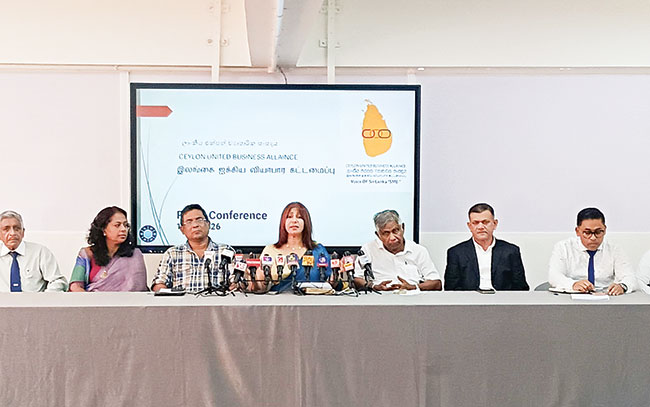
Addressing a press conference in Colombo on Friday, SLUNBA Chairperson Tania Abeysundara said the alliance had repeatedly requested a meeting with government leaders to discuss the growing challenges faced by the local manufacturing sector but had so far received no response.
She noted that shipping costs for raw materials imported to Sri Lanka had increased by nearly 300 per cent due to the ongoing conflicts in the Middle East, placing severe pressure on local industries.
“We are people who conduct businesses responsibly and pay taxes properly to the government. We are not a group that is a burden to the country and should not be labelled as an association that merely shouts demands,” Abeysundara said.
“What we are asking is that the promises made to us after discussions held before coming to power be fulfilled. We are not aligned with any political party. Today we are continuing our businesses without making any net profit,” she added.
Abeysundara said that before the election several rounds of discussions had been held with representatives of the alliance, during which assurances had been given that the concerns of local producers would be addressed.
“However, today it appears that instead of focusing on local manufacturers, attention is being given to importers,” she alleged.
She warned that if small and medium-scale industries collapsed under current economic pressures, the country could face a serious loss of employment opportunities.
“We are not a group trying to embarrass the government. But if small and medium-scale industries shut down, thousands of jobs could be lost. Even now we are facing a shortage of labour. Are we expected to close our factories and become importers instead?” she asked.
Abeysundara also said industries were already struggling with rising fuel prices and cautioned that any further increase in electricity tariffs, particularly with the entry of new power companies, would aggravate the situation.
“At a time when industries are already facing severe difficulties due to the increase in fuel prices, if electricity tariffs are increased further it will create additional pressure. Shouldn’t a government pay attention to such matters?” she asked.
SLUNBA Vice President Lakmal Perera said entrepreneurs also faced numerous bureaucratic obstacles when seeking official approvals.
“When a businessman goes to obtain an approval he encounters many problems. Even though the government has instructed that land be allocated for business activities, some state officials ignore these directives,” he said.
Perera added that the alliance was seeking a dialogue with the authorities to address these issues.
“We are not people who organise strikes or protests to demand our rights. We simply ask the authorities to listen carefully to our grievances and help resolve them,” he said.
Meanwhile, SLUNBA Sub-committee Chairman M. R. Jeffrey expressed concern over the government’s plan to remove the CESS tax by 2029, noting that the levy had originally been introduced to protect local producers from excessive imports.
“The CESS was imposed on imports to safeguard domestic manufacturers and it was also said that the funds collected would be used to support local production,” he said.
Jeffrey pointed out that although manufacturers produce locally, they still have to import a large portion of raw materials and warned that under the current circumstances businesses might have to incur an additional US$4–5 million in costs.
He also suggested that the government urgently explore arrangements to import fuel from Russia, noting that countries such as India were reportedly purchasing Russian oil at around US$ 60 per barrel.
“At this moment what is most valuable to the country is not the rupee but the dollar. Therefore, instead of encouraging the import of finished goods, authorities should support the import of raw materials and expand domestic production,” he said.
Several other members of the alliance also expressed their views during the media briefing, calling for greater engagement between the government and the private sector to address the challenges facing local industries.
by Chaminda Silva

Iranian Foreign Minister Seyed Abbas Araghchi held a telephone conversation with Sri Lanka’s Foreign Minister Vijitha Herath on Friday evening to discuss regional developments and bilateral relations.
During the discussion, Araghchi briefed the Sri Lankan minister on the latest situation following what Iran described as military aggression by the United States and Israel against the country.
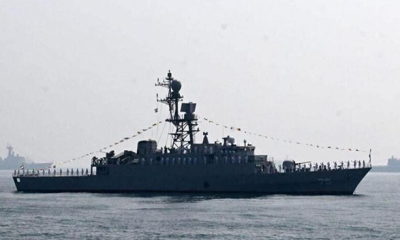
He also expressed appreciation to the Sri Lankan government for the assistance extended to the crew of the Iranian warship Dena following the attack on March 4.
The Iranian foreign minister thanked Sri Lanka for its role in helping rescue crew members and for facilitating the repatriation of the bodies of 84 sailors who were killed in the incident.
The two ministers also discussed matters relating to the strengthening of bilateral relations between Iran and Sri Lanka during the conversation, according to Iran’s Foreign Ministry.

Sri Lanka’s recovery reveals a ‘numerical puzzle’ in employment stats

The silent crisis: A humanitarian plea for Sri Lankan healthcare

From Que Sera, Sera … to QR

Plant-based tourism could be Sri Lanka’s overlooked growth opportunity: Andrea Diaz

Social and political aspects of Buddhism in a colonial context

Kidney awareness drive at Kegalle hospital

‘Dates have the highest sugar content to fight Coronavirus’

Sunday Island 27 December – Headlines

#SundayIsland 17th December – Headlines

Sunday Island – 28th March

Sunday Island Headlines – 21 March

Sunday Island – 21st February – Headlines
-
 News7 days ago
Repatriation of Iranian naval personnel Sri Lanka’s call: Washington
-

 News6 days ago
Prof. Dunusinghe warns Lanka at serious risk due to ME war
-

 News4 days ago
Historic address by BASL President at the Supreme Court of India
-

 Sports5 days ago
Royal start favourites in historic Battle of the Blues
-

 Sports4 days ago
The 147th Royal–Thomian and 175 Years of the School by the Sea
-
 Business5 days ago
BOI launches ‘Invest in Sri Lanka’ forum
-

 News5 days ago
CEBEU warns of operational disruptions amid uncertainty over CEB restructuring
-
 News4 days ago
Power sector reforms jolted by 40% pay hike demand