
Opinion
Impact of pandemic on right to education


Dr Laksiri Fernando
The World University Service (WUS) initially planned to celebrate its 100th anniversary in Vienna on 14-16 May 2020. The theme of the world conference was ‘Human Right to Quality Education for All,’ promoting the sustainable development goals on education, SDG 4.
Due to the pandemic, however, it had to be postponed and it is now scheduled to be held on 21-23 September 2021. Because of the pandemic, not only the conference but its theme is also affected. There are new challenges to the right to education because of the pandemic and new thinking also might be necessary to carry forward the intended primary goals of the WUS’ attempts on the subject.
Basic Facts
Nearly 875 million school population, and over 200 million university population are affected by the pandemic. Students, school teachers, and academics, are included in these figures. This is nearly 15% of the world population and in terms of education, career opportunities, and knowledge production and research this is devastating. Of course, the whole of the world population is affected by the Covid pandemic. But the above facts and figures are highlighted, given we are here focusing on education and the impact of Covid pandemic on the right to quality education.
When a right is normally violated or even infringed, there are culprits, or violators who are responsible. But in this case, it is difficult to pinpoint a violator, except in terms of who have aggravated or neglected the situation. Therefore, the Covid impact on education appears a common predicament, nevertheless exposing many underlying defects in the world education system or systems that this article would focus on.
Underlying Defects
What are these underlying defects? Inequality, lack of opportunity and discrimination are the most important causes even before the eruption of the pandemic. These three causes are interlinked although for the sake of simplicity or even otherwise they can be separated.
Inequality (1) between rich and poor countries, (2) between urban and rural (or remote) areas within countries, and (3) between rich and poor students/families are some of the features. In terms of schooling, 850 million children, equal to those who are in school, are always out of school for these and other reasons. This is even before the pandemic, and the situation has now worsened because the poor countries, poor areas and poor people have newly faced enormous difficulties. A new distinction is between ‘rich online’ and ‘poor online’ or ‘absence of online’
When parents are poor and also uneducated (or less-educated) for the same reason, the motivation to send children to school is low.UNICEF estimates roughly 160 million children are in child-labour or illicit employment due to various reasons. This is about neglect and exploitation. Even if some parents are motivated to send children to school, and even if school education is free and fair, there are certain amenities that the parents might not be in a position to afford. These are lack of opportunities from the demand side; no opportunity to claim even the right to education.
The lack of opportunities also come from the supply side, or the side of the governments or States. Some States might not give priority to education. (1) In conflict ridden countries, higher amounts of money, double or treble, are spent on defence or on military. This is unfortunate to say the least. (2) The neglect of public education also come from other sources of public policy. Privatisation of education is one. When it is done, the rich people might benefit, but not the poor or the marginalised. (3) The poverty of supply side of education also can be a vicious cycle. When inadequate money is spent on public education, the quality of education is inevitably poor. When the teachers are recruited from the same system, their inputs into the learning processes are also poor.
Most regrettable is discrimination in education. Discrimination in education (even if you are in school or university) can come from ethnic, racial, religious, indigenous, class or gender basis. Most widespread discrimination in some regions is based on gender. Women are discriminated either on religious interpretations or cultural basis. All these religious or cultural interpretations are given by men! All these are difficult to unravel because of political reasons. Men dominate politics. During the pandemic, these interpretations have become strengthened on easy excuses.
Different Effects of the Pandemic
One of the most direct effects of the pandemic on education is the closure of schools and universities. It is a disaster. On school closures, UNESCO has collected data and UNICEF has compiled a substantial report.i On university closures, the International Association of Universities (IAU) has collected information through a survey. ii
What are the key findings on school closures? (1) During one year between March 2020 and February 2021, schools in the whole world have been fully closed for 95 days and this means half the time intended for teaching and learning. (2) Countries in South America were the most affected with 158 days of full school closures, followed by countries in South Asia with 146 days. Countries in the Eastern and Southern Africa region were the third most affected with an average of 101 days. All these means the poor and developing countries. (3) Worldwide, 214 million students have lost three fourths of school hours in 23 countries. Among these students, 168 million had missed all classroom hours in 14 countries due to school closures.
What are the key findings on university closures? IAU survey was conducted during March and April 2020 covering 109 countries. Almost all countries reported that they have been impacted by the pandemic and 59 percent of them replied that all campuses were closed at that time. In the case of Africa, closures reported were high as 77 percent. The main concern of 80 percent of responding institutions was on the impact on student enrollment in the new academic year. 46 percent believed impact would be on both local and international students. Private universities were more concerned about the impact on financial consequences.
In terms of research, 80 percent of higher educational institutions have been directly impacted. The most common impact has been the cancellation of international travel (83 percent) and the cancellation or postponement of scientific conferences (81 percent). This is what happened even to the WUS conference although it is not directly a higher education institute or a research forum. Even at present, scientific projects are at risk of not being able to complete on time at various institutes and by individuals.
It is true that the pandemic, as a positive challenge, has opened up new research on Covid-19 and other diseases. However, without being limited to medical and pharmaceutical research, social impacts of the pandemic also should be investigated and researched. Apart from valid restrictions on travel that has affected international cooperation and research travel, there has emerged unnecessary bureaucratic barriers in some countries.
For example, to participate at the WUS conference in Vienna, over a dozen of Sri Lankan academics have received funding from the Austrian ministries/universities. But for nearly two months now their leave, approvals and exist permits have been delayed unnecessarily. This appears infringing on academic freedom and educational benefits to the country. This is unfortunate.
Expansion of eLearning
Of course everything is not hopeless. Facing the Covid challenge the world has positively shifted to more and more eLearning. This trend has been there even before but not in this scale. This is easy in the university sector, but not so much in the school sector. This is easy in rich countries, but not in poor or developing countries.
According to the UNICEF report, schoolchildren in the countries with the longest duration of school closures are the ones who have had the lowest opportunity for fixed online connections. Although the radio or TV must have been used in these countries, these are not that effective as internet or zoom teaching. Interactive learning is something lost in these media.
The repercussions of school closures can be diverse and long standing. Through eLearning alone these cannot be rectified. Schools are important not only for children’s learning, but also for health, safety and well-being. Most vulnerable children in some countries have lost their single most nutritional meal a day. For children coming from dysfunctional (or violent) families, schools are also a safe and a pleasing place. In many countries schools also play a major role in immunisation and health support.
Even in the university sector, the (quick) adoption of eLearning has not been easy. Although two-thirds of them had reported that they have replaced classroom teaching with distance teaching and learning, they reported that it has not come without challenges. The main challenges being access to technical infrastructure, competencies of both teachers and students to adopt them, and pedagogical impact on some specific fields of study. However in the medium term or in the long-run, eLearning can be an escape route from future pandemics, lockdowns or travel restrictions.
Facing the Challenge
The challenge for the university sector and academics is not limited to the pandemic or themselves alone. Without uplifting the school sector, the university sector cannot thrive or survive. Without addressing the education problems in poor countries, education in rich countries cannot prosper. This is also a moral obligation. This was a main message of the UNDP initiated sustainable goals, SDG 4. Now there is a clear setback for these goals because of the pandemic, initially to be achieved by 2030.
In answering the pandemic question, university academics or the World University Service should stand for full vaccination of all sections and particularly the school students, children of that age, university students and teachers and administrators in schools and universities. Vaccine hesitancy should be overcome and a booster might be necessary.
Universities in all countries should reach the broader communities and extend education, assistance and relief. They should have the academic freedom to do so. There can be risks involved. But this is a duty. If the vaccination programmes are expedited and covered all countries, rich and poor, schools can be reopened fully soon or by 2022. There can be many mitigating and catchup measures that needs to be implemented in terms of learning and other ways. There can also be a necessity to develop and introduce new modalities in education. Blended or hybrid methods might be more appropriate. This is applicable to both schools and universities. University academics and academic cooperation between countries might be able to play a major role in this sphere.
There can be gaps that might emerge compared to the past. Truly estimating them and innovating devices to optimise the existing resources, while seeking necessary resources to bridge those gaps through international cooperation between governments, ministries of education and universities can be some tasks. Academics can take a lead. The main public policy advocacy of this article is for the universities and academics to get involved in school education more than before, and bring benefits to the society.


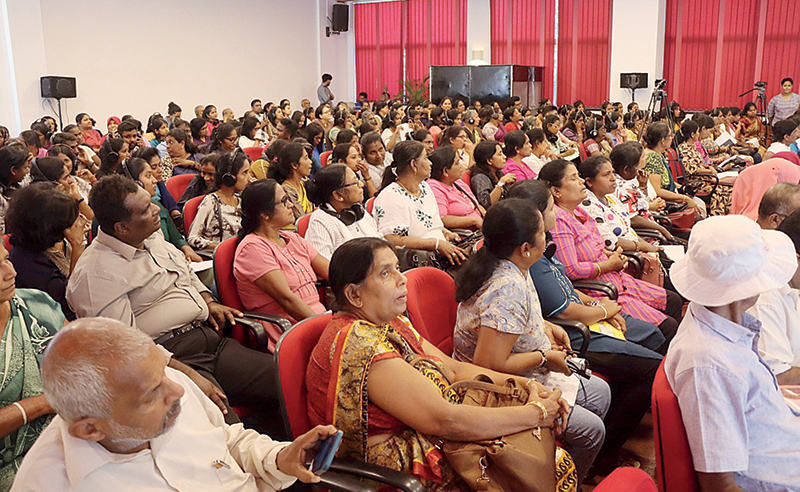
January 21 | Olympus Auditorium, Bandaranaike Centre for International Studies (BCIS)
The National Collective of Community Savings and Credit Services Providers organised the conference “Microfinance and Credit Regulatory Authority Bill: Neither Here, Nor There” on January 21 at the Olympus Auditorium, Bandaranaike Centre for International Studies (BCIS), BMICH, to foreground the community savings and credit services as an alternative credit practice to moneylending and microfinance. While underscoring the uniqueness of community credit practices, grounded in collective rights, solidarity, mutual aid, the non-hierarchical nature of organising and long years of practice, community credit providers opposed the Asian Development Bank (ADB)-Treasury-CBSL attempt to subsume the community credit model under moneylending and microfinance in the proposed Microfinance and Credit Regulatory Authority Bill. Over 200 community credit practitioners from more than 50 community organisations from Mannar, Kilinochchi, Jaffna, Mullaitivu, Batticaloa, Anuradhapura, Polonnaruwa, Badulla, Rathnapura, and Hambanthota had gathered at the conference.
M. K. Jayathissa, a farmer leader from Hingurakgoda, Polonnaruwa, explained the microfinance crisis as resulting from the microfinancialisation of rural credit and the targeting of low-income women. He recalled his role in the farmers’ struggle against debt during the 1990s. Jayathissa linked the microfinance crisis among women and the farmers’ debt crisis to a wider crisis in food production.
Renuka Bhadrakanthi, chairperson of the Ekabaddha Praja Sanwardhana Kantha Maha Sangamaya, Weligepola, shared her three decades of experience as a community practitioner. She showed how the community credit framework helped women build assets and wealth through small savings. Unlike market-based initiatives such as microfinance and moneylending, community-controlled credit systems empowered women both with agency and material capabilities. Renuka also noted the regional diversity in organisational frameworks and credit purposes. She stressed the need for vigilance and action now, as globalisation and neoliberalism drive economic reforms aimed at capturing community wealth and making people dependent on the market.
Rajeswary Sritharan from Yuhashakthi, Mullaitivu, brought in experiences from war-torn societies. Yuhashakthi and Mahashakthi networks, operating in the Northern and Eastern provinces and comprising more than 10,000 women members, were created during the civil war to support women’s ability to control the household economy. These two networks have proven resilience against war-related dispossession and loss while also strengthening women. Rajeswary contended that self-help community credit groups are informal and unregulated, revealing that societies are governed by a collective ethos, community audits, and democratic decision-making, ensuring transparency and accountability. She pointed out that community groups do not have a history of bringing their members before the police or courts when they fail to service their debts, unlike microfinance companies. She also raised the significance of community groups such as Yuhashakthi and Mahashakthi as first responders in times of crisis, even as recently as with Ditwah, intervening and assisting affected communities much before the government could.
-
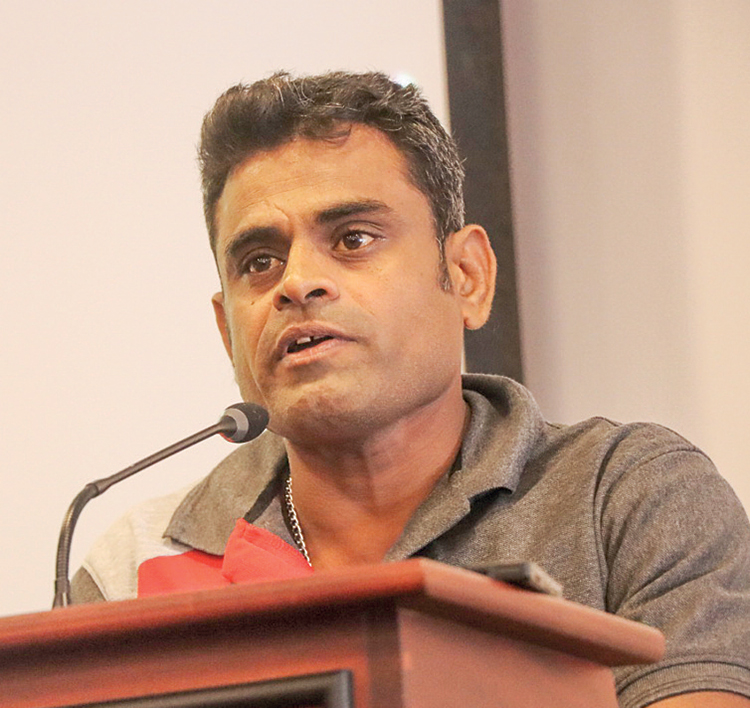
- Suneth Aruna Kumara
-
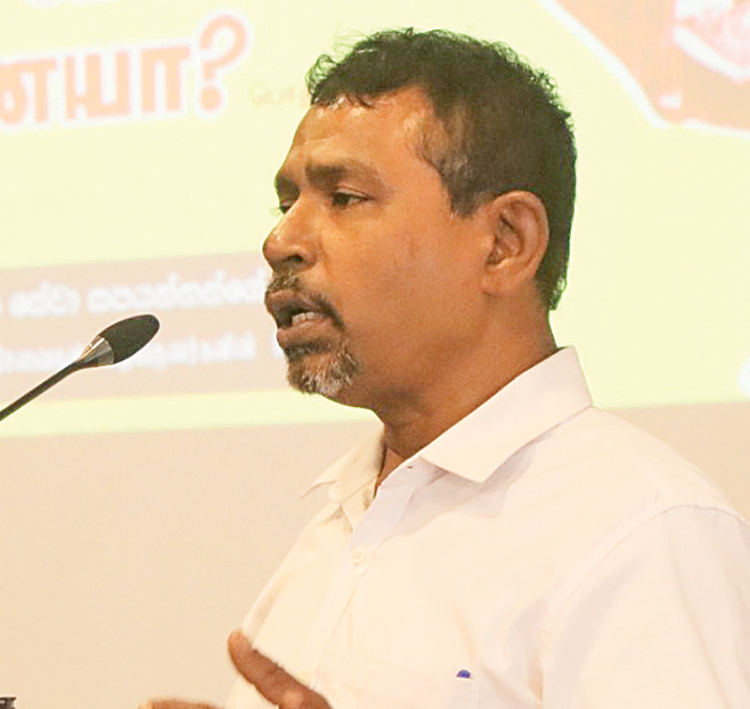
- Pubudu Manohara
-
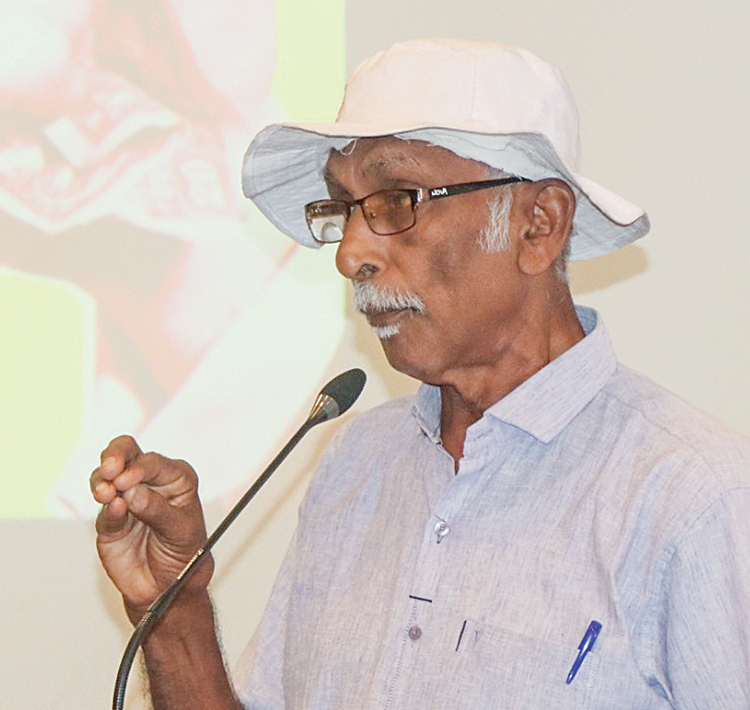
- M K Jayathissa
Suneth Aruna Kumara, representing Vimukthi Gami Gowi Kantha Samithiya, Hingurakgoda, Polonnaruwa and also speaking on behalf of the microfinance-affected women, highlighted the creative space that collective forms of association have opened up for microfinance victims. “People who were hiding, afraid of debt collectors, are trying to rebuild their lives autonomously,” he said. In this journey, women are rethinking the meaning of credit, whether it is possible to create credit mechanisms that do not rely on interest income, and imaginative ways of decommodifying community relations. Suneth emphasised that women’s initiatives are emerging from their lived experiences as debtors, exploited by predatory interest rates and violent recovery practices. As a victim himself, Suneth criticised the proposed regulatory Bill for failing to adequately safeguard microfinance and credit consumers by providing legally binding safeguards. According to Suneth, the proposed Bill does not guarantee that the microfinance crisis will not recur.
Another highlight of the conference was the sharing of experiences by Malaihaya women, presented by Letchumanan Kamaleswary from the Centre for Equality and Justice. Kamaleswary described debt as ever-present in the Malaiyaha community. It forced migration from South India and kept people captive as plantation labour for over 200 years. Although the plantation management restricts all community associations within the plantations, microfinance companies can enter and operate freely. Debt is so severe that most Malaiyaha women work past their retirement age.
-
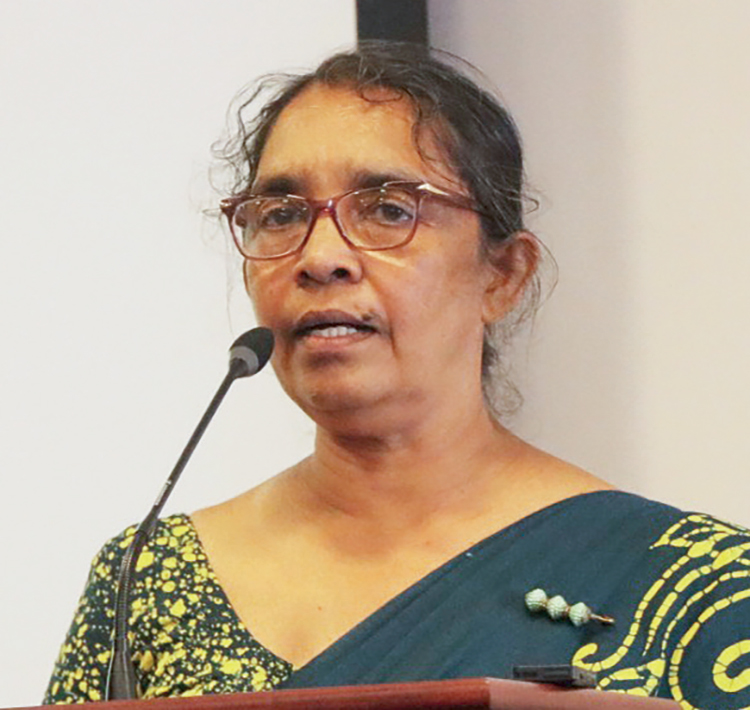
- Renuka Bhadrakanthi
-
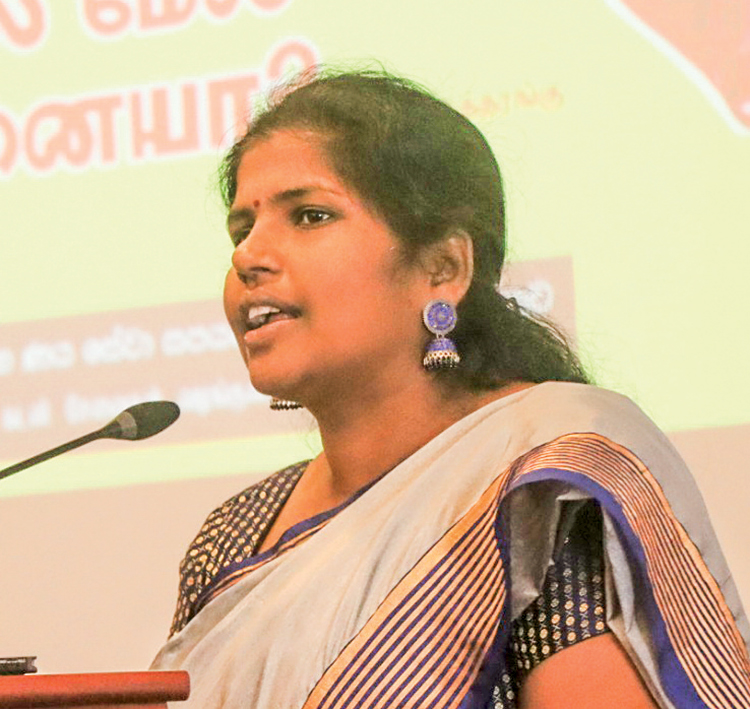
- Rajeswary Sritharan
Pubudu Manohara, from the Rural Development Foundation in Hambanthota, traced the history of community credit projects to various state poverty alleviation programmes since 1977. These projects, affiliated with governments and supported by international groups such as the World Bank and UNDP, have survived many national and local crises. Over time, however, both the government and international organisations like the ADB have become wary of people’s ability to save. “They are afraid of our ability to create community funds,” he said.
The discussion emphasised that mobilising community groups and local political leaders is essential to oppose the Bill in its current form. Concerns arose about the negative impact of heavy regulations on community organisations and women’s resilience. “Domestic violence is rooted in economic violence. The destruction of community organisations will have a direct effect on local development and local economic activities. That will also burden the government,” said a Yuhashakthi representative from Mullathivu.
Community organisers urged the government to consult directly with them when developing regulations, emphasising that new rules should protect and strengthen community-based initiatives rather than respond to external pressures. They argued that the ADB, having promoted commercialisation of microfinance and contributed to the resulting crisis, lacks the legal and ethical standing to advocate for regulatory frameworks. Instead of receiving directives from the International Financial Institutions (IFIs), the government should converse with the grassroots communities, devising homegrown developmental solutions to regenerate local economies, empower the most vulnerable and build community wealth, the community organisers stressed.
After jog for the camera, wearing shorts in Jaffna, thanks to the freedom gained by the country being liberated from the clutches of the Tigers by the valiant efforts led by Mahinda Rajapaksa, President Anura Kumara Dissanayaka, said: “Some come past Sri Maha Bodhi and other Buddhist temples all the way to Jaffna to observe Sil, not to spread compassion but hatred.” When the need of the hour is reconciliation what an outrageous statement that was, to be made by the head of state! Will he say that the people of the North and the East bypass many Kovils straddling the area and come to Kataragama to spread hate? Probably not! His claim has become a hot topic of conversation.
Having lost a majority of the votes garnered from the North at the presidential and parliamentary elections, to the Tamil nationalist parties at the local government elections, President Dissanayake’s claim may well have been a pitiful attempt to recover lost ground in the North. But at what cost?
It all started with AKD’s refusal to refer to those brave service personnel who saved the unity and the integrity of the country as Rana Viruwo. Interestingly, the most devastating rebuke for this came from a Tamil MP, who is an avowed admirer of Prabhakaran, stating in Parliament that a Sinhala Rana Viruwa saved his life when he was about to be washed off in the flood waters resulting from Cyclone Ditwah. He teased the government by asking in ‘raw’ Sinhala Ei umbalata lejjada unta Rana Viruwo kiyanna? (Are you shy to call them war heroes?)
In addition to slinging mud at MR and harassing service personnel, there is no doubt whatsoever that AKD’s government is trying to harass any Tamil politicians who helped eradicate the Tigers. This fact is borne out by the treatment meted out to Douglas Devananda. Shamindra Ferdinando has explained this in his article, “EPDP’s Devananda and missing weapons supplied by Army” (The Island, 7 January).
NPP ministers publicly insult Buddhist monks, but whenever they are in trouble, they rush to Kandy to meet the Maha Nayakas, the latest being Harini’s visit. Instead of admitting the mistake and trying to make amends, the government went on, until it realised the futility in trying to justify the ‘Buddy’ episode. Excuses given by Harini to the Maha Nayakas, to say the least, were laughable. She had the audacity to say that though the questionable web link was printed in the textbook there were no instructions to click on it! She may continue as Prime Minister but can anyone who does not know what to do with a link or who is trying to encourage ten-year-olds to have e-buddies when the rest of the world is heading towards banning 16-year-olds from social media, continue to be the Minister of Education?
Number of MOUs/pacts signed with India, including defence, have not yet been disclosed even to Parliament. The Cabinet Spokesman once stated that the contents of those MOUs/pacts could not be divulged without the consent of India. Interestingly, we have had very frequent visits from VVIP politicians and top government officials from India, some at very short notice. One of them referred to these as ‘usual’ ones! However, what is unusual is that a party that shed a lot of blood of Sri Lankans for even selling ‘Bombay’ onions, is now in government and seems under Indian command. Perhaps, its transformation occurred when India sponsored a visit by AKD in early 2024, which helped him secure the presidency. Among the NPP’s election pledges, the most touted one was to reveal the mastermind behind the Easter Sunday attacks. It has been alleged in some quarters that India was behind the attacks. The NPP government’s silence about this speaks volumes!
It has transpired recently that it was Indian High Commissioner Gopal Baglay who pressured Speaker Mahinda Yapa Abeywardena in July 2022 to take over the presidency after the elected President was toppled by protesters, but many believe that it was a joint effort by the Indian HC and the ‘Viceroy’ who just left, after an overstay! It is an illegal act as pointed out in the editorial “Conspiracy to subvert constitutional order” (The Island, 22 January) and may be investigated by a future government, if elections are not postponed forever!
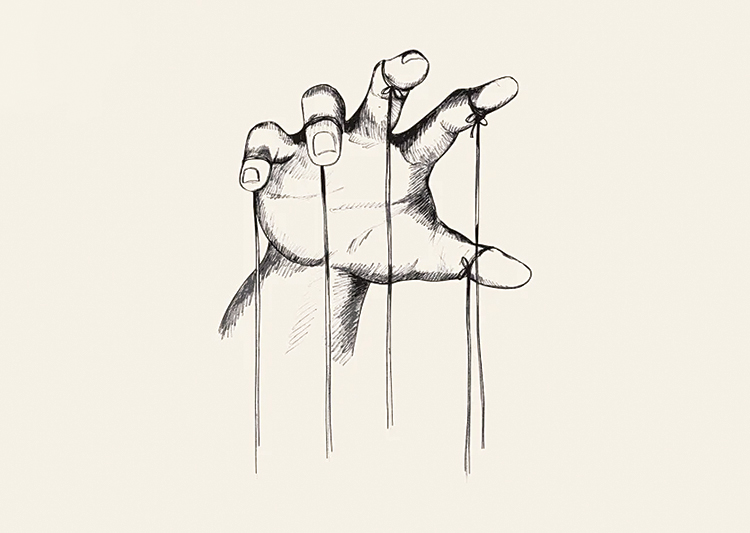
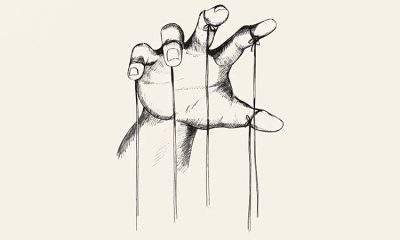
We seem to be watching a puppet show where many puppeteers outside are pulling the strings! Are we paying the price for electing a bunch of inexperienced politicians?
By Dr Upul Wijayawardhana ✍️
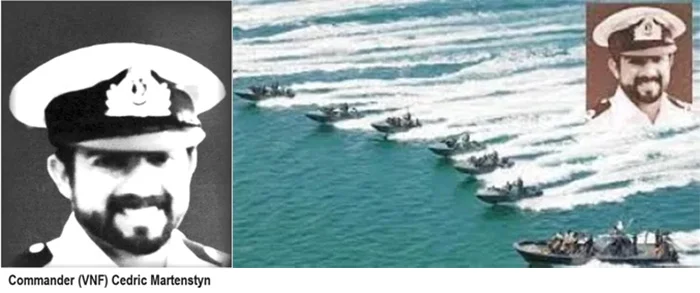
Salute to a brave father-son
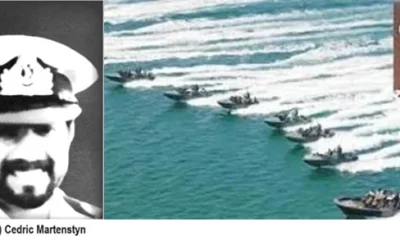
Cedric Martenstyn was a very affluent man. He owned a house in Colombo 7, valuable properties throughout the country, vehicles / speed boats and ran the lucrative business of importing Johnson and Evinrude Outboard Motors (OBM) and sold them to local fishermen and businessmen.
Cedric was the local agent for the OBMs, which were known for reliability and after-sales service, and among his customers were humble fishermen. He was fondly known as Sudu Mahattaya “(white Gentleman) by humble fishermen and he would often travel in his double cab across the country to meet his customers and solve their problems.
He had a loving wife and children. He was an excellent scuba diver, member of Sri Lanka Navy Practical Pistol Firing team and his knowledge of wildlife and reptiles was amazing.
A member of the Dutch Burgher community of Sri Lanka, he was a true patriot, who volunteered to protect country and people from terrorists. An old boy of S. Thomas’ College, Mount Lavinia, he was an excellent sportsman.
The founding father of Sri Lanka Army Commando Unit, Colonel Sunil Peris, was his classmate at S.Thomas’.
I first met Cedric when I was a very junior officer at Pistol Firing Range at Naval Base, Welisara. I helped him catch a poisonous snake in the Range. I think he carried that snake home in a bottle! That was the type of person Cedric was!
We became very close friends as we both loved “guns and fishing rods”. His experience and tactics in angling helped me catch much bigger Paraw (Trevallies) in the Elephant Rock area at the Trincomalee harbour. He was a dangerous man to live with at Trincomalee Naval Base wardroom (officers’ mess), because he had various live snakes kept in bottles and fed them with little frogs!
Even though he was a keen angler, he was keen to conserve endangered species both on land and in water. He spent days in Horton Plains and the Knuckles Mountain Range streams to identify freshwater species in Sri Lanka. Did you know there is an endangered freshwater fish species he found in Horton Plains and Knuckles Mountain Range has been named after him?
Feeding of snakes was an amusement to all our stewards at the wardroom at that time! They all gathered and watched carefully what Cedric was doing, keeping a safe distance to run away if the snake escaped. Our Navy stewards dare to enter Cedric’s cabin (room) at Trincomalee wardroom (officers’ mess), even keeping his tea on a stool outside his cabin door. One day pandemonium broke in the officers’ mess when Cedric announced that one snake escaped! We never found that snake, and that was the end of his hobby as the Commander Eastern Naval Area, at that time, ordered him to ” get rid of all snakes! Sadly, Cedric released all snakes to Sober Island that afternoon.
Cedric was a volunteer Navy officer, but still joined me (he was 47 years old then) to help SBS trainees (first and second batch) on boat handling and OBM maintenance in 1993, when I raised SBS. It was exactly 31 years ago!
The Arrow Boat
Being an excellent speed boat race driver and boat designer, he prepared the blueprint of the first “18-foot Arrow Boat” and supervised building it at a private Boat Yard in 1993. This 18- foot Arrow Boat was especially designed to be used in the shallow waters of the Jaffna lagoon, fitted 115 HP OBMs, and with two weapons he recommended; 40mm Automatic Grenade Launcher (AGL) and 7.62×51 mm General Purpose Machine Guns (GPMGs). In no time, we had highly trained and highly motivated four SBS men on board each Arrow Boat at Jaffna lagoon, and they were very effective.
Same hull (deep V hull) developed during the tenure of Admiral of the Fleet Wasantha Karannagoda, as Commander of the Navy, by Naval architects, with knowledge-gained through captured LTTE Sea Tiger boats, designed 23- foot Arrow Boats and implemented the “Lanchester Theory” (theory of battle of attrition at sea in littoral sea battles) to completely nullify LTTE’s superiority which it had gained with small craft and deadly suicide boats.
Thank you, the Admiral of the Fleet for understanding the importance of Arrow Boat design and mass production at our own boatyard at Welisara. Karannagoda, under whom I was fortunate to serve as Director Naval Operations, Director Maritime Surveillance and Director Naval Special Forces during the last stages (2006/7) of the Humanitarian Operations, always used to tell us “You cannot buy a Navy- you have to build one”! Thank you, Sir!
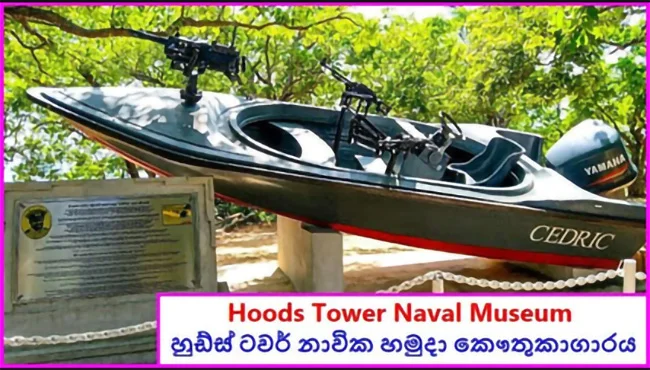
Cedric craft display at Naval Museum, Trincomalee
The Hero he was
When I was selected for my Naval War Course (Staff Course) conducted by the Pakistan Navy Staff College at Karachi, Pakistan, (now known as Pakistan Navy War College relocated at Lahore), Cedric took over the command (even though he was a VNF officer) as Commanding Officer of SBS.
Being one of the co-founders of this elite unit, he was the most suitable person to take over as CO SBS. He was loved by SBS officers and sailors. They were extremely happy to see him at Kilali or Elephant Pass, where SBS was deployed during a very difficult time of our recent history – fighting against terrorists during the 1996-97 period.
Motivated by father’s patriotism, his younger son, Jayson, who was a pilot working in the UK at that time, came back to Sri Lanka and joined the SLAF as an volunteer pilot to fly transport aircraft to keep an uninterrupted air link between Palaly (Jaffna) and Ratmalana (Colombo). Sometimes Jayson flew his beloved father on board from Palaly to Ratmalana. Cedric was extremely happy and proud of his son.
Tragically, young Jayson was killed in action in a suspected LTTE Surface-to-Air missile attack on his aircraft. Cedric was sad, but more determined to continue the fight against LTTE terrorists. He would also lead the rescue and salvage operation to identify the aircraft wreckage his son flew in. The then Navy Commander advised him to demobilise from VNF and look after his grieving family or join Naval Operations Directorate and work from Colombo which he vehemently refused. When I called him from Pakistan to convey my deepest condolences, he said, he would look after the “SBS boys”, he had no intention of leaving them alone at that difficult hour of our nation. That was Cedric. He was such a hero—a hero very few knew about!
The young officers, and sailors in SBS were of his sons’ age, and Cedric would not leave them even when he was facing a personal tragedy. He was a dedicated and courageous person.
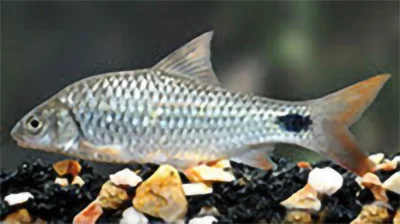
Scientific name: Systomus Martenstyni
English name : Martenstyn’s Barb
Local name: Dumbara Pethiya
Sadly, like many who served our nation and stood against terrorists, Cedric would go on to be considered Missing In Action (MIA) following a helicopter crash off the seas of Vettalikani with Lt. Palihena (another brave SBS officer- KDU intake). He was returning to Point Pedro after visiting the SBS boys at Elephant Pass, Jaffna.
Cedric and his son, Jayson, will go down in history as a brave father-son duo who paid the supreme sacrifice for the motherland. MAY THEY REST IN PEACE ! Salute!
Commander Martenstyn was considered missing in action (MIA) on 22 January 1996 in the sea off Vettalaikerni, while returning to Palaly Air Force Base in an SLAF helicopter when it was lost to enemy fire. He was returning from visiting an SBS detachment in Elephant Pass near the Jaffna Lagoon. Considering his contribution to the war effort, his gallentry and valour in fighting the enemy, and his steadfast service to the Sri Lanka Navy in manufacturing Arrow Boats, and training the SBS, all SLN Arrow Boats were renamed ‘Cedric’ on his 70th Birthday.
(The writer is former Chief of Defence Staff and Commander of The Navy, and former Chairman of the Trincomalee Petroleum Terminals Ltd.)
By Admiral Ravindra
C Wijegunaratne
(Retired from Sri Lanka Navy)
Former Chief of Defence Staff and Commander of the Sri Lanka Navy,
Former Sri Lanka High Commissioner to Pakistan

U19 World Cup: Japan defeat Tanzania by nine wickets

U19 World Cup: Ambrish’s four-fer powers India to third straight win

Josh Hoey breaks world 800m short track record with 1:42.50 in Boston

Trump threatens Canada with 100% tariffs if it ‘makes a deal with China’

Showers will occur at times in the Northern, North-central, Eastern and Uva provinces and in Matale and Nuwara-Eliya districts

Engineers draw red line as CEBEU warns of union action over appointed date

‘Dates have the highest sugar content to fight Coronavirus’

Sunday Island 27 December – Headlines

#SundayIsland 17th December – Headlines

Sunday Island – 28th March

Sunday Island Headlines – 21 March

Sunday Island – 21st February – Headlines
-

 Features6 days ago
Extended mind thesis:A Buddhist perspective
-
 Opinion5 days ago
American rulers’ hatred for Venezuela and its leaders
-
 Business3 days ago
CORALL Conservation Trust Fund – a historic first for SL
-
 Opinion3 days ago
Remembering Cedric, who helped neutralise LTTE terrorism
-
 Opinion2 days ago
A puppet show?
-
 Opinion5 days ago
History of St. Sebastian’s National Shrine Kandana
-

 Features4 days ago
The middle-class money trap: Why looking rich keeps Sri Lankans poor
-
 Features2 days ago
‘Building Blocks’ of early childhood education: Some reflections