
News
IMF urges Sri Lanka to raise taxes, devalue currency

The International Monetary Fund warned crisis-hit Sri Lanka on Thursday that its foreign debt was “unsustainable”, and called for devaluation and higher taxes to revive the almost bankrupt economy.
The pandemic pushed the South Asian island’s tourism sector — a key foreign-exchange earner — off a cliff, and the government in March 2020 imposed a broad import ban to try to shore up foreign currency.
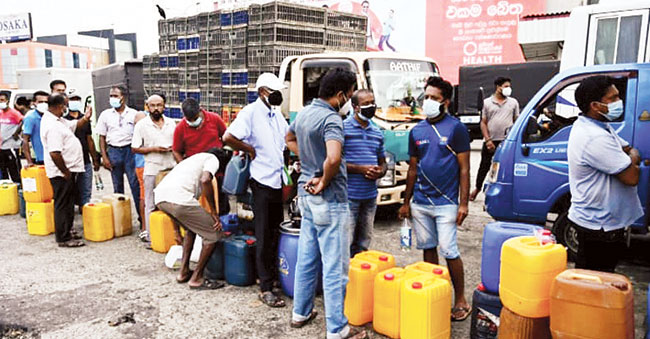
But more than two years on, Sri Lanka is grappling with food and fuel shortages, which this week saw its public transport crippled as buses ran out of diesel and the state imposed blackouts.
Following its annual review of the cash-strapped country, the IMF said its fast-dwindling foreign reserves were inadequate to service the country’s current foreign debt of $51 billion.
Official data shows Sri Lanka needs nearly $7 billion to service its foreign debt this year, but the country’s external reserves at the end of January were only $2.07 billion — just enough to finance one month’s imports.
The IMF stressed “the urgency of implementing a credible and coherent strategy to restore macroeconomic stability and debt sustainability”, recommending a return to a “market-determined and flexible exchange rate” — meaning a devaluation of the Sri Lankan rupee.
While the central bank’s set rate is 197 rupees to the dollar, a thriving black market offers 260 rupees for US currency notes.
This disparity has led to a more than 50 percent decline in foreign remittances through official banking channels.
But the IMF noted the country’s economic woes began pre-pandemic.
Soon after taking office in November 2019, President Gotabaya Rajapaksa cut several taxes nearly in half, the IMF said, driving down government revenues and forcing it to borrow more.
Among recommendations to address the crisis was to raise income taxes and VAT, “complemented with revenue administration reform”, the IMF said.
The lack of dollars to import fuel has led to a serious energy crisis.
Besides bringing public transport to a halt on Wednesday, the state’s electricity company also imposed a daily seven-and-a-half-hour electricity blackout — the longest scheduled power rationing in over a quarter of a century.
Without dollars to finance essential imports, rice, milk powder, sugar and wheat flour are in short supply, while local industries are unable to bring in raw materials and machinery.
The shortages pushed inflation to 16.8 percent in January — the fourth consecutive record rise — and the IMF said it expected it to remain in the double digits.
International rating agencies have downgraded Sri Lanka over expectations it may not be able to service its foreign debt, though the government insists it can meet its obligations.

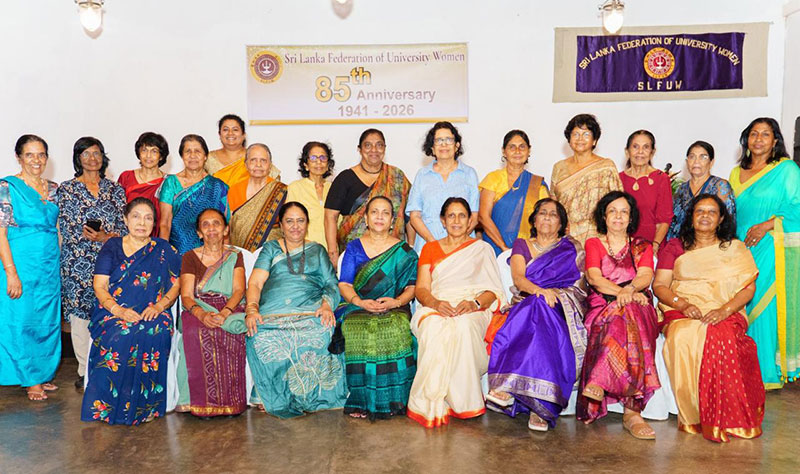
The Sri Lanka Federation of University Women (SLFUW) celebrated its historic 85th Anniversary on September 19 at its headquarters on Kithulwatte Road, Colombo with a full house in attendance, an SLFUW news release said.
The Auditorium was filled to capacity as SLFUW President, Eng. Lakmini Nonis, welcomed the assemblage, which included distinguished professionals and academics. Subsequently, Prof. Emeritus Niranjanie Ratnayake, Chief Guest, initiated proceedings by lighting the traditional oil lamp.
The festive commemorative cake was cut jointly by the Chief Guest Prof.. Ratnayake and Dr. Premala Sivaprakasapillai Sivasegaram, the first female engineer of Sri Lanka. Then followed the presentation of eight scholarships to female undergraduates, including two who were visually impaired.
In her address, President Nonis stated that the SLFUW assisted not only university women, but also school education in underprivileged areas, with special focus on the socially disadvantaged. Besides, it also helped alleviate poverty, and uplift the lot of the common man. She hoped that this legacy of patriotic service would be carried forward during the next 85 years as well.
Finally, she paid tribute to the late Mrs. Clara Motwani, American educationist, who set up the SLFUW in 1941.
The day’s program included a panel discussion on ‘ Honouring Traditions, and Building a Sustainable Future for the Next Era of the SLFUW.’. The panelists were, Eng. Premala Sivasegaram Ph.D, Ms. Dinali Fernando, Head, Dept. of English, Kelaniya University, and Snr. Prof. Kumudu Perera of Wayamba University. Compere Ms. Ayeshah Bansajayah served as Moderator.
Ms. Gnanakanthi Makalanda, Chairperson of the Membership Committee, spoke on the modernization of the SLFUW Membership database, and a token presentation of a few Membership Cards was done by Prof. Ratnayake.
After the sumptuous lunch games and a sing-along followed, with gifts for everybody. All in all, participants spent a relaxed, enjoyable day. SLFUW Vice President, Nirmali de Silva presented the Vote of Thanks.
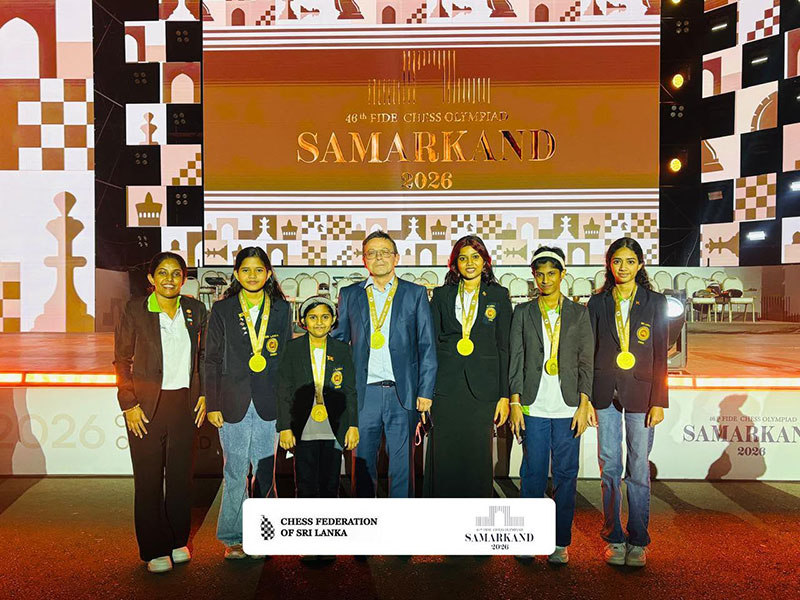
China, Kazakhstan and India won Gold, Silver and Bronze in the women’s section of the 46th Chess Olympiad recently concluded in Samarkand, Uzbekistan, but the efforts of the Sri Lankan team also made waves. Sri Lanka secured the Gold for Category C finishing 34th overall and well ahead of the Silver winner, Panama (60th).
Oshini Gunawardhana, Sri Lanka’s highest rated female chess player who is not only the youngest Woman International Master (WIM) in the world but is currently the No one among girls under 16, led from the front to ensure that the women’s team secured a category gold.
Oshini, playing on the top board and thereby forced to play against the strongest players in teams Sri Lanka played against, scored an incredible eight points out of a possible 10. Her ‘Plus Six’ individual score came from seven wins and two draws. The 24.2 rating points she secured brought her very close to the 2,300 ELO mark. Oshini already has one Woman Grand Master (WGM) norm and needs two more to become Sri Lanka’s first Woman Grandmaster.
Sri Lanka, ranked 77th at the start of the tournament and placed in Category C, ensured the best category result with one round to go. At this point Sri Lanka was placed 18th and above all teams from Category B as well.
The team beat Belgium, Slovakia and Cuba in Rounds eight-10, all three ranked much higher than Sri Lanka. Even though they lost the final round to Türkiye, Sri Lanka still finished 34th, with Croatia and Turkmenistan (32nd and 33rd respectively) being the only Category B teams ahead.
Meanwhile, Yenuthi Sahanlee who is just 15 years of age, scored a remarkable 6/9 on Board four. Her efforts were rewarded by the Women’s FIDE (International Chess Federation) Master title. Her consistency (just one loss in nine games) saw Yenuthi gaining 79.6 rating points
National Champion Dahamdi Sanudula scored a creditable 5.5/10 on board two, while Sandithi Alwis had a decent outing with 4.5 out of nine on board three. The youngest member of the team, Sayumi Halangoda, just 11-years old, won four out of six in a memorable debut Olympiad performance. Dahamdi added 24.2 points to her ELO Rating while Sandithi and Sayumi added 35.2 and 30.4 respectively.
The team was coached by Grandmaster Dejan Bojkov before the tournament and by Grandmaster Boris Chatalbashev during the event. In addition, Akila Kavinda and Kashyapa Kulasekera, two of the top coaches in the country, trained the members of the team individually. Washini Surasinghe did an excellent job as Manager, ensuring that the team was match-ready for every round.
The women’s team received tremendous support from Elephant House, which sponsored the in-situ coach, Boris Chatalbashev whose services were obtained by the Chess Federation of Sri Lanka.
News
Pathfinder Foundation and the China Center for South Asian Studies at Sichuan University launch the Colombo Maritime Dialogue 2026 Report

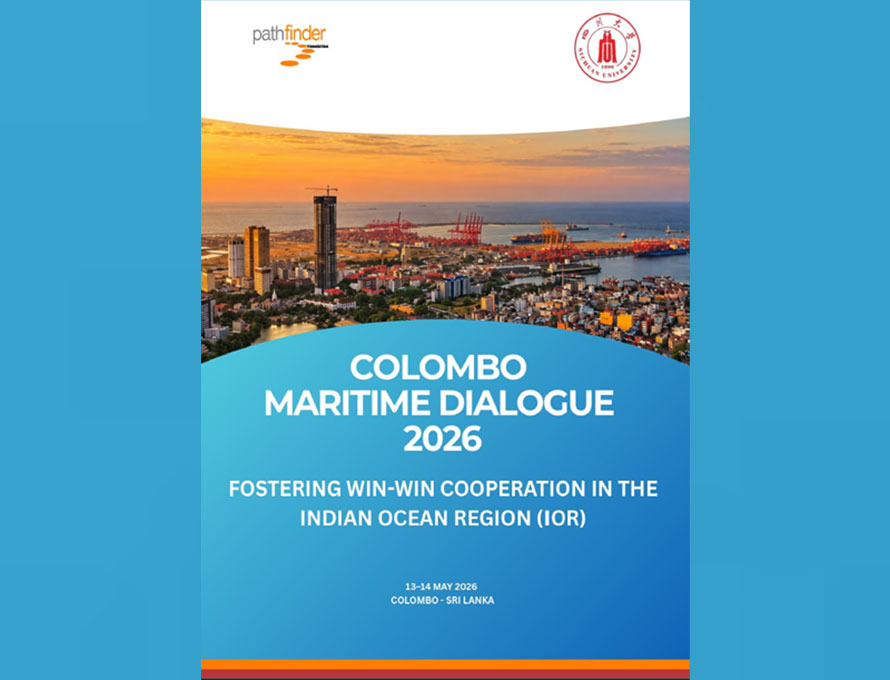
The Pathfinder Foundation and the China Center for South Asian Studies (CCSAS), Sichuan University, jointly launched the Colombo Maritime Dialogue (CMD) 2026 Report at a virtual event. Representatives of both institutes joined a virtual platform to launch the publication. The report, “Colombo Maritime Dialogue – 2026,” is available on the Pathfinder website: www.pathfinderfoundation.org.
The virtual launch began with welcome and opening remarks from Bernard Goonetilleke, Chairman of the Pathfinder Foundation, and Prof. Qiu Yonghui, Chief Expert and Vice Director of the China Center for South Asian Studies, Sichuan University. The report was formally launched during the ceremony, followed by concluding remarks from Prof. Rong Ying, Chair Professor at the China Center for South Asian Studies, Sichuan University, and Admiral (Retd.) Prof. Jayanath Colombage, Distinguished Fellow at the Pathfinder Foundation.
The Colombo Maritime Dialogue 2026, held on 13 and 14 May 2026, brought together experts and scholars to exchange perspectives on maritime affairs and to explore opportunities for greater cooperation in the Indian Ocean Region (IOR) under the theme “Fostering Win-Win Cooperation in the Indian Ocean Region.”
The Dialogue recognised the Indian Ocean as a vital global maritime space for international trade, energy flows, connectivity and economic development, while also acknowledging the region’s increasingly complex security and environmental challenges. It examined areas of potential cooperation to address shared maritime challenges, including maritime safety, illegal, unreported and unregulated (IUU) fishing, maritime crime, disaster response, maritime domain awareness and the sustainable management of marine resources. The report also highlighted the importance of strengthening dialogue and building greater mutual understanding among countries and institutions in the Indian Ocean.
The report captures the key discussions, perspectives and recommendations that emerged from the Dialogue, highlighting areas where continued dialogue, cooperation and engagement could foster greater understanding and shared interests in the Indian Ocean Region.
The Colombo Maritime Dialogue, jointly organised by the Pathfinder Foundation and the China Centre for South Asian Studies at Sichuan University, reflects both institutions’ shared interest in promoting informed dialogue, strengthening mutual understanding, and fostering constructive cooperation on maritime issues important to the Indian Ocean Region. (Pathfinder news release)

From stability to transformation: What Sri Lanka’s industrial policy experience teaches us

In love with linen: Minha Akram’s creative journey

What lies behind our waters?

THE SLFUW CELEBRATES 85th ANNIVERSARY

Oshini and Yenuthi excel as SL women strike Chess Olympiad gold

The first woman in the foreign service or Ceylon Overseas Service it was then called

‘Dates have the highest sugar content to fight Coronavirus’

Sunday Island 27 December – Headlines

#SundayIsland 17th December – Headlines

Sunday Island – 28th March

Sunday Island Headlines – 21 March

Sunday Island – 21st February – Headlines
-

 News6 days ago
Police remove Thileepan statue in Jaffna
-

 Features6 days ago
The 22nd Amendment, constitutional recovery and illiberal slippage
-

 Features6 days ago
Of foreigners as CEOs of Lankan ventures
-

 Latest News4 days ago
Gold winner Tharanga gets brand-new Honda Vezel from SLAAJ
-

 News6 days ago
Sajith rejects Jt. Opp. protest sabotage claim; SJB TU chief demands remedial action
-

 Features4 days ago
Why Sri Lanka needs an Inclusive Civic Nationalism – urgently
-

 Features5 days ago
Thailand’s biggest new global star …
-

 News3 days ago
US-assisted ‘Ice’ detection: NPC to examine IGP’s move to transfer drug-busting team