
News
IMF should oppose restrictions on Freedom of Expression, Civil Society Groups


Sri Lanka: Repression of Civic Space Threatens Financial Reform
The International Monetary Fund (IMF) should urge Sri Lanka’s government to abandon draft legislation that would severely curtail civil society and jeopardize the IMF’s programme in the country, Human Rights Watch said in a letter to the IMF that was released on Tuesday (12). The proposed Non-Governmental Organizations (Registration and Supervision) Act is among several recent and planned measures that would curtail fundamental freedoms, despite the critical role of public scrutiny in promoting good governance and combatting corruption.
The IMF’s US$3 billion bailout of Sri Lanka – which is linked to government commitments to reform – helped stem the immediate economic crisis after the country defaulted on its foreign debt in 2022, but further progress is threatened by the adoption of laws by President Ranil Wickremesinghe’s administration that would severely restrict basic rights. The Online Safety Act, enacted in January, creates vague and broad speech-related offenses punishable with lengthy prison terms. The Anti-Terrorism Bill, currently before Parliament, contains sweeping new speech-related offenses and arbitrary powers of arrest. And the draft law to regulate nongovernmental organizations could make independent civil society activity all but impossible in Sri Lanka.
“As the economy collapsed in 2022, Sri Lankans demanded good governance and an end to corruption, but instead now face draconian laws and policies that threaten human rights and undermine reforms,” said Meenakshi Ganguly, Deputy Asia Director at Human Rights Watch. “The protests helped bring President Wickremesinghe to power, but instead of listening to calls for change, he’s clamping down on peaceful dissent.”
A 2023 IMF study of Sri Lanka known as the Governance Diagnostic Assessment stated that “[a]nticorruption efforts are unlikely to achieve their objectives unless they also encompass initiatives designed and led by groups outside of government who are committed to rule-based inclusive economic and social progress.” However, the study found that civil society’s participation in oversight and monitoring of government actions has been “restricted by limited transparency, the lack of platforms for inclusive and participatory governance, and by broad application of counter-terrorism rules.” As a result, “opportunities for public participation and oversight of official behaviour, including by civil society, are increasingly restricted.”
The government on January 30, 2024, provided the draft NGO law to selected members of civil society, who were given three weeks to respond. The Bill does not address any evident need, but instead seeks to subject civil society organizations to invasive government scrutiny and interference, and threatens civil society members with prison if they don’t comply with cumbersome administrative procedures.
The National Collective of CSOs and NGOs, a coalition of Sri Lankan civil society organizations, wrote to the government on February 28 that the proposed law would “violate the fundamental rights to freedom of association and expression,” while damaging the delivery of services by civil society organizations, including to “the many families who are struggling to make ends meet in the midst of severe economic hardship.”
The United Nations High Commissioner for Human Rights, Volker Türk, in his March 1 update to the UN Human Rights Council on the crisis in Sri Lanka, said he was “concerned by the introduction of new or proposed laws with potentially far-reaching impact on fundamental rights and freedoms … which variously strengthen the executive, grant broad powers to the security forces, and severely restrict rights to freedom of assembly, association and expression, impacting not only on civic space but the business environment.”
The IMF should protect the credibility and efficacy of its programme in Sri Lanka by publicly calling upon the government to abandon the proposed NGO law, impose a moratorium on use of the Online Safety Act, and amend the Anti-Terrorism Bill to ensure that it respects human rights standards, Human Rights Watch said.
“The IMF and other international partners supporting Sri Lanka’s economic recovery recognize that this crisis has its roots in misgovernance and corruption,” Ganguly said. “If their efforts are to be successful, they need to stand firm against the government’s attempts to curtail fundamental civil and political rights.”



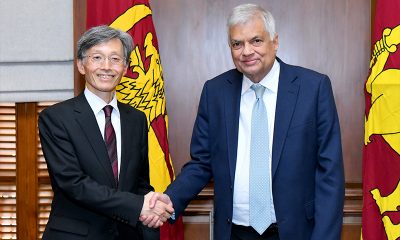


Opposition and SJB Leader Sajith Premadasa has alleged that the current government is attempting to suppress freedom of expression and media freedom to lead the country towards authoritarian rule.
In a video message on Thursday (25), Premadasa said that in a democratic country, the four main pillars safeguarding democracy are the legislature, the executive, the judiciary, and the independent media, but, at present, the government is using the police to violate both the democratic rights of the people and the rights of police officers themselves.
He said that the government is working to establish a police state that deprives citizens of their right to access truthful information.
“For democracy to be protected, media freedom must be safeguarded, and space must be given to independent media. Instead, the government is interfering with the independent media process, using the police to suppress and intimidate independent media,” he said.
He noted that even when independent media present their views based on reason, facts, and evidence, the government attempts to suppress them. Such actions, he said, amount to turning a democratic country into a police state. “Do not suppress the voice of the silent majority, the independent media,” he urged.
Premadasa emphasised that independent media represent the voice of the silent majority in the country and must not be suppressed.
“Media repression is a step towards authoritarian rule, and the people did not give their mandate to create an authoritarian regime or a police state. If the government attempts to abolish democratic rights, the Samagi Jana Balawegaya will stand as the opposition against it,” he said.
The Opposition Leader further alleged that the government was interfering with police independence, stating, “Political interference has undermined the independence of the police, making it impossible for them to serve impartially. Suppressing freedom of expression is an attempt to lead the country towards authoritarian rule.”
Premadasa pointed out that the media has the right to reveal the truth, and interfering with that right is a violation of the rights of 22 million citizens.
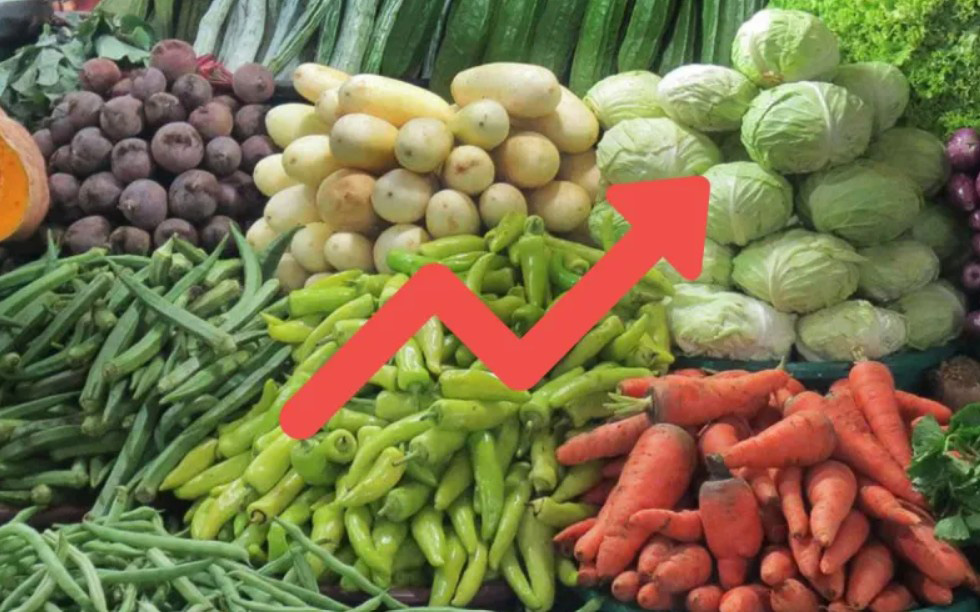
Vegetable prices at the Peliyagoda Manning Wholesale Market surged to unusually high levels yesterday (26), raising concerns among consumers as the festive season drives up demand. The situation is expected to persist over the next few days, a spokesman for the Manning Market told The Island.
He said a sharp increase in the number of buyers visiting the wholesale market, ahead of upcoming festivities, had resulted in a sudden spike in demand, prompting wholesale traders to raise prices significantly. The price hikes have affected a wide range of commonly consumed vegetables, placing additional pressure on household budgets.
According to market sources, the wholesale price of beans climbed to Rs. 1,100 per kilogram, while capsicum soared to Rs. 2,000 per kilogram. Green chillies were selling at around Rs. 1,600 per kilogram. Prices of other vegetables, including beetroot, brinjal (eggplant), tomatoes, bitter gourd, snake gourd and knolkhol, also recorded unusually high increases.
The spokesman alleged that despite the steep rise in prices, vegetable farmers have not benefited from the increases. Instead, he claimed that a group of traders, who effectively control operations at the wholesale market, are arbitrarily inflating prices to maximise profits.
He warned that if the relevant authorities fail to intervene promptly to curb these practices, vegetable prices could escalate further during the peak festive period. Such a trend, he said, would disproportionately benefit a small group of middlemen while leaving consumers to bear the brunt of higher food costs.
By Kamal Bogoda ✍️

The Hakgala National Botanical Garden, which was closed in the aftermath of Cyclone Ditwah, has been reopened to tourists from yesterday, the Ministry of Environment indicated.
The Ministry said the reopening was carried out in accordance with recommendations and guidelines issued by the National Building Research Organisation (NBRO) and the DisasterManagement Centre (DMC) after safety assessments were completed.
However, due to the identification of hazardous ground conditions, several areas, within the garden, have been temporarily restricted. These include the pond area, near the main entrance, and access roads leading towards the forest park where potential risks were observed. Warning signs have been installed to prevent visitors from entering these zones.
To ensure the safety and convenience of both local and foreign visitors, the garden’s management has introduced a special assistance programme, with staff deployed to guide and support tourists.
The Hakgala Botanical Garden was closed as a precautionary measure during the disaster situation triggered by Cyclone Ditwah. The Ministry noted that the garden has now been safely reopened, within a short period, following remedial measures and inspections, allowing visitors to resume access while maintaining necessary safety precautions.
By Sujeewa Thathsara ✍️

A few showers may occur in the Northern, Eastern and Uva provinces and in Polonnaruwa, Matale and Nuwara-Eliya districts

Sajith warns country is being dragged into authoritarian rule

Wholesale mafia blamed for unusually high vegetable prices

Cyclone-damaged Hakgala Botanical Garden reopened with safety measures

Holiday travellers generate record revenue for expressways

Another casualty from underworld warfare succumbs to his injuries

‘Dates have the highest sugar content to fight Coronavirus’

Sunday Island 27 December – Headlines

#SundayIsland 17th December – Headlines

Sunday Island – 28th March

Sunday Island Headlines – 21 March

Sunday Island – 21st February – Headlines
-

 News4 days ago
Members of Lankan Community in Washington D.C. donates to ‘Rebuilding Sri Lanka’ Flood Relief Fund
-

 News2 days ago
British MP calls on Foreign Secretary to expand sanction package against ‘Sri Lankan war criminals’
-

 Business6 days ago
Browns Investments sells luxury Maldivian resort for USD 57.5 mn.
-

 News5 days ago
Air quality deteriorating in Sri Lanka
-

 News5 days ago
Cardinal urges govt. not to weaken key socio-cultural institutions
-
 Features6 days ago
Another Christmas, Another Disaster, Another Recovery Mountain to Climb
-
 Features6 days ago
Hatton Plantations and WNPS PLANT Launch 24 km Riparian Forest Corridor
-

 Features4 days ago
General education reforms: What about language and ethnicity?