
Latest News
ICC launches Emerging Nations Trophy for women

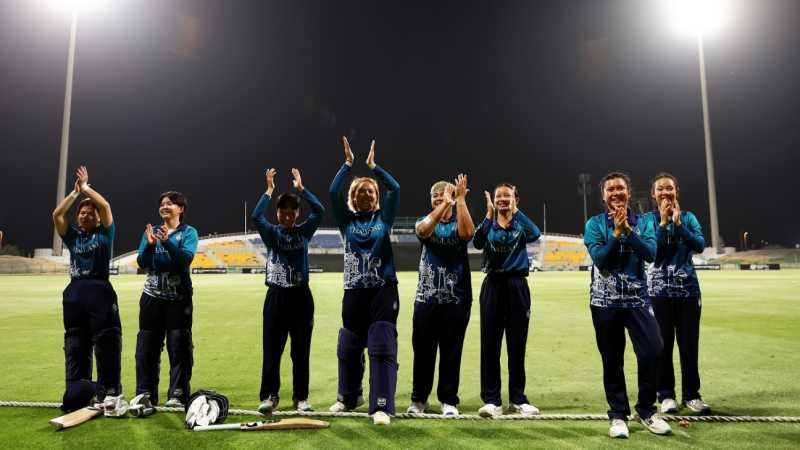
A new global tournament, the ICC Women’s Emerging Nations Trophy, involving eight teams from four continents, will be played from November 20 to 30 in Bangkok. Thailand, Papua New Guinea, Netherlands, UAE, Scotland, Namibia, Tanzania, and Uganda will take part in the inaugural edition.
The trigger for the tournament, an ICC statement said, was the success of the recent ODI World Cup in India and Sri Lanka, where “more than 500 million viewers in India” were recorded and there was also “significant growth in viewership across countries”.
“Nearly 300,000 fans attended matches across India and Sri Lanka and the event concluded with India becoming the first Asian team to lift the Women’s Cricket World Cup, a watershed moment in the evolution of the sport and the socio-cultural context of gender roles,” an ICC statement said. “Building on the extraordinary impetus provided by the marquee event, the ICC continues to invest in creating a sustainable future for women’s cricket. The Women’s Emerging Nations Trophy is part of a new three-tier development pathway designed to offer high-performance exposure to emerging nations.”
Sanjog Gupta, the ICC chief executive, said, “It is the ICC and the Chair’s [Jay Shah] vision to sustainably expand cricket’s footprint across the world and grow the women’s game. Providing elite athletes from emerging nations more opportunities to play at the highest level is aimed at fast-tracking their development and improving the competitiveness of their teams.
“It also drives the visibility of the sport in participant nations, serving as a driver of girls’ involvement in the sport and inspires women from other nations to stay committed to the development pathways.”
The opening day will feature Thailand vs Netherlands and Papua New Guinea vs UAE.
(Cricinfo)

Foreign News
‘Time for Ukraine to get new president,’ says Trump after Zelensky condemns diesel deal

US President Donald Trump has said he thinks “it’s time for Ukraine to get a new president” as he responded to Volodymyr Zelensky’s criticism of the US diesel deal with Russia.
The Ukrainian president warned a new deal to release millions of tonnes of Russian diesel into the US would provide Moscow with money to continue its war against his nation, calling it a gift to Russian President Vladimir Putin.
Trump told reporters outside the White House on Saturday that Zelensky “wants to make problems for the world” by continuing to authorise attacks on Russian refineries.
“He’d better damn well stop,” Trump said, before suggesting Ukraine should “get a new leader who can make a deal”.
Global fuel supplies, including diesel, have been severely limited by the war against Iran launched by the US and Israel, which led to the effective closure of the Strait of Hormuz, through which roughly a fifth of the world’s oil products usually flows.
Russia – a major producer – and Ukraine have recently intensified their strikes on each other’s energy infrastructure and transport facilities, further straining energy markets.
“We said, ‘you can do whatever you want to Russia, don’t hit the refineries’, because that’s a world problem that’s caused,” Trump continued.
“He could have made many deals and for some reason, he never does.”
Putin’s envoy Kirill Dmitriev described Trump’s intervention as “iconic and historic”, saying that Ukraine “needs leadership actually focused on peace”.
The US president confirmed on Friday that an agreement had been reached with Moscow to suspend sanctions on Russian diesel exports until 7 April.
Zelensky reacted by saying it would allow Moscow to raise new funds to source new military equipment to continue the war.
He also accused Moscow of taking the deal “to mean they can keep fighting, to mean they keep dropping bombs on cities” following deadly new strikes on Zaporizhzhia.
The Ukrainian president spoke to several allies on Saturday to discuss the latest developments, calling for “real decisions to protect lives in Ukraine” and to protect European security.
A Downing Street spokesperson said UK Prime Minister Andy Burnham had spoken to Zelensky and offered his “complete solidarity”.
The pair had agreed Russia should acquiesce to “an immediate energy ceasefire” and end its attacks on shipping in the Black Sea, the spokesperson said, as “this would immediately release more energy and food supplies into the global market”.
News of the US-Russia diesel deal was also met with criticism by EU’s foreign affairs chief Kaja Kallas, who echoed Zelensky in saying that suspending sanctions “provides Moscow with more revenues to wage war”, adding: “This is not the time to ease pressure on Russia, and Europe won’t.”
She said European foreign ministers intended to approve the biggest set of sanctions on Russia since the start of its full-scale invasion on Monday.
The deal with Russia is the latest effort from Trump to lower fuel prices in the US ahead of the midterm elections, after months spent grappling with the political consequences of the Iran war.
That conflict, which began in February, has sent the cost of petrol and in particular diesel skyrocketing, which has soured his standing with the American public who have been stung by the higher pump prices and knock-on effects that led to across-the-board inflation.
The average price of diesel is currently $6.28 (£4.74) a gallon, according to the AAA – up from last month’s $5.94 average, and $3.68 last year.
Under the deal, Russia would release an initial 300,000 tonnes of diesel “to the American and global marketplace” followed by an additional 500,000 tonnes in November.
A further million would follow, Trump wrote on Truth Social, and then another 3m tonnes “within a short period of time” – but he noted that this delivery will be “based on the condition of their diesel refineries”.
In the past 10 months, Russia experienced two waves of severe fuel shortages across the country due to Ukrainian drones strikes on its oil refineries.
Diesel production in Russia dropped by an estimated 30%, according to the International Energy Agency.
Trump had already called for new elections in Ukraine last December, saying Ukrainian voters should have the choice to replace Zelensky.
Since the war broke out in 2022 Ukraine has been under martial law, meaning elections are suspended.
[BBC]
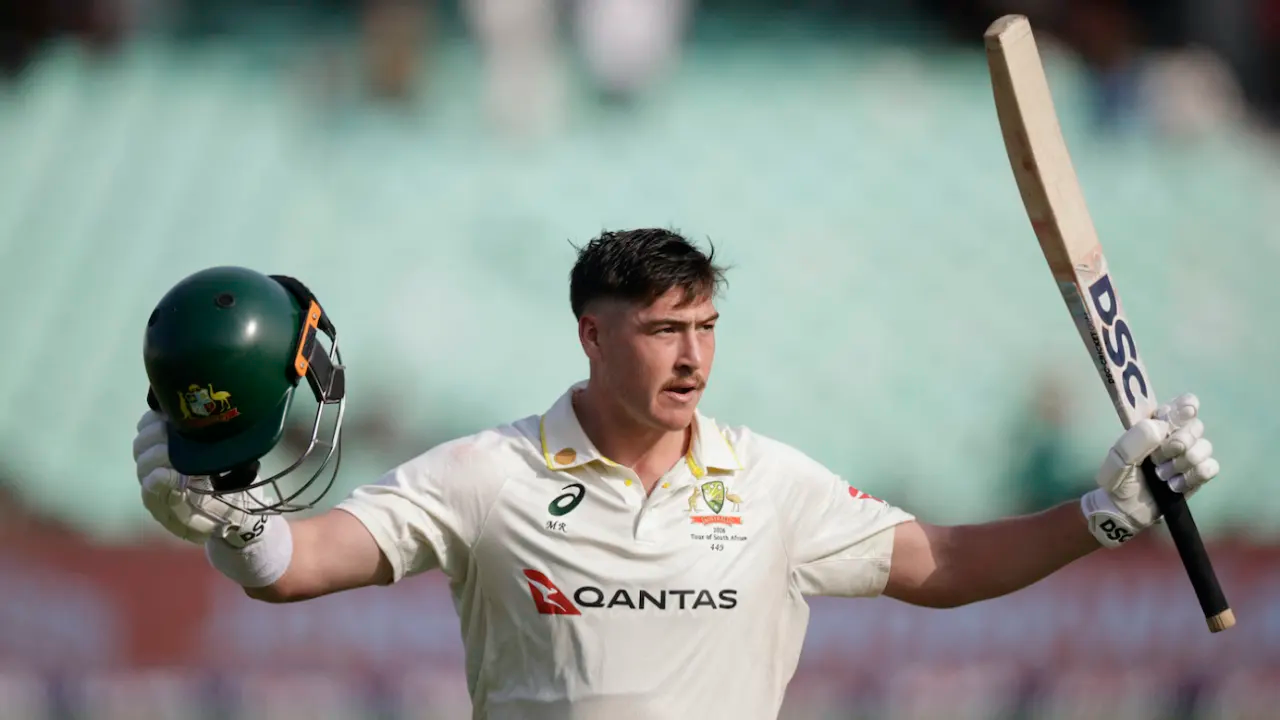
Matt Renshaw produced a herculean 190 and powered Australia to an unlikely first-innings total before Josh Hazelwood dismissed South Africa opener Ryan Rickelton for a duck late on day two of the first Test in Durban. Australia had their backs to the wall at 124 for 6 in familiar batting woes but Renshaw rescued the innings with his 397-ball marathon effort.
Renshaw fell short of what would have been a maiden double ton after being dismissed two balls into the final session, caught at slip off the bowling of offspinner Simon Harmer. His only other Test century was against Pakistan at the SCG in January 2017, when he made 184.
After 137.2 overs in the field, South Africa openers Rickelton and Aiden Markram faced a tough challenge under increasingly gloomy skies. A weary Rickelton did not fare well after edging Hazlewood to third slip in the second over, having attempted a lavish drive to a full delivery.
But Markram and new No. 3 David Bedingham were unruffled, and hit several attractive boundaries before bad light ended the day’s play just 8.4 overs into South Africa’s innings.
Having been on the back foot for much of the opening day, Australia were on top after day two as Renshaw produced the fourth highest score by an Australian in South Africa. Remarkably, he scored 174 of his runs with the last four batters, the most anyone has scored in a Test innings while batting with the tail since 2002.
Renshaw received strong support from the lower order, marked by an 86-run seventh-wicket partnership with Pat Cummins and a 134-run stand with Nathan Lyon, the second-most for the ninth wicket for Australia in their Test history.
Cummins and Lyon faced a combined 190 deliveries – that was 27 more than Australia’s top four batters – although batting became easier on a surface that on day one produced steep bounce and seam movement.
It has been a tough journey for Renshaw, who might have resurrected his Test career after providing a major tonic for Australia’s reshuffled batting order. He reached his century just before the lunch break with a boundary through the leg side, and raised his arms in delight and took off his helmet, showing off a beaming smile.
Highly disciplined but also showing a knack of going through the gears, Renshaw became the first Australia batter to face 300 balls in a Test innings since Usman Khawaja scored 232 against Sri Lanka in Galle in early 2025.
Renshaw has relished moving down to No. 5 after Nic Maddinson’s surprise selection as an opener, along with Cameron Green missing the match through injury. He had only filled the position four times previously – thrice during the 2023 tour of India, and once on the 2017 tour – with modest results, although has enjoyed success with Queensland there.
Renshaw had returned to Test cricket after three-and-a-half years as an opener against Bangladesh in August. While Maddinson’s selection has initially backfired, Renshaw looked at ease in the middle order, and equally untroubled against the seamers and spinners.
Having dominated much of the shortened first day, South Africa were left frustrated with their attack blunted by Renshaw. Seamers Wiaan Mulder, Marco Jansen and Anrich Nortje took nine wickets between them but struggled to consistently threaten on day two.
Spin duo Harmer and Keshav Maharaj claimed just one wicket from 48.2 overs, with Renshaw negating their influence, although the surface is expected to spin significantly later in the match. It was a disappointment for the sparse crowd in Durban, with the atmosphere rather subdued for Australia’s first Test series in South Africa since the 2018 sandpaper scandal.
Earlier on day two, Australia resumed their first innings on 187 for 6 after just 65.2 overs were bowled on a truncated opening day due to bad light. Renshaw and Cummins aimed to build on their unbeaten 63-run partnership from overnight. It did not take Renshaw long to reach his fourth Test half-century after edging Nortje through third slip and gully as he celebrated the milestone for the first time since March 2017.
Nortje, who played a starring role on day one after a three-and-a-half year exile from Test cricket, once again unfurled vicious short deliveries but occasionally tried to outfox Cummins by pitching up. A focused Cummins was unfazed, and pounced on a rare overpitched delivery with a beautiful square drive to the boundary. He had a fourth Test half-century in his sights – and the first since January 2024 – until, on 43, he edged a good-length delivery from Mulder to second slip.
Renshaw, meanwhile, showcased his much improved play against spin, reverse sweeping Maharaj with good effect to keep the scoreboard ticking over.
Much like Cummins, Mitchell Starc was intent on solid defence, and had a slice of luck when he edged Harmer through the hands of Markram at first slip as the ball flew to the boundary. South Africa had no hesitation in taking the second new ball, and Mulder capitalised when he clean bowled Starc with a cracker of a delivery that pitched on middle before crashing into the off stump.
But Renshaw kept South Africa at bay, and put the foot down in the back end of the elongated session. He hogged the strike after lunch as South Africa skipper Temba Bavuma deployed Maharaj and Harmer in tandem. The game went through a lull until the reintroduction of Nortje, who delivered a 143kph thunderbolt that whacked Renshaw on the grill of the helmet.
But Renshaw gave an immediate thumbs up and continued with his indefatigable effort after receiving medical attention. He reached 150 with a reverse sweep off Maharaj – and quite fittingly so, given his mastery of the stroke through the innings.
Lyon appeared set to bat through the entire second session before being trapped plumb lbw by a full delivery from Jansen, who was rewarded for a hostile spell before tea. The session was extended, but Hazlewood held firm with the bat before making an impact with the ball before stumps.
Scores:
South Africa 27 for 1 in 8.4 overs (Aiden Markram 15*, David Bedingham 12*; Josh Hazlewood 1-9) trail Australia 390 in 137.2 overs (Matt Renshaw 190, Pat Cummins 43; Marco Jansen 3-68, Wiaan Mulder 4-68, Anrich Nortje 2-88 ) by 363 runs
[Cricinfo]
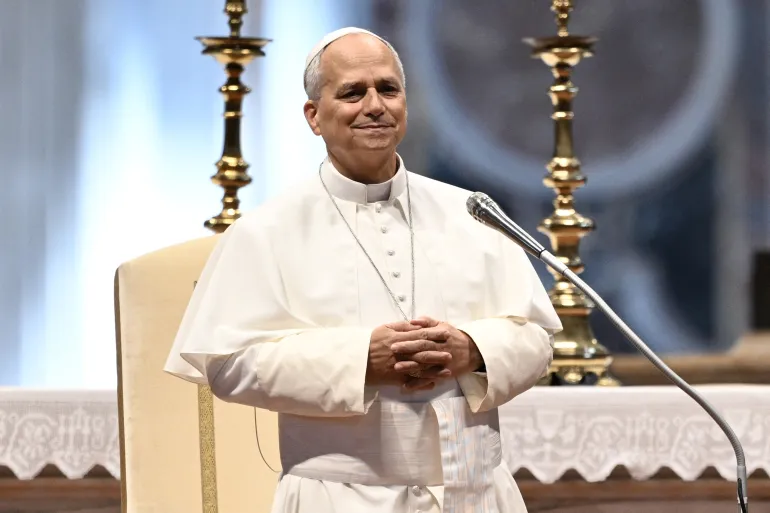
Pope Leo XIV has declared that the death penalty is “inadmissible” while his home country, the United States, announces plans to livestream an execution by firing squad.
Marking World Day Against the Death Penalty on Saturday, the pope reiterated the Catholic Church’s teaching on capital punishment, writing on X that it was “inadmissible because it is an attack on the inviolability and dignity of the person”.
“The common good can be safeguarded and the requirements of justice can be met without recourse to capital punishment,” his post said.
“Effective systems of detention have been developed that protect citizens while at the same time do not completely deprive those who are guilty of the possibility of redemption,” added the leader of the Catholic Church.
The American Pope’s comments come days after US Secretary of Defense Pete Hegseth said on Thursday that the firing squad execution of Nidal Malik Hasan on December 3 will be livestreamed.
Hasan was convicted of killing 13 people and wounding 32 others in a shooting at the Fort Hood military base in 2009.
Pope Leo did not specifically refer to the planned execution, or last month’s botched execution attempt on Christa Pike, who survived two doses of the lethal injection in Tennessee.
But his post came hours after his top deputy, Cardinal Pietro Parolin, the Vatican secretary of state, told Vatican News that the plan to livestream Hasan’s execution was “unacceptable”.
It was Leo’s predecessor, Pope Francis, in 2018 who first amended official Catholic teaching to declare capital punishment “inadmissible” in all circumstances.
[Aljazeera]

Showers above 75 mm are likely at some places in the Western, Sabaragamuwa, Central, Uva and North-Western provinces and in Galle, Matara, Anuradhapura and Mannar districts.

Iranian ships stranded, Lanka fears US sanctions

Sri Lanka CERT warns of overseas university admission scams

Navi Pillay’s Lankan affairs in focus as she wins 2026 Nobel Peace Prize

Lanka welcomes Indian SC remarks on Katchatheevu dispute

UN at Crossroads, Trump nearing End of the Road

‘Dates have the highest sugar content to fight Coronavirus’

Sunday Island 27 December – Headlines

#SundayIsland 17th December – Headlines

Sunday Island – 28th March

Sunday Island Headlines – 21 March

Sunday Island – 21st February – Headlines
-

 News6 days ago
Geneva takes up Sallay’s case and govt. ignores opportunity to answer accusations
-
 Features5 days ago
Preventing grievances from becoming communal
-

 Sports3 days ago
Nissanka absence opens door for Sri Lanka’s young guns
-

 Features3 days ago
The Sri Lankan who made Scottish history
-

 News4 days ago
Gnansara Thera to be assigned to prison printing section: Officials
-

 Features6 days ago
Sri Lanka Cricket Bill: Governance reform is not yet a cricket strategy
-

 Features3 days ago
Future of Sri Lanka’s state university system: Should it be shut down and reopened?
-

 News2 days ago
NDB fraud Rs 60mn more than reported