
Features
I OPPOSE THE PRIME MINISTER, THE MINISTER OF PLANNING AND THE MINISTER OF AGRICULTURE

(Excerpted from Falling leaves, an autobiographical memoir of LC Arulpragasam)
I had no place to go, because I was wedded to the agriculture sector – by my own choosing. Therefore, I was lucky to find a berth as Head of the Agriculture Sector in the Department of National Planning. But I had to pay a career-price for doing this, because it involved my working under a non-civil servant and under someone whom I outranked in the Civil List – which was simply not done in those days.
I also accepted to work in the capacity of Senior Research Officer, which was a post at least two levels below my own rank in the public service. (I always had a penchant toward research – and I must have been fulfilling it at this stage of my life). However, since around 70 per cent of the people were dependent on agriculture, planning its development was the most important job in Sri Lanka at that time. So for me, it was the highest point in my career, although it was ranked in the government service as my lowest!
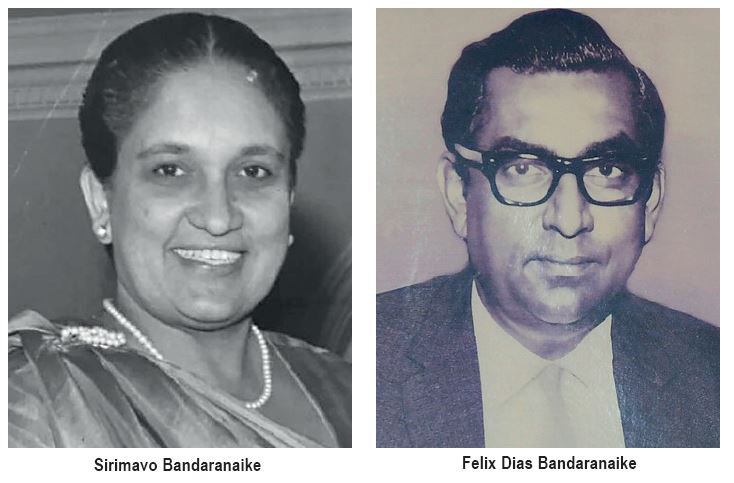
I soon discovered, however, that the Planning Department had absolutely no influence on policy under the government of Mrs. Sirimavo Bandaranaike. It so happened that I knew the Minister of Finance and Planning, Mr. Felix Dias Bandaranaike on a personal basis. For he had been two years my junior at Royal College, and as Head Prefect I had even reported him for a caning for smoking in school. Despite his personal regard for me, I was averse to approaching him directly on policy/political matters, given my personal ethics and Civil Service training of not finding favour with politicians.
I also feared that my work would be lost in the political infighting between Mr. Felix Bandaranaike and Mr. C.P. de Silva, who were both vying for the post of Deputy Prime Minister. Meanwhile, I was growing increasingly frustrated since I knew that I was getting nowhere and had nowhere else to go. For by specializing in the agriculture sector, I had brought myself to a dead end.
Fortunately, things came to a head in 1960, when Mr. Felix Bandaranaike, as Minister of Finance and Planning wished to bring out a three-year development plan together with his budget. He asked me directly at a big meeting of divisional heads whether I could write such a plan for the agriculture sector. I refused – which caused a stir among those present. I boldly said that since I disagreed fundamentally with the Government’s agricultural policies, there was no way in which I could write the proposed Plan. I added that he could transfer me anywhere, but that I would not write endorsing the government’s programs. He got angry and replied that if I presumed to challenge the Government’s policy, I should write and prove it – or I should officially withdraw my statement.
I had to take up his challenge. I was now saddled with an almost impossible task. However, I realized that suddenly and fortuitously, I had been given the chance to lay out my thinking, with the certainty that it would be read. But I had only 10 days in which to do this. Working around the clock with three stenographers and a dictaphone, I was able to produce the needed paper of about 110 pages within 10 days, since I had been working on these issues for some time.
My paper met with amazement and respect from the Minister, Mr. Felix Bandaranaike, an extremely intelligent and arrogant man. After many personal, one-on-one briefings with him, I was able to convince him that the whole agricultural policy and programs were completely uneconomic. I had confronted him in his anger, and I had convinced him that I was right. He now insisted on taking me to the Prime Minister, Mrs. Bandaranaike – to bring about a change in agricultural policy. Now I had to cope with the Prime Minister, who was equally antagonistic.
I remember her opening words: “My husband (the late Mr. Bandaranaike) told me that Mr. C.P. de Silva was the most knowledgeable man in his Cabinet; and now you are telling me that all his policies are wrong”. So I started off with the Prime Minister on an angry note. Since she knew little about the agriculture sector, I had to commence almost daily one-on-one briefings with her at ‘Temple Trees’ (the personal and official residence of the Prime Minister at that time) while she copied notes. After some two weeks of such almost daily, personal briefings at her residence at ‘Temple Trees’ she agreed that radical changes were required in agricultural policy.
She then wanted me to confront Mr. C.P.de Silva, Minister of Agriculture and Lands, who was against all these changes. She summoned a meeting with Mr. C.P. de Silva and all his department heads to a big, high-powered meeting. Fortunately, I had worked with all the Heads of Departments or their Deputies to arrive at the conclusions in my policy paper – some with heated argument, and some with acceptance. The stakes were high; but since I was already on a slippery slope of policy, beyond which any administrator should not dare, I agreed to this too. This seemed to be the only way in which the needed policy changes could be achieved. At issue was early independence on rice – which was mainly imported at that time.
Dead End: My Resignation from the Civil Service
I spent hours agonizing over whether I had a right to intervene in matters of policy. I went ahead with a policy-risk course because I knew that I would be the only person that had the knowledge, the position and the nerve to tell the Prime Minister the truth of our failed agricultural policies. I argued for a policy of agricultural intensification, based on the benefits of the green revolution technologies which were becoming known at that time.
The Government was importing so many millions tons of rice every year. On a rough calculation, we would have lost at least 35,000 million tons of rice (in imports) before the Government finally recognized after 10 years (in 1970) the potential of H4 and H11. (remember the Govi Raja of 1970?) I had confronted the Prime Minster and Minister of Agriculture (Mr..C.P. de Silva) ten years before, in 1960. It was all published in the Short-Term Implementation Program of 1961. Ten years passed before the Ceylon Government actually embraced the green revolution; and this was five years before the Indian Five-Year Plan of 1965 which was credited with introducing the green revolution.
Finally a meeting was called, presided over by the Hon. Prime Minister – at which the Minister of Agriculture and Lands, Mr. C. P. de Silva and all his departmental heads were present. After much argument, when Mr. C. P. de Silva raised his voice against me and abused me, calling me a pothe gura who did not know the facts on the ground. In effect, he called me a liar, challenging the figures that I was using. When I showed him that I was quoting from his own Ministry’s Administration Report, he subsided. The same thing happened four times in the two days of acrimonious meetings. After two days of argument, the Minister finally and resignedly agreed to my proposed policy changes, in front of all his departmental heads.
After one week, however, he decided to renege on our agreement and sought to politically confront the Prime Minister. He threatened to cross the floor with 14 of his parliamentary supporters, which would have led to the fall of Mrs. Bandaranaike’s government. The Prime Minister was forced to back down. She called me to her office to personally apologize to me and offered me “any post you want”. So that was it. All my work – and the risks I had undertaken, had been in vain!
In short, I had struggled to introduce a policy of agricultural intensification against a policy of extensification: that is of opening new land. The short-term benefit of intensification was potentially the doubling of our rice production, by embracing the high-yielding varieties of rice. At issue was millions and millions of bushels of rice – which it took 10 years for the Government to realize. In other words, I was advocating the green revolution in 1960.
Fortunately, this was embodied in The Short-Term Implantation Plan of 1961.. My proposals were buried – because one man chose to play politics, rather than think of the country’s need.. It took 10 years for the new government to recognize the high yielding varieties – and to capitalize on it, by coining the phrase, “Govi Raja”. My fight to get this done under the Bandaranaike government was buried in the dust of history. I think the story would have been different, if I had written this and persuaded Dr, Gamini Corea (whom I knew very well) if he headed the national planning at that time.
I now had nothing to look forward to in the Ceylon Civil Service; I did not want to go into any humdrum administrative post. So I tried desperately to get a posting abroad. Luckily for me, within the next six months I was selected for posts both in the UNDP and the FAO. In 1962, I accepted the FAO position and sent in my letter of resignation from the Civil Service. The Prime Minister sent for me immediately and offered me ‘any post you want’. She also offered me secondment, which had been refused to others in the CCS.
Although I had a permanent job with FAO, I promised the Prime Minister idealistically, that I would come back to work in Sri Lanka as soon as she was in a position to carry out our agreed policy changes. But she was not able to keep her side of the bargain because her Government fell – and the UNP Government took over.
Although I had transgressed the Civil Service tradition of not getting involved in policy matters or with politicians, I need to say this in extenuation of my actions. First, as Head of the Agricultural Sector in the Department of National Planning, it was part of my legitimate duties to evaluate agricultural programs and to suggest alternative policy options; hence, I had not acted beyond my mandate. Secondly, I myself had decided to bow out of my post, rather than get involved in the political rivalry between two senior Ministers.
Thirdly, I had ultimately been ordered (although angrily) by the Minister of Planning (my own Minister) to write and prove my challenge against the agricultural policies of the Government: so I was only obeying orders. Fourthly, I had infringed on policy only because I had known that the country could achieve self-sufficiency in food (that the production of rice could be almost doubled) if only the Minister of Agriculture would agree with the policy recommendations that he himself had agreed to.
I had confronted the Minister of Planning, the Minister of Agriculture and even the Prime Minister, who had all been against my policy proposals.. The price was too high for the country, for me to do otherwise. I think I always knew that there would be a personal price to pay.
Moreover, even though I had spent hours alone with the Prime Minister, I had deliberately kept away from any personal conversation with her. There were many points of personal contacts, which I had deliberately avoided mentioning to her. For instance, my mother-in-law was her close friend and had actually dressed Mrs. Bandaranaike as a bride. Moreover, every time that the Prime Minister went to London, she would bring back presents from my mother-in-law to me, which I had refused to collect from ‘Temple Trees’, because I considered it improper for my mother-in-law to try to ingratiate me with the Prime Minister! Such was the stiff-upper-lip tradition that I had imbibed from the CCS.
Looking back on my ten years in the Ceylon Civil Service (1951 -1961), I can only be thankful for the opportunity that I was given to serve at that time. It is true that I failed to achieve what I set out to do; but this was obviously due to my unrealistic expectations of what could be achieved within an administrative service, rather than any fault of the Civil Service itself. Despite my hard work in the agricultural sector, all my efforts had ended in frustration – due to purely political reasons. It took ten long years before the changes that I had advocated in 1960 were finally embraced by the Government of Sri Lanka. I have no regrets, however, that I tried.
I must also record that I managed to win at least four first places in the Ceylon Civil Service. First, I managed to come first in the Civil Service examination in my year. Second, I was the first Civil Servant to specialize in one sector only – and to ultimately pay a price for doing so. Third, I was the only civil servant, who by choice, agreed to work under a non-civil servant, also someone lower to me in rank in the Civil List. Fourth, I was also the only civil servant (again by my own choice) to go backwards, with my last job being lower than my previous one. So I did hold some records in the CCS – even if only negative ones!



Representatives of almost all the main opposition parties were in attendance at the recent book launch by Pivithuru Hela Urumaya leader Udaya Gammanpila. The book written by the PHU leader was his analysis of the Easter bombing of April 2019 that led to the mass killing of 279 persons, caused injuries to more than 500 others and caused panic and shock in the entire country. The Easter bombing was inexplicable for a number of reasons. First, it was perpetrated by suicide bombers who were Sri Lankan Muslims, a community not known for this practice. They targeted Christian churches in particular, which led to the largest number of casualties. The bombing of Sri Lankan Christian churches by Sri Lankan Muslims was also inexplicable in a country that had no history of any serious violence between the two religions.
There were two further inexplicable features of the bombing. The six suicide bombings took place almost simultaneously in different parts of the country. The logistical complexity of this operation exceeded any previously seen in Sri Lanka. Even during the three decade long civil war that pitted the Sri Lankan military against the LTTE, which had earned international notoriety for suicide attacks, Sri Lanka had rarely witnessed such a synchronised operation. The country’s former Attorney General, Dappula de Livera, who investigated the bombing at the time it took place, later stated, upon retirement, that there was a “grand conspiracy” behind the bombings. That phrase has remained central to public debate because it suggested that the visible perpetrators may not have been the only planners behind the attack.
The other inexplicable factor was that intelligence services based in India repeatedly warned their Sri Lankan counterparts that the bombings would take place and even gave specific targets. Later investigations confirmed that warnings were transmitted days before the attacks and repeated again shortly before the explosions, yet they were not acted upon. It was these several inexplicable factors that gave rise to the surmise of a mastermind behind the students and religious fanatics led by the extremist preacher Zahran Hashim from the east of the country, who also blew himself up in the attacks. Even at the time of the bombing there was doubt that such a complex and synchronised operation could have been planned and executed by the motley band who comprised the suicide bombers.
Determined Attempt
The book by PHU leader Gammanpila is a determined attempt to make explicable the inexplicable by marshalling logic and evidence that this complex and synchronised operation was planned and executed by Zahran himself. This is a possible line of argumentation in a democratic society. Competing interpretations of public tragedies are part of political discourse. However, the timing of the intervention makes it politically more significant. The launch of the PHU leader’s book comes at a critical time when the protracted investigation into the Easter bombing appears to be moving forward under the present government.
The performance of the three previous governments at investigating the bombing was desultory at best. The Supreme Court held former President Maithripala Sirisena and several senior officials responsible for failing to act on prior intelligence and ordered compensation to victims. This judicial finding gave legal recognition to what victims had long maintained, that there was a grave dereliction of duty at the highest levels of the state. In recent weeks the investigation has taken a dramatic turn with the arrest and court production of former State Intelligence Service chief Suresh Sallay on allegations linked directly to the attacks. Whether these allegations are ultimately proven or disproven, they indicate that the present phase of the investigation is moving beyond negligence into possible complicity.
This is why the present moment requires political sobriety. There is a danger that the line of political division regarding the investigation into the Easter bombing can take on an ethnic complexion. The insistence that the suicide bombers alone were the planners and executors of the dastardly crime makes the focus invariably one of Muslim extremism, as the suicide bombers were all Muslims. This may unintentionally narrow public attention away from the unanswered questions regarding intelligence failures, possible political manipulation, and the allegations of a broader conspiracy that remain under active investigation. The minority political parties representing ethnic and religious minorities appear to have realised this danger. Their absence from the book launch was politically significant. It suggests an unwillingness to be drawn into a narrative that could once again stigmatise an entire community for the crimes of a handful of extremists and their possible handlers.
Another Tragedy
It would be another tragedy comparable in political consequence to the havoc wreaked by the Easter bombing if moderate mainstream political parties, such as the SJB to which the Leader of the Opposition belongs, were to subscribe to positions merely to score political points against the present government. They need to guard against the promotion of anti-minority sentiment and the fuelling of majority prejudice against ethnic and religious minorities. Indeed, opposition leader Sajith Premadasa in his Easter message said that justice for the victims of the 2019 Sri Lanka Easter Sunday attacks remains a fundamental responsibility of the state and noted that seven years on, both past and present governments have failed to deliver accountability. He added that building a society grounded in trust and peace, uniting all ethnicities, religions and communities, is vital to ensure such tragedies do not occur again.
Sri Lanka’s post war history offers too many examples of how unresolved security crises become vehicles for majoritarian mobilisation. The Easter tragedy itself was followed by waves of anti-Muslim suspicion and violence in some parts of the country. Responsible political leadership should seek to prevent any return to that atmosphere. There are many other legitimate issues on which the moderate and mainstream opposition parties can take the government to task. These include the lack of decisive action against government members accused of corruption, the passing of the entire burden of rising fuel prices on consumers instead of the government sharing the burden, and the failure to hold provincial council elections within the promised timeframe. These are issues that touch the daily lives of citizens and the health of democratic governance. They offer the opposition ample ground on which to build credibility as a government in waiting.
The search for truth and justice over the Easter bombing needs to continue until all those responsible are identified, whether they were direct perpetrators, negligent officials, or political actors who may have exploited the tragedy. This is what the victim families want and the country needs. But this search must not be turned into a partisan and religiously divisive matter such as by claiming that there are more potential suicide bombers lurking in the country who had been followers of Zaharan. If it is, Sri Lanka risks replacing one national tragedy with another. coming together to discredit the ongoing investigations into the Easter bombing of 2019 is an unacceptable use of ethno-religious nationalism to politically challenge the government. The opposition needs to find legitimate issues on which to challenge the government if they are to gain the respect and support of the general public and not their opprobrium.
by Jehan Perera

* The new duty-free regime for Africa, announced by Chinese President Xi Jinping in February, is the most generous unilateral nonreciprocal trade concession offered by any country to developing countries since the beginning of the modern rule based international trading system.
* Yet, it is a clear violation of the cornerstone of the multilateral trade law, the Most-Favoured-Nation (MFN) principle.
* Hence, its implications on developing countries, without duty-free access to China, will be extremely negative. Sri Lanka is one of the few developing countries without duty-free access to China.
On 14 February, 2026, Chinese President Xi Jinping announced that China will grant zero-tariff treatment to 53 African nations, effective 01 May, 2026. Under this new unilateral policy initiative, China would eliminate all import tariffs on all goods imported from all the countries in Africa, except Eswatini. China already enforces a zero-tariff policy for 33 Least Developed Countries (LDCs) in Africa. Now this policy would be extended to non LDCs as well. This policy initiative clearly aims at reducing the continuously expanding trade deficit between China and Africa. In 2024, China’s trade surplus against Africa was recorded at US $ 61 billion.
This trade initiative, a precious gift amidst ongoing global trade tensions, is the most generous unilateral nonreciprocal trade concession given by any country to developing countries, since the beginning of the modern rule based international trading system.
Though this landmark announcement has far-reaching implications on global trade, as much as President Trump’s “Liberation Day” tariffs, it was almost overlooked by the global media.
Implications for Global Trade
This Chinese policy initiative, though very generous, is a clear violation of the Most-Favoured-Nation (MFN) principle and the “Enabling Clause” of the International Trade Law. The MFN principle is the cornerstone of the multilateral trading system under the World Trade Organisation (WTO) and is enshrined in Article I of the General Agreement on Tariffs and Trade (GATT). It mandates that any trade advantage, privilege, or immunity granted by a WTO member to any country must be extended immediately and unconditionally to all other WTO members. Though, the GATT “Enabling Clause” allows developed nations to offer non-reciprocal preferential treatment (lower tariffs) to developing countries without extending them to all WTO members, this has to be done in a non-discriminatory manner. By extending tariff concessions only to developing countries in Africa, China has also breached this requirement.
This deliberate violation of the MFN principle by China occurs less than 12 months after the announcement of “Liberation Day” tariffs by President Trump, which breached Article I (MFN) and Article II (bound rates) of the GATT. However, it is important to underline that the objectives of the actions by the two Presidents are poles apart; the US objective was to limit imports from all its trading partners, and China’s objective is to increase imports from African countries.
Though the importance of the MFN principle of the WTO law had eroded over the years due to the proliferation of preferential trade agreements and unilateral preferential arrangements, the WTO members almost always obtained WTO waivers, whenever they breached the MFN principle. Now the leaders of the main trading powers have decided to violate the core principles of the multilateral trading system so brazenly, the impact of their decisions on the international trading system will be irrevocable.
Implications for Sri Lanka
China’s unilateral decision to provide zero-tariff treatment to African countries will have a strong adverse impact on Sri Lanka. Currently, all Asian countries, other than India and Sri Lanka, have duty-free access, for most of their exports, into the Chinese market through bilateral or regional trade agreements, or the LDC preferences. Though Sri Lanka, India and China are members of the Asia Pacific Trade Agreement (APTA), preferential margins extended by China under APTA to India and Sri Lanka are limited.
The value of China’s imports from Sri Lanka had declined from US$ 650 million in 2021 to US$ 433 million by 2025. However, China’s exports to Sri Lanka increased significantly during the period, from US$ 5,252 million to US$ 5,753 by 2025. This has resulted in a trade deficit of US$ 5,320 million. Sri Lanka’s exports to China may decline further from next month when African nations with duty-free access start to expand their market share.
Let me illustrate the challenges Sri Lanka will face in the Chinese market with one example. Tea (HS0902) is Sri Lanka’s third largest export to China, after garments and gems. Sri Lanka is the largest exporter of tea to China, followed by India, Kenya and Viet Nam. During the last five years the value of China’s imports of tea from Sri Lanka had declined significantly, from US$76 million in 2021 to US$ 57 million by 2025. Meanwhile, imports from our main competitors had increased substantially. Most importantly, imports from Kenya increased from US$ 7.9 million in 2021 to US$ 15 million in 2025. For tea, the existing tariff in China for Sri Lanka is 7.5% and for Kenya is 15%. From next month the tariff for Kenya will be reduced to 0%. What will be its impact on Sri Lanka exports? That was perhaps explained by a former Ambassador to Africa, when he urged Sri Lankan exporters to “leverage duty free access from Kenya” to expand their exports to China!
(The writer is a retired public servant and a former Chairman of WTO Committee on Trade and Development. He can be reached at senadhiragomi@gmail.com)
by Gomi Senadhira

 Jeevarani Kurukulasuriya was a famous actress and her name still rings a bell with many. And now in the spotlight is her daughter Senani Wijesena – not as an actress but as a singer – and she has been singing, since the age of five!
The plus factor is that Senani, now based in Australia, is also a songwriter, plays keyboards and piano, dancer, and has filmed and edited some of her own music videos.
Says Senani: “I write the lyrics, melody and music and work with professional musicians who do the needful on my creations.”
Her latest album, ‘Music of the Mirror’, is made up of 16 songs, and her first Sinhala song, called ‘Nidahase’, is scheduled for release this month (April) in Colombo, along with a music video.
‘Nidahase’,
says Senani, is a song about Freedom … of life, movement, love and spirit. Freedom to be your authentic self, express yourself freely and Freedom from any restrictions.
In fact, ‘Nidahase’ is the Sinhala translated version of her English song ‘Free’ which made Senani a celebrity as the song was nominated for a Hollywood Music in Media Award in the RnB /Soul category and reached the Top 20 on the UK Music weekly dance charts, as well as No. 1 on the Yes Home grown Top 15, on Yes FM, for six weeks straight.
Senani went on to say that ‘Nidahase’ has been remixed to include a Sri Lankan touch, using Kandyan drums and the Thammattama drum, with extra music production by local music producer Dilshan L. Silva, and Australia-based Emmy Award winning Producer and Engineer Sean Carey … with Senani also in the scene.
The song was written (lyrics and melody) and produced by Senani and it features Australian musicians, while the music video was produced by Sri Lanka’s Sandesh Bandara and filmed in Sri Lanka.

First Sinhala song scheduled for release this month … in Colombo
Senani’s music is mostly Soul, Funk and RNB – also Fusion, using ethnic sounds such as the tabla, sitar, and sarod – as well as Jazz influenced.
“I also have Alternative Music songs with a rock edge, such as ‘New Day’, and upcoming releases ‘Fly High’ and ‘Whisper’“, says Senani, adding that she has also recorded in other languages, such as Hindi and Spanish.
“As much of my fan base are Sri Lankans, who have asked me to release a song in the Sinhala language, I decided to create and release ‘Nidahase’ and I plan to release other original Sinhala songs in the future.
Senani has a band in Australia and has appeared at festivals in Australia, on radio and TV in Australia, and Sri Lanka.
She trained as a vocalist, through Sydney-based Singing Schools, as well as private tuition, and she has 5th Grade piano music qualifications.
And this makes interesting reading:
“I graduated from the University of Newcastle in Australia with a Bachelor of Medicine and I work part time as a doctor (GP) and an Integrative Medicine practitioner, with a focus on nutrition, and spend the rest of the time dedicated to my music career.”
Senani hails from an illustrious family. In addition to her mum, Jeevarani Kurukulasuriya, who made over 40 films, including starring in the first colour movie ‘Ranmuthu Duwa’, her dad is Dr Lanka Wijesena (retired GP) and she has two sisters – all musical; one is a doctor, while the other is a dietitian/ psychotherapist.

Cabinet approves relief meaures to persons affected due to the War situation in the Middle East

Amendments to the Finance Act No. 35 of 2018 to be Gazetted

Value Added Tax (Amendment) Bill to be Gazetted

H.M.J.M.Herath appointed Commissioner General of Registration of Persons

Water Resources Board Act, No. 29 of 1964, to be amended

Securing public sector employment opportunities for Athletes demonstrating National-Level sporting excellence

‘Dates have the highest sugar content to fight Coronavirus’

Sunday Island 27 December – Headlines

#SundayIsland 17th December – Headlines

Sunday Island – 28th March

Sunday Island Headlines – 21 March

Sunday Island – 21st February – Headlines
-

 Features3 days ago
Ranjith Siyambalapitiya turns custodian of a rare living collection
-

 News6 days ago
2025 GCE AL: 62% qualify for Uni entrance; results of 111 suspended
-

 News3 days ago
Global ‘Walk for Peace’ to be held in Lanka
-

 Business7 days ago
Hour of reckoning comes for SL’s power sector
-

 Editorial6 days ago
Search for Easter Sunday terror mastermind
-

 Opinion5 days ago
Hidden truth of Sri Lanka’s debt story: The untold narrative behind the report
-
Editorial7 days ago
Ideological confusion and identity crisis
-

 Opinion6 days ago
Is there hope for Palestine?