
Opinion
I have ‘GASTRITIS’, Doctor!


Most, if not all, practitioners of Medicine in Sri Lanka, I believe, would surely have come across patients presenting with the above complaint.
I find this rather strange, since, for over two decades of practicing medicine outside Sri Lanka, I have never, (that’s right, never) not once, had a patient complaining of “Gastritis”. Thus, this complaint, endemic in our country, appears to be a uniquely Sri Lankan phenomenon and merits reflection and thought.
I find that the manner in which this complaint is made to some extent reflects the individual’s educational and socioeconomic standard. Thus, white collar worker types, present with the standard “I have gastritis, doctor” (mata hariata gastritis, doctor). Blue collar workers come, saying, ” I have gastric, doctor” (mata hondatama gastric thiyenawa, sir).
Then finally there is the classic lady in her late sixties or early seventies,(she runs the corner grocery shop- “podi sillara kadayak dala thiyanawa, sir,) dressed in white blouse with lace trimmings and a printed cloth,(admittedly a fast disappearing dress code!), generally overweight, with betel stained teeth, who waddles into the consultation room and plonks herself on a chair like a beached whale and comes out with, “Sir, mata Gas -Trick thiyanawa!” Now, this is said with a triumphant, almost challenging smirk on her face as if to say “There, now, sort that trick if you’re so clever”. I find myself cringing, reduced to a nail biting, quivering mass of flesh, not knowing how to respond!!
Seriously, folks, “Gastritis” is not a SYMPTOM; it’s a condition where the lining of your stomach is abnormal, and can accurately be diagnosed only by looking into your stomach with an endoscope. Not even then sometimes, the endoscopist may have to take bits of tissue and look at it under the microscope to diagnose “Gastritis”.
Thus, if I were to draw an analogy, when you have a headache, for example, you don’t tell your doctor, “I have migraine, or a tension headache, or meningitis, or Benign Intracranial Hypertension or Brain tumour”, do you? Of course, you don’t. You just say I have a headache! Your doctor will then try to ascertain what the headache is due to. Another example, if you have chest pain, you’re not going to tell the doctor “I have Pericarditis, or Pleurisy, or Costochondritis, or I’m having a Myocardial Infarct, or Intercostal neuralgia”? No, you don’t, you just tell him your SYMPTOM, which is chest pain. (I have deliberately used some medical terms readers may not be familiar with, to drive home my point.).
In fact, if you do have Gastritis, it can produce symptoms like, discomfort or pain in the tummy, nausea, bloating, early satiety and so on, but the point is that these symptoms can be due to a whole variety of other conditions, and to conclude that Gastritis is the underlying cause is often quite misleading. There are a few occasions where one might correctly self-diagnose “gastritis”. Thus if you have had a bout of heavy alcohol drinking, you may have alcoholic gastritis, or if you have accidentally swallowed dishwashing liquid or other household cleaning agent, you may have a chemical gastritis, or if you have been taking pills like anti-inflammatory drugs for a while you may have a drug induced gastritis ,
Some patients who have presented with the infamous ‘i have gastritis” complaint have in fact turned out to have a completely different diagnosis, Reflux Oesophagitis, Biliary Colic, Irritable Bowel Syndrome, Acute Pancreatitis, Gastroenteritis, Acute appendicitis ,Diverticulitis, are some examples that come to mind, and some of these are quite serious illnesses unlike the much-maligned “Gastritis”.
Well researched studies have shown that over fifty percent of patients attending gastroenterology clinics, in fact have what are medically called “functional disorders” .This means that there is no demonstrable structural abnormality in the organ under study, (in this case the stomach and intestinal tract mainly),but that its functioning is not normal. Many of the symptoms attributed to “Gastritis” mentioned earlier are due to these types of “functional disorders.”
There are nerve impulses travelling to and fro, from parts of the brain to the intestinal tract, the ‘’Brain Gut Axis”. This Brain Gut Axis and its functioning is still not fully understood, but to put it simply, it’s when this is out of sync that a number of functional disorders of the bowel arise. It’s a common experience when under intense stress you feel your “stomach knotted up” or you feel like “throwing up”, due to these nerve connections between the brain and intestinal tract. ‘Visceral Hypersensitivity’ is another concept which explains many functional disorders of the intestinal tract. Here, in some individuals, normal impulses that arise – for example when the bowel is filled with gas – is perceived as a painful sensation in those with visceral hypersensitivity (perhaps an oversimplified explanation).
When you tell your doctor, I have gastritis (particularly if he’s very busy and hasn’t much time to listen ) you’ll invariably be prescribed two types of drugs, an acid suppressant also called a Proton Pump Inhibitor, which reduces acid secretion in the stomach and a “pro kinetic ” drug, which helps emptying of the stomach, and you’ll end up popping these pills in your mouth for months! A small percentage of patients may actually need these medications, but the majority have “Functional disorders”, incorrectly attributed to “Gastritis”, and what is needed is an explanation of the harmless nature of the symptom, and perhaps a few lifestyle changes. The true beneficiary of these medications are of course the drug companies, who’ll be laughing all the way to the bank!
How did the term ‘Gastritis’ come to be so widely used/misused? In the late eighties, this was a complaint we hardly heard of. At the time Endoscopy services were not widely available in Sri Lanka, unlike the present time. With the increasing use of endoscopy, it’s quite common to find some degree of “gastritis”, which is an endoscopic diagnosis and does not result in clinical symptoms. Secondly, patients may feel they don’t want to waste time of a busy doctor, and instead of describing their symptoms, just say that they have “gastritis”.
The major culprits responsible for misuse of the term “gastritis” is of course the medical profession itself! Particularly practitioners, who have what I call the “Next Patient Syndrome”! In so much of a hurry to see the next patient, it’s much easier to say “you have gastritis” for any tummy problem, and prescribe a few drugs; than to give a long-winded explanation on the lines mentioned earlier.
I must end with this classic example illustrating the misuse of “gastritis”. A patient rang me recently saying “Doctor, my friend’s mother has high blood pressure and has got a sudden headache and is now vomiting” and before I could say, OMG, she could be having a Sub Arachnoid bleed, (type of bleeding inside the skull) she goes, ‘Doctor, can you give something for her gastritis, because she’s vomiting!” That telephone conversation ended sharply. Need I say more?
So, folks, let’s do the “In thing” and have a “system change”, and use the term Gastritis, as it should be!
N. J.
Consultant Physician, Internal Medicine and Gastroenterology


By Lalin I De Silva
Sri Lanka speaks constantly about hospitals, medicines, food imports, agricultural productivity and the rising cost of living. Yet there is one simple question we rarely ask:
Are we eating enough of the food that our own soil can naturally give us?
Fruit is perhaps one of the finest gifts of the earth to humankind. A ripe mango, banana, papaya, guava or avocado comes to us almost ready to eat. Sunlight, rain, soil, microorganisms, minerals and the labour of a farmer have already done most of the work.
That is why I like to describe fruit as the “cream of the earth.”
This is, of course, not an argument that fruit alone can prevent every disease, or guarantee longevity. Science does not support such exaggerated claims. But there is strong international evidence that regular consumption of fruits and vegetables forms an important part of a healthy diet and is associated with lower risks of several major non-communicable diseases.
Sri Lanka’s own dietary guidance encourages the daily consumption of fruit as part of a balanced diet.
The tragedy is that we live on an island capable of producing an extraordinary variety of fruits, while many families increasingly depend on highly processed foods, sugary drinks and imported snacks.
This deserves national attention.
We Produce — But Do We Connect?
Sri Lanka grows banana, mango, pineapple, papaya, avocado, rambutan, mangosteen, guava, woodapple, beli, pomegranate, durian and many lesser-known indigenous fruits.
Yet our fruit value chain remains fragmented.
The farmer often does not know the final consumer.
The consumer rarely knows the farmer.
Fruit travels through several intermediaries, sometimes suffering poor handling, unnecessary damage and price escalation along the way.
Consumers may not know where a fruit was grown, when it was harvested, whether it was naturally matured or what crop-protection practices were followed.
Meanwhile, a careful farmer, producing exceptional fruit, may receive almost the same farm-gate price as someone producing an inferior product.
That is not value-chain management.
It is precisely this disconnect that a new citizen-led initiative could begin to address.
25 Districts — 25 Consumer Societies
A proposal now emerging is to establish a Pure Sri Lankan Authentic Healthy Fruit Consumers Society in each of Sri Lanka’s 25 districts.
The concept should not become another organisation full of titles, meetings and ceremonial functions.
Its purpose must be practical.
Each district society could bring together consumers, growers, doctors, nutritionists, horticulturists, schools, universities, retailers, hotels, processors and young entrepreneurs.
The first task would be to understand the district itself.
What fruits are grown?
Where are they grown?
When are they available?
Which traditional varieties are disappearing?
Where can consumers purchase genuinely good fruits?
Where are the post-harvest losses?
What do farmers need?
What do consumers actually want?
From this information, each district could eventually develop its own Fruit Map.
Twenty-five district maps could then become a National Fruit Map of Sri Lanka.
From Anonymous Fruit to Traceable Fruit
Imagine buying a mango and scanning a QR code.
You could see the district, grower, variety, approximate harvest date and production information.
You could perhaps even provide feedback on taste.
That may sound futuristic, but the technology already exists.
The problem is not technology.
The problem is that our food system was never designed to connect the person who grows the fruit with the person who eats it.
Traceability could change that.
The principle is simple:
Know your farmer. Know your fruit.
Let the Consumer Lead
For decades, agriculture has largely been driven from the production side.
“How much can we produce?” has been the dominant question.
A healthier agricultural economy should begin with another question:
What does the consumer need, value and trust?
If thousands of consumers deliberately demand fresh, safe, flavorful and traceable Sri Lankan fruit, the message travels backwards through the entire value chain.
Retailers respond.
Farmers respond.
Nurseries respond.
Researchers respond.
Investors respond.
Government eventually has to respond.
That is the real power of an organised consumer movement.
Start With Children
Perhaps the most powerful campaign message could be remarkably simple:
Two Fruits a Day.
Imagine a Sri Lankan child coming home from school and asking:
“What are our fruits today?”
Imagine every school having a small fruit garden.
Imagine children being able to identify 10 Sri Lankan fruits, understand their seasons and know where they are grown.
Such behavioral change cannot be achieved merely by issuing circulars from Colombo.
It must become part of family culture.
Kandy Could Begin
Kandy would be a logical district in which to pilot the concept.
Its climatic diversity, surrounding agricultural communities, educational institutions, hotels, markets and strong plantation heritage provide an excellent testing ground.
A successful Kandy model could then be adapted—not blindly copied—across the other 24 districts.
The objective should ultimately be much larger than selling more fruit.
It is about reconnecting soil, farmer, food, consumer and health.
Sri Lanka does not need to invent every solution from outside.
Sometimes the answer may already be hanging from a tree beside us.
We simply have to recognise its value.
Know Your Farmer. Know Your Fruit. Live Well.
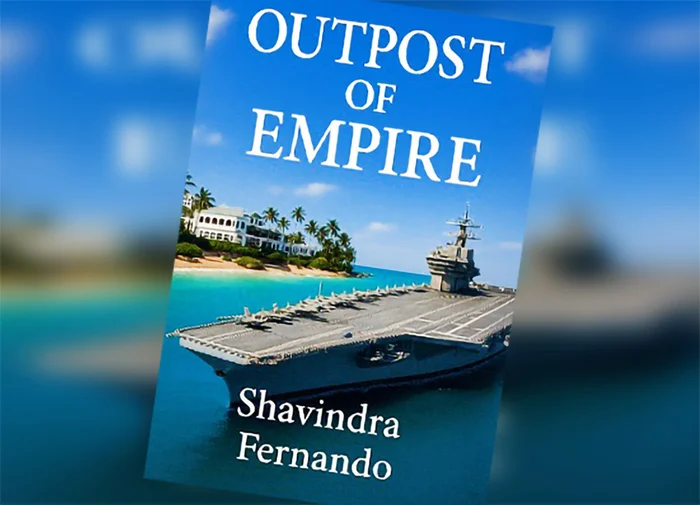
Review
by Colleen Figg, Editor
and Reviewer – Amazon, New Voices Publishing
“Fernando echoes Macbeth with the line, “There is judgment here.” It captures the question running through the novel: can anyone participate in corruption and remain untouched by it? Beneath this satire is a dark story about power and the danger of believing, that someone else will always pay the price.”
Shavindra Fernando’s Outpost of Empire is a political novel set in the fictional country of Lackadasia. At its heart is a strong idea: an exploration of world politics, terrorism and the ways in which powerful countries manipulate smaller ones. Fernando is clearly writing about political issues that matter deeply to him.
The names immediately establish the book’s satirical character. Lackadasia, Burgherbugaria and the various Klowns suggest a world in which the people and places are exaggerated, but the issues beneath the exaggeration are recognisable. The playful language allows Fernando to approach terrorism, religious conflict and political corruption from an unusual angle.
Henry Stockwell is a central character: an ambassador who arrives in Lackadasia presenting himself as a friend of the country. He believes he understands how power works and treats the country, its politicians and its people as pawns on his personal chessboard. In his arrogance, he never doubts that he controls events rather than being controlled by them. This confidence makes him a compelling figure and in him, we explore the workings of political influence and the potential traps contained therein.
As the story develops, Fernando reveals a political world where causes are adopted when they are useful, people are exploited and discarded, and the truth becomes whatever those in power need it to be. Ordinary people suffer the consequences of decisions made far beyond their reach or knowledge, while those making those decisions continue to justify their actions. Even the people who help keep this world running may not be as important or as safe as they imagine.
Stockwell brings this idea into focus. He recognises corruption in others and willingly takes part in it himself, yet he cannot see that he might also suffer its consequences. Ultimately, he thinks his position will keep him safe. He is intelligent enough to understand the game, but not insightful enough to grasp the limits of his place within it. This blindness gives the novel a strong sense of irony.
The satirical approach gives Fernando room to criticise political hypocrisy without turning the novel into a direct political argument. By using fictional countries and exaggerated names, he creates some distance from specific governments and events while still making the larger targets of the book clear. The humour does not take away from the seriousness of the subject; instead, it makes the cruelty and self-interest beneath the political performance stand out more sharply.
Near the end, Fernando echoes Macbeth with the line, “There is judgment here.” It captures the question running through the novel: can anyone participate in corruption and remain untouched by it? Beneath this satire is a dark story about power and the danger of believing that someone else will always pay the price.
I came away feeling that Outpost of Empire is a valuable and thought-provoking book, particularly in today’s political and social climate. It has a distinctive voice, and the questions it raises about power, responsibility and foreign interference remain relevant far beyond the fictional borders of Lackadasia.
About the Author
Shavindra Fernando has worked as a reporter. He read English & Classics at the University of Peradeniya in Sri Lanka, and took International Relations & Ethnic Politics as a Reuter Fellow at the University of Oxford in England. The Vague Poetess (1999)was his first novel.

The Opposition, in its wisdom (or perhaps stupidity), has submitted yet another No-Confidence Motion (NCM) against the Speaker of Parliament. Perhaps it hopes to score some brownie points in the eyes of the public, which is hardly indifferent to such developments. Yet, knowing full well that the motion is unlikely to succeed, the exercise may well prove futile — akin to banging one’s head against a solid rock.
Nevertheless, the nearly fifty allegations levelled against the Speaker, whether justified or mere mudslinging, cannot simply be brushed aside. Such allegations may well have a bearing on the individual concerned, particularly where it matters most — his conscience — and few would dispute that possibility.
From a protocol standpoint, the Speaker occupies one of the highest positions in the country, ranking third in the hierarchy of state. He consequently belongs to the uppermost echelons of public life, with acquaintances and associates extending across a wide spectrum of society, including diplomats and other distinguished personalities. Such a position carries with it not merely prestige and privilege, but also an onerous responsibility to uphold the dignity and integrity of the office.
As the guardian of Parliament, the Speaker is expected to maintain standards of conduct, impartiality and discipline that are beyond reproach.
Whether the allegations are justifiable or not may be of little consequence to members of the ruling party, who will undoubtedly defend their colleague to the hilt. Nevertheless, the stigma arising from such allegations may prove difficult to erase, particularly in the eyes of his family, close associates and, ultimately, the voters who placed their trust in him. Of course, it is common knowledge that politics can be a dirty game and that, as Lord Acton famously observed, “power tends to corrupt, and absolute power corrupts absolutely.”
Yet, nothing could be more devastating than a person losing his own soul in the process. On the one hand, stepping down could be construed as an admission of responsibility for the allegations levelled against him. On the other, allowing the No-Confidence Motion (NCM) to proceed could expose him to further public scrutiny and potentially inflict lasting damage on his character, dignity and reputation. Thus, he finds himself caught between two unenviable choices, each carrying consequences that may extend far beyond the immediate political fallout.
The Speaker is therefore confronted with a classic Hobson’s choice, with neither option likely to be without consequences. After all, in politics, there are no permanent friends or enemies—only permanent interests.
WILLIAM

Heavy showers above 100 mm are likely at some places in the Western, Sabaragamuwa, Southern, Central, and North-western provinces and in Anuradhapura district.

Sri Lanka, India caught in US-Iran ship crisis

Namal further remanded

IMF projects Lankan economic growth to moderate amidst mounting global uncertainties

Major Gen Pushpakumara assumes command of 56 Infantry Division

Dickwella axed, Bandara earns maiden Test call up

‘Dates have the highest sugar content to fight Coronavirus’

Sunday Island 27 December – Headlines

#SundayIsland 17th December – Headlines

Sunday Island – 28th March

Sunday Island Headlines – 21 March

Sunday Island – 21st February – Headlines
-

 Features7 days ago
The Sri Lankan who made Scottish history
-

 Sports7 days ago
Nissanka absence opens door for Sri Lanka’s young guns
-

 News6 days ago
NDB fraud Rs 60mn more than reported
-

 News6 days ago
Removing monk’s robes matter for Sangha to decide: Mahanayake Theras
-
 News7 days ago
Shiranthi R remanded until 13 Oct.
-

 News4 days ago
Sri Lanka escalates anti-graft drive with Shiranthi’s jailing
-

 Features7 days ago
Future of Sri Lanka’s state university system: Should it be shut down and reopened?
-

 News5 days ago
NPP govt. reminded of its responsibilities as US warship leaves Colombo