
Editorial
Hypocrites as democrats


Thursday 30th May, 2024
Opposition politicians and some of their government counterparts have taken up the cudgels for the people’s franchise following UNP General Secretary Palitha Range Bandara’s call for postponing the next presidential and parliamentary polls by two years. They say they are ready to do all it takes to prevent the postponement of elections.
Bandara’s proposal could be considered a trial balloon floated at the behest of the UNP leadership. However, it is doubtful whether the UNP will dare make an attempt to postpone the upcoming presidential election. There is no constitutional provision for such a course of action. President Ranil Wickremesinghe has reportedly said the presidential election will be held, but why the UNP’s proposal at issue has caused so much concern to the public is understandable.
The UNP has an ugly history of trifling with the people’s franchise; it caused a general election to disappear, so to speak, in 1982, with the help of a heavily-rigged referendum. Old habits are said to die hard. The UNP must be made to regret having entertained the idea of postponing national elections again.
The question however is whether some of the self-proclaimed champions of democracy could be trusted with the task of protecting the people’s franchise, given their sordid past. They are trying to win some brownie points with the public by condemning the UNP, which they once honeymooned with and assisted in suppressing democracy.
Prominent among those who are hauling the UNP over the coals are the JVP/NPP and the SLPP. JVP/NPP Leader Anura Kumara Dissanayake, MP, has declared that his party will never allow the UNP to postpone elections. Amusingly, the SLPP, too, has jumped on the bandwagon; its National Organiser, Namal Rajapaksa, has said his party is ready to go to any extent to defeat the UNP’s move to postpone elections. He has claimed that under the Rajapaksa governments, elections were never delayed. These politicians seem to think Sri Lankans have drunk from the Lethe (‘River of Forgetfulness’) or are a bunch of fools.
Both Namal and Anura apparently have a very low opinion of public intelligence. The SLPP has postponed the Local Government (LG) elections twice. First, it put off the mini polls on President Gotabaya Rajapaksa’s watch in early 2022, unable to face the public; the second postponement of the LG polls came under President Wickremesinghe, who audaciously claimed there were no funds for elections. The SLPP endorsed his position. What moral right does the SLPP have to condemn the UNP for stifling democracy while helping President Wickremesinghe make draconian laws? The Rajapaksas are running with the public and hunting with the UNP, in a manner of speaking.
The JVP, which has taken the moral high ground, unflinchingly helped the UNP-led Yahapalana government postpone the Provincial Council (PC) elections. It voted for amending the PC Elections Act for that purpose in 2017. What Parliament passed became a textbook example of the proverbial Christmas tree bill, given the sheer number of riders; the final draft contained more additional sections than the original text due to extensive committee-stage revisions effected by the Yahapalana government to bypass judicial review. The TNA, the UNP, the UPFA including its dissidents, the SLMC, etc., voted for that obnoxious Bill. The SJB politicians and their SLPP counterparts were in the UNP and the UPFA, respectively, at the time.
The SLFP postponed a general election in 1975 by two years, creating an extremely bad precedent, which the UNP followed eight years later. The JVP committed heinous crimes in a bid to sabotage elections in the late 1980s. Its sparrow units murdered people and/or cut off their hands for voting. Those brave men and women who sacrificed their lives to save democracy have been forgotten, but the criminals who were responsible for heinous crimes against them are commemorated every year! The JVP’s spree of violence aimed at scuttling elections in the late 1980s stood the UNP in good stead as it created conditions for widespread rigging, which helped extend the UNP’s undemocratic rule.
There is no gainsaying that the UNP deserves all the bashing it receives, and must be prevented from suppressing democracy, but its critics are no paragons of virtue, as can be seen from their ruthless attacks on democracy or contribution thereto in the past or even at present. No wonder anti-politics is on the rise with public resentment welling up. The least that the self-styled defenders of democracy could do to assuage public anger is to apologise for their sins and seek forgiveness.

Wednesday 21st October, 2026
Power cuts have returned, much to the resentment of the public. They however did not come as a surprise. Given the generation shortfall at Lakvijaya (Norochcholai) power plant due to the use of low-quality coal, power cuts were expected much earlier, but the government stepped up diesel power generation to avert them.
Having groped in the dark and resorted to obfuscation, following Saturday’s nationwide power outage, which lasted for nearly six hours, the government now says the power supply will return to normal soon. But the question is whether the Norochcholai power complex will be able to resume operations any time soon. Coal-fired power plants can take several days to return to service after a shutdown, as Sri Lanka’s experience has shown. The time required depends on the nature of the fault and the repairs needed. One can only hope that Norochcholai has not suffered a major component damage that could keep it off the grid for weeks.
The cost of operating oil-fired power plants to make up for Norochcholai’s generation loss is prohibitive. The Opposition claims that the country’s increased reliance on diesel-fired power generation is costing more than Rs. 1.3 billion a day. Worse, there is a significant global diesel supply shortfall, and the International Energy Agency has warned that the market could remain tight well into 2027. Its October 14 Oil Market Report provides the clearest evidence. The government says diesel is heavily subsidised. Therefore, the country cannot afford to rely on diesel-fired power plants for an extended period to compensate for the loss of generation at Norochcholai.
It is only natural that questions are being raised about whether low-grade coal contributed to the Norochcholai power plant failure, despite the government and the National System Operator insisting that coal quality had nothing to do with the incident. Plant shutdowns caused by substandard coal are not uncommon.
Experts have pointed out that Sri Lanka is not alone in facing the technical consequences of burning low-quality coal for power generation. They have cited evidence-based instances in support of their argument; there have been coal-fired power plant failures in China, and excessive sulphur content and combustion conditions have been linked to serious corrosion of boiler tubes. Studies of India’s coal-fired power industry have shed light on the operational problems associated with ash-rich, abrasive fuel. These international experiences underline the importance of enforcing coal-quality specifications and conducting independent tests. Hence the need for a transparent technical investigation to ascertain what actually caused the Norochcholai plant shutdown.
The Commission to Investigate Allegations of Bribery or Corruption (CIABOC) yesterday summoned Prof. G. L. Peiris and recorded a statement from him over an investment promotion meeting chaired by him when he was the Minister of Foreign Affairs during the Mahinda Rajapaksa government. As Prof. Peiris told the media after making a statement to the CIABOC, probes into allegations of corruption are welcome, provided they are not used to silence Opposition politicians.
Strangely, the CIABOC and the police lack this kind of high-octane performance regarding the complaints against those who are responsible for the procurement of substandard coal, which is believed to have caused the Lakvijaya power plant shutdown and a huge loss to the state coffers.
The Opposition claims that the coal racket is bigger than the 2015 Treasury bond scam. How, then, can the government claim that the rule of law has been restored and nobody is above the law under its watch?
Tuesday 20th October, 2026
A massive wave of youth-led and anti-austerity protests is sweeping across several European countries. It is driven by a host of issues including soaring cost of living, housing unaffordability, discontent with public services, and resentment at governments’ economic policies that are not beneficial to ordinary people. Protests in France, Italy, Belgium, Albania, Portugal and Spain are not part of a single, centrally organised movement, although the international media often lump them together. All of them however reveal a growing frustration over young people’s prospects and the increasing cost of living in Europe.
No country is immune from what social scientists describe as the cross-border diffusion of discontent and protests. Agitations could have a domino effect across national borders. We have witnessed waves of youth-led protests, in this part of the world, affecting Sri Lanka, Bangladesh, Nepal and India. Protesters brought down governments in Bangladesh and Nepal and ousted a Sri Lankan President, causing a subsequent regime change. One may recall that four African countries saw their governments or long-serving rulers fall during the Arab Spring uprisings of 2010–2012.
Main causes of unrest in Europe can be divided into three broad categories. People are facing an unbearable cost-of-living squeeze, with rising prices, expensive energy and housing costs exerting enormous pressure on household budgets. The youth have a diminishing confidence in the future; they are concerned about employment, education, housing and, above all, whether they can achieve financial independence. Then, there is growing public anger over government priorities which are widely considered misplaced.
In Belgium and France, austerity and public spending priorities have driven unions and students to the streets. In Albania, corruption allegations and demands for political accountability are key factors fuelling protests. In Portugal and Spain housing is a central grievance of protesters. The causative factors however are far more complicated.
What is unfolding in Europe portends trouble for the developing world, where people are facing much worse socio-economic problems than their European counterparts. Sri Lanka ranks 120th out of 130 countries in monthly minimum wages in US dollars, according to data compiled by Visual Capitalist from International Labour Organization (ILO) statistics. Its monthly minimum wage (USD 200) has placed it among the lowest globally and at the bottom among surveyed South Asian nations, behind Pakistan (68th at USD 570), Nepal (78th at USD 490), Bangladesh (89th at USD 379), and India (111th at USD 233). Sri Lanka has the highest rate of unemployment among young people with post-secondary education in the Asian economies covered by an International Monetary Fund (IMF) comparison, with about 43% of those aged 15–24 in this category unemployed. The cost of living is increasing, with taxes and tariffs remaining extremely high. Sri Lanka has the highest household electricity tariffs in South Asia.
When economic grievances deepen in a country, with public confidence in the political establishment eroding, people’s resentment tends to find expression in street protests. In 1953, an attempt by the then UNP government to reduce subsidies, which amounted to about 20% of its total expenditure, and the resultant increase in the price of rice led to a hartal that almost brought about a regime change. An austerity drive, among other things, led to the downfall of the United Front government in 1977. Shortages of essentials fuelled the 2022 Aragalaya.
The biggest challenge facing the JVP-NPP government is to find a way to ease the unbearable economic burden on the irate public while raising enough revenue to meet the targets set by the IMF. This is a high-wire act. Rhetoric, political theatre and more promises will be of little avail. People are crying out for relief. Pro-government demonstrations may give the rulers a false sense of security but they cannot help stem the tide of public anger.


Monday 19th October, 2026
Buddhist monks’ Satyagraha at Viharamahadevi Park, seeking the release of Ven. Galaboda Atte Gnanasara Thera from prison, took a dramatic turn on Saturday evening with a confrontation between protesters and the police. Ven. Balangoda Kassapa Thera, one of the monks leading the protest, was rushed to the Colombo National Hospital. Subsequently, he had himself moved to a private hospital, claiming that he feared for his life. He has been in the government’s crosshairs due to his active involvement in protests.
Satyagraha activists insist that a group of policemen led by an ASP roughed up Kassapa Thera. Police Spokesman ASP F. U. Wootler lost no time in denying the allegation, claiming that Kassapa Thera had ‘slipped and fallen’. The police cannot expect the discerning public to buy into their claims, and cynics say they do not believe anything until the police deny it. It may be recalled that ASP Wootler has been found guilty of violating fundamental rights of a lawyer and ordered to pay compensation from his personal funds.
He that hath an ill name is half-hanged, as the old saying goes. One may recall that when rugby player Wasim Thajudeen was found dead in his car in 2012, the police promptly claimed that he had died in an accident. They ruled out foul play. But subsequently they admitted that Thajudeen had been murdered. In 2018, the CID blamed former LTTE combatants for the killing of two policemen on duty in Vavunathivu and made some arrests. Later, they admitted that the National Thowheed Jamaath, which carried out the Easter Sunday bombings, had murdered the two constables. Thugs armed with clubs and iron rods freely operated in full view of the police during President Mahinda Rajapaksa’s government, and when this was taken up at a media briefing, the then Police Spokesman had the chutzpah to deny the allegation, claiming that they may have carried ‘sticks’ to ward off street dogs. So much for the police and their claims.
It is often said that the truth is the first casualty of war. The same holds true for other conflicts as well. So, we can’t expect both sides to the current dispute between Buddhist monks and the government to tell us the truth, the whole truth and nothing but the truth. Only a thorough, impartial investigation will help ascertain what really happened on Saturday evening at Viharamahadevi Park, leading to Kassapa Thera’s hospitalisation. The government must order a probe into the alleged assault incident.
Self-righteous Opposition politicians are trying to dupe the public into believing that the police neither committed excesses nor engaged in political work under their watch. Crackdowns on protests are not of recent origin, and the police have acted like storm troopers under successive governments. The police have a shameful history of doing dirty work for all governments and allowing ruling party thugs to operate alongside them during previous governments. But the fact that police excesses are not unprecedented does not justify suppressing people’s right to stage peaceful protests under the incumbent administration.
The JVP thrived on protests and capitalised on the 2022 Aragalaya to propel itself to power. At the height of the uprising, it also sought to lead protesters in a bid to capture Parliament, but failed. Today, the JVP/NPP is practising the very antithesis of what it preached and did while out of power. Many of the monks engaged in the current Satyagraha at Viharamahadevi Park campaigned hard for the JVP/NPP, enabling its swift rise to power, in 2024.
The police have urged the public to refrain from sharing unverified videos of Saturday’s incident via social media to discredit them. One cannot but agree that social media must not be abused to disseminate disinformation. But shouldn’t the police first take action against government propagandists who are carrying out social media disinformation campaigns with impunity?
Coercive measures the current administration adopts to discourage protests and the aggressive manner in which the police enforce them could offer a foretaste of what is to come if the proposed Protection of State from Terrorism law, criticised by human rights groups for its draconian features, if enacted.

Showers above 100 mm are likely at some places in the Western, Sabaragamuwa, Central, North-western, Northern and Southern provinces and in Anuradhapura district.

Low-quality coal causes power cuts: Ex-LECO Chief

Power cuts continue

GL stresses importance of post-war Shangri-La investment after CIABOC questions him

Coal inquiry gets extension until 16 December

Dilshan, Hirupama named best athletes at All Island Schools Games Athletics Championships

‘Dates have the highest sugar content to fight Coronavirus’

Sunday Island 27 December – Headlines

#SundayIsland 17th December – Headlines

Sunday Island – 28th March

Sunday Island Headlines – 21 March

Sunday Island – 21st February – Headlines
-

 Features3 days ago
Kotahena:A Small Enclave, An Extraordinary Legacy
-
 News4 days ago
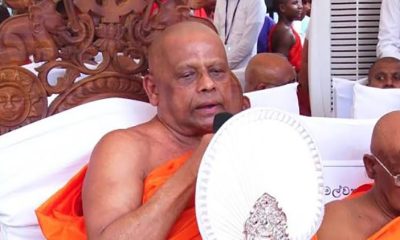
Asgiri Mahanayake calls for immediate release of Gnanasara Thera
-

 News3 days ago
Record 1,600 students take Russian Classical Ballet examination in Sri Lanka
-
 News6 days ago
AC President recuses himself from hearing prison attire case pertaining to Gnanasara Thera
-
 News5 days ago
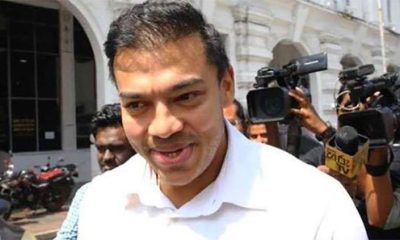
Naval officer testifies Yoshitha received Rs. 5.15 mn in salaries during SLN service
-

 News3 days ago
Karannagoda pushed for £24,536 for Yoshitha’s UK training, Court told
-

 Editorial5 days ago
Saving Anojan: Beyond Executioner’s Blade
-
 News6 days ago
CID informs Fort Magistrate’s Court investigation into money laundering case against Namal completed