
Latest News
Hundreds rescued as search for quake survivors continues in Tibet

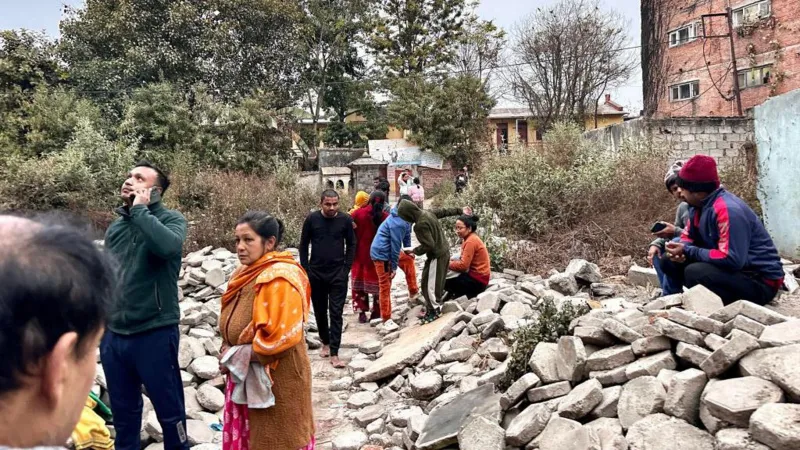
More than 14,000 rescue workers have arrived in Tibet to continue the search for survivors after a strong earthquake killed at least 126 people in a remote part of western China.
More than 400 people have been rescued, Chinese state media says, since the quake struck on Tuesday, some 50 miles from the base of Mount Everest, destroying thousands of homes.
Vice-Premier Zhang Guoqing arrived on Wednesday to oversee the operation, which is being hampered by winter temperatures that dropped to -16C overnight.
Earthquakes are common in the region, which lies on a major geological fault line, but Tuesday’s was one of China’s deadliest in recent years.
The magnitude 7.1 quake, which struck at a depth of 10 km (six miles), according to data from the US Geological Survey, was also felt in Nepal and parts of India, which neighbour Tibet.
Internet access is restricted in Tibet, which is tightly controlled by Beijing, and reporters cannot travel there without government permission. So much of what we know about the quake and its aftermath is from Chinese state media.
The air force has been deployed and drones dispatched to help rescuers, as President Xi Jinping called for all-out efforts to minimise casualties and resettle affected residents.
State-owned People’s Daily says more than 30,000 people have been relocated in the region. Electricity and mobile phone service in Tingri county, near the epicentre, were restored by Wednesday morning, according to state media.
Officials estimate that more than 3,600 buildings had collapsed, potentially leaving thousands without shelter.
Videos published by China’s state broadcaster CCTV showed houses destroyed and and buildings brought down in Tibet’s holy Shigatse city, with rescue workers wading through debris and handing out thick blankets to locals.
(BBC)

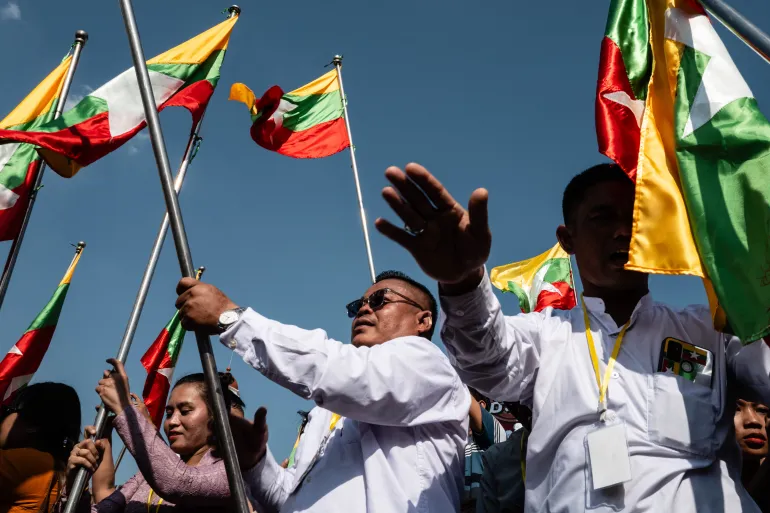
Myanmar’s military-backed party secured a sweeping victory in the country’s three-phase general election, according to state media, following the tightly controlled voting held amid civil war and widespread repression.
The final of three rounds of voting last weekend wrapped up an election that began on December 28, more than four years after the military seized power in a coup that overturned the elected government of Aung San Suu Kyi.
Dominating all phases of the vote, the Union Solidarity and Development Party (USDP) won an overwhelming majority in Myanmar’s two legislative chambers, state media reports.
The USDP secured 232 of the 263 seats up for grabs in the lower house and 109 of the 157 seats announced so far in the upper chamber, according to results released on Thursday and Friday.
A spokesman for the country’s military rulers, Zaw Min Tun, said Myanmar’s parliament is now expected to convene to elect a president in March, with a new government set to take over in April, according to a report in the pro-military Eleven Media Group.
Myanmar, formerly known as Burma, has been in political turmoil since the 2021 coup, with the crushing of pro-democracy protests prompting a nationwide rebellion. Thousands have been killed, and about 3.6 million people have been displaced, according to the United Nations.

The 11-member Association of Southeast Asian Nations (ASEAN) has said it will not endorse Myanmar’s electoral process, and human rights groups and some Western countries have also expressed concerns about the credibility of the election.
The UN human rights office said that large segments of the population, including minorities such as ethnic Muslim majority Rohingya, were excluded from voting since they have been denied citizenship, and many have also been displaced outside the country.
At least 170 civilians were killed in air strikes during the election period, and about 400 people were arrested, according to the UN.
“Many people chose either to vote or not to vote purely out of fear,” UN human rights chief Volker Turk said.
Myanmar’s military rulers insist the polls were free and fair, and supported by the public.
A spokesperson for the United States Department of State, which has muted its critiques of foreign elections in the second Trump administration, said it was monitoring the situation and “will assess the military regime’s next steps”.
Aung San Suu Kyi’s National League for Democracy was dissolved along with dozens of other parties, and some others declined to take part, drawing condemnation from critics who say the process was designed to legitimise military rule.
Under Myanmar’s political system, the military is also guaranteed 25 percent of parliamentary seats, ensuring continued control even if power is formally transferred to a civilian-led administration.
[Aljazeera]

The ICC and the global players’ body the World Cricketers Association (WCA) are locked in a fresh tussle over player terms, including name, image and likeness (NIL) rights, ahead of the 2026 Men’s T20 World Cup.
The WCA claims the ICC has sent a version of the squad participation terms to players from several countries in the tournament that does not align with an agreed version signed by both bodies in 2024. The WCA claims the new, non-agreed version is exploitative when compared to the 2024 version.
WCA had written to the ICC about these concerns and ESPNcricinfo understands the ICC, in its response, disagreed, saying the 2024 agreement was only applicable to eight member boards (referred to as National Governing Boards, or NGBs). The ICC told WCA that the remaining members who are part of this World Cup were not bound by the 2024 agreement.
The eight NGBs are Australia, England, New Zealand, South Africa, West Indies, Ireland, Netherlands and Scotland – in as a replacement for Bangladesh, who have been excluded after they refused to travel to India. Of the remaining 12 participating countries, boards from India, Pakistan, Sri Lanka, Nepal, Oman and the UAE do not recognise WCA and hence their players are not affiliated with it. Italy, Zimbabwe, Afghanistan, Namibia, USA and Canada have player bodies but had not received the squad terms as of January 15, and were expected to get the non-approved version, the WCA said in a memo.
In its follow-up response, WCA told the ICC that the 2024 agreement stated it was applicable to all players affiliated with the players body – both that were participating in the World Cup and from countries that were not part of the 20-team tournament. As a result, WCA noted, all players should be protected by the 2024 agreement, which it believes is legally binding.
WCA sent a memo on January 15 informing players that the squad terms distributed by ICC were “substantially different” to the agreed 2024 version. It is understood WCA also sent an email to ICC on the same day.
Tom Moffat, the WCA CEO, highlighted differences across eight areas between the two versions: content/media appearances, behind the scenes content, changing room access, biological player related data, licensing, name, image likeness (NIL), player agreement and dispute resolution.
The WCA’s broader contention was that the 2024 agreement gave players the right to decide, and negotiate via the global players body, whereas the ICC version says player consent is not needed, with their boards having that authority.
An example of the significant differences is NIL rights, according to the communication Moffat sent to players. In the ICC’s new version, “the player is required to license their NIL to any third party; 3 players from the same team can be used by an ICC Partner for commercial content which can directly relate to the promotion of the Partners brand or product; the player’s national board approves all use of NIL on behalf of the player; Any use of NIL outside of the Squad Terms can be agreed by the player’s national board.”
In the 2024 agreement, the NIL rights were “restricted” only to the ICC’s commercial partners and the event hosts and the WCA is authorised on behalf of the players to negotiate terms and use. The 2024 version also said a group of players – not three per team – would be “represented in all content” promoting the ICC tournament.
There are significant differences in the terms for the usage of player data during the event as well. The WCA said in the ICC version, the governing body “can use and commercialise player data with the agreement of the player’s national board” and that the ICC “owns” the data. The approved version, WCA said, says the player owns the data and their consent is necessary “given the sensitivities.”
In the ICC version, once the players participate in a global tournament, “he /she is deemed to have accepted the Squad Terms regardless of whether they sign the Terms.” In the version agreed between the WCA and ICC, the players are required to agree the terms and sign for every event separately.
In the memo to players, Moffat accused the ICC and member boards of “deliberately removing” all the protection that players were assured of in the 2024 terms, while “attempting” to “own” players and “claim an almost unlimited ability to use and commercialise it with third parties without your consent, with the only recourse to an in-house dispute resolution process run by the ICC itself .” Moffat also said the ICC and member boards were trying to “exploit the most vulnerable, and worst paid player groups at this World Cup, some of whom are amateur,” through the non-approved version.
This week, Moffat told ESPNcricinfo that the WCA did not want to disrupt the World Cup, but admitted being “deeply concerned” by ICC presenting terms that did not “align” with the 2024 agreement. “The (ICC) terms provided significantly erode player rights and protections including around image and commercial use, compared to those agreed,” Moffat said. “It is especially concerning that it is the most vulnerable playing groups who appear to have been targeted and expected to compete under different terms and conditions to other playing groups participating in the same Men’s T20 World Cup. For many players affected, participation in ICC Events represents a primary source of income and career progression.
“The WCA supports the growth of the game and ICC events, but these objectives should be pursued in partnership with players, not at their expense. The agreed Squad Terms have now been signed by impacted WCA players, and our expectation is for these terms to be honoured by the ICC for the T20 World Cup.”
It is understood the ICC has not responded to WCA’s follow-up mail sent earlier this week. The ICC has been asked for a comment.
[Cricinfo]
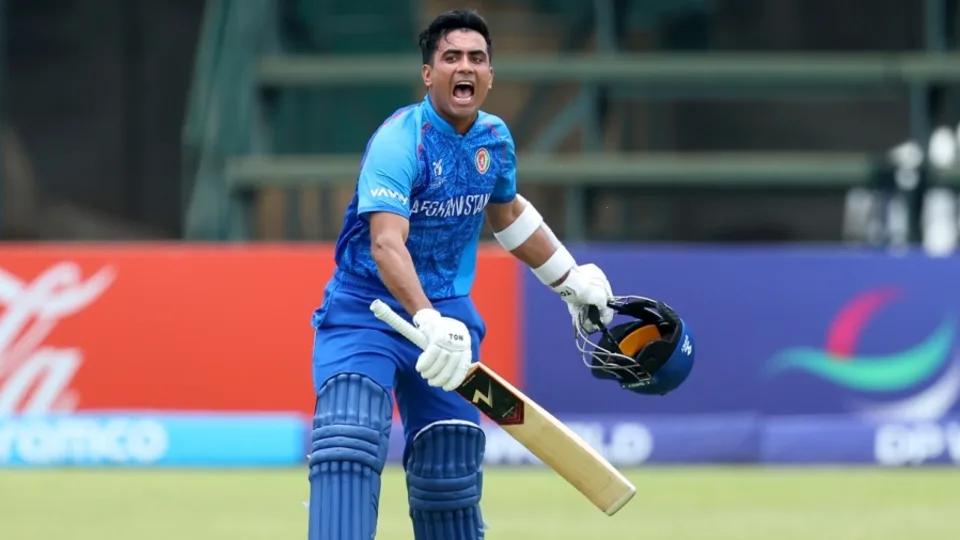
Afghanistan Under 19s 315/7 in 50 overs (Faisal Khan 163, Mahboob Khan 89; Reuben Wilson 3/52) beat Ireland Under 19s 124 in 40.4 overs (Marko Bates 34; Abdul Aziz 3/21) by 191 runs
[Cricbuzz]

Myanmar election delivers walkover win for military-backed political party

New education reforms for grade one officially launched

ICC and World Cricketers Association clash over player terms ahead of T20 World Cup

U 19 World Cup: Faisal Khan’s ton helps Afghanistan cruise into semifinals

U19 World Cup: England qualify for semifinals

Curran hat-trick caps England win in rain-shortened series opener

‘Dates have the highest sugar content to fight Coronavirus’

Sunday Island 27 December – Headlines

#SundayIsland 17th December – Headlines

Sunday Island – 28th March

Sunday Island Headlines – 21 March

Sunday Island – 21st February – Headlines
-
 Business5 days ago
ComBank, UnionPay launch SplendorPlus Card for travelers to China
-

 Business6 days ago
ComBank advances ForwardTogether agenda with event on sustainable business transformation
-
 Business2 days ago
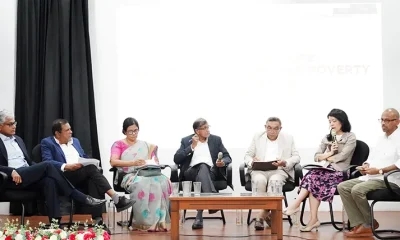
Climate risks, poverty, and recovery financing in focus at CEPA policy panel
-
 Opinion6 days ago
Conference “Microfinance and Credit Regulatory Authority Bill: Neither Here, Nor There”
-
 Opinion1 day ago
Sri Lanka, the Stars,and statesmen
-

 Opinion5 days ago
Luck knocks at your door every day
-

 News6 days ago
Rising climate risks and poverty in focus at CEPA policy panel tomorrow at Open University
-

 Business2 days ago
Bourse positively impacted by CBSL policy rate stance