
Opinion
Humane capitalism needed to generate national wealth

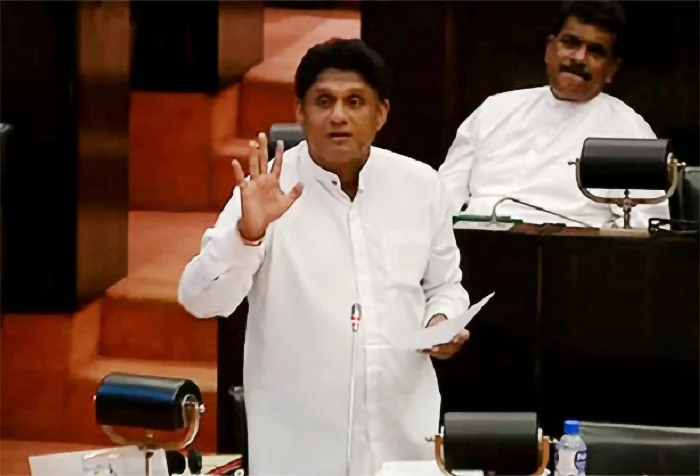
(Text of Opposition Leader Sajith Premadasa’s speech in Parliament during the ongoing debate on Budget 2025)
When analysing the solutions that the 2025 Budget should provide for the country, it is crucial to examine the mandate given to implement such a budget and how that mandate has been executed.
The policy framework presented to secure the mandate was “A Thriving Nation – A Beautiful Life” and “Country to Anura”. We must assess how much of these policy features are reflected in the 2025 Budget.
Looking at the budget framework, its presentation, and its unveiling, it is clear that this budget does not align with the promises made or the mandate received. I would like to substantiate this argument with evidence, data, and facts.
On page 105 of the ” A Thriving Nation – A Beautiful Life” policy document, there is a commitment to conduct an alternative debt sustainability analysis when the current government came into power. What has happened to that promise? Instead, what we see today is an unbearable burden and hardship imposed on the people, with the benefits they deserve being severely restricted.
Under the 2024 Fiscal Management (Responsibility) Act, primary expenditure is capped at 13% of GDP, and the primary balance is limited to 2.3% of GDP. Such limits are imposed in only about 10 countries worldwide, including Guatemala, Ethiopia, SriLanka, Venezuela, Nigeria, Yemen, Bangladesh, Lebanon, and Haiti.
Capping primary expenditure at 13% of GDP and maintaining a primary balance at 2.3% of GDP were not election promises of this government. This is not the execution of a mandate; it is a surrender of the mandate. It is a destruction of the mandate, forgetting what was promised, and entering into harsh and oppressive agreements with the International Monetary Fund (IMF) and sovereign bondholders.
This does not mean we advocate for withdrawing from the IMF program. Instead, we believe in entering a new, more people-centric and humane path that prioritizes the welfare of people.
These fiscal limits make it impossible to correct for externalities or address social costs. The responsibility of a government is to provide public goods, and these limits hinder that. They also restrict social redistribution. International studies show that capping primary expenditure and primary balances is counterproductive to a country’s development. Yet, the government has ignored all this, renegotiated agreements, and entered into new ones.
In essence, the government, which came to power with the people’s mandate, has completely surrendered that mandate.
I remember a statement made by President John F. Kennedy: “The great enemy of the truth is very often not the lie, deliberate, contrived, and dishonest, but the myth, persistent, persuasive, and unrealistic.” This statement holds great relevance today.
Many people are lamenting that they do not understand the increase in salaries. There is confusion about what will happen to allowances and how they will be structured. We must understand this confusion. This budget has been prepared within the constraints of 13% primary expenditure and a 2.3% primary balance of GDP. In reality, the amount of funds available to rebuild the country and empower the people is very limited.
We have met with the International Monetary Fund (IMF) on several occasions. I, along with Minister Harsha de Silva, Minister Kabir Hashim, Minister Eran Wickramaratne, and others, have clearly stated that we are working with the IMF and that we are moving forward with their program. However, we do not dance to their tune. We acknowledge that the IMF program creates hardship and burdens, and there are costs involved. But we must minimize these hardships and burdens as much as possible.
Yet, the President comes to Parliament and says that we must forget all the promises made on election platforms, forget the people’s burdens, tears, and pain, and ignore all these difficulties. He claimed then that by November 2024, the country’s economy would face significant shocks. The President is taking over the agreements negotiated by the previous Ranil Wickremesinghe government wholesale.
We see this as a betrayal of the people’s mandate. On one hand, it is a betrayal of the people, and on the other, he speaks of the lost decades. Will we lose another decade due to this decision? We could have made a better, more beneficial decision for the country—one that reduces burdens instead of increasing them, provides relief instead of hardship, and offers some solution to the people’s cries.
The President has firmly stated in this House that they will be ready to repay our debt by 2028. That is a good thing. Our hope is that we can achieve this. However, we do not endorse the tribal political culture that creates crises within the country and transfers power. To repay the debt by 2028, it is essential to boost economic growth and increase state revenue. There is a fact that no one talks about, and many are hiding it.
Since 1975, 75 countries have implemented IMF agreements. Of these 75 countries, 59% have inevitably had to enter second, third, and fourth debt restructuring programs. No one talks about this or informs the public. Only 41% of countries have successfully managed their affairs with a single agreement and debt restructuring. Honestly, I hope we are among that 41%. I pray that we do not have to undergo another debt restructuring. If that happens, it will lead to a severe economic collapse.
Our country should have stayed on the path of debt sustainability, but it has deviated from that line. Our country needs a higher economic growth rate and a faster rate of increasing state revenue. Otherwise, we will have to undergo another debt restructuring.
This revelation came to light during discussions I participated in with a team that advised the previous government until the last moment on formulating the current IMF agreement and sovereign bond agreements.
Even if we cannot stay on the debt sustainability line, we may have to undergo a second or third debt restructuring. If that happens, Sri Lanka will face a global crisis. To prevent this, the country’s economy must grow, and state revenue must increase.
The President stated in his budget speech that they would achieve a 5% economic growth rate in 2025. That would be good if it can be achieved. However, the President’s speech mentions that according to the World Bank, our country’s poverty rate is 25.9%. These are the statistics presented by the President in the budget speech. But while the President accepts the World Bank’s poverty statistics, the World Bank states that the economic growth rate in January 2025 will be 3.5. The President has accepted the poverty rate of 25.9% while citing World Bank statistics.
According to the President, the economic growth rate is 5%. The World Bank states that the economic growth rate in January 2025 will be 3.5%. There is a deficit in the economic growth rate. If this deficit is not bridged, we will fall into difficulty. As a country, we must definitely move towards rapid economic growth. However, this budget does not clearly indicate how this will be achieved.
Similarly, we need to increase our Gross Domestic Product. This budget has not provided any clarification regarding expenditure methodology, revenue methodology, and production methodology. There is no clarity in this budget about how to maintain a high economic growth rate to begin debt repayment in 2028. We must be realistic in presentation.
The whole country is complaining today because of the wrong agreement reached on the primary balance and primary expenditure. There is confusion about salary increases and no clarity. There is no clarity about how salaries will be received by grades. There is no clarity about how much will be received this year and next year. There is confusion everywhere. There is no explanation about salary increases.
There should be a clear explanation of how the economy will grow rapidly. There should be a clear explanation of how to increase state revenue. The agreement with the International Monetary Fund and the International Sovereign Bond agreement have been entered into based on several scenarios. The scenario used as the basis for this is completely wrong. That’s why we stated that an agreement should be reached. This process created based on the agreement has created an unrealistic target that cannot achieve the economic growth rate. They have agreed to an unrealistic target regarding state revenue. The main reason for this is that the current government also agreed to a weak agreement. The current government is following in the footsteps of the former President.
During the period of electing 159 MPs, they should have discussed with the International Monetary Fund and international sovereign bondholders to change the signed agreements and move to a new agreement that would put less pressure on the people, provide more relief, less distress, and more strength. I request that they consider this even now.
I request immediate discussions with the International Monetary Fund. The economic growth targets are not realistic. State revenue targets are not realistic. Primary balance and primary targets are not realistic. The country will have to go for a second debt restructuring before debt repayment in 2028. This is a serious situation. The government is heading towards a very difficult destination. The government is heading in the wrong direction.
I was shocked to hear what the team that advised on creating the International Monetary Fund agreement and International Sovereign Bond agreement said. It hasn’t even been three months since discussing the end of the agreement. They say we need to go for debt restructuring again. These are not jokes. It’s our country’s people who face distress and pressure from these. Through domestic debt restructuring, they tapped into the Employees’ Provident Fund. Why can’t the current government bring a proposal to Parliament to do justice to the Employees’ Provident Fund and Employees’ Trust Fund?
Similarly, Aswesuma is not a solution for eliminating poverty. There should be a production program, consumption program, savings program, export program, and investment program to eliminate poverty, but none of these exist. The selection for and exclusion from the Aswesuma program are done without identifying the poverty line and without conducting a household income-expenditure survey. It has been done without knowing information about poverty as well as food and non-food expenses. How can a poverty elimination program be implemented that way?
There are several serious problems with the limitations the government has created. There is serious confusion in every service including teachers, doctors, nurses, workers, and office employee (KKS) staff. The government has been unable to provide the promised Rs. 20,000 salary increase. The limited primary expenditure limit is thirteen percent. The primary balance is limited to 2.3. Within this limit, the government cannot implement the promised “A Thriving Nation-A Beautiful Life” policy statement. Within these limited resources, you have placed the necessary limitations yourself to not implement this, and you have become a prisoner yourself.
The elderly retired community used to receive 15% interest on their Rs. 1.5 million savings. That saving has now been reduced to one million. The savings interest rate is only about 10%. This is a serious problem for the elderly community. Various benefits have been provided for women. That’s a good thing. But the most serious problem has become labor force participation. It’s thirty-four percent. We should work to bring that to 45%. Verite Research has prepared data-centric proposals to implement maternity allowances with state patronage. It costs about six to seven billion rupees. If such an amount is spent, women’s labor force participation can be brought to a higher level.
Tax money from alcohol and cigarette manufacturing companies is not being properly collected. A wrong tax formula is being implemented. The government should look into this and work to increase state revenue.
There are several proposals to help the pre-school system. It has been proposed to increase pre-school teachers’ allowances. But there are very few pre-schools in the public service. Don’t implement it selectively. It should be implemented as a comprehensive program. We are happy about the increase in Mahapola scholarships. The Mahapola scholarship hasn’t even been paid for the past few months. The government has announced increasing an allowance that hasn’t been paid. I believe the government will work to pay both the increased Mahapola allowance and the unpaid Mahapola allowance.
Farmers are currently under severe pressure. Not just the paddy purchasing process, but the purchasing process of other crops has not been properly implemented. I’m not making this accusation against the government. No previous government had a proper cultivation formula with a clear cycle. This should be legislated. It should be legislated through a Parliamentary act.
The fishing community is waiting for the fuel subsidy. Many fishermen have become destitute. We talked about the wages of the Malayaha community. We believe we need to go beyond that. That Malayaha community has no land ownership, no house ownership. They should be empowered by giving them ownership of cultivation and lands, and the right to live in their own house. This community should be transformed into small tea estate owners who contribute 60% of production by utilizing 40% of the country’s land within the national production, with their own small tea estate in this country.
A sustainable solution should be provided to the unemployed youth community too by distributing some portion of uncultivated land. More than increasing salaries, such a process adds something to national production.
Many people are waiting for appointments after training as nurses. The family health sector is the same. There are about thirty-five thousand graduates. The President has promised to prepare a proper program for 35,000 graduates. Please don’t forget the promise given to unemployed graduates. Work to implement that too.
The current government hasn’t made any systemic changes. The Gotabaya-Mahinda Rajapaksa system hasn’t changed. Projects are implemented according to the government’s wishes. Political victimization is happening severely. Mahinda Weerasuriya was the Chief Secretary of Sabaragamuwa Province. Now he has retired. Mrs. Deepika, the Chief Secretary of the North Western Province, and Mrs. Damayanthi Paranagama, the Secretary of Uva Province, have been removed from their Chief Secretary positions. Nandana Galagoda, the Nuwara Eliya District Secretary, has also been removed. Mr. Wasantha Gunaratne has been removed from the position of Ratnapura District Secretary. Ganesh Amarasinghe has been removed from the position of Matara District Secretary. Why are they doing this? People didn’t vote for you to carry out such political victimization. This is wrong. Stop the victimization immediately.
I hope this budget will be successful. We will also support implementing the positive, people-friendly provisions in it. We will be a strength to add value to the country. Please let’s work with a mindset of providing decentralized funding. Let’s work under a new program. This budget shows no understanding of the external environment.
We need to diversify our export market. We depend on just a few exports. There is potential to create diversification in export destinations in other power regions of the world. There are no details about this in the budget. Foreign direct investment must necessarily be brought to our country to rebuild it. A special program should be implemented for this. We are ready to support this. We must compete with other countries in the world. I don’t see a clear program for this within this budget speech.
Within our political policy, in the ten-fold methodology we follow, we follow a social democratic program. Through this, humane capitalism is needed to generate wealth in the country. Limited state intervention is needed to correct the imbalances that occur within humane capitalism. While protecting the welfare state and increasing its efficiency, more action should be taken to provide resources to it. A results-oriented and time-bound poverty eradication program is needed. A balanced economic growth rate should occur at the Divisional Secretary level across all nine provinces of the country. An agriculture sector, fisheries sector, and industrial sector enriched with new technology should be created. All people should be empowered as Sri Lankans without discrimination. Democracy should be strengthened. Sustainable development should be strengthened. Foreign relations that add value to the country should be implemented. This ten-fold program is the program we follow. Standing within that framework, we will provide our strength to build this country.


From Burden to Solutions:
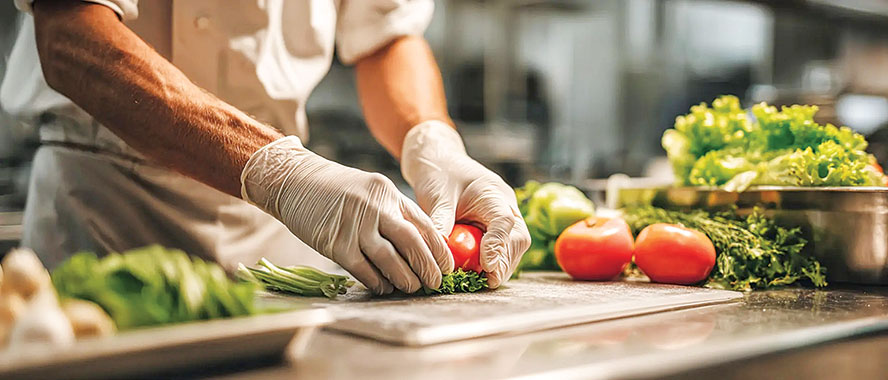
Every year on 07 June, the world pauses to reflect on a truth that is at once mundane and profound: the food on our plate should not make us sick. This year, the World Health Organization and the Food and Agriculture Organization of the United Nations have chosen a theme that is both a diagnosis and a directive “From burden to solutions – safe food everywhere.”
The framing is deliberate. For too long, conversations about food safety have been dominated by the language of loss counting the sick, tallying the dead, lamenting the economic damage. The 2026 theme demands that we harness that data not as an epitaph, but as a map that guides us toward targeted, evidence-based action.
Globally, foodborne diseases cause illness in at least 600 million people and claim an estimated 420,000 lives every year. These are not abstractions. They are children who did not return to school, breadwinners who could not return to work, and farmers whose produce never reached a market.
For Sri Lanka, the stakes are deeply personal. As a food scientist who has spent over a decade studying, teaching, and working across our food systems from university laboratories and hotel kitchens to dairy processing plants and international sporting events, I have witnessed both the fragility and the resilience of food safety in this country.
The burden is real. Foodborne infections from Campylobacter, Escherichia coli, Vibrio cholerae, and Hepatitis A continue to be recorded by the Epidemiology Unit. Pesticide residues in vegetables, aflatoxin in stored grains, and heavy metal contamination in seafood present chronic, low-visibility risks that rarely make headlines but accumulate silently in our bodies and in our healthcare bills. The unchecked proliferation of informal food establishments has widened the exposure surface significantly.
Sri Lanka’s food safety architecture rests primarily on the Food Act No. 26 of 1980. A legislation conceived in an era that could not have anticipated the complexity of today’s supply chains, the growth of modern retail, or the risks posed by climate-driven changes in microbial ecology. While amendments in 1991 and 2011 have partially modernised the framework, the foundational challenge of fragmented, multi-ministerial oversight remains unresolved. No single authority commands the end-to-end food chain from farm to fork.
The consequences are visible. Sri Lanka has repeatedly seen food export consignments rejected at international borders due to non-compliance with safety standards. A reputational and economic wound that strikes our tea, spices, fish, and fruit sectors. These rejections are not merely trade disputes; they are data points, signalling systemic gaps in Good Agricultural Practices, cold chain infrastructure, and laboratory testing capacity. The 2026 World Food Safety Day theme is therefore a clarion call to Sri Lanka’s policymakers, industry leaders, academics, and consumers alike. We have data. We have science. What we need is the collective will to act.
The solution begins with data.
The WHO’s landmark 2026 release of national-level foodborne disease burden estimates the first of their kind, covering the period 2000–2021 provides an unprecedented opportunity. For the first time, Sri Lanka will have access to country-specific data on the incidence, mortality, and disability-adjusted life years attributable to specific foodborne hazards. This is not merely an academic resource; it is a policy instrument. Ministries of Health, Agriculture, and Industries must treat it as such, using it to identify where risk is highest, which population groups are most vulnerable, and which interventions deliver the greatest return on public health investment.
Having served as a Food Safety Officer/Trainer and Trainer at the FIFA 2022 World Cup in Qatar, I observed first-hand how a structured, data-driven approach to food safety management grounded in HACCP principles and supported by rigorous real-time monitoring can successfully feed tens of thousands of people across dozens of venues without a single outbreak. The lesson for Sri Lanka is not that we must import foreign systems wholesale, but that the underlying principles of evidence, accountability, and prevention translate universally.
Education is the second pillar of transformation.
In my years of teaching food safety to university students, hotel management students, tourism professionals, and food industry workers, the most consistent finding is that unsafe food practices are rarely born of malice. They arise from ignorance of microbial growth temperatures, of cross-contamination pathways, of the invisible consequences of inadequate handwashing. Behaviour change at scale requires education that begins early. We must embed food safety literacy into our school curricula, not as an elective topic in home economics, but as a fundamental life skill taught alongside reading and arithmetic. Food safety must be as instinctive as looking before crossing a road. Industry bears its own responsibility. Food business operators from the multinational processor to the neighbourhood bakery must understand that food safety is not a compliance cost to be minimised. It is a brand asset, an ethical obligation, and ultimately, a business survival strategy. The investment in quality management systems, whether ISO 22000, FSSC 22000, or the foundational GMP and GHP frameworks, pays returns in consumer trust, export market access, and reduced liability. Safe food is not a luxury reserved for export markets or five-star hotels. It is a right that belongs equally to a schoolchild buying a kottu roti from a street cart and a tourist dining in a star hotel. The 2026 theme reminds us that the burden is well-documented. The solutions exist. The only thing left is the resolve to implement them everywhere, for everyone.
PRIORITY ACTIONS FOR SRI LANKA
= Enact a unified Food Safety Authority consolidating fragmented regulatory mandates under a single body
= Establish mandatory HACCP certification for food businesses beyond the large-scale sector
= Invest in regional food testing laboratories with accredited capacity (ISO/IEC 17025)
= Integrate food safety education into the national school curriculum from primary level
= Strengthen cold chain infrastructure, particularly for seafood and fresh produce destined for export
= Adopt the WHO 2026 national burden data to prioritise health spending on highest-risk hazards
= Empower Public Health Inspectors with digital reporting tools and updated training mandates

I must first thank Gayantha Dehiwatte for inviting me this afternoon to the launch of his book, The Path of Freedom: Dismantling the Imperialist Debt Trap. The title itself suggests that Sri Lanka has yet to achieve genuine independence, particularly in the sphere of economic decision-making. In recent years, most economic decisions of major importance appear to have emanated from Washington. During the initial phase, these decisions reached Colombo in the form of International Monetary Fund- World bank conditionalities. In more recent years, however, many of these policies have been designed locally by the economists and bureaucrats in the Treasury and the Central Bank of Sri Lanka who are trained in western academic institutions. As a result, local and international experts have worked in synergy united by their adherence to what may be called the TINA (There Is No Alternative) doctrine.
According to Dehiwatte, ‘the current economic structure in Sri Lanka is guided by the principles of neo-liberal free-market economics. This economic theory has been steering the course of Sri Lankan economy since 1978’ (page iii). It was consistently claimed that the policy package introduced in 1978 would generate higher rates of growth, lower unemployment, poverty alleviation, reduced dependency and inequality transforming Sri Lanka into the Singapore or South Korea of the Indian ocean region.
In this talk, I would focus on three main points. My first thesis is that Sri Lanka is now facing a simultaneous presence of three crises namely, the structural, conjunctural and contingent crises, as a direct consequence of the neo-liberal economic policies introduced in 1977. Second, the decision to invite the IMF to play a central role in managing the 2022 debt crisis was a serious mistake. Third, although the de-dollarisation is an essential step towards resolving the crisis it is not by itself sufficient to transform the existing global economic architecture.
The performance of the Sri Lankan economy over the last 48 years (1978- 2026) does not support the contention that the adoption of neo-liberal economic policies as outlined in Washington Consensus would pave the way for sustained economic growth and development. Compared to the period from 1950- 77 period, there has been no significant improvement in either the rate of economic growth or in the level of employment. Dehiwatte reports: ‘As of 2024, approximately one-third of Sri Lankan population -around 7 million people – are living below the poverty line, with about 2.3 million children suffering from hunger due to inadequate access of food. That is, exactly half of the children are going hungry. The total number of families in Sri Lanka is about 5.7 million, of which 3.7 million seeking assistance to survive’ (p. 18). data on consumption patterns strongly corroborate these findings. The top 1% of the population accounts for 22% of GDP whereas the bottom 50% accounts for only about 14%. The crisis Sri Lanka has experienced over the last 48 years is an all-embracing structural crisis, the resolution of which requires far-reaching changes to the existing economic structure. Following Istvan Meszaros, four characteristics of the present crisis may be identified:
(1) It is not confined to a particular sector of the economy;
(2) It is global in scope, being closely linked to the process of globalization;
(3) Its temporal scale is continuous rather than limited and cyclical, making it difficult to identify a clear beginning or point;
(4) Its mode of unfolding is gradual and creeping rather than in contrast to sudden and explosive. (Beyond Capital. pp. 680- 81).
The structural crisis is the product of a conjunction of three interrelated developments: the absence of an independent macroeconomic policy framework, the nature of the bourgeoisie, and the nature of the state and its relationship to different social classes. Given the limited time available, I will not attempt a detailed analysis of these three dimensions. Nonetheless, two observations deserve emphasis. First, the average annual growth rate during the last 48 years has not been significantly higher than that achieved during the preceding period of the so-called dirigisme regime. Second, although Sri Lanka experienced two periods of relatively rapid growth (1978- 1982 and 2010- 2915), it failed to sustain the momentum generated during these periods. Consequently, these episodes were ultimately reduced to little more than infra-structure driven bubbles.
Cyclical fluctuations within a prolonged structural crisis are not uncommon in market economies. Sri Lanka is no exception. During the public debate surrounding the 2022 economic crisis, it was frequently argued that the crisis began in 2019 because of misguided economic policies. However, as data demonstrates, the current conjunctural crisis began not in 2019 but in 2016. The recession that started in 2016 culminated in negative growth in 2020. A modest recovery in 2021 was followed by a negative growth both in 2022 and 2023. The economy returned to a limited recovery in 2024, but by 2026 that recovery appears to have lost momentum. If one plots annual growth rates between 2026- 2026 a W-shaped cycle emerges, with its lowest point in 2022. The debt crisis in 2022 should therefore be viewed not as an isolated event, but as the trough of the 2016- 2025 cycle. Of course, the acceleration of the crisis in 2022 was triggered by excessive borrowing in the global capital market through ISDs (International Sovereign Bonds). Prof Prabath Patnaik depicts this specific phenomenon as a contingent crisis: a crisis that appears manageable until a sudden financial crunch exposes underlying vulnerabilities. The IMF’s own projection that annual growth will remain around 3 per cent in 1926 together with its assessment that debt sustainability remains fragile, suggests that Sri Lanka is once again approaching a tipping point.
Confronted with these three interrelated crises, the neoclassical economists, CBSL and Treasury officials and politicians representing bourgeoisie parties argued that seeking IMF support was the only available solution. According to this view, it was imperative to accept a comprehensive IMF program at any cost. The irony is that these same actors have failed to acknowledge that Sri Lanka has been operating under the IMF program for seven out of ten years under consideration. (2017- 2020 and 2022- 2026). A second group adopted a more critical position. While accepting the need for IMF engagement, they argued for greater local input, theoretical as well as practical, into the program and advocated modifications and incorporation of selected elements of the augmented-Washington consensus. Both groups, however justified IMF intervention on the grounds that the IMF is an international institution of which Sri Lanka is a member and that the country therefore has a legitimate right to seek assistance during a foreign exchange crisis.
This argument suffers from three fundamental defects. First, it overlooks that the IMF and the IBRD established in 1945 are very different institutions from those that emerged during the mid-1970s. The original purpose of the IMF and IBRD was to assist war-ravaged countries in Western Europe and Japan facing balance of payment difficulties and reconstruction needs. By the 1970s these tasks had largely been completed rendering the original mandate of the institutions increasingly redundant Following the quadrupling of oil prices and the accumulation of petro-dollars in the US banks, the IMF effectively assigned itself a new role: that of managing the interests international finance capital during the neo-liberalist phase of the capitalist development. Its primary responsibility thus shifted away from member states and towards the preservation and upholding of the interests of the global capital market and its institutions. (For a detailed discussion, see : Unholy Trinity: the IMF, World Bank and WTO by Richard Peet) 2003.
Second, the dominant approach is based on the presupposition that there is no alternative. Consequently. The magnitude of the crisis was exaggerated in order to ensure Sri Lanka’s continued integration into the global financial system and therefore its continued entrapment with a cycle of indebtedness. Third, the argument rests on a fundamental misunderstanding of the IMF’s mode of crisis management. When dealing with a crisis ridden country, the IMF typically intensifies the crisis by imposing deflationary policies designed to restore creditor confidence.
The Sri Lankan experience illustrates this pattern clearly. Although the economy achieved a modest but positive rate of growth in 2021, growth contracted sharply in 2022 and 2023 following the implementation of IMF-backed policies. Once an economy reaches the trough of the cycle, its internal dynamics tend to generate some degree of recovery because aggregate demand rarely falls to zero. Consequently, the stability achieved since 2024 should be understood as a low-level stability -an outcome of economic contraction and adjustment rather than genuine transformation.
Let me turn to my third thesis that Dehiwatte had raised in his proposal for de-dollarization. The book appears to suggest that de-dollarization is imperative if the imperialist debt trap is to be dismantled. In a different historical context, some French economists argued that replacing the franc with a currency based on labour value would provide a solution to balance-of-payments crises. Commenting on this view, Marx observed:
“In order to balance the decrease of domestic production by means of imports on the one side and the increase of industrial undertakings abroad on the other side, what would have been required were not symbols of circulation which facilitate the exchange of equivalents but the equivalents themselves, not money but capital” (Grundrisse, p. 121).
However, the context to which Gayantha Dehiwatte refers is substantially different. In 1944–45, when the advanced capitalist countries debated the design of the post-Second World War international financial architecture, they arrived at a consensus that it should be centred on the U.S. dollar. The principal reason for this decision was the overwhelming dominance and productive superiority of the U.S. economy.
By the early 1970s, however, this superiority had begun to erode. Nevertheless, as Costas Lapavitsas has argued, “dollar dominance persisted and deepened through structural dependence as global trade, finance and reserves remained locked into dollar circuits, sustained by military power and institutional inertia despite the declining share of the United States in the world economy.”
It is in this context that Gayantha Dehiwatte’s argument acquires its significance. For him, de-dollarization does not simply mean replacing the dollar with another international currency. Rather, it entails transforming the structures of power that underpin dollar hegemony and reproducing a global order based on dependence and financial subordination. In this sense, de-dollarization is not merely a monetary reform but part of a broader project of restructuring the international order itself.
Ultimately, the argument points toward the possibility of imagining a new world order founded on the principles of democracy, equality, and ecological sustainability.
The writer is a retired teacher at the University of Peradeniya
Email: sumane_l@yahoo.com
Revieved by Sumanasiri Liyanage
(Text of a recent speech.)

To say that the developing new world order is history in the making may not be an exaggeration, because the economic, military and hegemonic landscape of the world may be undergoing radical realignment in these troubled times. Multipolarity and the emergence of the Global South’s economic and political clout may be the defining features of the new world order. There may be several evidential happenings around the world that give credence to the above observation. For instance, at the 61st Munich Security Conference, held in 2025, multipolarity was accepted as a historical inevitability and a reality. The Munich Security Report 2025, themed “Multi-polarization,” explicitly states that the world already lives in a multipolar order. The Munich Security Council, traditionally dominated by Europe and the US, saw 30 percent of its speakers, this time, representing the Global South, a testament to the world’s multipolar trajectory
The Munich Security Report 2025 highlights that BRICS nations contribute to approximately 40 percent of global trade, as well as crude oil production and exports. Further, according to the International Monetary Fund, the GDP of emerging markets and developing economies accounted for 58.9 percent of the global economy in 2023.
Countries in the Global South are asserting greater independence in global affairs. They have actively promoted greater democracy in international relations through platforms such as BRICS and the Shanghai Cooperation Organisation, injecting vital momentum into the world multi polarisation process.
Another clear indicator of this reality is the way the US failed to impose its will in the affairs of the Middle East. Significantly, it could not achieve its objectives in the war against Iran and, furthermore, its European allies refused to join, saying that it was not their war. The fact that the war, which the US and Israel expected to be a quick “strike and take over,” has ended up in a stalemate, with Iran holding all the cards, according to Prof Jeffrey Sachs, points to the changing balance of power in the world. Obviously, Iran was able to enhance its military capability due to the significant development of the multiple military power blocs.
In this regard it is interesting to see that most of the countries in Asia, Africa and Latin America, which have suffered due to western hegemony and economic exploitation, tariffs and sanctions and dollar weaponisation, are beginning to make moves towards realigning their relationship with world powers. Several African nations, Egypt, Ethiopia, Algeria, Kenya, Tanzania, are actively realigning toward the Global South, shifting away from Western-aligned partnerships to pursue multipolarity, resource sovereignty, and new economic ties with powers like China, Russia, and India.
In Asia, too, the trend is apparent; Malaysia has adopted an explicit Global South policy, focusing on outreach to the Middle East, Africa, and Latin America, as well as deepening ASEAN institutional ties. Indonesia focuses on inclusive multilateralism and critical balancing in global governance, ensuring the developing world’s economic needs are prioritised. Iran, Saudi Arabia, and the United Arab Emirates joined BRICS in 2023, reflecting a strategic shift to diversify their diplomatic and economic alliances away from purely Western orbits. There are several other countries that are emerging as economically independent and diplomatically articulative states, like Nigeria, Turkiye, and Mexico.
What is the position of Sri Lanka in this rapidly changing world order? Are we going to be left behind? Why aren’t there any signs that Sri Lanka is projecting itself as a willing partner of this journey in the South? Why isn’t it attempting to break away from the neo-liberal grip that keeps it in poverty and turn to the South? Are there any tangible economic, political or geopolitically strategic projections, reaching out to the Global South, that Sri Lanka has launched, at present, like so many other countries are doing? Even when opportunities knock on its door, Sri Lanka doesn’t seem to be interested. A case in point is the BRICS meeting in 2024, held in Russia. Though Sri Lanka was invited, none of its state leaders attended the meeting, resulting in the loss of an opportunity to establish vital economic, political and cultural links and bonds with Global South countries.
What is restraining Sri Lanka? Is it its present economic vulnerabilities and dependence on the West? It is the Global North that controls the Sri Lankan economy at present. We are tied to the IMF and controlled by their conditions and the IMF is under the thumb of the West. Further 60 percent of our exports go to the Global North. It seems likely that our export oriented, debt-burdened economy cannot afford to turn towards the Global South because of our utter dependence on the West. We saw that there was no hesitation to slap tariffs on us though we show the least tendency to disobey. One could imagine what could happen if we turn southwards, even a little bit. This is the reason why Sri Lanka would dare not change direction the slightest.
Countries that turn southwards do so to escape from the hegemony, exploitation and coercive power of the West. Isn’t there a way out for Sri Lanka to get out of this vicious global economic system and become economically independent? We were bankrupt in 2022 and people rose up against the system and wanted a change. The present government rode that tide and came to power promising a change. But there was no change and not even an attempt to change. What needed a change was the economy in the main, which would be meaningless unless a break from the fetters of neo-liberalism was the aim. What did not change was exactly that, though there were attempts to change other less vital areas, such as going after the corrupt in the Opposition.
It must be said that the government had an excellent opportunity to correct decades long mistakes. The people were asking for a change which means they were prepared to participate and support the government if it wanted to go for that change. An attempt should have been made to gradually change the export-import-debt based economy and lessen the dependence on the Global North and its economic system. A turn towards the Global South would have facilitated the desired change. The government was left-oriented, or so they said. But it appeared to be helpless to break away from the neo-liberal shackles, leave alone negotiating a better deal with the IMF.
True, we are not strong enough to go for such radical change but we could have made ourselves strong by achieving self-sufficiency, the only way to become economically independent. Such a move, no doubt, would initially result in hardship for the people, but eventually the country would come out of its poverty. Now they are condemned to eternal privation.
The government’s plan, if it wanted to go for the change, they promised, should have been to first launch a comprehensive programme to achieve self-sufficiency in our essential needs like food, cloth, medicine and green energy. The other critical move that Sri Lanka should have made was to join the Global South in its march towards a new world order. Such a strategy would have helped us to achieve a stronger and independent economy.
An important outcome of adopting such a policy would be that our economy would not be vulnerable to external shocks such as tariffs, drop in tourism, turmoil in the Middle East that disrupts fuel supply and migrant-remittances, and external trade vagaries. Further, when we are not dependent on our essentials, nobody would be able to dictate to us or interfere in our internal affairs.
Another important factor in Sri Lanka’s favour is its strategic position in the Indian Ocean and the fact that due to this everybody needs it. India would like to have a firm grip on it, so does the US. China has invested heavily in it due to this reason. However, Sri Lanka, at present, is not strong enough to leverage this geographical strategic situation to its advantage because of its highly dependent and vulnerable status. As a consequence of this strategic situation could be exploited by powerful countries as is now happening.
What Sri Lanka could do in this regard is to develop its airports and harbours as a transit trade hub by leveraging its strategic geographical position in the Indian Ocean to serve as a central stopping point where cargo, vehicles, and raw materials are consolidated, temporarily stored, or re-exported, primarily connecting East Asia, the Middle East, Africa and the Indian subcontinent. This would facilitate trade among the Global South countries and enhance Sri Lanka’s role and image in the new world order. At present Sri Lanka’s true potential in this business has not been realised due to its vulnerabilities, but if it chooses to take the path outlined above it could succeed. For this to happen Global South assistance is vital. There is no choice for Sri Lanka but to grab this moment of history and join the journey towards the new world order before we are left behind.
by N. A. de S. Amaratunga

Complete the Proposed Education Reform Policy Framework Within One Month – President

Committee appointed for restructuring SriLankan Airlines

Kane Williamson retires from international cricket

Jailed South Korea ex-president gets 30 more years for sending drones into North

Holder, Joseph set up victory as West Indies go 1-0 up against Sri Lanka

El Niño under way and threatens weather extremes, scientists say

‘Dates have the highest sugar content to fight Coronavirus’

Sunday Island 27 December – Headlines

#SundayIsland 17th December – Headlines

Sunday Island – 28th March

Sunday Island Headlines – 21 March

Sunday Island – 21st February – Headlines
-

 News5 days ago
Women’s T20 World Cup 2026 warm-up: Chamari Athapaththu’s 94 helps Sri Lanka beat Pakistan
-

 News6 days ago
Lankan-Canadian inducted to Toronto Sports Hall of Fame
-

 News7 days ago
Asst. Manager, security officer arrested over Rs 30 mn snatch at Horana PB branch
-

 Editorial5 days ago
Probe Sallay’s complaint
-
 News3 days ago
Local firms move millions of dollars overseas for phantom imports: Govt.
-

 Editorial6 days ago
Prez in the dock
-

 Features6 days ago
Entering MIT for my Ph.D program, coping with harsh Boston winter and breasting the tape
-
 News7 days ago
No blanket ban on musical performances; only those promoting LTTE