
News
Human Development progress is decelerating at alarming rate says new UNDP Human Development Report

(UNDP) For 30 years, the Human Development Index (HDI) showed a consistent increase in development progress and a decrease in inequality. Although the crises of 2020-2021 disrupted this trend, last year’s report saw tentative signs of recovery. The 2025 HDR has quashed this optimism.
Amid ongoing global turmoil, inequality has increased for the fourth consecutive year. The situation is especially severe for countries with the lowest Human Development Index (HDI) scores, as the most vulnerable continue to fall further behind. According to the new report, Sri Lanka’s HDI rank remains at 89, while the Gender Inequality Index has risen to 93 from 122 in 2024. The HDI measures the average achievement in three basic dimensions of human development: a long and healthy life, knowledge and a decent standard of living.
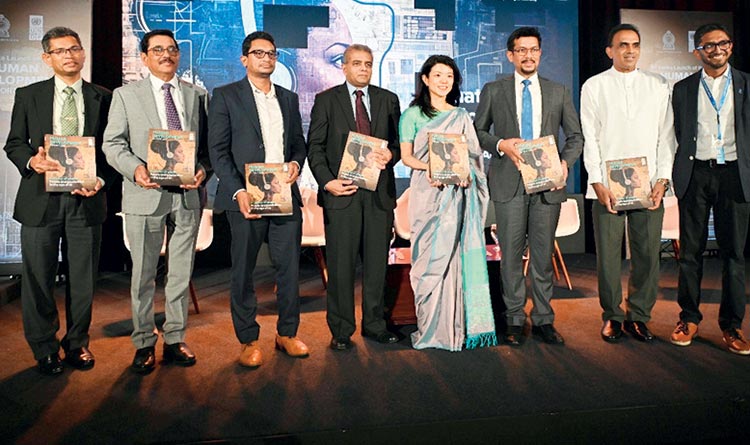
Marking a pivotal moment for digital transformation and inclusive development, Sri Lanka, on Friday, launched the 2025 Human Development Report (HDR) published by the United Nations Development Programme (UNDP), titled ‘A Matter of Choice: People and Possibilities in the Age of AI’.
The launch event was co-hosted by the Ministry of Digital Economy (MoDE) and UNDP in Sri Lanka with the participation of Eranga Weeraratne, Deputy Minister of Digital Economy; Dr. Hans Wijayasuriya, Chief Advisor to the President on Digital Economy; Waruna Sri Dhanapala, Acting Secretary, Ministry of Digital Economy; Azusa Kubota, Resident Representative, UNDP in Sri Lanka, among other high-level dignitaries. The event served as a platform for a multi-stakeholder dialogue, bringing together over 200 participants from the government, development partners, UN agencies, the private sector, academia, and civil society.
Azusa Kubota, Resident Representative, UNDP in Sri Lanka, underscored the significance of the moment, noting, “Sri Lanka’s Human Development journey is a story of resilience and ambition, but recent years have shown us that progress cannot be taken for granted. The 2025 Human Development Report reminds us that we stand at a crossroads: one path leads to deepening divides, while the other leads to inclusive transformation. Artificial Intelligence can propel human development if it is people-centred. At UNDP, we believe AI must serve people, not replace them. This is why we are proud to have supported Sri Lanka’s first AI strategy—anchored in equity, ethics, and empowerment”.
The launch event included the presentation of key findings from the 2025 HDR, which highlighted global, regional, and Sri Lanka-specific trends in the dynamic field of artificial intelligence. The HDR Report 2025 explores AI’s transformative impact on human development, emphasising that the choices societies make in its design, governance, and application will determine whether the technology becomes a catalyst for empowerment or a driver of exclusion.
Speaking on the Government’s role, Eranga Weeraratne, Deputy Minister of Digital Economy, stated, “AI is no longer optional; it can empower or exclude. AI is changing how we work, what skills are needed, and which jobs will grow. But here’s the truth — those who are prepared will thrive. And we want Sri Lanka to be ready. If we adapt smartly, AI can be the engine for the next generation of jobs. New industries, new services, and entirely new careers will emerge. Sri Lanka’s AI Strategy chooses inclusive empowerment, grounded in trusted data, talent, digital infrastructure, innovation, and ethics. Our goal is a US$15 billion digital economy by 2030. AI will be key to building a future-ready, ethical, and inclusive economy for all Sri Lankans.”
The launch coincides with a pivotal moment in Sri Lanka’s digital transformation journey. Since late 2023, UNDP has partnered with the Ministry of Digital Economy and is continuing its support provided to the previous Committee on Formulating the Strategy on AI (CFSAI) to support the formulation of Sri Lanka’s first National Artificial Intelligence Strategy. This collaboration has involved technical assistance, policy advisory support, and facilitation of dialogue among international and local experts. The strategy, informed by both global best practices and national development priorities, is designed to be inclusive, forward-looking, and tailored to the unique needs of Sri Lanka. Throughout this process, UNDP provided sustained support to ensure the strategy is firmly anchored in human development principles, promoting both equity and innovation at its core.
Noting the importance of AI’s transformative role in society, Dr. Hans Wijayasuriya, Chief Advisor to the President on DigitalEconomy, stated, “When harnessed alongside guardrails which give primacy for inclusion and responsible application, AI has the potential to deliver profound and transformational outcomes with respect to Digital Economy acceleration and Public Service delivery. The UNDP’s Human Development Report identifies socio-economic development levers which in concert with Sri Lanka’s Digital Economy Blueprint will shape AI and digital policies that are equitable, forward-looking, and responsive to the needs of all Sri Lankans”.


By Shamindra Ferdinando
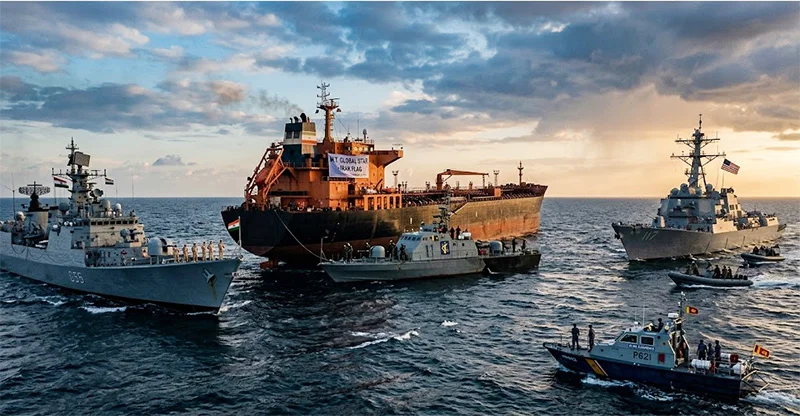
Iran has sought the Indian intervention, at the highest level, to provide lifesaving support to the crews of empty Iranian vessels stranded just outside Sri Lanka’s 12-nautical mile territorial waters off Galle.
Sources familiar with the issue said that Iran had brought the developing situation to the attention of New Delhi as the crews of almost 20 vessels, included Indian nationals. Sources stressed that the group of vessels that unloaded crude oil a couple of months back were now stranded within Sri Lanka’s Exclusive Economic Zone (EEZ).
The US Navy torpedoed an unarmed Iran frigate, returning from India, on 04 March, 2026, about 19 nautical miles off the Galle coast. The unprovoked attack killed nearly 100 Iranians.
The Iranian Embassy in Colombo has inquired from the Indian High Commission of their response to the situation, sources said. The US has issued a global warning against providing food, water, medicine and other services to the Iranian vessels. The outcome of Iran-India talks on the issue at hand was not known, though sources asserted India may not throw its weight behind Iranian efforts to address the issue.
Responding to The Island queries, sources said both Sri Lanka and India were in a dilemma due to the US warning. India couldn’t ignore the plight of the Indian crew members and the Iranian vessels in its backyard.
The Sri Lankan government remains tight-lipped about the vessels stranded in its EEZ. Our efforts to elicit a response from relevant authorities were in vain. In addition to Indians, there are Bangladeshis among the crew members. Iran has explicitly stated the responsibilities of the countries concerned to provide assistance in terms of international law.
The Iranian position was articulated by its Ambassador to Sri Lanka, Dr.Alireza Delkhosh, recently. In a special statement, Ambassador Delkhosh emphasised that in terms of the Convention on the Law of the Sea (Article 98) as well as SOLAS and SAR
Conventions, Sri Lanka couldn’t refrain from providing the needs of the Iranian vessels stranded in its EEZ.
SLMC leader Rauff Hakeem lambasted the NPP government in Parliament for failing to provide assistance to the Iranian ships. The former Minister alleged that the government was simply carrying out dictates of the US. He strongly criticised the way Foreign Minister Vijitha Herath was handling the issue.
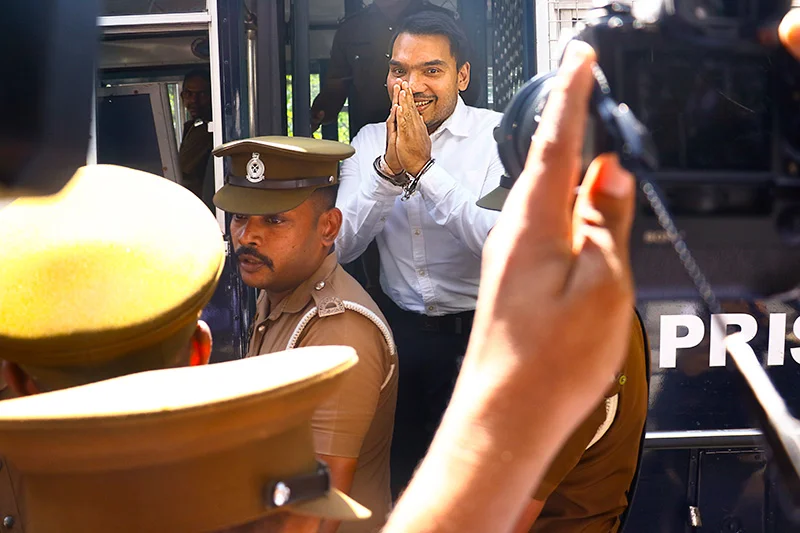
MP Namal Rajapaksa, who is in remand custody over the controversial Airbus deal, was further remanded until October 27 by the Colombo Magistrate’s Court yesterday (13).
Colombo Chief Magistrate Asanga S. Bodaragama made the order after considering submissions by officers of the Commission to Investigate Allegations of Bribery or Corruption and lawyers representing Rajapaksa.

Sri Lanka’s economy is expected to sustain its recovery over the next two years, although growth is projected to moderate amid mounting global uncertainties, according to the International Monetary Fund’s (IMF) latest World Economic Outlook.
In its World Economic Outlook 2026: Resilience Under Strain, Urgent Choices, the IMF projects Sri Lanka’s economy to expand by 4% in 2026, slowing to 3.7% in 2027, following estimated growth of 5% in 2025.
Inflation, meanwhile, is forecast to rise to 5.3% in 2026 and 5.4% in 2027, reversing the average deflation rate of 0.5% recorded in 2025.
Unemployment is expected to remain steady at 3.9% throughout the forecast period.
The projections come amid growing pressure on the global economy from the ongoing conflict in the Middle East, elevated energy prices, geopolitical tensions and trade disruptions.
Sri Lanka’s external position is also expected to weaken, with the current account balance projected to shift from a surplus of 1.6% of gross domestic product (GDP) in 2025 to deficits of 0.5% in 2026 and 0.3% in 2027.
The IMF’s outlook points to continued economic expansion in Sri Lanka, but with slower growth, rising inflation and a narrowing external surplus giving way to current account deficits over the forecast period.

Heavy showers above 100 mm are likely at some places in the Western, Sabaragamuwa, Southern, Central, and North-western provinces and in Anuradhapura district.

Sri Lanka, India caught in US-Iran ship crisis

Namal further remanded

IMF projects Lankan economic growth to moderate amidst mounting global uncertainties

Major Gen Pushpakumara assumes command of 56 Infantry Division

Dickwella axed, Bandara earns maiden Test call up

‘Dates have the highest sugar content to fight Coronavirus’

Sunday Island 27 December – Headlines

#SundayIsland 17th December – Headlines

Sunday Island – 28th March

Sunday Island Headlines – 21 March

Sunday Island – 21st February – Headlines
-

 Features7 days ago
The Sri Lankan who made Scottish history
-

 Sports7 days ago
Nissanka absence opens door for Sri Lanka’s young guns
-

 News6 days ago
NDB fraud Rs 60mn more than reported
-

 News6 days ago
Removing monk’s robes matter for Sangha to decide: Mahanayake Theras
-
 News7 days ago
Shiranthi R remanded until 13 Oct.
-

 Features7 days ago
Future of Sri Lanka’s state university system: Should it be shut down and reopened?
-

 News4 days ago
Sri Lanka escalates anti-graft drive with Shiranthi’s jailing
-
 News5 days ago
NPP govt. reminded of its responsibilities as US warship leaves Colombo