
News
HRW levels serious allegations against SL police

Police are increasingly killing and abusing people under cover of the Covid-19 pandemic measures and an anti-drug campaign, alleges the Washington-based Human Rights Watch.
In statement released from New York the HRW said: Recent police abuses reported in the media include alleged extrajudicial killings, torture, and arbitrary detention. The government should restore independent oversight of the police and meaningfully investigate and prosecute alleged police abuses. International partners, such as the United Nations Office on Drugs and Crime and the United Kingdom’s Police Scotland yard, should suspend assistance programs until there is progress on accountability and reform.
“Sri Lanka’s police seem intent on building on their past record of serious abuses, instead of cleaning up their act,” said Meenakshi Ganguly, South Asia director at Human Rights Watch. “The UN, the UK, and others working with Sri Lankan law enforcement should recognize that without the political will to reform on Sri Lanka’s part, their engagement risks appearing to endorse abusive agencies.”
Since May 2021, the police have been implicated in several unlawful deaths, including some linked to disproportionate and abusive enforcement of Covid-19 quarantines.
On May 17, police allegedly stopped D. Sunil Indrajith, 49, for violating a Covid-19 quarantine in Weligama and ordered a civilian police employee to beat him. He collapsed on the road and was killed by a passing bus. The incident was captured on CCTV, and two policemen and two others were subsequently arrested.
On June 3, Chandran Vidushan, 22, died in police custody shortly after being arrested in Batticaloa. His family alleged that police tied him to a tree outside their house and severely beat him with poles, then took him away. The authorities said that he died of a drug overdose.
On June 6, Mohamed Ali, 42, died after police arrested him for an alleged quarantine violation in Panadura, near Colombo. The police reported that he was fatally injured jumping from a moving police jeep. Ali’s wife alleged that the police beat him to death. Two policemen are reportedly facing a disciplinary procedure for “negligence.”
Police abuses have also been linked to a government crackdown on “the drug menace.” Police fatally shot Melon Mabula on May 11, and Tharaka Perera Wijesekera, on May 12. Both were in police custody for alleged involvement in organized crime, where lawyers and others had warned that their lives were in danger. In a statement the Bar Association of Sri Lanka said that both cases “have all the hallmarks of extra-judicial killings.”
In 2020, President Gotabaya Rajapaksa established a task force of senior military and police officers to create a “disciplined, virtuous, and lawful society,” and placed the police and National Dangerous Drugs Control Board under the Defense Ministry. In February 2020, the Chief of Defence Staff, Gen. Shavendra Silva, who is banned from visiting the United States due to his alleged involvement in unlawful wartime killings, said, “The security forces, which eradicated terrorism in the country 10 years ago, have been given a new task– to combat –drug trafficking.”
The police crackdown on drug dealers and users has allegedly involved planting drugs on suspects, torture and other ill-treatment in police custody or at “rehabilitation” centers, and invasive body searches of female suspects. Trafficking or possession of drugs in Sri Lanka carries severe penalties, including death or life in prison. No executions have been carried out in Sri Lanka since 1976, although death sentences continue to be handed down and about 1,500 prisoners are on death row.
People accused of using drugs can be arbitrarily detained without charge or trial for “rehabilitation” in facilities run by the army. A new report by Harm Reduction International found that the treatment of inmates in Sri Lanka’s “rehabilitation” centers includes near-daily beatings and other physical abuse amounting to torture.
The UN High Commissioner for Human Rights, Michelle Bachelet, in her report to the UN Human Rights Council in January, wrote that she was “concerned by a recent series of deaths in police custody and in the context of police encounters with alleged criminal gangs” amid a “militarised approach to law and order and drug control.” She highlighted five possible extrajudicial killings involving the Sri Lankan police between June and October 2020.
Police officers who investigate alleged crimes by the security forces face threats and prosecution on trumped-up charges. Senior Superintendent of Police Shani Abeysekera, who had investigated numerous high-profile cases, including the successful prosecution of a senior police officer for the contract killing of a businessman in 2013, was suspended by the new Rajapaksa administration in January 2020 and arrested in July 2020 for falsifying evidence.
He was released on bail in June 2021 after the Court of Appeal found that the evidence against him was “a fabricated, false version and an exaggerated account or concocted story involving a set of collaborators or conspirators, to unduly cause prejudice and harm.” While in prison he contracted Covid-19 and had a heart attack. He has repeatedly said that, although he has received death threats against him and his family, his police protection has been withdrawn.
The current police abuses come in a context of shrinking civil and political space under the Rajapaksa administration. The Bar Association of Sri Lanka has condemned the police’s use of the Covid-19 pandemic to curtail freedom of expression, including detaining peaceful protesters at a quarantine facility in July.
Sri Lankan law enforcement agencies receive international support from various countries. The UK government through Police Scotland provides police training. The UN Office on Drugs and Crime supports Sri Lankan counterterrorism units, which have long faced allegations of grave rights violations, as well as counter narcotics programs.
International partners should suspend their engagement with abusive Sri Lankan law enforcement agencies until there is demonstrated political will to address the situation, Human Rights Watch said. Such assistance risks appearing to endorse or lend legitimacy to agencies that are unwilling to improve their respect for human rights.
UN agencies should ensure that any engagement with Sri Lankan security forces complies with the “human rights due diligence policy on United Nations support to non-United Nations security forces” and the UN common position on drug policy.
“The Rajapaksa government needs to demonstrate that alleged police abuses will be properly investigated and prosecuted, and the law should promote accountability, not weaken it,” Ganguly said. “Until that happens, international partners should be under no illusions about human rights in Sri Lanka, and they should withhold assistance to abusive law enforcement agencies.

News
Sun directly overhead Galle, Angulugaha, Imaduwa, Telijjawila, Yatiyana and Tangalle about 12.08 noon today (07)


The sun is going to be directly over the latitudes of Sri Lanka from 28th of August to 07th of September due to its apparent southward relative motion.
The nearest places of Sri Lanka over which the sun is overhead today (07) are Galle, Angulugaha, Imaduwa, Telijjawila, Yatiyana and Tangalle about 12.08 noon.

By Norman Palihawadane
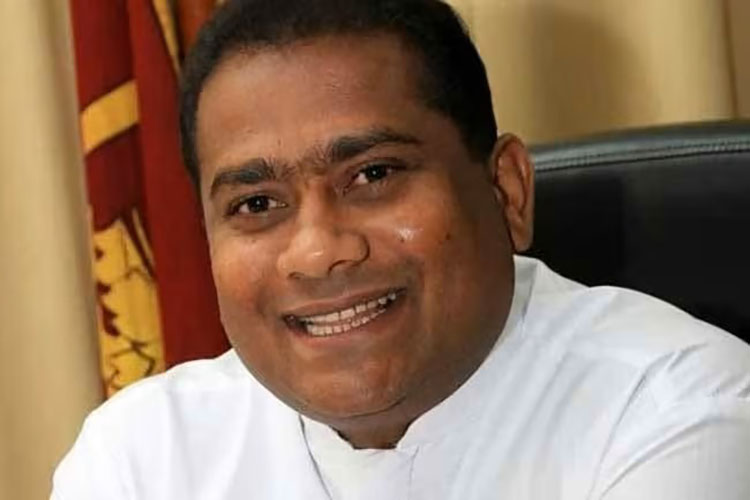
The CID recently found that former SLPP Deputy Minister Premalal Jayasekara, better known as ‘Choka Malli’, had left for Thailand when the Supreme Court imposed an overseas travel ban on him last Friday.
The CID discovered that Jayasekara had left Sri Lanka on August 31, while authorities were taking steps to enforce the travel restriction imposed by the Supreme Court. The Department has subsequently informed the Attorney General’s Department of the development.
The Supreme Court last Friday ordered Jayasekara, and two other men, to appear before court on October 21, and imposed a ban on their overseas travel.
The orders were made as the Supreme Court considered an appeal challenging the acquittal of the three men in connection with the 2015 murder of Shantha Dodangoda, also known as D.G. Sunil Perera.
The appeal was filed by Dodangoda’s wife against a decision of the Court of Appeal to acquit and release Jayasekara and the two other accused, who had previously been convicted and sentenced to death by the Ratnapura High Court.
Dodangoda was killed in a shooting in Kahawatta town, in the early hours of January 5, 2015, while a group of people were putting up decorations for an election rally in support of then common Opposition presidential candidate Maithripala Sirisena.
Two others, Karunadasa Weerasinghe and Mohamed Ilfan, were seriously injured in the shooting.
Following the incident, the Ratnapura High Court convicted Jayasekara, former Chairman of the Kahawatta Pradeshiya Sabha Wajira Darshana de Silva, and former Sabaragamuwa Provincial Council member Nilanta Jayakody, sentencing all three to death.
The Court of Appeal subsequently acquitted the three men and ordered their release.
The victim’s wife later challenged the acquittal before the Supreme Court.
The appeal was taken up before a Supreme Court bench, comprising Justice Preethi Padman Surasena and Justices Achala Wengappuli and Gihan Kulatunga.
During the proceedings, Deputy Solicitor General Janaka Bandara requested that the court impose overseas travel restrictions on Jayasekara and the other respondents.
The Supreme Court subsequently ordered all three to appear before the court on October 21 and imposed travel bans on them.
President’s Counsel Nalin Ladduwahetty, President’s Counsel U.R. de Silva and President’s Counsel Anuja Premaratne appeared for the respondents. President’s Counsel Saliya Peiris represented the aggrieved party.
Police sources said that the discovery that Jayasekara had already left for Thailand, on August 31, has raised concerns over the timing and enforcement of the travel ban.
Sources said that the CID had notified the Attorney General’s Department and was taking further action in relation to the development.
By Pradeep Prasanna Samarakoon
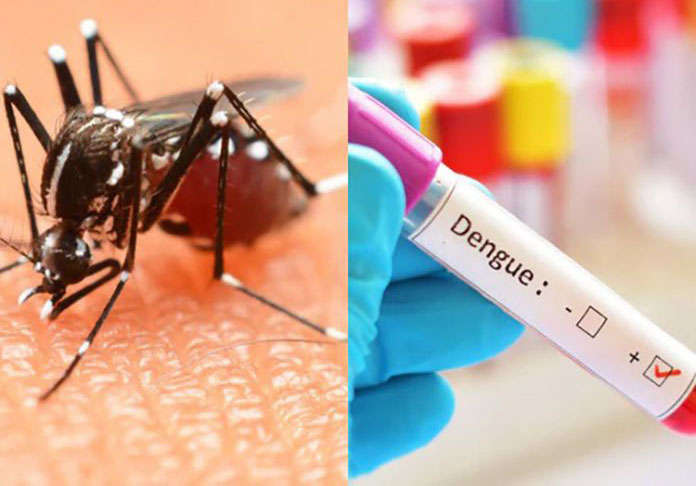
The number of deaths from dengue fever in Sri Lanka has risen to 73 this year, with 96,228 cases reported across the country so far, according to the Dengue Control Unit.
The latest figures indicate that dengue continues to pose a significant public health concern, with 737 new cases recorded during the first four days of September alone.
Dengue infections peaked in July, when 29,964 cases were reported, according to the latest data. June recorded the second-highest monthly total, with 21,533 cases, while 10,155 cases were reported in August.
Earlier in the year, 8,590 cases were recorded in May and 7,866 cases in January.The Western Province remains the worst-affected area, accounting for more than half of all dengue cases reported nationwide. A total of 50,851 cases have been recorded in the province, representing 52.84% of the country’s total.
The Southern Province has recorded 13,950 cases, followed by the Central Province with 8,818 cases and Sabaragamuwa Province with 7,925 cases.

Sun directly overhead Galle, Angulugaha, Imaduwa, Telijjawila, Yatiyana and Tangalle about 12.08 noon today (07)

Showers above 50 mm are likely at some places in the Uva and Eastern provinces.

Harshitha’s composed knock seals Sri Lanka’s semi-final berth

‘Choka Malli’ slips out of country before travel ban

Dengue death toll rises to 73

Ranil accuses govt. of undermining democracy

‘Dates have the highest sugar content to fight Coronavirus’

Sunday Island 27 December – Headlines

#SundayIsland 17th December – Headlines

Sunday Island – 28th March

Sunday Island Headlines – 21 March

Sunday Island – 21st February – Headlines
-

 News5 days ago
Denied of promotion to SC despite vacancies, justice Gurusinghe retires
-

 Latest News5 days ago
Grade 5 scholarship exam results released
-

 News5 days ago
22A: SC urged to suspend hearing, appoint full bench
-

 Midweek Review6 days ago
The local and global dynamics of Sri Lanka’s 22nd Amendment
-

 News3 days ago
Namal remanded until Sept. 18 over Airbus deal investigation
-

 News5 days ago
Govt. seeks NATO assistance
-

 Latest News2 days ago
Tharanga creates history with Diamond League crown in Brussels
-

 News6 days ago
40 professional organisations and TU oppose proposed 22A