
Sports
How Mr. Neil Perera changed cricket’s landscape


by Rex Clementine
The cricketing fraternity is mourning the loss of Mr. Neil Perera, a trailblazer who reshaped the sport’s landscape. His final innings will conclude on Sunday at Borella, marking the end of a remarkable 95-year journey that earned him the respect and admiration of the cricketing world.
Mr. Perera first took guard as Secretary of the Cricket Board in 1972 under the stewardship of Robert Senanayake. Over the next three decades, he played a pivotal role in Sri Lanka Cricket (SLC), donning various hats, including Vice-President and Team Manager apart from Secretary.
“He was at the helm as Manager when we clinched our first Test win overseas,” recalled former Test captain Arjuna Ranatunga. “A thorough gentleman with cricket running through his veins, he often dug deep into his own pocket to support the game. Despite his humility, he could be firm when the situation demanded. The game will sorely miss him,” Ranatunga added.
A visionary with an eye for the big picture, Mr. Perera was instrumental in orchestrating Asia’s joint bid to host the 1996 Cricket World Cup. In 1993, he floated the idea to then SLC President Tyronne Fernando, who swiftly escalated the proposal to President Ranasinghe Premadasa. With the President’s blessing, the groundwork was laid, and the dream seemed within reach.
However, just as the ICC meeting to decide the host nation approached, the tide turned. Nelson Mandela, fresh out of prison and riding the wave of global admiration, had successfully secured South Africa the hosting rights for the 1995 Rugby World Cup. He sought President Premadasa’s support to bring the Cricket World Cup to his nation. As a result, Mr. Perera was handed fresh instructions – Sri Lanka was to back South Africa’s bid.
But cricket, much like life, is unpredictable. When South Africa couldn’t muster enough support and pulled out of the race, Colombo gave Mr. Perera the green light to chase Asia’s dream once more. There was, however, one major hurdle – India and Pakistan, fierce rivals on and off the field, were at loggerheads with separate bids.
Displaying the finesse of a skilled batsman navigating a tricky pitch, Mr. Perera brought the warring parties to the same table. A unified Asian bid was submitted, momentum gathered, and in a historic moment, the ICC awarded the 1996 World Cup to the Asian bloc, with subsequent editions going to England and South Africa. It was a masterstroke that placed South Asia firmly on the cricketing map.
Yet, cricket is a game of glorious uncertainties and the very next year, Mr. Perera was clean-bowled in the Cricket Board elections. However, Indian cricket supremo Jagmohan Dalmiya, who later became the first Asian to preside over the ICC, acknowledged Mr. Perera’s crucial role. As a gesture of gratitude, he extended an all-expenses-paid invitation to witness the semi-finals and finals of the 1996 World Cup.
Dalmiya later wrote, “If not for Neil Perera’s timely intervention, the World Cup wouldn’t have come to Asia.” One can only wish for a Mr. Perera in today’s climate, someone capable of uniting Indian and Pakistani cricketing interests once again.
A stalwart of Panadura Sports Club, Mr. Perera was a loyal member of the club for 77 years, both as a player and administrator. His keen eye for talent unearthed fast bowler Ravindra Pushpakumara, who was fast-tracked to the MRF Pace Academy in India under the legendary Dennis Lillee’s watchful eyes. However, a freak swimming pool injury cut his training short.
Not one to give up easily, Mr. Perera made a strong appeal to then BCCI Secretary Jaywant Lele for a second chance, and the request was granted. Pushpakumara went on to serve Sri Lanka with distinction, thanks to Mr. Perera’s persistence and belief.
Even in his twilight years, Mr. Perera never lost his love for the game. A regular fixture in front of his television, he kept pace with the modern evolutions of cricket. Unlike many traditionalists who frown upon the fast-paced T20 and T10 formats, he welcomed change, acknowledging that cricket must evolve with the times to stay relevant.
Cricket has lost a true servant of the game, a man who selflessly dedicated his life to the sport he adored. As he takes his final walk back to the pavilion, may he attain the supreme bliss of Nibbana.


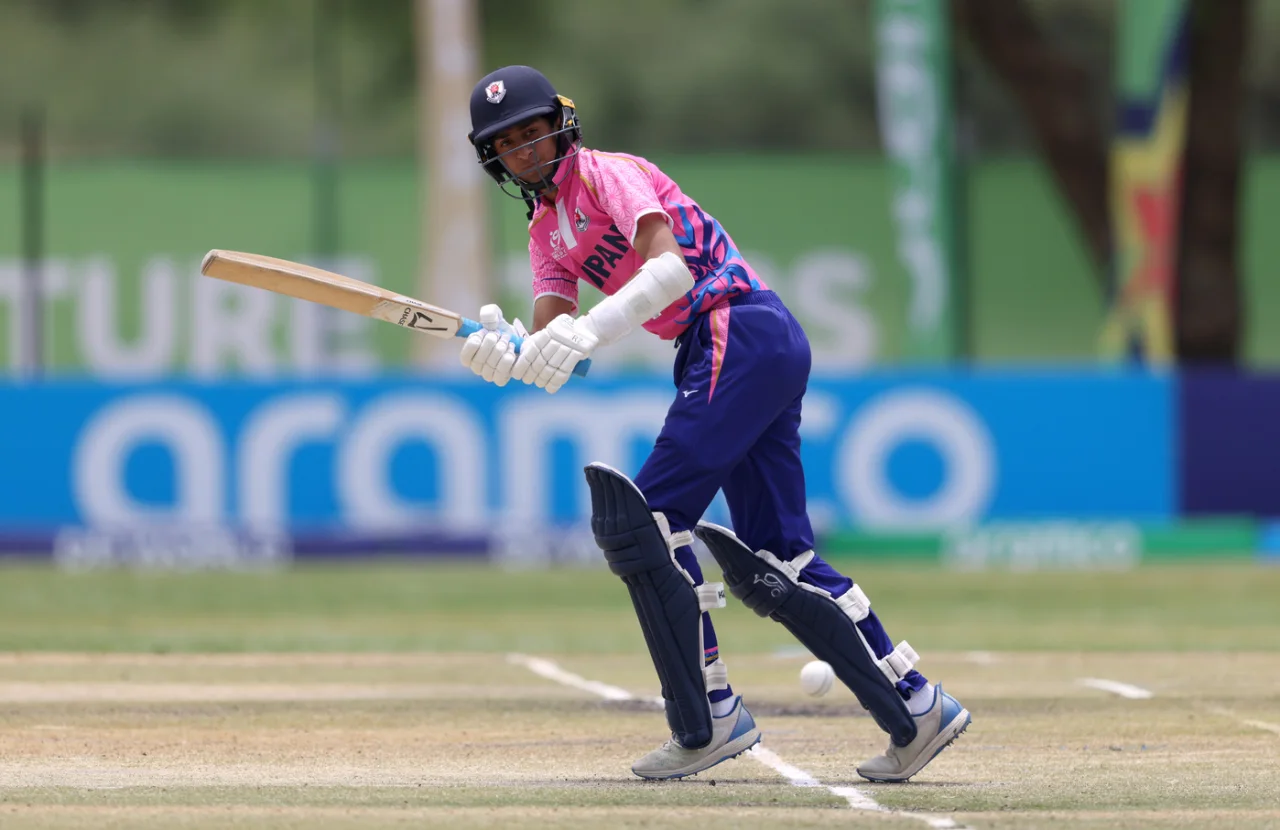
Tanzania 131 in 38.3 overs (Acrey Pascal 55; Nihar Parmar 4-30, Nikhil Pol 3-23) lost to Japan 136/1 in 28.2 overs (Nihar Parmar 53*, Taylor Waugh 47) by nine wickets
[Cricbuzz]
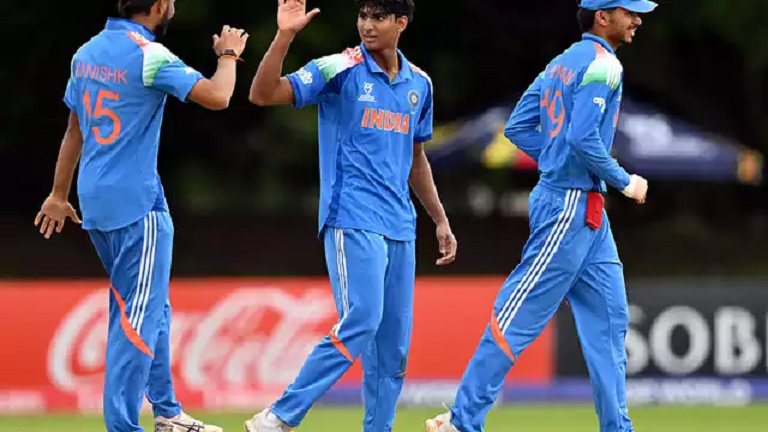
New Zealand 135 in 36.2 overs (RS Ambrish 4-29, Henil Patel 3-23) lost to India 130/3 in 13.3 overs (Vaibhav Suryavanshi 40, Ayush Mhatre 53) by 7 wickets [DLS Method]
[Cricbuzz]
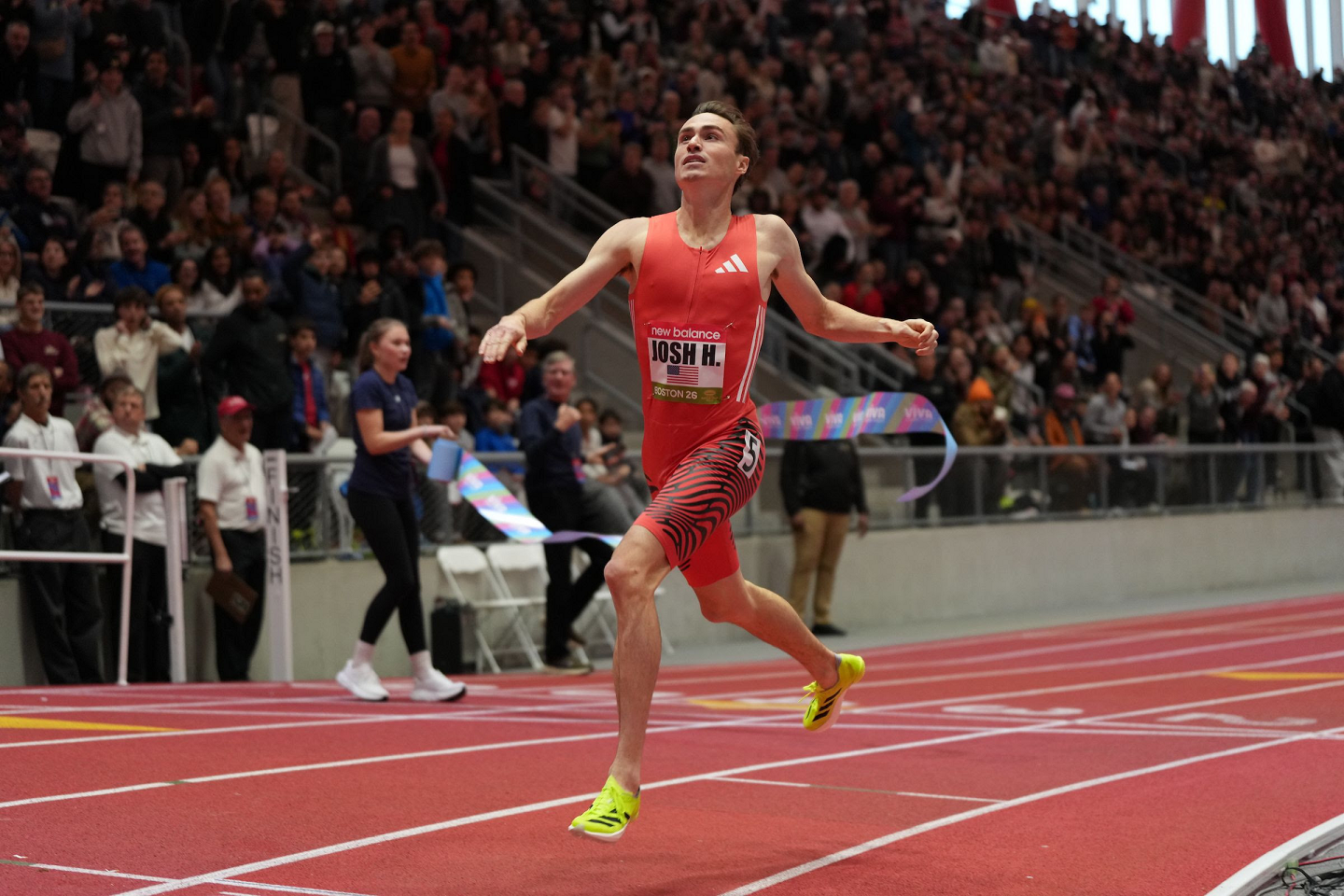
Josh Hoey had said he was excited to take a shot at the world 800m short track record in Boston and he was right on target as he clocked 1:42.50* to improve the 28-year-old mark at the New Balance Indoor Grand Prix – the first World Athletics Indoor Tour Gold meeting of the season – on Saturday (24).
Seven weeks on from setting a world 600m short track best, also in Boston, the US world indoor champion made more history as he took 0.17 off the world record of 1:42.67 set by Wilson Kipketer at the World Indoor Championships in Paris in 1997.
Hoey went into the race as the second-fastest indoor 800m runner of all time thanks to the North American record of 1:43.24 he ran at the US Indoor Championships in New York last year. But paced by his brother Jaxson, he leapt to the top of that all-time list, winning the race by more than two seconds.
Jaxson led his brother through the first 200m in 24.81 before 400m was reached in 50.21. Jaxson then stepped aside and Josh passed 600m in 1:16.19, holding on to cross the finish line in 1:42.50.
“We did a lot of pacing work,” said Josh, reflecting on his preparations for the race. “Just kind of kept steadily improving, taking it week by week, block by block, and we were able to make
this work.”
A world best had been set earlier in the programme, USA’s 2024 world indoor 1500m bronze medallist Hobbs Kessler clocking 4:48.79 to break the 2000m short track world best of 4:49.99 set by Kenenisa Bekele almost 19 years ago.
World short track 3000m record-holder Grant Fisher also dipped under the old world best, finishing second in 4:49.48.
[World Athletics]

Three arrested with narcotics valued at Rs123 million at BIA

Navy intercepts 02 narcotics-laden trawlers with 11 suspects in southern seas

Indonesian Naval Ship ‘KRI SULTAN ISKANDAR MUDA – 367’ departs island

U19 World Cup: Japan defeat Tanzania by nine wickets

U19 World Cup: Ambrish’s four-fer powers India to third straight win

Josh Hoey breaks world 800m short track record with 1:42.50 in Boston

‘Dates have the highest sugar content to fight Coronavirus’

Sunday Island 27 December – Headlines

#SundayIsland 17th December – Headlines

Sunday Island – 28th March

Sunday Island Headlines – 21 March

Sunday Island – 21st February – Headlines
-

 Features7 days ago
Extended mind thesis:A Buddhist perspective
-

 Business23 hours ago
ComBank advances ForwardTogether agenda with event on sustainable business transformation
-

 Opinion6 days ago
American rulers’ hatred for Venezuela and its leaders
-
 Opinion4 days ago
Remembering Cedric, who helped neutralise LTTE terrorism
-
 Business4 days ago
CORALL Conservation Trust Fund – a historic first for SL
-

 Opinion3 days ago
A puppet show?
-

 Opinion6 days ago
History of St. Sebastian’s National Shrine Kandana
-
 Opinion23 hours ago
Conference “Microfinance and Credit Regulatory Authority Bill: Neither Here, Nor There”