
Business
How could a modest sea passage like Hormuz hold the global economy hostage?



Prof. A. Saj U. Mendis, PhD
In the beginning of the last Century, Andrew Carnegie, US Steel magnate and one of the three wealthiest persons at that period stated “Put all your eggs in one basket and then watch the basket.” This famed quote could be, even, evolved or altered given the current geo-political and geo-economic volatility and seminal nature of oil and gas to most of the major economies as quote “Put all your geo-political and geo-economic eggs in one basket and watch that basket meticulously and with maximal care.” This is stated both in the context of extreme reliance of oil and gas and on a single 21-mile-wide sea passage (Hormuz).
In the context of aforesaid highly challenged and contested Strait of Hormuz, perceptive and sapient words articulated well over five decades ago by one of the most respected geopolitical analysts as well as National Security Advisor to Carter Administration, Prof. Zbigniew Brzezinski, would be most befitting “Geopolitical pivots are the states whose importance is derived not from their power and motivation but rather from their sensitive location”. This statement could be aptly attributed to Iran, with regard to Strait of Hormuz, as the entire global economy has been affected, either directly or indirectly, by the blockade, thus disrupting the flow of not only oil and gas but other critically essential commodities and goods such as industrial gases, fertilizer, dry grains and fresh food mostly to the GCC countries, amongst others.
Impact on Global Economy
if dispute endures:
The world took little notice or paid much heed during the first week of March 2026 as the global economy and oil and gas markets and demands were not disrupted or upended. Without any surprise, Iran implemented a blockade of the pivotal Strait of Hormuz, which is, probably, the most critical chokepoint for global oil shipments. Until the Strait of Hormuz was ruptured, the global economy did not feel the Iran-Israel-US conflict much.
As a matter of fact, the world of today has learned and accustomed to live and conduct its functionaries despite the four-year Ukraine-Russia conflict as well as the third year of Israel-Palestine conflict, amongst others. The Strait of Hormuz is hardly visible not only on a world map but even on a map of the region of Middle East. As a result, today the global price of a barrel of oil has surged to around USD 110 and if the aforesaid Strait was kept closed or disrupted till mid of June, one could witness the oil reaching a price of around USD 130-140 a barrel, historically, one of the highest recorded numerical prices since the 2008 global financial crisis. These circumstances and vicissitudes could have ‘rancorous’ and detrimental developments reverberating from Auckland, Ahmedabad to Atlanta.
Cruciality of Strait of Hormuz and Oil to the global economy:
On a similar note, most readers might not be well conversant of yet another key and crucial Strait known as Bab-el-Mandeb with a maximum length of 18 miles connecting Red Sea to Gulf of Aden and extending to Indian Ocean. This Strait accounts for roughly 10%-12% of total traded seaborne oil and mostly fueling the economies of Asia. This particular Strait, added to Hormuz, too had become perilous theatre in widening and exacerbating the regional skirmish, thus further ravaging the global economy, including advanced to least developed economies.
As a career diplomat specialized on international economics and geo-politics, author was much baffled and obfuscated of the fact that the world at large including major militaries, regional blocs, defense blocs and of course the so-called global corporate behemoths, amongst others, failed woefully and grievously to pay heed to focus on a single three letter word, yet imperative for global economy to function smoothly i.e. OIL. For all record purposes, this was not the first occasion that the global economy confronted and was threatened by an energy crisis i.e. oil & gas, especially in the region of Middle East. During the last seven decades, Suez Crisis of 1956, the two oil crises of 1973 and 1979, 1990 invasion of Kuwait by Iraq, invasion of Iraq in 2003, global financial crisis of 2008, Arab Springs of 2012 and Russian invasion of Ukraine in 2022 to name a few.
Unfortunately, the world was not equipped to endure or weather this crisis as the global economy, basically, believed that oil and gas, amongst others, cannot be held hostage since the US, today, is the largest producer of oil amounting to around 15 million barrels per day (bpd), or 15% of global production. Further, the OPEC produces roughly 30 to 32 million bpd. But it would be lesser with the exit of UAE on the last week of April 2026, yet again, surprising the world.
In 1980s, many futurists and geopolitical experts predicted that by the first decade of the new millennium, the global economy would not be dependent on oil and gas as in 1970s era. This was due to the fact that the world was tenaciously focused and engrossed on other sources of energy including numerous renewable energy sources, thus eclipsing the future indispensability of oil. Nobody would have believed after over four decades, the global economy would still be so reliant and dependent on oil as much as in 1970s era. According to both The World Bank and IMF, the global growth or GDP could decline by as much as 50 basis points (.5%) or more premised on resolution of the aforesaid chokepoint. It may be noted that most of the developing nations, including Sri Lanka, as well as developed economies of Asia would be affected, mostly the populace as cost of living, inflation and possibility of stagflation could surge with the surge of price and inadequacy of oil.
Crucial nature of Oil
Even to this day, Oil is the largest energy source of six of the ten largest economies including the US, Germany, Japan and UK. Interestingly, only China and India depend more on coal than oil whilst Russia on natural gas and France on nuclear. In this decade, in particular, the world was obsessed on the inventions and innovations of the 4th Industrial Revolution (4th IR) and 4th IR plus signaling the fact that the world would be embracing and unleashing the 5th Industrial Revolution (5th IR). This, of course, encompassed AI, ML, Big Data, EVs, and Quantum Computing, amongst others, and “Magnificent Seven” corporates (Mag-7) were flaunting and boasting a market cap of USD 23 trillion, larger than the GDP of China or over four times the GDP of India, Germany or Japan.
It, patently, appears that the facilitation, mediation and negotiations between Washington and Teheran, initiated by Islamabad, have not engendered or earned any tangible or desirable outcomes. Given the extreme gulf or disparity of the demands and requisites of each of the countries as well as most obstinate and intransigent positions, it is quite dubious that the world would reach any economically or politically amiable outcome in the foreseeable future. These courses of sequence and developments have given birth to unprecedented degree of uncertainty and incertitude to the global economy, which in turn, would translate to people confronting economic hardships and challenges.
As US noted writer and activist, Wendell Berry, stated “If we are serious of peace, then we must work for it as ardently, seriously, continuously, carefully and bravely as we have ever prepared for war”. Given these highly turbulent and unsettling times, the author wishes to ponder and ruminate on the fact whether the concerned nation/s is/are “effervescent and yearning” to achieve durable and enduring peace as much as the eagerness and readiness to engage in war. It may be apposite to record the incisive words of one of the highly respected Indian diplomats and politicians of last Century, Vijaya Lakshmi Pandit, “The more we sweat in peace, the less we bleed in war”.
Sri Lanka has positioned herself well to endure these energy shocks:
From a Sri Lankan perspective, it is most encouraging and commendable that the Government was in constant discussion and negotiation with major countries, including India and Russia, to meet the energy sources i.e. oil and gas. May add that given the global oil crisis, there is, literally, no shortage of oil and gas in Sri Lanka and the populous does not even feel the agony as in many other countries, mostly in Asia. Sri Lanka, today, has foreign exchange reserves sufficient for over four months of imports, stable currency with minimal depreciation of less than 5% during the last 12 months, robust and rising equity market, increasing GDP per capita surpassing psychologically significant figure of USD 5,000 and did record an impressive GDP growth of around 5% in 2025, amongst others.
Writer is a former career Ambassador including to Bahrain, Vietnam and South Korea and Additional Secretary of Economic Affairs, Visiting Professor and Examiner of International Economics with specialization on Geo-politics and Negotiations in over 35 universities of repute in the world, Board Member and Corporate Advisor. He earned PhD from Indian Institute of Technology (IIT) Delhi and is a Senior Fellow & former Speaker/Guest Lecturer at Harvard. He could be reached on mendissaj24@gmail.com
By Prof. A. Saj U.
Mendis, PhD

By Ifham Nizam
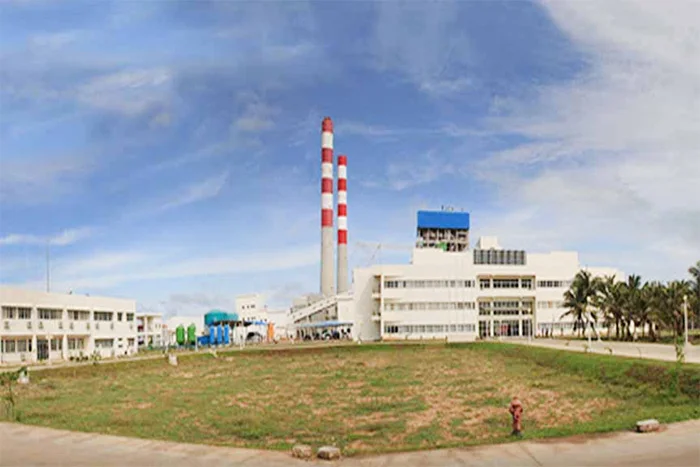
A Rs.160 million-plus diesel discrepancy at the Lakvijaya power plant in Norochcholai has triggered an internal investigation, raising questions over the handling of public funds and the controls governing fuel purchased for electricity generation.
The discrepancy surfaced during an internal audit of diesel supplied to the plant from the Kolonnawa and Sapugaskanda fuel terminals, according to senior officials familiar with the inquiry.
The audit has identified five transactions—two in December 2025 and three in January 2026—in which diesel recorded as delivered to the plant allegedly could not be fully accounted for in its physical stocks.
The investigation is now examining whether these were isolated discrepancies or part of a longer-running practice.
One transaction under scrutiny relates to January 16, when records reportedly showed that 10 diesel bowsers had arrived at the plant. Investigators subsequently found indications that the fuel stock corresponded to only nine bowsers.
A storekeeper responsible for the relevant fuel operation has reportedly been temporarily removed from those duties pending the investigation.
A senior official said investigators were reviewing historical records amid indications that similar discrepancies may have occurred over a longer period. If established, the financial exposure could therefore exceed the Rs.160 million currently identified.
The investigation is comparing fuel-terminal dispatch records, tanker movements, plant-entry records, receiving documents and physical stocks to establish exactly how much fuel was dispatched, received and accounted for.
That audit trail will also be critical in determining who authorised, received and certified the disputed consignments, and whether established controls were followed.
Relevant documents were reportedly transferred from Norochcholai to the company’s Colombo head office on September 26 for further examination, with electricity-sector security personnel assisting in the transfer.
The internal audit has also reportedly uncovered expired chemical stocks worth several hundred thousand rupees in the plant’s stores. Investigators are examining whether further inventory-management irregularities occurred.
The matter was also reportedly taken to the Puttalam Police Special Crimes Investigation Unit on September 26.
When contacted by Puttalam-based journalist Hiran Priyankara Jayasinghe for The Island Financial Review, Lakvijaya Power Plant Manager Nalaka Kumara confirmed that an investigation was under way but declined to provide further details.
The financial issue is direct: if the plant paid for diesel it did not receive, public-sector funds were spent without the electricity sector receiving the corresponding fuel.
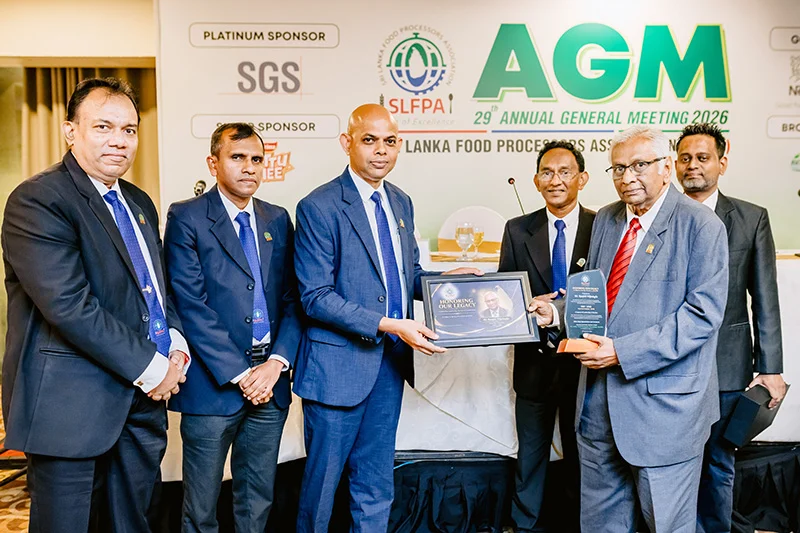
The Sri Lanka Food Processors Association (SLFPA) successfully convened its 29th Annual General Meeting (AGM) on September 23, 2026, at the Water’s Edge Hotel, Battaramulla. Bringing together key industry stakeholders and member organizations, the event served as a platform to review milestone achievements from the 2025/2026 term and outline strategic priorities for the nation’s food and beverage processing sector.
At the AGM, the new Executive Committee for 2027/2028 was appointed, comprising: Honorary President Aruna Senanayake C.W. Mackie PLC Imme. Past President Thusith Wijesinghe Trans Continental Packaging & Commodities (Pvt) Ltd.
President Elect Nadishan Guruge Meadlee Trading Co. (Pvt) Ltd.
1st Vice President Damitha Perera Forbes & Walkers Commodity Brockers (Pvt) Ltd.
2nd Vice President Rasika Seneviratne Diesel & Motor Engineering PLC 3rd Vice President Deepal De Alwis Neochem International (Pvt) Ltd.
Honorary Secretary Amila Weerasinghe Nestle Lanka Limited.
Asst. SecretaryDineth Alahakoon Country Style Foods (Pvt) Ltd.
Honorary Treasurer Sameera Jayathilaka Westmann Engineering Company (Pvt) Ltd.
Asst. Treasurer Niroshan Dalpethado C D De Fonseka & Sons (Pvt) Limited. In addition to the above office bearers, the following ten Executive Committee Members were appointed:
Sanjeewa De Silva Unilever Sri Lanka Limited Sheran De Alwis MA’S Tropical Food Processing (Pvt) Limited
Thusitha Ekanayake Anods Cocoa (Pvt) Ltd.
Vijitha Govinna Plenty Foods (Pvt) Limited Ms. Praharshi Wickramasekara International Commodity Exports (Pvt) Ltd.
Sanjeewa Niroshan SGS Lanka (Pvt) Ltd. Kushan Amarasinghe Finagle Lanka (Pvt) Ltd.
Rangajeewa Hettiarrachchi Fonterra Brands Lanka (Pvt) Ltd.
Harindra Abeyrathna Vision Technologies International (Pvt) Ltd. Thilina Weerasekara Ceylon Cold Stores PLC
The event was proudly supported by key industry partners, with SGS Lanka (Pvt) Ltd serving as the Platinum Sponsor. Unilever Sri Lanka Ltd. and Nestlé Lanka Ltd. joined as Gold Sponsors, Ceylon Agro Industries – Prima as the Silver Sponsor, while Lanka Exhibition & Conference Services (LECS) and Hero Nature Products (Pvt) Ltd., supported as Bronze Sponsors.
The proceedings concluded with a vote of thanks delivered by Hony. Secretary Deepal De Alwis, followed by cocktails and a fellowship networking session, providing an opportunity for members to connect and strengthen industry ties.

New premium ride option expands Uber’s portfolio from affordable Moto and Tuk rides to premium on-demand travel
Uber announced the launch of Uber Black in Sri Lanka, bringing its premium ride experience to the country for the first time. Designed as the “business class of back seats,” Uber Black combines premium vehicles and highly-rated drivers for riders looking for greater comfort, quality and a more elevated travel experience.
The launch comes as demand for premium products and experiences grows across Sri Lanka, with consumers seeking greater choice and quality in their everyday experiences. Uber Black brings this choice to on-demand mobility, whether for an airport journey, an important business meeting, a special occasion or simply when riders want to travel in greater comfort.

Gold winner Tharanga gets brand-new Honda Vezel from SLAAJ

Showers above 50 mm are likely at some places inthe Uva, Eastern and Central provinces and in Polonnaruwa and Mullaittivu districts after 1.00 p.m.

Civil society activist accuses govt. of favouring Ven. Gnanasara

More cops than cones

Sajith accuses govt. of using data selectively in crucial report

75 new inmates sent to Bogambara re-establishing it as a correctional facility

‘Dates have the highest sugar content to fight Coronavirus’

Sunday Island 27 December – Headlines

#SundayIsland 17th December – Headlines

Sunday Island – 28th March

Sunday Island Headlines – 21 March

Sunday Island – 21st February – Headlines
-
 Latest News6 days ago
Showers above 100 mm are likely at some places in the Western, Sabaragamuwa, Central and North-western provinces and in Galle and Matara Districts
-

 Editorial6 days ago
Crimes punished and unpunished
-

 Features5 days ago
Beyond traditional jobs: Why Sri Lanka needs to facilitate the gig economy
-

 Editorial4 days ago
Birth of a bad law
-

 Latest News5 days ago
Kusal, Wellalage star as Sri Lanka defend 322 in Headingley thriller
-

 News2 days ago
Police remove Thileepan statue in Jaffna
-
 Latest News7 days ago
Ms. P. M. Jayadeera (Engineer) appointed Director General of Irrigation
-

 News6 days ago
IMF: Sri Lanka on course for 2027 market return