
Life style
Hoop Earrings your everyday style


When it came to jewellery, 2023 saw a rise in Y2K-inspired designs like we saw in apparels as well. There was an influx of bold colours, playful designs and patterns that elicited a general sense of happiness in the wearer. Loops the simple, round earrings that have hung from women’s lobes since times immemorial has now necome a fashion statement, Bet this time, they are injected with a lot more character. Hoops have also evolved from being simple malleable metal shaped as rings to becoming pieces of jewellery that have a certain main character They are glamorous and stylish and add character to the wearer are Versatile and chic. it is a must have for any women’s wardrobe. Regardless of size, metal, and material, hoop earrings never fail to make one feel more put together.
Hoop earring proponent and jeweller Jennifer Fisher, says this is one jewellery piece that makes you standout among the rest
Fisher, whose name has become synonymous with hoop earrings, has everyone from Jennifer Lopez to CNN Chief White House Correspondent Kaitlan Collins wearing her styles daily. With hoops still the dominating earring style, we caught up with her again (hot on the heels of her Beverly Hills store opening) to talk about starting and growing a hoop earring collection. “Your first pair of hoops should be something clean that you can wear morning, noon, and night,” says Fisher. “Your fifth pair of hoops should be something that has texture and maybe a larger diameter. Something that rounds out your collection.”
“I always say that hoop earrings are like the perfect pair of jeans; you need a few styles to round out your collection,” continues Fisher. “Your foundation is normally something pretty classic and then as you grow your collection, your selection should become more diverse. A great example: for your first pair of jeans, you probably aren’t going to buy a wide-leg, long version. You’re probably going to go with a classic straight-leg version, so I suggest the same idea when you’re buying hoops.”
And—to keep Fisher’s analogy going— just like denim, the hoop is versatile. It can be the most casual earring or a minimal accent for an evening outfit.
Medium Hoops
Bigger than a huggie (meaning a hoop that “hugs” the ear) and smaller than a look-at-me-hoop, the medium hoop is an essential for every collection. It’s a classic pairing for pretty much every outfit under the sun.


A destination wedding in Sri Lanka is not just an event,it is an experience that unfolds over days, sometimes even a week. From the golden shores of Bentota to the colonial charm of Galle Fort, and the cool romantic highlands of Nuwara Eliya, Sri Lanka offers a stunning diversity of settings for exotic weddings. Destination weddings are more than romantic celebrations, they are a dynamic driver of tourism, drawing high spending travellers, global attention, and long stay visitors. In Sri Lanka, these weddings seamlessly blend scenic beauty, culture and luxury promoting Sri Lanka on the world stage.
Sri Lanka is one of the most diverse destination wedding hubs in Asia – drawing couples from India, Europe and even Pakistan who are looking for something beyond the ordinary.
What makes Sri Lanka irrestible is its rare ability to offer multiple wedding backdrops within a few hours – from sun kissed beaches, misty mountains, colonial charm, and lush tropical landscapes, all seamlessly woven into one unforgettable celebration.
For many couples the dream begins by the sea. Along the southern and western coastlines, Sri Lanka offers a perfect beach wedding, with golden sunsets, and endless horizons.

Celebration of love in an elegant setting
For many Indian couples, in particular, Sri Lanka presents the perfect blend of proximity and exotic appeal. While the couples seeking cooler climes and a dramatic scenery, Sri Lanka’s hill country offers a dreamlike alternative. Nuwara Eliya, often called Little England, is loved by European couples. With its colonial bungalows, rose gardens and cool climate, it lends itself perfectly to elegant garden weddings, reminiscent of an English country affair.
What sets Sri Lanka apart is not just the beauty of these locations but how seamlessly everything comes together – food, culture and locations.
From décor and catering to cultural performances and legal formalities – ensure couples and their families to focus solely on the celebration itself without hassles.
-

- An ancient symbol of grace at a modern wedding
It is also the versatility that attracts a global clientale, Indian weddings find space for grandeur and tradition while European couples discover intimacy and charm. Some European couples are drawn to Sri Lanka’s tropical allure, heritage architecture, and a promise of a wedding that feels both intimate and extraordinary. Hotels and resorts across the island have elevated destination weddings into an art form.
Some of the hotels, such as Shangri-La Hambantota, Cinnamon Bentota Beach, Sheraton Kosgoda and Weligama offer bespoke wedding packages that go for beyond décor and dining.
Wedding planners curate menus, from floral themes, cultural performance to dining, ensuring each celebration reflects the couples story. Guests, too, are not left out, they find themselves embarking on wildlife safaris or indulge in Ayurvedic wellness retreats along the southern coast. Weddings becomes rich with memory making moments. Unlike Bali or Phuket, Sri Lanka offers five star venues, world class cuisine to the island’s ability to offer something deeply personal yet effortlessly luxurious.
In Sri Lanka, couples will never confined to a single venue. A beach ceremony can be followed by a hill country honeymoon or a cultural
celebration near Sigiriya can transition into a coastal after party and personalised service at a fraction of the cost, allowing couples to enjoy their ceremonies at a low cost. Culturally the island offers depths and colour. Kandyan dancers, traditional drummers, Poruwa ceremonies and vibrant local rituals add authencity and character.
The island’s year round tropical climate further enhances its appeal. Couples can host outdoor ceremonies under open skies. The exotic landscapes lend themselves beautifully to photography. Above all this, Sri Lanka offers warmth and the hospitality is genuine and deeply personal.
Sri Lanka stands out in a world where destination weddings are becoming increasingly extravagant.
Sri Lanka is a place where love is celebrated against a backdrop of nature, culture and timeless beauty. And perhaps that is why so many couples choose Sri Lanka to say ‘I do’ and to began their journey in a place that feels like home.
By Zanita Careem

at Cinnamon Grand
This Avurudu season, Cinnamon Grand Colombo invited guests to embrace the warmth, joy, and timeless traditions of the Sinhala and Tamil New Year with a thoughtfully curated series of festive experiences for the whole family.
Blending authentic Sri Lankan heritage with the hotel’s signature hospitality, the celebrations promise a memorable April filled with traditional flavours, lively entertainment, and meaningful moments of togetherness.
The festivities began with the Avurudu themed tea buffet, at the tea lounge, where guests savoured a delightful spread of seasonal sweets, festive treats, and local favourites inspired by Avurudu traditions.
During the season, Nuga Gama came alive with Happy Avurudu, featuring a charming traditional sweet table followed by an authentic Sri Lankan lunch buffet. Guests immersed themselves in the festive spirit with traditional Avurudu games, cultural celebrations, and special seasonal activities, recreating the joy of a classic Sri Lankan New Year gathering.
-

- Behind every celebration is a team of culinary artists

Swinging into elegance and unforgettable memories
As the celebrations continued into the evening, Nuga Gama presented the Sri Lankan New Year Dinner on 14th April, an indulgent dinner buffet showcasing cherished festive recipes and beloved Sri Lankan flavours.
The guests enjoyed a host of seasonal experiences across the hotel. Coffee Stop featured the Avurudu Kavili Pop up, offering an irresistible selection of traditional New Year sweets, while palms of beautifully curated festive hampers perfect for gifting family, friends, and colleagues.
Adding to the vibrant atmosphere, the Avurudu feast at the lobby brought the traditions of the season to life with live raban performances by traditional Sri Lankan ladies and live cooking stations serving freshly prepared local sweet treats, creating an immersive festive experience for guests and visitors alike.
For those looking to extend the celebrations, Cinnamon Grand Colombo also introduced a festive Avurudu stay, inviting guests to enjoy the season with an exclusive city escape. Guests booking with the promo code CGA26 enjoyed special benefits, including 15% off on all food and beverage, 10% off spa treatments, and a complimentary stay for one child, valid for stays until 30th April 2026. Reservations can be made via cinnamonhotels.com.
The celebrations continue later in the month with Baila Night at Nuga Gama on 24th April, featuring a lively performance by Sri Band SL, followed by a delicious dinner buffet in a festive village style setting.
Celebrate Avurudu season with unforgettable flavours, cherished traditions, and heartfelt hospitality at Cinnamon Grand Colombo, where every experience is designed to capture the true spirit of the season.

Sri Lanka’s wildlife story has long been told through its giants — the stealth of the Sri Lankan leopard, the quiet power of the Asian elephant, and the ocean drama of the blue whale.
These icons have shaped the island’s global image, drawing travellers from across the world.
But as the sun slips below the horizon and the last safari jeeps return to camp, another Sri Lanka awakens — one that is far less known, yet just as extraordinary.
In the half-light of wetlands, along bunds of ancient irrigation tanks, and at the edges of village paddy fields, three elusive felines begin their nightly rounds. The Fishing Cat, the Jungle Cat, and the Rusty-spotted Cat — small, secretive, and largely overlooked — are now emerging as the island’s most intriguing untold wildlife story.
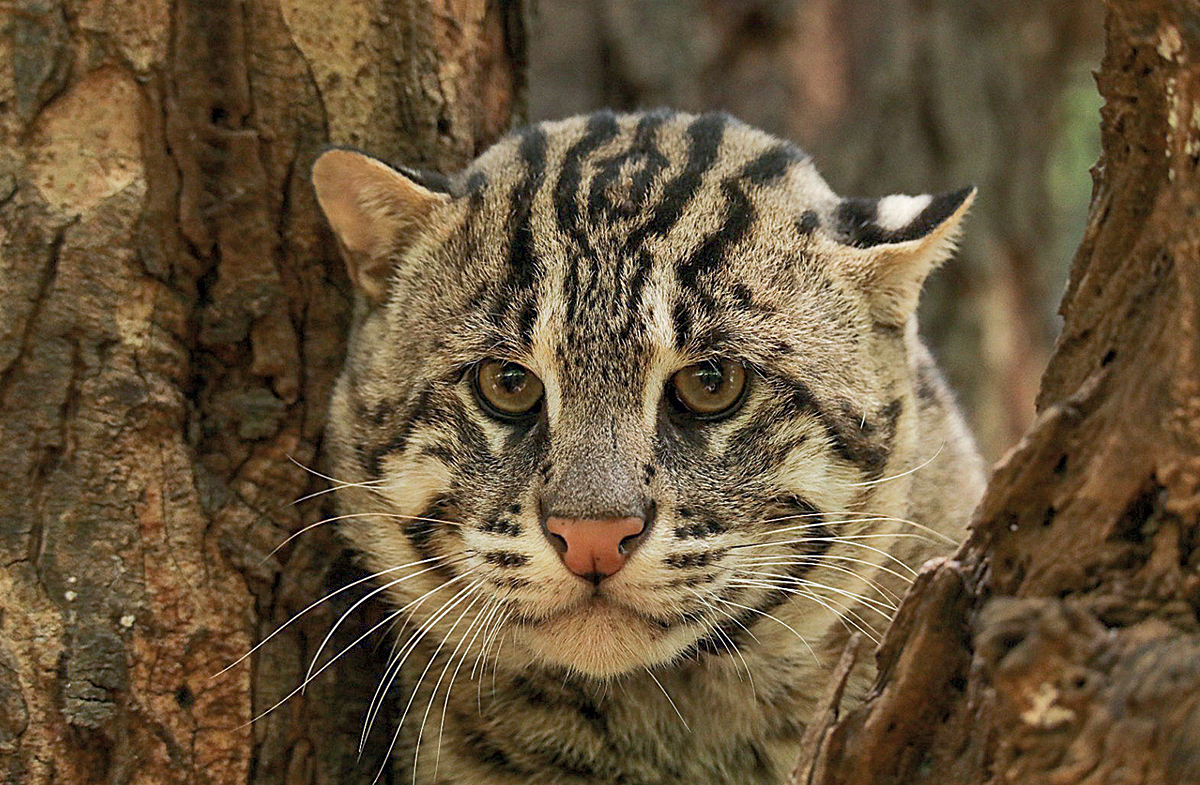
Fishing Cat
And according to researchers, their time in the spotlight may have finally come.
A Hidden World, Ready to Be Seen
“These cats have always been here — living quietly alongside us,” says Chaminda Jayasekara, a researcher and conservationist who has spent years studying Sri Lanka’s lesser-known carnivores.
“What is changing now is not the cats, but our awareness. We are beginning to understand that these species are not rare in the sense of being absent — they are rare because we have not been looking for them in the right way,” he said.
Jayasekara notes that all three species are distributed across wide swathes of the island — from the dry zone landscapes of the Cultural Triangle to the wetter lowlands and even human-dominated environments.
“The remarkable thing about the Fishing Cat and the Jungle Cat in particular is their adaptability. They are not confined to deep water. They use wetlands, paddy fields, scrublands — habitats that exist right next to where people live,” he explained.
-

- Jungle cat

-
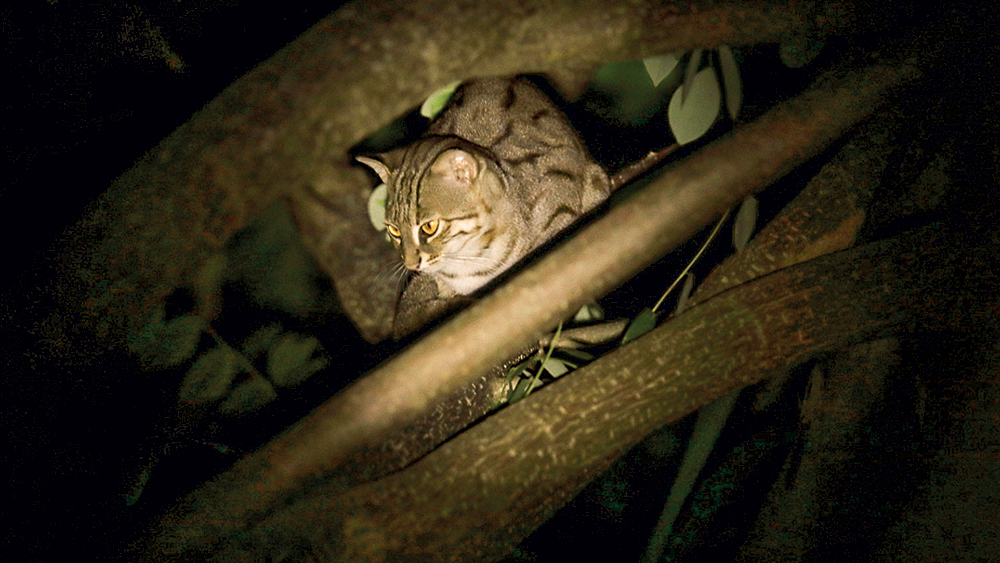
- Rusty-spotted cat

-

- Chaminda with wife Thilini Sandamali
Three Cats, Three Remarkable Stories
The largest of the trio, the Fishing Cat, is a wetland specialist — a muscular, spotted predator with partially webbed paws built for hunting in water. Across Sri Lanka’s vast network of tanks, marshes, and mangroves, it stalks fish with silent precision.
Globally listed as Vulnerable and considered endangered nationally, the species faces mounting pressure from wetland loss and pollution. Yet paradoxically, it is often found within sight of human settlements.
“Seeing a Fishing Cat hunting along a village tank is one of the most powerful wildlife experiences Sri Lanka can offer,” Jayasekara said. “It challenges everything people think they know about where wildlife belongs.”
The Jungle Cat, by contrast, is a creature of grass and scrub — long-legged, alert, and often active at dusk. It thrives in the margins where farmland meets wilderness, preying on rodents, birds, and reptiles.
Though not currently endangered, its habitat is steadily shrinking.
“These are landscapes we often dismiss as ‘empty’ or ‘degraded,’” Jayasekara noted. “But for the Jungle Cat, they are essential. Losing them means losing an entire ecological story.”
And then there is the smallest of them all — the
Rusty-spotted Cat.
Weighing little more than a kilogram, this tiny feline — found only in Sri Lanka, India, and Nepal — holds the distinction of being the world’s smallest wild cat. With its soft, rust-coloured coat and disproportionately large eyes adapted for night vision, it appears almost unreal in the wild.
“To encounter a Rusty-spotted Cat is something very few people in the world have experienced,” Jayasekara said. “It is not just a sighting — it is a moment of disbelief.”
A Tourism Opportunity After Dark
What makes these cats especially compelling is not just their rarity, but their accessibility.
Unlike the island’s larger, more famous wildlife, sightings do not always require long hours inside national parks. Instead, they can occur in carefully managed landscapes — wetlands, forest edges, and even within the grounds of eco-sensitive hotels.
One such example is Jetwing Vil Uyana, a property that has quietly demonstrated what is possible.
Located in the heart of the Cultural Triangle, the hotel sits within a restored wetland ecosystem where all three cat species have been recorded. Over more than a decade, guided night walks conducted by trained naturalists have offered guests rare glimpses into this hidden world.
“These experiences must be done with extreme care,” Jayasekara emphasised. “Low-impact lighting, small groups, and knowledgeable guides are critical. If done incorrectly, we risk disturbing the very species we are trying to protect.”
A Changing Global Audience
Sri Lanka’s tourism narrative has long revolved around its “big five” — elephants, leopards, sloth bears, blue whales and sperm whales. But global travel trends are shifting.
Today’s wildlife traveller is increasingly seeking intimate, lesser-known experiences — encounters that feel personal, rare, and authentic.
“For a visitor from Europe, where wild cats are virtually absent, the idea of seeing even one species is exciting,” Jayasekara said. “To potentially see three — in one country, in one journey — is extraordinary.”
He believes Sri Lanka is uniquely positioned to capitalise on this niche.
“This is not about replacing what we already have. It is about expanding the story — showing that Sri Lanka is not just about large animals, but also about the small, the secretive, and the scientifically fascinating.”
Conservation Through Experience
Beyond tourism, the implications are deeper.
The Fishing Cat continues to decline due to habitat destruction and human conflict. The Rusty-spotted Cat remains poorly studied, with significant gaps in scientific knowledge. Even the adaptable Jungle Cat is losing ground as grasslands disappear.
Jayasekara argues that responsible tourism can play a vital role in reversing these trends.
“When communities begin to see value in these animals — not as threats, but as assets — attitudes change,” he said. “A Fishing Cat alive in a wetland can generate far more long-term benefit than a wetland converted for short-term gain.”
Tourists, too, become part of the conservation chain.
“A single meaningful encounter can transform how a person sees the natural world. They go back, they share the story, and suddenly these small cats are no longer invisible.”
The Night Belongs to Sri Lanka
Across the island, as darkness settles over ancient reservoirs and forest edges, this quiet transformation is already underway.
A ripple disturbs the surface of a tank — a Fishing Cat at work. In the tall grass, a Jungle Cat pauses, ears alert. And somewhere in the shadows, almost impossibly small, a Rusty-spotted Cat watches with luminous eyes.
These are not distant, unreachable moments. They are unfolding now — in landscapes that millions pass every day.
Sri Lanka has long been celebrated for what it shows the world in daylight. But, as researchers and conservationists now suggest, its future may also lie in what it chooses to reveal after dark.
“The story is already here,” Jayasekara said. “We just need to tell it — carefully, responsibly, and with the respect these animals deserve.”
By Ifham Nizam

Malinga, Reddy sink Chennai Super Kings chase to defend under-par 194 in Hyderabad

Stubbs, Miller win Delhi Capitals a thriller against Royal Challengers Bengaluru

Showers predicted in the Western, Central, Sabaragamuwa, Uva, North-western, North-central and Southern provinces after 1.00 pm.

Heat Index at Caution Level in the Northern, North-central, North-western, Western, Sabaragamuwa, Eastern and Southern provinces and in Monaragala district

‘Agents of the devil’ seeking to block Easter probe, Cardinal warns

Nation to mark Easter Sunday attacks with countrywide observances, march for justice

‘Dates have the highest sugar content to fight Coronavirus’

Sunday Island 27 December – Headlines

#SundayIsland 17th December – Headlines

Sunday Island – 28th March

Sunday Island Headlines – 21 March

Sunday Island – 21st February – Headlines
-

 Latest News6 days ago
PNS TAIMUR & ASLAT arrive in Colombo
-

 Latest News6 days ago
Prasidh, Buttler set up comfortable win for Gujarat Titans
-

 News4 days ago
PNS TAIMUR & ASLAT set sail from Colombo
-

 Latest News5 days ago
“I extend my heartfelt wishes to all Sri Lankans for a peaceful and joyous Sinhala and Tamil New Year!” – President
-

 Latest News6 days ago
Heat Index at Caution level’ in the Northern, North-central, North-western, Western and Southern provinces and in Trincomalee district.
-

 Latest News5 days ago
US blockade of Iran would worsen global energy crisis, analysts say
-

 Latest News6 days ago
Salt and Patidar power RCB past Mumbai Indians
-

 News1 day ago
Heroin haul transported on 50-million-rupee contract