
Sports
Hodge hundred keeps West Indies’ fight on


Slow-burn thrillers aren’t for everyone. Mount Maunganui’s been screening one for the past three days and just as the draw was starting to turn favourite, things started to happen. “Ooooh my Goooddddd,” cried Kaveem Hodge rolling around on the floor. Apparently, he was only allowed a second Test match century if he could show he could take a cricket ball to the crown jewels. He did. On 97, he put his agonised body through the trauma of a quickly run two, and on 99, decided running is for losers and whacked a pull shot to the square-leg boundary.
West Indies went to stumps on 381 for 6, and trailing by 194, but there is uncertainty around two of the wickets they have in hand. Shai Hope was holed up in his hotel all of Friday and he hasn’t really been seen since. It is reported that he is unwell and as team-mate after team-mate came in ahead of him, it is starting to look serious enough to prevent him from batting Kemar Roach is down with a hamstring injury he picked up on the first day and his status is unclear as well.
New Zealand will remain hopeful of a positive result, particularly on the evidence of how they roused themselves in the final session. They were tired. The slow pace of the pitch was negating the movement that was still on offer. So there was a lot of oohs and aahs but never the aha! Until Daryl Mitchell was given the ball and he just trundled in and trapped Justin Greaves lbw. Three balls later, Ajaz Patel had Roston Chase trapped in front as well.
West Indies had racked up fifty partnership after fifty partnership – four of their top five wickets were able to bed in. They’d proven hard to crack. Then all of a sudden, a dibbly-dobbly bowler and a man who had never taken a Test wicket at home broke through.
Slow burn thrillers. Gotta love ’em.
Hodge batting in the 90s started to get uncomfortable. Anderson Phillip got hit in the head. New Zealand missed an edge through to the keeper. The replay went up on the big screen and Tom Latham said, “Oh, not again!”, throwing back to the missed opportunity when they had no reviews in Christchurch and Roach lbw only for the umpire to shake his head. There’s still two more days of this left.
Hodge’s Test career has been a slow burn too and at one point was in danger of being put out. He had been dropped during the home summer with only two of his previous 15 innings crossing the 30-run mark. Speaking at the end of the day’s play, he had the grace to accept that, saying if the employees aren’t giving what is expected of them, bosses will look elsewhere.
West Indies came back to him for this tour of New Zealand and he made it a priority to figure out a way to bat against the moving ball. This challenge, far from making him shrink, triggered the analytical side of him. He has a degree in sports science and those principles might have come in handy to recognise that he could leverage his strength, scoring square of the wicket, into runs, “Plan your work, work your plan,” he said at the end of the day on 109 not out.
Hodge looked suspect initially, surviving outside edges through the slip cordon and berating himself about his front foot’s reluctance to get in line with the ball. But none of that deterred him from doing the basics right; from being ready for the next ball; from gaining better awareness of his off stump. With more and more time in the middle, he was able to get his body moving the way he wanted. The strength of his defence began to shine through – soft hands, bat face pointed down to make sure the ball didn’t reach the close catchers – and the bowlers began looking elsewhere. Hodge punished them for their lack of perseverance, playing some of the most crisp pull shots. The early struggle and the method to get out of it made the final yield all the better.
Tevin Imlach, batting at No. 4 in place of Hope soon after his captain had wondered where he was trying to score his runs, put in a decent shift which included running down the pitch at Ajaz and hoisting him over the top for a straight six. That shot was a direct response to the left-arm spinner almost running through his defence with an arm ball.
Alick Athanaze was all class. He, like Hodge who was his room-mate as they came up playing together in Dominica, was back-foot dominant. Punches and whips and cuts all eye-catching for the sound off the bat and the balance at the crease.
Greaves spoke on Friday about bringing glory back to West Indies and it is clearly not beyond him. Once, a mere forward defensive was almost enough to carry the ball to the long-off boundary.
Each of those three players had the chance to go big in largely placid conditions but they were all cut short. Imlach out for 27 driving at a ball that wasn’t pitched up and could’ve been left alone. Athanaze left a nothing ball from Ajaz that would’ve comfortably missed leg stump but for a cruel deflection off his front leg. He was 45 off 57. Greaves (43 off 69) missed a straight ball from Mitchell and needed a review to see just how plumb he was. New Zealand’s batters had been ruthless. West Indies’ had work to do.
Jacob Duffy, the highest wicket-taker of the series, ran in with purpose whether his job was to strike early – which he did, John Campbell falling without adding to his overnight score of 45 – or do some donkey work – he cranked his pace up to 144kph for the last over of the day which he spent banging the ball into the pitch to see if he could benefit from a bit of variable bounce.
Ajaz, who hasn’t played a Test at home for five years, and whose 85 wickets until now were all the result of work done away from home, made the most of the wind blowing across the ground, just lobbing the ball up at the high-70-low-80 kph range and getting good drift and dip. Michael Rae overcame a laceration to his shin to keep trucking in. Zak Foulkes, a swing bowler out of place on a pitch which was helping only those who could hit the deck hard, tried his best. New Zealand were a much-improved bowling side. Their discipline was up. They didn’t let their shoulders sag even as the ball got soft and partnerships kept building. That mentality is going to be crucial as the slow burn in Mount Maunganui continues.
Brief scores:
West Indies 381 for 6 (Kaveem Hodge 109*, Brandon King 63; Jacob Duffy 2-79) trail New Zealand 575 for 8 dec (Devon Conway 227, Tom Latham 137, Rachin Ravindra 72*; Justin Greaves 2-83) by 194 runs
[Cricinfo]

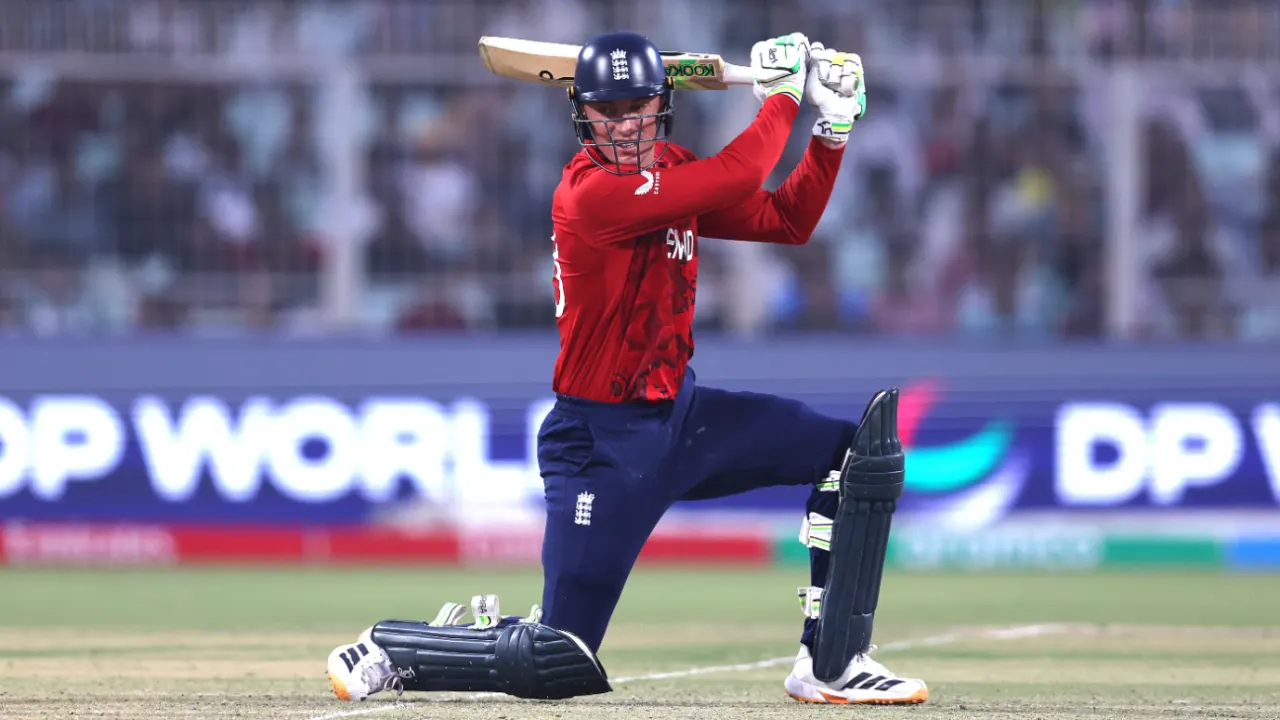
It was another nervy affair against an associate nation. But England’s Super Eight hopes remain on course after a five-wicket victory over Scotland in Eden Gardens, moving them up to second in Group C of this T20 World Cup with a game to play.
Tom Banton’s unbeaten 63 off 41 deliveries – his fourth T20I fifty – ultimately quelled a testy chase of 153, which began with openers Phil Salt and Jos Buttler falling inside the first two overs to nibbling seamers Brandon McMullen and Brad Currie.
Banton’s arrival triggered a vital 66-run stand with Jacob Bethell, and he was similarly engaging with Sam Curran for their partnership of 46 which brought the runs required below the number of balls remaining. Having managed just 4 from nine deliveries across knocks against Nepal and West Indies, Banton, who struck four fours and three sixes, watched on as Will Jacks smashed Brad Wheal for a six down the ground and then pulled the quick behind square to seal victory with 10 balls to spare.
Much like Nepal in England’s opening victory, Scotland will rue missed opportunities with the bat. They were dictating terms midway through the 13th over, with skipper Richie Berrington leading a 71-run stand with Tom Bruce. Berrington’s hard-hitting against spinners Adil Rashid and Liam Dawson which made amends for a stuttering powerplay of 42 for 3 after losing the toss. Jofra Archer was the key aggressor in those first six overs, finishing with 2 for 24 as he ticked over to 50 T20I dismissals.
When Dawson pocketed Bruce (24) and Rashid did for Berrington (49) in the space of four balls, England did not relent. Only four boundaries were scored in the remainder of the innings, with three of them to Oliver Davidson, which included a towering six over cow corner off Archer on his way to a T20I career-best 20 not out.
Having left runs out there, Scotland were always going to be up against it. Though they were gifted wickets, such as Harry Brook’s dismal flick over his shoulder to short fine leg for just 4, Banton’s brutal striking took England home in this first completed T20I between these Auld enemies.
Brief scores:
England 155 for 5 in 18.2 overs (Jacob Bethell 32, Tom Banton 63*, Sam Curran 28, Will Jacks 16*; Brandon McMullen 1-23, Brad Currie 1-21, Brad Wheal 1-23, Michael Leask 1-33, Oliver Davidson 1-12) beat Scotland 152 in 19.4 overs (Michael Jones 33, Richie Berrington 49, Tom Bruce 24, Oliver Davidson 20*; Jofra Archer 2-24, Jamie Overton 1-23, Sam Curran 1-33, Adil Rashid 3-36, Liam Dawson 2-34) by five wickets
[Cricinfo]
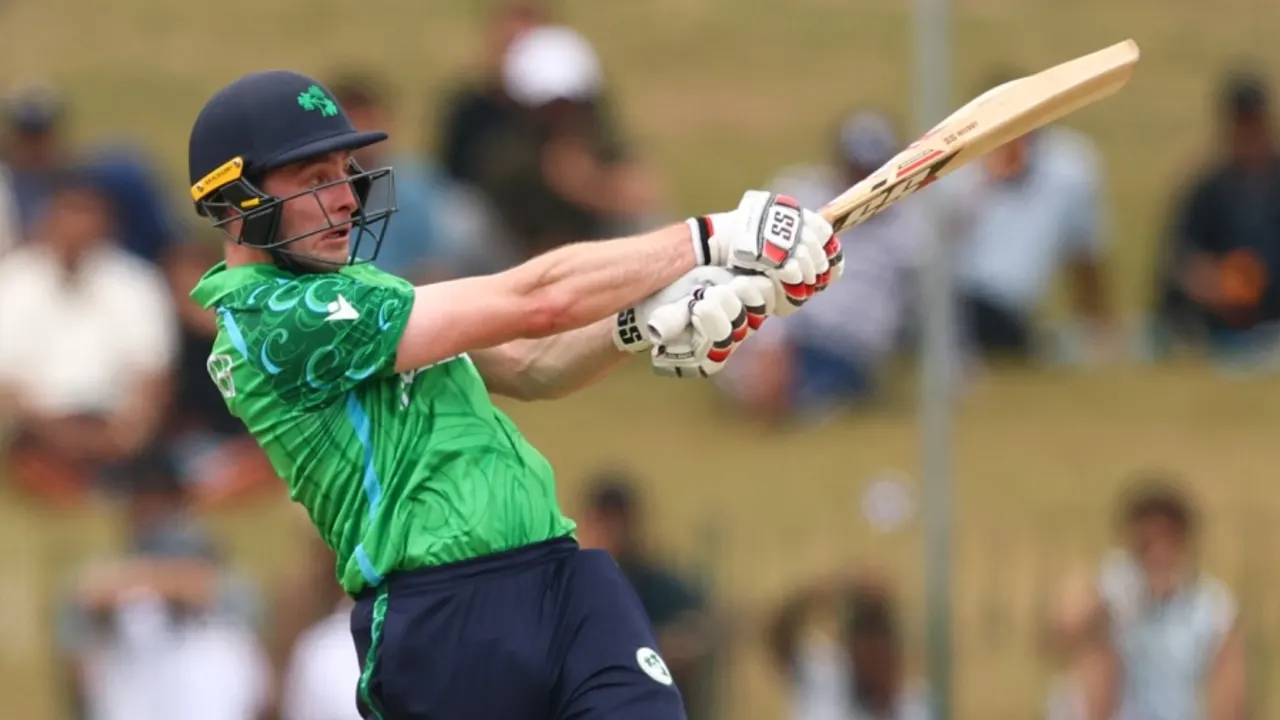
Ireland muscled the highest score of the 2026 T20 World Cup en route to a dominating win over Oman in Group C to keep their Super Eights hopes alive, at least mathematically.
Lorcan Tucker, standing in for the injured Paul Stirling, muscled 94 not out as Ireland walloped 235 for 5. They hammered eight sixes in the last three overs alone – more than Oman had in the tournament until then – and the last five overs produced 93 runs.
In response, Oman were bowled out for 139 with two overs left unused, the innings characterised by a rush of wickets following an early turbocharge from 44-year-old Aamir Kaleem, who muscled 50 off 29 balls.
Playing his first game of the competition, left-arm spinner Shakeel Ahmed struck thrice in the powerplay to leave Ireland in trouble at 45 for 3 after five overs. Each of the three wickets had a different skill at play: Tim Tector was dismissed with an arm-ball, Ross Adair was beaten in flight as he skied one to mid-off, and Harry Tector was bowled, done in by dip and turn.
There was more trouble for Ireland as Kaleem, also a left-arm spinner, struck to remove Curtis Campher in the eighth over. Two balls later, he should have had Tucker on 18, but for a missed stumping by Vinayak Shukla. Deceived in flight, Tucker seemed to have been stumped down leg, but third umpire Ahsan Raza deemed Shukla to have broken the bails with the hand in which he didn’t have the ball. Replays, though, seemed to indicate both gloves were in contact with each other. Had it been given, Ireland would have been 65 for 5.
For the first 14 overs, Oman’s mantra was pace off. And that meant Tucker had to adjust to a slow surface. Out went the agricultural heaves, out came the scoops and paddles. Tucker and Gareth Delany raised their half-century stand off just 33 deliveries, with Tucker getting to his half-century first with a ferocious sweep behind square off Kaleem. This was only the second half-century by an Irish captain, after Andy Balbirnie, in a men’s T20 World Cup.
With their spin options exhausted by 14 overs, Oman turned to their seam options in a bid to restrict Ireland. This is when Delany chose to leave his imprint on the game, muscling Jiten Ramanandi for two sixes off his first two deliveries in an 18-run over. Then he went after Faisal Shah, flat-batting a six off a slower-length ball to raise a 28-ball half-century. That was to be the start of the carnage that saw Ireland muscle 93 off the last five overs.
Tucker began the 18th over on 60 and ended it on 86 as he took apart Mohammad Nadeem with three sixes and two fours. Suddenly, a first century by an Irish batter at a men’s T20 World Cup loomed, but George Dockrell’s cameo – 35 not out off nine – provided the perfect finish. Ireland had smashed an incredible 156 off their last ten overs.
Jatinder Singh fell for his third low score, while Ashish Odedara, playing his first game, was run out taking a casual stroll. After two ordinary outings, Kaleem showed what he is capable of in a sensational powerplay take-down, reminiscent of his half-century against India at last year’s Asia Cup. When he got to a half-century, off just 28 deliveries, he became the oldest half-centurion in men’s T20 World Cup history. At 97 for 2 in the 11th over, Oman were well on track.
Then from 107 for 3, they slumped to 108 for 5 before Josh Little, the left-arm seamer, picked up the wickets of Ramanandi and Nadeem Khan to inflict further damage. By then, it looked increasingly likely Oman wouldn’t even bat their overs. And they didn’t, the margin of defeat of 96 runs, much bigger than it seemed when Kaleem set them up in the first half.
Brief scores:
Ireland 235 for 5 in 20 overs (Ross Adair 14, Harry Tector 14, Lorcan Tucker 94*, Curtis Campher 12, Gareth Delany 56, George Dockrell 35*; Shakeel 3-33) beat Oman 139 in 18 overs (Aamir Kaleem 50, Hammad Mirza 46, Sufiyan Mehmood 10; Mathew Humphreys 2-27, Barry McCarthy 2-32, Josh Little 3-16, George Dockrell 1-06) by 96 runs
[Cricinfo]

Two days out from a will-they-won’t-they India vs Pakistan contest, the weather in Colombo has largely been clear. But the Sri Lanka Department of Meteorology has warned of a low-pressure system developing in the Bay of Bengal, which indicates a high risk of rain that could disrupt the marquee World Cup game on Sunday evening.
The weather forecast for Sunday in the Khettarama area of Colombo, where the R Premadasa Stadium is located, shows warm and humid conditions to start the day, with temperatures peaking around 30° to 31°C. However, scattered thunderstorms are predicted throughout the afternoon, with a 50-70% chance of rain.
With the game set to begin at 7pm local time, some models suggest heavy thundershowers in the hours before the scheduled start, which might lead to a delayed toss, or a shortened game. While clouds are expected to linger, some forecasts indicate a slight clearing trend after 8pm, though isolated showers remain possible through the night.
The Premadasa, however, features a sophisticated drainage system and specialised ground staff protocols designed to handle Colombo’s tropical downpours. And unlike many international venues that only cover the pitch, the Premadasa has enough covers to protect the entire playing area. This prevents the outfield from soaking up water in the first place.
The staff also manually push water from one cover to the next until it reaches the perimeter drains. This method is often faster and more effective than using mechanical super soppers. Under standard conditions, the ground typically becomes fit for play within 45 to 60 minutes after heavy rain stops.
There’s also some rain expected the day before, on Saturday, which could disrupt India’s scheduled training session at the ground.
The weather in Colombo has otherwise been largely dry, making any rain unseasonal for this time of the year. So far, none of the matches in Sri Lanka of this T20 World Cup has been impacted by inclement weather, even though there have been a few close calls – such as Sri Lanka’s match against Oman, where rain was predicted but fell hours after the match ended.
Both India and Pakistan, meanwhile, currently have four points each after playing two games. But India are ahead in Group A due to a superior net run rate of 3.050 to Pakistan’s 0.932. If rain in Colombo forces a washout, both sides will get one point each as there is no reserve day for group-stage matches.
[Cricinfo]

Russia killed opposition leader Alexei Navalny using dart frog toxin, UK says

Tom Banton 63* sets up nervy win for England

Landslide Early Warnings issued to the districts of Kandy and Nuwara Eliya extended

Advisory for Severe Lightning issued to the Western, Sabaragamuwa and Southern provinces and Badulla and Nuwara-Eliya districts

Tucker 94* headlines Ireland’s thrashing of Oman

High risk of rain in marquee India vs Pakistan T20 World Cup game in Colombo

‘Dates have the highest sugar content to fight Coronavirus’

Sunday Island 27 December – Headlines

#SundayIsland 17th December – Headlines

Sunday Island – 28th March

Sunday Island Headlines – 21 March

Sunday Island – 21st February – Headlines
-

 Features7 days ago
My experience in turning around the Merchant Bank of Sri Lanka (MBSL) – Episode 3
-

 Business7 days ago
Remotely conducted Business Forum in Paris attracts reputed French companies
-
 Business7 days ago
Four runs, a thousand dreams: How a small-town school bowled its way into the record books
-

 Business7 days ago
ComBank and Hayleys Mobility redefine sustainable mobility with flexible leasing solutions
-

 Business4 days ago
Autodoc 360 relocates to reinforce commitment to premium auto care
-

 Midweek Review4 days ago
A question of national pride
-
 Opinion3 days ago
Will computers ever be intelligent?
-

 Midweek Review4 days ago
Theatre and Anthropocentrism in the age of Climate Emergency