
Editorial
Hobson’s choice for Zelensky?


Monday 3rd March, 2025
Ukrainian President Volodymyr Zelensky must be regretting that he ever tried to obtain NATO membership for his country and confronted Russia. Having received rousing welcomes in western capitals including Washington during Joe Biden’s presidency, he may not have expected to be thrown into a gauntlet at the White House last Friday. A meeting that was aimed at strengthening US-Ukraine relations and inking some agreements ended in disaster, with President Donald Trump and Vice President J.D. Vance berating Zelensky in full view of journalists before showing him the door. Trump told Zelensky in no uncertain terms that Ukraine would lose the ongoing war.
Zelensky apparently did not properly read Trump’s patronising remarks about his attire at the entrance to the White House, much less guard himself against his host’s volatile temper. Had he done so, he might have chosen to tread cautiously during their discussion on contentious issues. In his wisdom, he gave Trump and Vance an opportunity to castigate him.
President Trump has drawn fire from Europe for the way he treated Zelensky at the White House, but his assessment of Ukraine’s military strength and his prognostication about the war are bound to take their toll on the morale of the Ukrainian soldiers. There is no way Ukraine can sustain its military campaign against Russia effectively, without US help. Zelensky himself has said so.
European leaders have reportedly rallied behind Zelensky after his humiliation in Washington. European Union Foreign Policy Chief Kaja Kallas lost no time in declaring, “The free world needs a new leader’. The transatlantic alliance has thus suffered a serious setback. But there is little that Europe can do to contain Russia without US backing. Trump accused Zelensky of ‘gambling with World War III’, and therefore any country that aids Ukraine’s continued military campaign will be seen by Washington as being complicit in that dangerous pursuit!
Russian President Vladimir Putin has accused Europe of trying to sabotage rapprochement between Russia and the US. However, Trump is not doing Russia a favour by pressuring Ukraine to agree to a ceasefire. Besides his antipathy towards war, he does not want to keep pouring dollars into a bottomless pit in Ukraine; he is seeking to recover, through a deal on Ukraine’s minerals, what the US has spent. His approach to any issue is transactional; his focus is always on what’s in it for the US. His announcement that the US will acquire the Gaza strip is also case in point.
Russia’s aggression cannot be countenanced, but Zelensky should not have provoked Russia by recklessly furthering the interests of NATO and providing Moscow with a casus belli in the process. An experienced leader would have been mindful of the disastrous consequences of fighting a war with a military superpower.
Trump apparently has some other reasons for his refusal to help Ukraine unconditionally. He is not well-disposed towards NATO, which he considers a liability. In 2019, he failed to make Zelensky endorse his claims about wrongdoing on the part of some of his political rivals, and he faced impeachment over that. Trump has given a big boost to the Ukrainian Opposition by calling Zelensky a dictator and creating uncertainty about the continuation of the lifeline of US arms to Kyiv. The New York Times has reported that when Zelensky visited the White House, he was aware that the flow of weapons and military hardware from the US to Ukraine had essentially stopped.
Now that Trump has told Zelensky it is his way or the highway, chances are that the latter will have to agree to a ceasefire and a peace deal with Russia. Might is right in this world. The United Nations exemplifies the perversion of equality one comes across in Orwell’s dystopian, allegorical novella, Animal Farm. All countries are said to be equal, but, in reality, the permanent members of the UN Security Council are ‘more equal than’ others owing to their wealth and power. So, the outcomes of conflicts among nations are determined not by the notions of right and wrong or justice and fair play but by military strength and economic prowess of the parties thereto. Hence, the need for the not-so-powerful countries to come to terms with this reality and tread cautiously without endangering the lives of their people.



Wednesday 15th July, 2026
The JVP-NPP government’s efforts to increase the retirement ages of the judges of the Supreme Court (SC) and the Court of Appeal (CA) has triggered an avalanche of criticism. The Judicial Service Association of Sri Lanka (JSASL), which represents all District Court judges and Magistrates in the country, has also opposed the government move. It has written to President Anura Kumara Dissanayake, informing him of its decision. However, the government remains unresponsive.
Ironically, the JVP affronted elderly politicians and officials in previous administrations, claiming that they were past their productive years and therefore had to be put out to pasture. But no sooner had it formed a government in 2024 than it brought two former police officers, Ravi Seneviratne and Shani Abeysekera, out of retirement and elevated them as the Secretary to the Ministry of Public Security and the Director of the CID, respectively, because they were members of the NPP’s Retired Police Collective. Its action compromised the integrity of the CID and the Ministry of Public Security. Now, it is trying to extend the retirement ages of some members of the judiciary selectively.
Several leading lawyers’ associations, both local and foreign, prominent political leaders and legal luminaries have unequivocally taken exception to the government’s proposed plan to amend the Constitution to extend the tenure of the SC and CA judges. The Bar Association of Sri Lanka (BASL) is leading the campaign against the government plan at issue. Its arguments are cogent. The Colombo Law Society has also asked President Dissanayake not to proceed with the proposed constitutional amendment and warned that such a move could undermine public confidence in the judiciary. The Colombo High Court Lawyers’ Association has also called upon the government to abandon its controversial plan which, if implemented, will undermine judicial independence, disrupt career progression within the judicial service, and erode public confidence in the judiciary. The opponents of the government’s questionable move also include LAWASIA (the Law Association for Asia and the Pacific), which consists of regional association of lawyers, judges, jurists, legal academics and legal organisations in the Asia-Pacific region, and the Commonwealth Lawyers’ Association, which promotes the rule of law, an independent legal profession, access to justice, human rights and high standards of legal ethics.
All arguments put forth by the aforesaid legal associations are compelling. They have pointed out that a change benefiting sitting judges could create a perception of favouritism; judicial tenure is closely linked to the separation of powers and constitutional safeguards; any reform should follow broad consultation rather than a rushed constitutional amendment, and existing vacancies numbering four each in the SC and the CA, should be filled immediately through proper appointments rather than extending the tenure of current judges.
One may recall that in 2024, the then Speaker Mahinda Yapa Abeywardena told Parliament that following the resignation of President Gotabaya Rajapaksa at the height of Aragalaya, in July 2022, a foreign envoy and a group of Sri Lankans had striven to pressure him into appointing himself Acting President in violation of the Constitution, and their intention had been to plunge Sri Lanka into anarchy, like Libya. Tens of thousands of protesters were trying to march on Parliament at that time. The JVP has admitted that it sought to lead those protesters to Parliament. Luckily, Sri Lanka did not become Asia’s Libya in 2022, but four years on, under a JVP-led government, it runs the risk of facing the same fate as Zimbabwe!
Addressing a recent BASL public forum, CLA President Steven Thiru warned that Sri Lanka would risk repeating Zimbabwe’s judicial crisis if it went ahead with its controversial plan to extend the retirement ages of sitting judges arbitrarily. If Sri Lanka proceeded with an ad hoc, non-transparent extension of Superior Court judges’ tenure without a broad consultative process, it risked plunging its legal system into a crisis of legitimacy similar to that in Zimbabwe, he warned.
The government must abandon its ill-conceived plan to amend the Constitution to extend the tenure of the superior court judges. Instead, it must take steps to fill the vacancies in the SC and the CA. Let it be warned that missteps can lead to pratfalls.
Tuesday 14th July, 2026
Paddy farmers have refused to sell their produce to the Paddy Marketing Board (PMD) at the prices offered by the government. They are demanding better prices in view of increasing production costs, and their protests are gathering momentum. Their consternation is understandable. They backed the JVP-led NPP to the hilt, enabling it to win elections, expecting it to liberate them from the clutches of unscrupulous millers. Today, big-time rice millers are buying Rolls-Royces and helicopters while farmers are mortgaging their houses and tractors, unable to recover production costs.
Protesting farmers have claimed that although the government has offered to buy paddy, most of its warehouses still have stocks of paddy purchased during the Maha season. Even if storage facilities are available, the government can buy only 2% of the national paddy production, according to the PMD officials. So, how can the government make an effective market intervention to safeguard the interests of paddy farmers and consumers? It apparently does not explore other ways and means of preventing wealthy millers from exploiting paddy farmers and consumers.
Powerful rice millers, who bankroll election campaigns of main political parties, leverage their political connections to protect their interests. Reams have been written about how they manipulate governments to facilitate exploitation. They create rice shortages a few weeks before the commencement of every paddy harvesting period, prompting governments to import rice. Thereafter, they release some of their stocks into the market, bringing the prices of rice down so that they can buy paddy from farmers at very low prices. When their rice enters the market, imported rice in government warehouses rot and end up in breweries or animal feed factories. Governments, capitalist or socialist, are wary of antagonising the powerful millers for obvious reasons.
Curiously, President Anura Kumara Dissanayake has recently argued that Sri Lanka should diversify the uses of locally produced rice by manufacturing more value-added products. He has said rice can be used for producing beer and animal feed among other things. The government has cancelled a gazette notification that prohibited the use of rice as a raw material for beer and animal feed. Rice-based food products are common in this country, and the use of rice for manufacturing them does not adversely affect the public. However, the lifting of the aforesaid ban could lead to unforeseen problems.
The question is whether it is advisable to allow a water-intensive crop, raised with subsidised fertiliser, etc., to be used for manufacturing beer or animal feed when alternative raw materials are available. Is the government capable of regulating the paddy and rice markets to prevent a situation where the manufacturers of beer and animal feed will act in a way that may lead to a shortage of rice?
It is hoped that the government will be able to build sufficient buffer stocks of paddy, particularly in view of the current El Niño phenomenon, which is expected to adversely impact rainfall here. El Niño drastically changes predictable weather patterns and poses challenges for agriculture and water resources, experts have warned.
If the government is planning to divert a part of the local rice production to breweries and animal feed factories due to storage issues, as claimed in some quarters, it should seriously consider abandoning its plan and expanding its warehouse network by rebuilding the PMD storehouses, most of which went to wrack and ruin under UNP governments, following the 1977 regime change or were destroyed by the JVP during its second uprising in the late 1980s.
Minister Bimal Rathnayake has gone on record as saying that unlike in the past, today there are ‘tons and tons of money’ in the state coffers. If so, there is no reason why the government should not utilise a fraction of those funds to help the hapless farmers struggling to keep their heads above water and develop the PMD so that it will be able to regulate the paddy and rice markets and safeguard the interests of rice growers and consumers.
Monday 13th July, 2026
The government has come under heavy criticism over its decision to abandon a plan to convert the former Bogambara Prison, Kandy, into a modern hotel complex, restore the status quo ante and repurpose the Mahamodara Hospital, Galle, as a prison. Desperate times are said to call for desperate measures. Recent riots in the overcrowded Negombo Prison have jolted the government into addressing the issue of overcrowding.
Prison congestion did not arise after the 2024 regime change. Successive governments have let the grass grow under their feet, and the current dispensation has had to grasp the nettle; its difficulties need to be appreciated. The Opposition and other opponents of the aforesaid government move to set up new prisons in an ad hoc manner ought to stop protesting and propose alternative ways and means of managing the issue.
Overcrowding is one of the root causes of prison unrest and violence. Sri Lanka’s prisons are said to accommodate as many as 41,000 inmates or about 400% more than they are equipped to hold. It has been reported that the anti-drug campaigns and the resultant arrests have led to a huge increase in the number of prison inmates. Media reports, quoting the Department of Prisons, have placed the increase between 2021 and 2024 at a staggering 65%. Why no action was taken to address this problem earlier is the question.
The Negombo Prison, where riots snuffed out 28 lives including those of eight officers recently, was holding as many as 2,400 inmates at the time of the incidents whereas it has space and facilities only for 650 prisoners. Inmates become aggressive when they have no space for sleeping, and basic medical and hygienic facilities are scarce. So, it is high time the problem of prison overcrowding is tackled as a national priority. There could be a wave of copycat prison disturbances.
There are also other causative factors that need to be addressed urgently. The prison system is under immense strain owing to the ever-increasing remand prisoner population and prolonged custody due to judicial delays. Many suspects spend months, if not years, in prisons. Researchers have proposed solutions to the issues affecting prisons, but successive governments have ignored them. Action is called for to expedite trials and ensure that bail is granted wherever possible and adopt modern methods, such as using electronic ankle monitors where low-risk suspects are concerned.
The state ought to get rid of its overreliance on imprisonment for minor offences. Instead, it should consider rehabilitation, community-based supervision, as options, experts have suggested over the years. Sadly, the police and the Attorney General’s Department apparently do everything in their power to have the opponents of governments in power held on remand for extended periods to please their political masters. It has also become blatantly clear from the recent bout of prison riots that efforts so far made to curb drug trafficking in prisons have not yielded the desired results due to various factors, particularly corruption among prison officers. A solution to this issue will continue to elude the prison system unless intelligence gathering and surveillance are strengthened with modern technology being used to prevent organised crime suspects and convicts in prison from communicating with their associates outside.
Violence erupts in prisons also due to lack of proper classification of prisoners and action to hold them separately, as was the case in the Negombo Prison. Hardcore criminals must be separated from other inmates, and the so-called officer-to-inmate ratio has to be increased urgently. Worryingly, it has not been possible to recruit the required number of prison officers due to declining attractiveness of prison service and bureaucratic delays, Minister of Justice and National Integration Harshana Nanayakkara has recently told Parliament, explaining why the government has not been able to fill 1,300 vacancies in prison service. The recent murder of prison officers in Negombo is bound to make the government’s efforts even more difficult. Ensuring the safety of prison officers, enhancing their salaries and perks and providing them with better training may help make prison service attractive to the youth.
Prison reform initiatives have not brought about the intended results during the past several decades due to deficiencies therein. The need has arisen for a comprehensive, multi-pronged national prison reform strategy integrating judicial reform, sentencing policy, rehabilitation, staffing and infrastructural development, prisoner welfare and independent oversight. This is what the government and the Opposition should discuss in Parliament and at other fora, instead of locking horns and trading insults.
Prime land in urban centres, such as Colombo, Kandy and Galle, should be utilised for high-income-generating activities, and the prisons situated there should be relocated for security, economic and aesthetic reasons. One can only hope that the prisons to be set up at Bogambara and Mahamodara to ease overcrowding will serve as only stopgap measures until modern correctional facilities are built in appropriate locations.

Trump meets Iraq PM at White House, promises ‘a lot of deals’

A few showers may occur in the Western, Sabaragamuwa and North-western provinces and in Kandy, Nuwara-Eliya, Galle and Matara districts

Negombo Prison riot: No convicts among 21 inmates killed

2026: 128 elephants killed in first four-and-a-half months

Sigiriya Jungles marks 10 years with community medical camp

Protests continue in Valikamam North demanding military-held land

‘Dates have the highest sugar content to fight Coronavirus’

Sunday Island 27 December – Headlines

#SundayIsland 17th December – Headlines

Sunday Island – 28th March

Sunday Island Headlines – 21 March

Sunday Island – 21st February – Headlines
-
 News5 days ago
Herath warns prospective migrant workers not to get fleeced by racketeers
-
 Features3 days ago
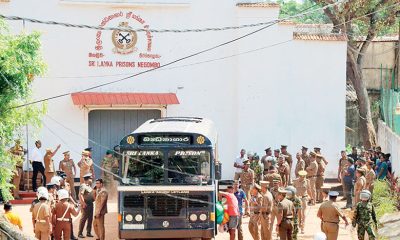
Prison riots and politics: NPP’s biggest challenge and Sri Lanka’s biggest opportunity
-

 Editorial4 days ago
What’s the world coming to?
-
 Foreign News5 days ago
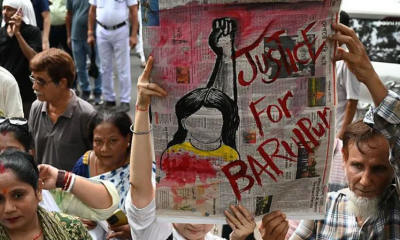
Tensions erupt in Indian state after 11-year-old raped and murdered
-
 Features5 days ago
Devanesan Annan – in Memoriam
-
 News6 days ago
Negombo Prison riot: Ensuring protection of prisoners fundamental responsibility of the state – UN
-
Editorial5 days ago
Punishment in hellholes
-

 News6 days ago
Representatives of the Organization of Professional Associations (OPA) of Sri Lanka meet the Prime Minister