
Business
HNB enhances facilities to MSMEs in agriculture sector

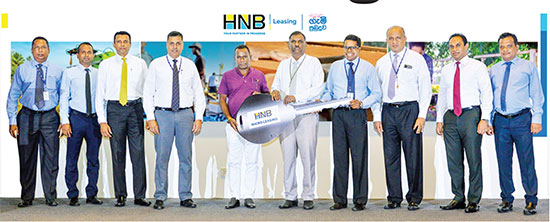
CBSL Deputy Governor H.A. Karunaratne with the first Micro Finance Customer Mahinda Abegunawardane of HNB Ambalangoda Customer Centre as (from left) HNB Regional Credit Head- Southern Shalindra Karunarathne, HNB Relationship Officer- Micro Finance Southern Region Chathuranga Welivita, HNB Head of Personal Financial Services Kanchana Karunagama, HNB Deputy General Manager – Retail & SME Banking Sanjay Wijemanne, HNB Executive Director/Chief Operating Officer Dilshan Rodrigo, HNB Head of Micro Finance Vinodh Fernando, Head of Leasing Niluka Amarasinghe and HNB Manager – Micro Finance Southern Region Rohana Yagamuni look on.
In a bid to enhance growth opportunities available for agricultural Micro, Small and Medium Enterprises (MSME), HNB PLC, launched the Micro Leasing facility anchored to a myriad of benefits and opportunities for entrepreneurs.
Working in line with initiatives drawn by the Central Bank of Sri Lanka (CBSL) to strengthen the sector, HNB will ensure customers can further enhance their entrepreneurial capabilities. The facility will also provide customers access to an extensive range of deals and benefits from the bank’s wide portfolio of merchant partners.
“For Sri Lanka to achieve long term sustainable growth, it is vital that we empower the MSME sector, which contributes an estimated 52% to the GDP. As the regulator, we believe this can be done by equipping our entrepreneurs with the necessary capital while simultaneously improving their financial literacy.
“Therefore, I wish to thank HNB for the initiatives taken over the past few years through the Gami Pubuduwa campaign and for launching this facility, which will provide entrepreneurs with the opportunity to grow their businesses in a sustainable manner,” CBSL Deputy Governor H.A. Karunaratne stated.
Working through its 175 strong microfinance officers stationed across the country’s grassroots, HNB has facilitated growth in the sector through its Gami Pubuduwa initiative. The bank will lend the same support for its leasing customers by organising curated sessions to enhance value chain development and capacity building skills in collaboration with skills development organisations.
Additionally, customers can use the bank’s flexible payment schemes, customised to their repayment capabilities.
HNB Executive Director/Chief Operating Officer Dilshan Rodrigo, speaking at the event, said: “This is indeed a very proud moment for us as we are unveiling a new product for the agriculture sector. HNB has worked with over 10,000 MSME customers through the Gami Pubuduwa initiative and we hope to expand this supportive network to others through this new facility.
“We are looking forward to supporting and enhancing the capabilities of businesses affected by the pandemic and those created because of it by facilitating a common platform for our corporate clientele and the medium and small rural customers to establish and foster supply chains for an export-oriented economy. We are delighted to be launching this facility and hope to see our customers make use of this opportunity to grow their businesses during these challenging times.”
Notably, the bank will on-board all customers using the facility on its digital platforms such as HNB SOLO, MOMO and Appigo, improving the availability of convenient payment solutions in the sector. Furthermore, HNB offers a seamless one-day approval process supported by its state-of-the-art backend systems. Customers availing themselves of the facility are entitled to a free life insurance cover of Rs.4.5 million. The insurance is also anchored to discounted premiums from HNB General Insurance.
(HNB)





Reliable and affordable energy is essential to Sri Lanka’s economic growth, industrial development and competitiveness. As the country seeks to strengthen energy security while reducing its dependence on fossil fuels, the energy sector will be a key area of discussion at the Sri Lanka Economic & Investment Summit 2026, organised by The Ceylon Chamber of Commerce on 12-13 October 2026.
The session, “Beyond Fossil Dependence: Balancing Security, Sustainability, and Growth,” will examine how Sri Lanka can diversify its energy sources, accelerate renewable energy adoption and attract investment while ensuring a reliable energy supply for businesses and households. Discussions will also consider the infrastructure and policy frameworks needed to support the country’s transition towards a modern and competitive energy system.
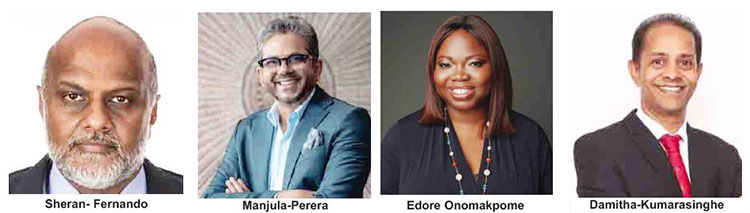
Ms. Edore Onomakpome – Regional Infrastructure Industry Manager – Bangladesh, Sri Lanka and Nepal, at the International Finance Corporation will keynote the session, and join the panel discussion featuring G.M.R.D. Aponsu – Secretary to the Ministry of Energy, Damitha Kumarasinghe – Director General (Chief Executive Officer), Public Utilities Commission of Sri Lanka, and Manjula Perera – Managing Director, WindForce PLC. The discussion will be moderated by Sheran Fernando – Senior Advisor, Plus94.
The session will also explore the role of public-private collaboration in developing new energy solutions, encouraging investment and creating opportunities within Sri Lanka’s evolving energy sector. It will consider how energy policy and investment decisions can support both economic expansion and the country’s longer-term sustainability objectives.
The Sri Lanka Economic & Investment Summit 2026 is supported by its valued sponsors and partners. Platinum Sponsor – Standard Chartered Bank Sri Lanka, Gold Sponsor – VISA Worldwide (Pvt) Ltd., Bronze Sponsor – South Asia Gateway Terminals (Pvt) Ltd., Strategic Development Partner – Asian Development Bank, Telecommunication Partner – Dialog Telecommunication, Television Partner – Dialog Television, Session Sponsors – David Pieris Motor Company (Pvt) Ltd., Hemas Holdings PLC, Sunshine Holdings PLC, International Construction Consortium (Pvt) Ltd., Official Logistics Partner – Hayleys Advantis Limited, Official Airline – SriLankan Airlines Ltd., Official Hospitality Partner – Shangri-La Colombo, Airline Partner – China Eastern Air Holding Co. Ltd.
Registrations are now open at https://sleis.chamber.lk/. For more information, contact Alikie on 011 558 8805 (alikie@chamber.lk) or Shanuka on 0701082541 (events.division@chamber.lk).
Business
A fresh chapter for the George Keyt Foundation: A renewed commitment to the Sri Lankan art ecosystem

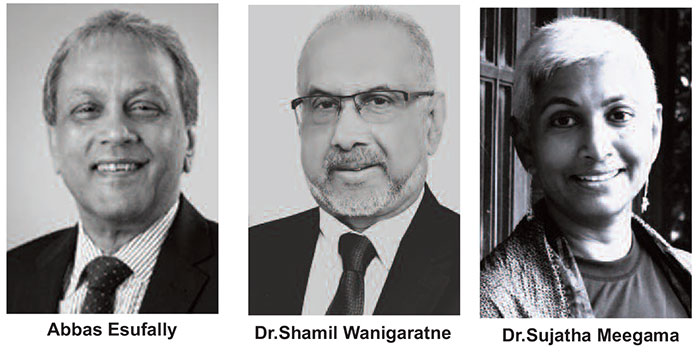
The George Keyt Foundation (GKF), dedicated to preserving the legacy of modernist painter George Keyt and fostering local art, has announced strategic appointments to its leadership team, bringing together a mix of global academic expertise, corporate leadership, and artistic passion. These enhancements aim to inject fresh expertise and academic depth into the Foundation’s long-term vision.
Establishment of the New Advisory Committee
To broaden its operational reach and deepen its engagement with the global art market, the George Keyt Foundation has established an Advisory Committee. The newly appointed committee members include:
• Dr Sujatha Meegama is a Senior Lecturer in Buddhist Art History at the Courtauld. She is an acclaimed art historian, author and academic, bringing specialised knowledge in South Asian art history to guide the foundation’s curatorial and educational directives.
• Dr Shamil Wanigaratne: A clinical psychologist, author, and avid art historian, Shamil will lend his unique perspective to help the foundation design meaningful public outreach and cultural preservation strategies.
• Abbas Esufally: A veteran corporate leader and patron of the arts, Abbas is transitioning from his role as a GKF Trustee to this advisory position, where he will continue to offer his sharp business acumen and extensive network.
New Trustee Appointment
Leesha Captain has been appointed to the Board of Trustees. Inspired by Sri Lankan artists, Leesha is a recognised supporter of the local art scene. Leesha’s hands-on perspective will strengthen the foundation’s core team as they develop and design new art programs.
A Vision for the Future
“These new appointments mark an exciting chapter for us as we build on our decades-long history of promoting Sri Lankan artists,” says Malaka Talwatte, Chairman of the Foundation. “The combination of Leesha on the board, alongside the diverse expertise of our new Advisory Committee, will significantly amplify our efforts in curating high-profile exhibitions and expanding local and international partnerships”.
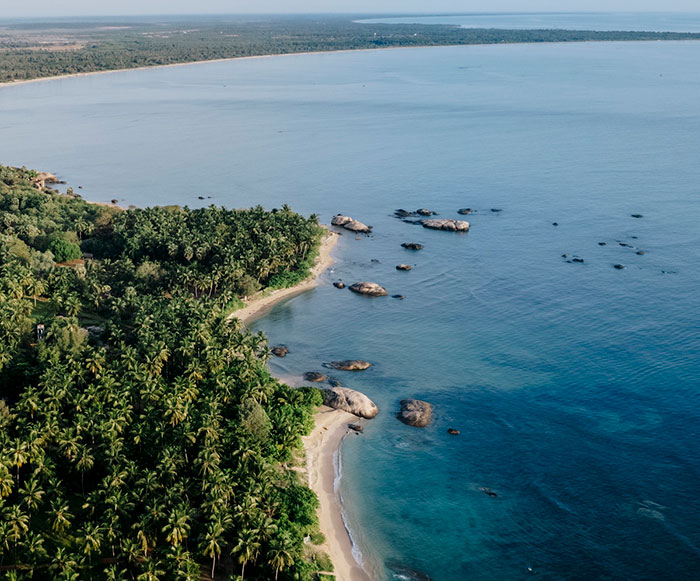
Sun Siyam Pasikudah, part of the Privé Collection under Maldivian-owned Sun Siyam Resorts, will mark World Tourism Day on 27 September 2026 with a full day programme celebrating the culture, cuisine and natural beauty of Sri Lanka’s east coast, paired with community focused sustainability activities.
The celebrations open with a special buffet of authentic Sri Lankan cuisine, followed by a street food festival showcasing regional snacks and traditional sweets rarely found on resort menus. A signature World Tourism Day mocktail and cocktail, created for the occasion, will be served through the day, while traditional Sri Lankan cultural dance performances bring the island’s heritage to life for guests.
Beyond the festivities, the resort has planned a tree planting activity with guests and a beach or park clean up campaign, both reflecting Sun Siyam Pasikudah’s ongoing commitment to responsible tourism along Sri Lanka’s northeast coast.

Thileepan rembered on 39th death anniversary

Landslide Early Warnings issued to the districts of Colombo, Galle, Gampaha, Hambanthota, Kalutara, Kandy, Kegalle, Kurunegala, Matara, Nuwara Eliya and Ratnapura

Showers in the Western, Uva and Sabaragamuwa provinces and in Galle, Matara, Kandy, Nuwara-Eliya, Batticaloa and Ampara districts.

22A, Judicature Amendment Bills passed with 2/3 majority

TIN mandatory for key transactions from Nov. 1

Navy brings 25 Indonesian fishermen ashore after trawler capsizes

‘Dates have the highest sugar content to fight Coronavirus’

Sunday Island 27 December – Headlines

#SundayIsland 17th December – Headlines

Sunday Island – 28th March

Sunday Island Headlines – 21 March

Sunday Island – 21st February – Headlines
-

 News7 days ago
Namal Rajapaksa Buddhist gambit fails, bail denied
-

 Features7 days ago
Why the spelling Sri Lankan names in English vary
-

 Features7 days ago
Three bands, a new identity: Sri Lankan wolf snake recognised as distinct species
-
 Business7 days ago
SLIIT holds largest-ever convocation
-

 News7 days ago
Vehicle prices drop by up to Rs. 1 mn, says importers’ body
-

 News7 days ago
Govt monitors reported Saudi death sentence – Foreign Ministry
-
 Business7 days ago
Lanka’s famed beach shack battles demolition
-

 Business7 days ago
All-new Bolero MaXX Pik-Up unveiled in Lanka