
Features
History of St. Sebastian’s Shrine, Kandana


By Godfrey Cooray
Ambassador of Sri Lanka to Norway, Finland and Iceland
According to legend, St. Sebastian was born at Narbonne in Gaul. He became a soldier in Rome and encouraged Marcellian and Marcus who were sentenced to death to remain firm in their faith. St. Sebastian made several converts; among them were master of the rolls Nicostratus, who was in charge of prisoners and his wife, Zoe, a deaf mute whom he cured.
Sebastian was named captain in the Roman Army by Emperor Diocletian, as Emperor Maximian went to the east. Neither knew that Sebastian was a Christian. When it was discovered that Sebastian was indeed a Christian, he was ordered to be executed. He was shot with arrows and left to die but when the widow of St. Castulas went to recover his body, she found out that he was still alive and nursed him back to health. Soon after his recovery, St. Sebastian intercepted the Emperor; denounced him for his cruelty to Christians and was beaten to death on the Emperor’s order.
St. Sebastian was venerated in Milan as early as the time of St. Ambrose. St. Sebastian is the patron of archers, athletes, soldiers, the Saint of the youths and is appealed to protection against the plagues. St. Ambrose reveals that the parents young Sebastian were living in Milan as a noble family. St. Ambrose further says that Sebastian along with his three friends, Pankasi, Pulvius and Thorvinus completed his education successfully with the 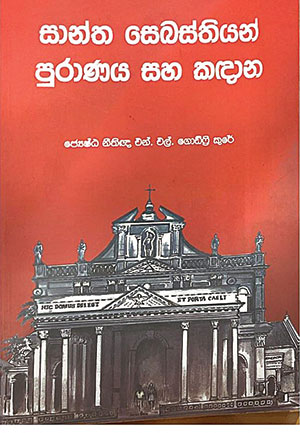 blessing of his mother, Luciana. Rev. Fr. Dishnef guided him through his spiritual life. From his childhood, Sebastian wanted to join the Roman Army and with the help of King Karnus, young Sebastian became a soldier. Within as short span of time he was appointed as the Commander of the Army of king Karnus. Emperor Diocletian declared Christians the enemy of the Roman Empire and instructed judges to punish Christians who have embraced the Catholic Church. Young Sebastian as one of the servants of Christ converted thousands of other believers into Christians. When Emperor Diocletian revealed that Sebastian had become a Catholic, the angery Emperor ordered for Sebastian to be shot to death with arrows. After being shot, one of Sebastian supporters, Irane, treated him and cured him. When Sebastian was cured, he came to Emperor Diocletian and professed his faith for the second time disclosing that he is a servant of Christ. Astounded by the fact that Sebastian is a Christian, Emperor Diocletian ordered the Roman Army to kill Sebastian with club blows.
In the liturgical calendar of the Church, the feast of the St. Sebastian is celebrated on 20th of January. This day is, indeed, a mini Christmas to the people of Kandana, irrespective of their religion. The feast commences with the hoisting of the flag staff on the 11th of January at 4 p.m. at the Kandana junction, along the Colombo- Negombo road. There is a long history attached to the flag staff. The first flag staff which was an ariecanut tree, 25 feet tall was hoisted by the Aththidiya family of Kandana and today their descendants continue hoisting of the flag staff as a tradition. This year’s flag staff too was hoisted by the Raymond Aththidiya family. Several processions originating from different directions carrying flags meet at this flag staff junction. The pouring of milk on the flag staff has been a tradition in existence for a long time. The Nagasalan band was introduced by a well-known Jaffna businessman that had engaged in business in Kandana in the 1950s. The famous Kandaiyan Pille’s Nagasalan group takes the lead even today in the procession. Kiribath Dane in the Kandana town had been a tradition from the time immemorial.
According to the available history from the Catholic archives and volume III of the Catholic Church in Sri Lanka, the British period of vicariates of Colombo written by Rev. Ft. Vito Perniola SJ in 1806 states that the British government granted the freedom of conscious and religion to the Catholics in Ceylon and abolished all the anti-Catholic legislation enacted by the Dutch. The proclamation was declared and issued on the 3rd of August 1796 by Colonel James Stuart, the officer commanding the British forces of Ceylon stated “freedom granted to Catholics” (Sri Lanka national archives 20/5).
Before the Europeans, the missioners were all Goans from South India. In the year 1834, on the 3rd of December, XVI Gregory the Pope, issued a document Ex Muwere pastoralis ministeric, after which the Ceylon Catholic Church was made under the South Indian Cochin diocese. Very Rev. Fr. Vincent Rosario, the Apostolic VicarGeneral, was appointed along with 18 Goan priests (The Oratorion Mission in Sri Lanka being a history of the Catholic Chruch 1796-1874 by Arthur C Dep Chapter 11 pg 12) Rev Fr. Joachim Alberto arrived in Sri Lanka as missionary on the 6th of March 1830 when he was 31 years old and he was appointed to look after Catholics in Aluthkuru Korale consisting Kandana, Mabole, Nagodaa and Ragama. There have been one church built in 1810 in Wewala about three miles away from Kandana. Wewala Chruch was situated bordering Muthurajawela which rose to fame for its granary. History reveals that the entire area was under paddy cultivation of which most of them were either farmers or toddy tappers. History further reveals that there have been an old canal built by King Weera Parakrama Bahu. Later it was built to flow through the Kelani River and Muthurajawela up to Negombo which was named as the Dutch Canal (RL Brohier historian).
During the British time this canal was named as Hamilton Canal and was used to transport toddy, spices, paddy and tree planks of which tree planks were stored in Kandana. Therefore, Kandana name derives from “Kandan Aana”.
Rev. Fr. Joachim Alberto purchased a small piece of land called Haamuduruwange watte at Nadurupititya in Kandana and put up a small cadjan chapel and placed a picture of St. Sebastian for the benefit of his small congregation. In 1837 with the help of the devotees, he dug a small well of which water was used for drinking and bathing and today this well is still operative. He bought several acres of land including the present cemetery premises. Moreover, he had put up the church at Kalaeliya in honour of his patron St. Joachim where his body has been laid to rest according to his wish of the Last will attested by Weerasinghe Arachchige Brasianu Thilakaratne. Notary public dated 19th of July 1855. Present Church was built on the property bought on the 13th of August 1875 on deed no. 146 attested by Graciano Fernando. Notary public of the land Gorakagahawatta Aluthkuru Korale Ragam Pattu in Kandana within the extend ¼ acre from and out of the 16 acres. According to the old plan number 374 made by P.A. H. Philipia, Licensed surveyor on the 31st of January 195, 9 acres and 25 perches belonged to St. Sebastian church. However, today only 3 acres, 3 roods and 16.5 perches are left according to plan number 397surveyed by the same surveyor while the rest had been sold to the villagers. According to the survey conducted by Orithorian priest on the 12th of February 1844 there were only 18 school-going Catholic students in AluthKuru Korale and only one Antonio was the teacher for all classes. In 1844 there was no school at Kandana (APF SCG India Volume 9829).
According to Sri Lanka National Archives (The Ceylon Almanac page 185) in the year 1852 there were 982 Catholics – Male 265, female 290, children 365 with a total of 922. According to the census reports in 2014 prepared by Rev. Ft. Sumeda Dissanayake TOR, the director Franciscan Preaching group, Kadirana Negombo a survey revealed that there are 13,498 Catholics in Kandana.
According to the appointment of the Missionaries in the year 1866-1867 by Bishop Hillarien Sillani, Rev. Fr. Clement Pagnani OSB was sent to look after the missions in Negoda, Ragama, Batagama, Tudella, Kandana, Kala Eliya and Mabole. On the 18th of April 1866, the building of the new church commenced with a written agreement by and between Rec. Fr. Clement Pagnani and the then leaders of Kandana Catholic Village Committee. This committee consisted of Kanugalawattage Savial Perera Samarasinghe Welwidane, Amarathunga Arachchige Issak Perera Appuhamy, Jayasuriya Arachchige Don Isthewan Appuhamy, Jayasuriya Appuhamylage Elaris Perera Muhuppu, Padukkage Andiris Perera Opisara, Kanugalawattage Peduru Perera Annavi and Mallawa Arachchige Don Peduru Appujamy. The said agreement stated that they will give written undertaking that their labour and money will be utilised to build the new church of St. Sebastian and if they failed to do so they were ready to bear any punishment which will be imposed by the Catholic Church.
Rev. Fr. Bede Bercatta’s book “A History of the Vicariate of Colombo page 359” says that Rev. Fr. Stanislaus Tabarani had problems of finding rock stones to lay the foundation. He was greatly worried over this and placed his due trust in divine providence. He prayed for days to St. Sebastian for his intercession. One morning after mass, he was informed by some people that they had seen a small patch of granite at a place in Rilaulla, close to the church premises although such stones were never seen there earlier and requested him to inspect the place. The parish priest visited the location and was greatly delighted as his prayers has been answered. This small granite rock provided enough granite blocks for the full foundation of the present church. This place still known as “Rilaulla galwala”. The work on the building proceeded under successive parish priests but Rev. Fr. Stouter was responsible for much of it. The façade of the church was built so high that it crashed on the 2nf of April of 1893. The present façade was then built and completed in the year 1905. The statue of St. Sebastian which is behind the altar had been carved off a “Madan tree”. It was done by Paravara man named Costa Mama, who was staying with a resident named Miguel Baas a Ridualle, Kandana. This statue was made at the request of Pavistina Perera Amaratunge, mother of former Member of Parliament gate muadliyer D. Panthi Jayasuriya. The church was completed during the time of Rev. Fr. Keegar and was blessed by then Archbishop of Colombo Dr. Anthony Courdert OMI on the 20th of January 1912. In 1926, Rev. Fr. Romauld Fernando was appointed as the parish priest to Kandana Church. He was an educationalist and a social worker. Without any hesitation he can be called as the father of education in Kandana. He was the pioneer to build three schools to Kandana: Kandana St. Sebastian Boys School, Kandana St. Sebastian English Girls School and, the Mazenod College Kandana. Later he was appointed as the principal of the St. Sebastian Boys English School. He bought a property at Kandana close to Ganemulla road and started De Mazenod College. Later, it was given officially to Christian Brothers of Sri Lanka, by then Archbishop of Colombo, Peter Mark. In 1931, there were three hundred students (history of De Lasalle brothers by Rev. Fr. Bro Michael Robert). Today, there are over three thousand five hundred students and is one of the leading catholic schools in Sri Lanka. In 1924, one Karolis Jayasuriya Widanage donated two acres to build De Mazenod College for its extension.
First priest from Kandana to be ordained was Rev. Fr. William Perera in 1904. With the help of Rev. Fr. Marcelline Jayakody, he composed the famous hymn “the Vikshopa Geethaya”, the hymn of our Lady of Sorrow.
The Life story of St. Sebastian was portrayed through a stage play called “Wasappauwa” and the world famous German passion play Obar Amargave wchi was a sensation was initiated by Rev. Fr. Nicholas Perera. Legend reveals that in the year 1845, a South Indian catholic on his way to meet his relatives in Colombo had brought down a wooden statue of St. Sebastian, one and half feet tail to be sold in Sri Lanka. When he reached Kalpitiya he had unexpectedly contracted malaria. He had made a vow at St. Anne’s church. Thalawila expecting a full recovery. In route to Colombo he had come to know about the church in Kandana and dedicated to St. Sebastian. In the absence of the then parish priest Rev. Fr. Joachim Alberto, the Muhuppu of the Church with the help of the others had agreed to buy the statue for 75 pathagas (one pahtaga was 75 cent). Even though the seller had left the money in the hands of the “Muhuppu” to be collected in the meantime he never returned.
On the 19th of January 2006, Archbishop Oswald Gomis declared St. Sebastian Church as “St. Sebastian Shrine” by way of special notification and handed over the declaration to Rev. Fr. Susith Perera, the parish priest of Kandana.
On the 12th of January 2014, Catholics in Sri Lanka celebrated the reception of a reliquary containing a fragment of the arm of St. Sebastian. The reliquary was gifted from the administrator of the Basilica of St. Anthony of Padua and was brought to Sri Lanka by Monsignor Neville Perera. His Eminence Malcolm Cardinal Ranjit, Archbishop of Colombo accompanied by priests and a large gathering received the relic at the Katunayake International Airport, brought to Kandana lead by a procession and was enthroned at the St. Sebastian Shrine.
Rev. Fr. Lalith Expeditus the present administrator of the shrine and other two assistant priests Rev. Fr. Sunath Udara and Fr. Sumeda Perea have finalized all arrangements to conduct the feast of St. Sebastian in grand scale. The vespers service will be officiated by his Eminence Malcolm Cardinal Ranjit and the festival high mass will be solemnized by most Rev. his Lordship J.D. Anthony, Auxiliary Bishop of Colombo.
The latest book written by Senior Lawyer Godfrey Cooray named “Santha Sebastian Puranaya Saha Kandana”. (The history of St. Sebastian and Kandana) was launched at De La Salle Auditorium De Mazenod College, Kandana.
The Archbishop of Colombo His Eminence Malcolm Cardinal Ranjith and former Chief Justice Priyasath Dep were the guests at the event.
The book discusses about the buried history of Muthurajawela and Aluth Kuru Korale civilization, the history of Kandana and St. Sebastian. The author discusses the historical and archaeological values and culture.


In politics, there is the grand language and the simple words. As they say in North America, you don’t need a $20-word or $50-word where a simple $5-world will do. There is also the formal and the functional. People of different categories can functionally get along without always needing formal arrangements involving constitutional structures and rights declarations. The latter are necessary and needed to protect the weak from the bullies, especially from the bullying instruments of the state, or for protecting a small country from a Trump state. In the society at large, people can get along in their daily lives in spite of differences between them, provided they are left alone without busybody interferences.
There have been too many busybody interferences in Sri Lanka in all the years after independence, so much so they exploded into violence that took a toll on everyone for as many as many as 26 (1983-2009) years. The fight was over grand language matters – selective claims of history, sovereignty assertions and self-determination counters, and territorial litigations – you name it. The lives of ordinary people, even those living in their isolated corners and communicating in the simple words of life, were turned upside down. Ironically in their name and as often in the name of ‘future generations yet unborn’ – to recall the old political rhetoric always in full flight. The current American anti-abortionists would have loved this deference to unborn babies.
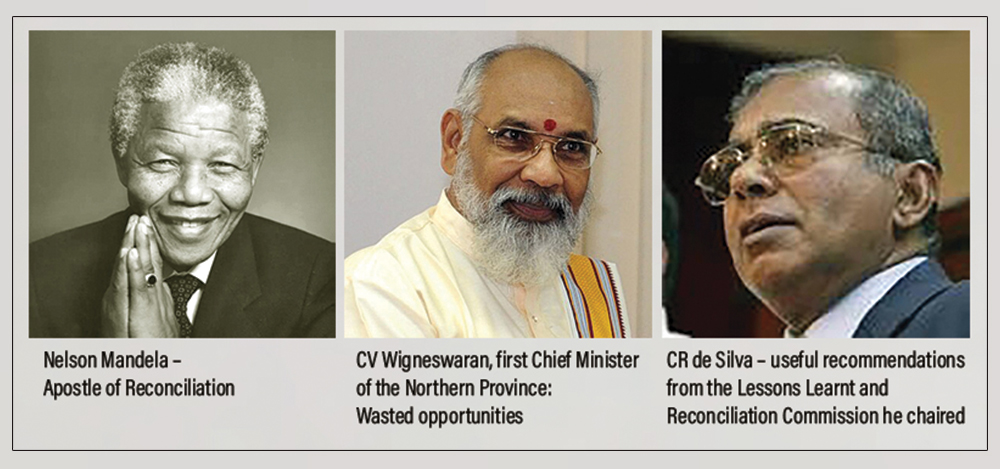
At the end of it all came the call for Reconciliation. The term and concept are a direct outcome of South Africa’s post-apartheid experience. Quite laudably, the concept of reconciliation is based on choosing restorative justice as opposed to retributive justice, forgiveness over prosecution and reparation over retaliation. The concept was soon turned into a remedial toolkit for societies and polities emerging from autocracies and/or civil wars. Even though, South Africa’s apartheid and post-apartheid experiences are quite unique and quite different from experiences elsewhere, there was also the common sharing among them of both the colonial and postcolonial experiences.
The experience of facilitating and implementing reconciliation, however, has not been wholly positive or encouraging. The results have been mixed even in South Africa, even though it is difficult to imagine a different path South Africa could have taken to launch its post-apartheid era. There is no resounding success elsewhere, mostly instances of non-starters and stallers. There are also signs of acknowledgement among activists and academics that the project of reconciliation has more roadblocks to overcome than springboards for taking off.
Ultimately, if state power is not fully behind it the reconciliation project is not likely to take off, let alone succeed. The irony is that it is the abuse of state power that created the necessity for reconciliation in the first place. Now, the full blessing and weight of state power is needed to deliver reconciliation.
Sri Lanka’s Reconciliation Journey
After the end of the war in 2009, Sri Lanka was an obvious candidate for reconciliation by every objective measure or metric. This was so for most of the external actors, but there were differences in the extent of support and in their relationship with the Sri Lankan government. The Rajapaksa government that saw the end of the war was clearly more reluctant than enthusiastic about embarking on the reconciliation journey. But they could not totally disavow it because of external pressure. The Tamil political leadership spurred on by expatriate Tamils was insistent on maximalist claims as part of reconciliation, with a not too subtle tone of retribution rather than restoration.
As for the people at large, there was lukewarm interest among the Sinhalese at best, along with strident opposition by the more nationalistic sections. The Tamils living in the north and east had too much to do putting their shattered lives together to have any energy left to expend on the grand claims of reconciliation. The expatriates were more fortuitously placed to be totally insistent on making maximalist claims and vigorously lobbying the western governments to take a hardline against the Sri Lankan government. The singular bone of contention was about alleged war crimes and their investigation, and that totally divided the political actors over the very purpose of reconciliation – grand or simple.
By far the most significant contribution of the Rajapaksa government towards reconciliation was the establishment of the Lessons Learnt and Reconciliation Commission (LLRC) that released its Report and recommendations on December 16, 2011, which turned out to be the 40th anniversary of the liberation of Bangladesh. I noted the irony of it in my Sunday Island article at that time.
Its shortcomings notwithstanding, the LLRC Report included many practical recommendations, viz., demilitarization of the North and East; dismantling of High Security Zones and the release of confiscated houses and farmland back to the original property owners; rehabilitation of impacted families and child soldiers; ending unlawful detention; and the return of internally displaced people including Muslims who were forced out of Jaffna during the early stages of the war. There were other recommendations regarding the record of missing persons and claims for reparation.
The implementation of these practical measures was tardy at best or totally ignored at worst. What could have been a simple but effective reconciliation program of implementation was swept away by the assertion of the grand claims of reconciliation. In the first, and so far only, Northern Provincial Council election in 2013, the TNA swept the board, winning 30 out of 38 seats in provincial council. The TNA’s handpicked a Chief Minister parachuted from Colombo, CV Wigneswaran, was supposed to be a bridge builder and was widely expected to bring much needed redress to the people in the devastated districts of the Northern Province. Instead, he wasted a whole term – bandying the claim of genocide and the genealogy of Tamil. Neither was his mandated business, and rather than being a bridge builder he turned out to be a total wrecking ball.
The Ultimate Betrayal
The Rajapaksa government mischievously poked the Chief Minister by being inflexible on the meddling by the Governor and the appointment of the Provincial Secretary. The 2015 change in government and the duopolistic regime of Maithripala Sirisena as President and Ranil Wickremesinghe as Prime Minister brought about a change in tone and a spurt for the hopes of reconciliation. In the parliamentary contraption that only Ranil Wickremesinghe was capable of, the cabinet of ministers included both UNP and SLFP MPs, while the TNA was both a part of the government and the leading Opposition Party in parliament. Even the JVP straddled the aisle between the government and the opposition in what was hailed as the yahapalana experiment. The experiment collapsed even as it began by the scandal of the notorious bond scam.
The project of reconciliation limped along as increased hopes were frustrated by persistent inaction. Foreign Minister Mangala Samaraweera struck an inclusive tone at the UNHRC and among his western admirers but could not quite translate his promises abroad into progress at home. The Chief Minister proved to be as intransigent as ever and the TNA could not make any positively lasting impact on the one elected body for exercising devolved powers, for which the alliance and all its predecessors have been agitating for from the time SJV Chelvanayakam broke away from GG Ponnambalam’s Tamil Congress in 1949 and set up the Ilankai Tamil Arasu Kadchi aka the Federal Party.
The ultimate betrayal came when the TNA acceded to the Sirisena-Wickremesinghe government’s decision to indefinitely postpone the Provincial Council elections that were due in 2018, and let the Northern Provincial Council and all other provincial councils slip into abeyance. That is where things are now. There is a website for the Northern Provincial Council even though there is no elected council or any indication of a date for the long overdue provincial council elections. The website merely serves as a notice board for the central government’s initiatives in the north through its unelected appointees such as the Provincial Governor and the Secretary.
Yet there has been some progress made in implementing the LLRC recommendations although not nearly as much as could have been done. Much work has been done in the restoration of physical infrastructure but almost all of which under contracts by the central government without any provincial participation. Clearing of the land infested by landmines is another area where there has been much progress. While welcoming de-mining, it is also necessary to reflect on the madness that led to such an extensive broadcasting of landmines in the first place – turning farmland into killing and maiming fields.
On the institutional front, the Office on Missing Persons (OMP) and the Office for Reparations have been established but their operations and contributions are yet being streamlined. These agencies have also been criticized for their lack of transparency and lack of welcome towards victims. While there has been physical resettlement of displaced people their emotional rehabilitation is quite a distance away. The main cause for this is the chronically unsettled land issue and the continuingly disproportionate military presence in the northern districts.
(Next week: Reconciliation and the NPP Government)
by Rajan Philips
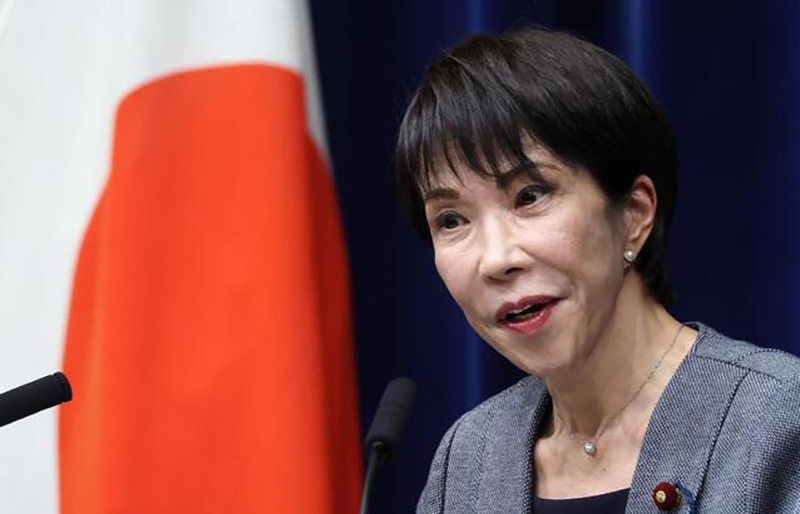
Her victory is remarkable, and yet, beyond the arithmetic of seats, it is the audacity, unpredictability, and sheer strategic opportunism of Sanae Takaichi that has unsettled the conventions of Japanese politics. Japan now confronts the uncharted waters of a first female prime minister wielding a super-majority in the lower house, an electoral outcome amplified by the external pressures of China’s escalating intimidation. Prior to the election, Takaichi’s unequivocal position on Taiwan—declaring that a Chinese attack could constitute an existential threat justifying Japan’s right to collective self-defence—drew from Beijing a statement of unmistakable ferocity: “If Japan insists on this path, there will be consequences… heads will roll.” Yet the electorate’s verdict on 8 February 2026 was unequivocal: a decisive rejection of external coercion and an affirmation of Japan’s strategic autonomy. The LDP’s triumph, in this sense, is less an expression of ideological conformity than a popular sanction for audacious leadership in a period of geopolitical uncertainty.
Takaichi’s ascent is best understood through the lens of calculated audacity, tempered by a comprehension of domestic legitimacy that few of her contemporaries possess. During her brief tenure prior to the election, she orchestrated a snap lower house contest merely months after assuming office, exploiting her personal popularity and the fragility of opposition coalitions. Unlike predecessors who relied on incrementalism and cautious negotiation within the inherited confines of party politics, Takaichi maneuvered with precision, converting popular concern over regional security and economic stagnation into tangible parliamentary authority. The coalescence of public anxiety, amplified by Chinese threats, and her own assertive persona produced a political synergy rarely witnessed in postwar Japan.
Central to understanding her political strategy is her treatment of national security and sovereignty. Takaichi’s articulation of Japan’s response to a hypothetical Chinese aggression against Taiwan was neither rhetorical flourish nor casual posturing. Framing such a scenario as a “survival-threatening situation” constitutes a profound redefinition of Japanese strategic calculus, signaling a willingness to operationalise collective self-defence in ways previously avoided by postwar administrations. The Xi administration’s reaction—including restrictions on Japanese exports, delays in resuming seafood imports, and threats against commercial and civilian actors—unintentionally demonstrated the effectiveness of her approach: coercion produced cohesion rather than capitulation. Japanese voters, perceiving both the immediacy of threat and the clarity of leadership, rewarded decisiveness. The result was a super-majority capable of reshaping the constitutional and defence architecture of the nation.
This electoral outcome cannot be understood without reference to the ideological continuity and rupture within the LDP itself. Takaichi inherits a party long fractured by internal factionalism, episodic scandals, and the occasional misjudgment of public sentiment. Yet her rise also represents the maturation of a distinct right-of-centre ethos: one that blends assertive national sovereignty, moderate economic populism, and strategic conservatism. By appealing simultaneously to conservative voters, disillusioned younger demographics, and those unsettled by regional volatility, she achieved a political synthesis that previous leaders, including Fumio Kishida and Shigeru Ishiba, failed to materialize. The resulting super-majority is an institutional instrument for the pursuit of substantive policy transformation.
Takaichi’s domestic strategy demonstrates a sophisticated comprehension of the symbiosis between economic policy, social stability, and political legitimacy. The promise of a two-year freeze on the consumption tax for foodstuffs, despite its partial ambiguity, has served both as tangible reassurance to voters and a symbolic statement of attentiveness to middle-class anxieties. Inflation, stagnant wages, and a protracted demographic decline have generated fertile ground for popular discontent, and Takaichi’s ability to frame fiscal intervention as both pragmatic and responsible has resonated deeply. Similarly, her attention to underemployment, particularly the activation of latent female labour, demonstrates an appreciation for structural reform rather than performative gender politics: expanding workforce participation is framed as an economic necessity, not a symbolic gesture.
Her approach to defence and international relations further highlights her strategic dexterity. The 2026 defence budget, reaching 9.04 trillion yen, the establishment of advanced missile capabilities, and the formation of a Space Operations Squadron reflect a commitment to operationalising Japan’s deterrent capabilities without abandoning domestic legitimacy. Takaichi has shown restraint in presentation while signaling determination in substance. She avoids ideological maximalism; her stated aim is not militarism for its own sake but the assertion of national interest, particularly in a context of declining U.S. relative hegemony and assertive Chinese manoeuvres. Takaichi appears to internalize the balance between deterrence and diplomacy in East Asian geopolitics, cultivating both alliance cohesion and autonomous capability. Her proposed constitutional revision, targeting Article 9, must therefore be read as a calibrated adjustment to legal frameworks rather than an impulsive repudiation of pacifist principles, though the implications are inevitably destabilizing from a regional perspective.
The historical dimension of her politics is equally consequential. Takaichi’s association with visits to the Yasukuni Shrine, her questioning of historical narratives surrounding wartime atrocities, and her engagement with revisionist historiography are not merely symbolic gestures but constitute deliberate ideological positioning within Japan’s right-wing spectrum.
Japanese politics is no exception when it comes to the function of historical narrative as both ethical compass and instrument of legitimacy: Takaichi’s actions signal continuity with a nationalist interpretation of sovereignty while asserting moral authority over historical memory. This strategic management of memory intersects with her security agenda, particularly regarding Taiwan and the East China Sea, allowing her to mobilize domestic consensus while projecting resolve externally.
The Chinese reaction, predictably alarmed and often hyperbolic, reflects the disjuncture between external expectation and domestic reality. Beijing’s characterization of Takaichi as an existential threat to regional peace, employing metaphors such as the opening of Pandora’s Box, misinterprets the domestic calculation. Takaichi’s popularity did not surge in spite of China’s pressure but because of it; the electorate rewarded the demonstration of agency against perceived coercion. The Xi administration’s misjudgment, compounded by a declining cadre of officials competent in Japanese affairs, illustrates the structural asymmetries that Takaichi has been able to exploit: external intimidation, when poorly calibrated, functions as political accelerant. Japan’s electorate, operating with acute awareness of both historical precedent and contemporary vulnerability, effectively weaponized Chinese miscalculation.
Fiscal policy, too, serves as an instrument of political consolidation. The tension between her proposed consumption tax adjustments and the imperatives of fiscal responsibility illustrates the deliberate ambiguity with which Takaichi operates: she signals responsiveness to popular needs while retaining sufficient flexibility to negotiate market and institutional constraints. Economists note that the potential reduction in revenue is significant, yet her credibility rests in her capacity to convince voters that the measures are temporary, targeted, and strategically justified. Here, the interplay between domestic politics and international market perception is critical: Takaichi steers both the expectations of Japanese citizens and the anxieties of global investors, demonstrating a rare fluency in multi-layered policy signaling.
Her coalition management demonstrates a keen strategic instinct. By maintaining the alliance with the Japan Innovation Party even after securing a super-majority, she projects an image of moderation while advancing audacious policies. This delicate balancing act between consolidation and inclusion reveals a grasp of the reality that commanding numbers in parliament does not equate to unfettered authority: in Japan, procedural legitimacy and coalition cohesion remain crucial, and symbolic consensus continues to carry significant cultural and institutional weight.
Yet, perhaps the most striking element of Takaichi’s victory is the extent to which it has redefined the interface between domestic politics and regional geopolitics. By explicitly linking Taiwan to Japan’s collective self-defence framework, she has re-framed public understanding of regional security, converting existential anxiety into political capital. Chinese rhetoric, at times bordering on the explicitly menacing, highlights the efficacy of this strategy: the invocation of direct consequences and the threat of physical reprisal amplified domestic perceptions of threat, producing a rare alignment of public opinion with executive strategy. In this sense, Takaichi operates not merely as a domestic politician but as a conductor of transnational strategic sentiment, demonstrating an acute awareness of perception, risk, and leverage that surpasses the capacity of many predecessors. It is a quintessentially Machiavellian maneuver, executed with Japanese political sophistication rather than European moral theorisation. Therefore, the rise of Sanae Takaichi represents more than the triumph of a single politician: it signals a profound re-calibration of the Japanese political order.
by Nilantha Ilangamuwa
Three months on (February 2026)
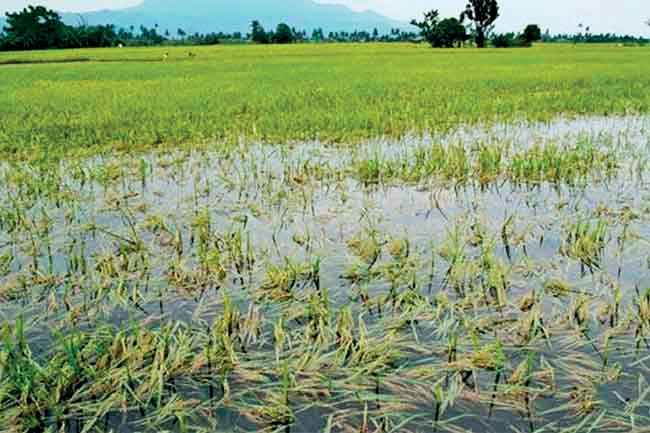
Three months after Cyclone Ditwah swept across Sri Lanka in late November 2025, the headlines have moved on. In many places, the floodwaters have receded, emergency support has reached affected communities, and farmers are doing what they always do, trying to salvage what they can and prepare for the next season. Yet the most important question now is not how quickly agriculture can return to “normal”. It is whether Sri Lanka will rebuild in a way that breaks the cycle of risks that made Ditwah so devastating in the first place.
Ditwah was not simply a bad storm. It was a stress test for our food system, our land and water management, and the institutions meant to protect livelihoods. It showed, in harsh detail, how quickly losses multiply when farms sit in flood pathways, when irrigation and drainage are designed for yesterday’s rainfall, when safety nets are thin, and when early warnings do not consistently translate into early action.
In the immediate aftermath, the damage was rightly measured in flooded hectares, broken canals and damaged infrastructure, and families who lost a season’s worth of income overnight. Those impacts remain real. But three months on, the clearer lesson is why the shock travelled so far and so fast. Over time, exposure has become the default: cultivation and settlement have expanded into floodplains and unstable slopes, driven by land pressure and weak enforcement of risk-informed planning. Infrastructure that should cushion shocks, tanks, canals, embankments, culverts, too often became a failure point because maintenance has lagged and design standards have not kept pace with extreme weather. At farm level, production risk remains concentrated, with limited diversification and high sensitivity to a single event arriving at the wrong stage of the season. Meanwhile, indebted households with delayed access to liquidity struggled to recover, and the information reaching farmers was not always specific enough to prompt practical decisions at the right time.
If Sri Lanka takes only one message from Ditwah, it should be this: recovery spending, by itself, is not resilience. Rebuilding must reduce recurring losses, not merely replace what was damaged. That requires choices that are sometimes harder politically and administratively, but far cheaper than repeating the same cycle of emergency, repair, and regret.
First, Sri Lanka needs farming systems that do not collapse in an “all-or-nothing” way when water stays on fields for days. That means making diversification the norm, not the exception. It means supporting farmers to adopt crop mixes and planting schedules that spread risk, expanding the availability of stress-tolerant and short-duration varieties, and treating soil health and field drainage as essential productivity infrastructure. It also means paying far more attention to livestock and fisheries, where simple measures like safer siting, elevated shelters, protected feed storage, and better-designed ponds can prevent avoidable losses.
Second, we must stop rebuilding infrastructure to the standards of the past. Irrigation and drainage networks, rural roads, bridges, storage facilities and market access are not just development assets; they are risk management systems. Every major repair should be screened through a simple question: will this investment reduce risk under today’s and tomorrow’s rainfall patterns, or will it lock vulnerability in for the next 20 years? Design standards should reflect projected intensity, not historical averages. Catchment-to-field water management must combine engineered solutions with natural buffers such as wetlands, riparian strips and mangroves that reduce surge, erosion and siltation. Most importantly, hazard information must translate into enforceable land-use decisions, including where rebuilding should not happen and where fair support is needed for people to relocate or shift livelihoods safely.
Third, Sri Lanka must share risk more fairly between farmers, markets and the state. Ditwah exposed how quickly a climate shock becomes a debt crisis for rural households. Faster liquidity after a disaster is not a luxury; it is the difference between recovery and long-term impoverishment. Crop insurance needs to be expanded and improved beyond rice, including high-value crops, and designed for quicker payouts. At the national level, rapid-trigger disaster financing can provide immediate fiscal space to support early recovery without derailing budgets. Public funding and concessional climate finance should be channelled into a clear pipeline of resilience investments, rather than fragmented projects that do not add up to systemic change.
Fourth, early warning must finally become early action. We need not just better forecasts but clearer, localised guidance that farmers can act on, linked to reservoir levels, flood risk, and the realities of protecting seed, inputs and livestock. Extension services must be equipped for a climate era, with practical training in climate-smart practices and risk reduction. And the data systems across meteorology, irrigation, agriculture and social protection must talk to each other so that support can be triggered quickly when thresholds are crossed, instead of being assembled after losses are already locked in.
What does this mean in practice? Over the coming months, the focus should be on completing priority irrigation and drainage works with “build-back-better” standards, supporting replanting packages that include soil and drainage measures rather than seed alone, and preventing distress coping through temporary protection for the most vulnerable households. Over the next few years, the country should aim to roll out climate-smart production and advisory bundles in selected river basins, institutionalise agriculture-focused post-disaster assessments that translate into funded plans, and pilot shock-responsive safety nets and rapid-trigger insurance in cyclone-exposed districts. Over the longer term, repeated loss zones must be reoriented towards flood-compatible systems and slope-stabilising perennials, while catchment rehabilitation and natural infrastructure restoration are treated as productivity investments, not optional environmental add-ons.
None of this is abstract. The cost of inaction is paid in failed harvests, lost income, higher food prices and deeper rural debt. The opportunity is equally concrete: if Sri Lanka uses the post-Ditwah period to modernise agriculture making production more resilient, infrastructure smarter, finance faster and institutions more responsive, then Ditwah can become more than a disaster. It can become the turning point where the country decides to stop repairing vulnerability and start building resilience.
By Vimlendra Sharan,
FAO Representative for Sri Lanka and the Maldives

Fairly heavy showers are likely at some places in the Rathnapura, Kalutara, Galle and Matara districts

India vs Pakistan is finally here. Over to cricket now

“We Are Building a Stable, Transparent and Resilient Sri Lanka Ready for Sustainable Investment Partnerships” – PM

US military kills 3 in latest attack on boat in the Caribbean

Prez AKD congratulates BNP’s Tarique Rahman on B’desh election win

Massive Sangha confab to address alleged injustices against monks

‘Dates have the highest sugar content to fight Coronavirus’

Sunday Island 27 December – Headlines

#SundayIsland 17th December – Headlines

Sunday Island – 28th March

Sunday Island Headlines – 21 March

Sunday Island – 21st February – Headlines
-

 Business4 days ago
Autodoc 360 relocates to reinforce commitment to premium auto care
-
 Midweek Review4 days ago
A question of national pride
-
 Opinion3 days ago
Will computers ever be intelligent?
-
 Midweek Review4 days ago
Theatre and Anthropocentrism in the age of Climate Emergency
-

 Editorial6 days ago
The JRJ syndrome
-
 Opinion4 days ago
The Walk for Peace in America a Sri Lankan initiative: A startling truth hidden by govt.
-

 Foreign News6 days ago
Portugal elects Socialist Party’s Seguro as president in landslide
-

 Foreign News7 days ago
Washington Post chief executive steps down after mass lay-offs