
Foreign News
Himachal Pradesh worst-hit as rains continue to batter north India

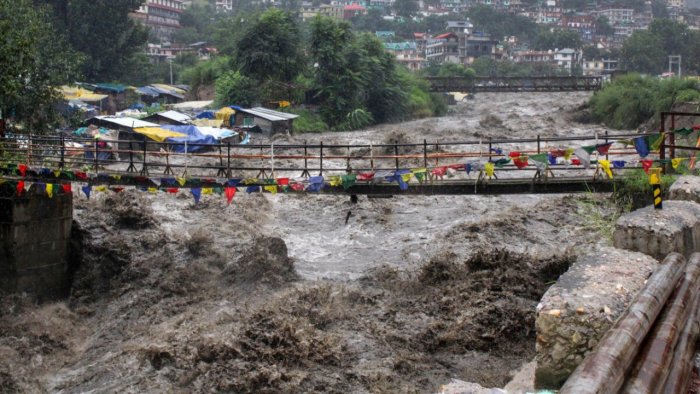
As torrential rains wreaked havoc in north India for another day, Prime Minister Narendra Modi on Monday spoke with senior ministers and officials to take stock of the situation while Congress chief Mallikarjun Kharge sought relief from the PM CARES Fund for the rain-hit states.
Delhi Chief Minister Arvind Kejriwal held a meeting to discuss water logging caused by torrential rains in the city and Yamuna’s rising water levels, officials said.
Several rivers, including the Yamuna in Delhi, in north India are in spate. In cities and towns across the region, many roads and residential areas were submerged in knee-deep water with the civic system unable to hold on in the face of record rains on Sunday.
The prime minister spoke with senior ministers and officials and took stock of the situation in the wake of excessive rainfall in parts of the country, his office said.
Local administrations, National Disaster Response Force (NDRF) and State Disaster Response Force (SDRF) teams are working to ensure the well-being of those affected, the Prime Minister’s Office said.
“PM @narendramodi spoke to senior ministers and officials, and took stock of the situation in the wake of excessive rainfall in parts of India. Local administrations, NDRF and SDRF teams are working to ensure the well-being of those affected,” the Prime Minister’s Office (PMO) said in a tweet.
Twenty people stranded in Himachal Pradesh’s tourist town of Manali were rescued but about 300 others were stranded across various parts of the hill state as heavy rain wreaked havoc for the third day on Monday.
The state is bracing for another day of downpours with the meteorological department issuing a “red” alert for “extremely heavy rain” on Monday, a day after heavy rain pounded the state, triggering landslides, damaging houses and leaving several people dead.
Officials said rail operations on the Shimla-Kalka route, a UNESCO world heritage site, have been suspended till Tuesday as landslides blocked the track at several places while educational institutions across the state were ordered to remain shut on Monday and Tuesday.
Himachal Pradesh Chief Minister Sukhvinder Singh Sukhu, in a video released on Monday morning, appealed to the people to avoid venturing out in heavy rains, especially near rivers and nullahs, and remain vigilant for the next 24 hours as the Met department has warned of heavy rains to continue.
He also asked all the MLAs to stay in their respective constituencies and help the people in this hour of distress. Congress chief Mallikarjun Kharge on Monday asked the Centre to make available additional relief from the PM CARES Fund for states affected by the torrential rain pounding several parts of north India, including Himachal Pradesh.
A day after 19 people were killed in landslides and other rain-related incidents, the Congress president also spoke to Sukhu to express his concern.
“The death of several people in north India due to heavy rains is sad and painful. Have talked to the chief minister of Himachal Pradesh. Relief efforts in the state have picked up and every effort is being made despite bad weather, to take people affected by heavy rains to safer places,” Kharge said in a tweet in Hindi.
He said teams of the State Disaster Response Force and National Disaster Response Force teams are doing this work.
Adequate compensation will be given to the victims and all possible help will be given to compensate for the loss of life and property, the Congress chief said.
The meeting called by Kejriwal was held at the Delhi Secretariat. It was attended by senior officials of the Irrigation and Flood Control department and the Municipal Corporation of Delhi.
The Yamuna inched closer to the warning mark in Delhi as Haryana released more water into the river from the Hathnikund barrage amid persistent rains in the upper catchment areas.
The Pragati Maidan tunnel in the national capital was closed for traffic on Monday due to congestion caused by water-logging on the stretch, officials said.
Rains battered parts of Punjab and Haryana for the third consecutive day on Monday with authorities working round the clock to reach out to people in the worst-hit places in hours of crisis. According to the meteorological department, it has been raining in many parts of Punjab and Haryana since morning.
In view of the prevailing situation caused due to incessant rains, Haryana Chief Minister Manohar Lal Khattar cancelled all his pre-scheduled programmes for the day and summoned an emergency meeting of senior officials of various departments, including Home, Disaster Management and Urban Local Bodies, officials said.
Punjab’s Patiala district was reeling under a flood-like situation following heavy monsoon rainfall, with authorities seeking the Army’s assistance to combat the escalating crisis, officials said on Monday.
Floodwaters entered the premises of the Rajpura Thermal Power Plant here, leading to the shutdown of one of its 700 MW units, they said.
Authorities have also deployed the National Disaster Response Force (NDRF) and the State Disaster Response Force (SDRF) teams for relief and rescue work as the district grapples with rising water levels.
The Army’s assistance was sought by the Patiala district administration after water overflowed from the Sutlej Yamuna Link (SYL) canal in Rajpura town following a breach, the officials said.
Also, as many as 800 students from a private university in the district were successfully rescued with the assistance of the Army, he said.
Four people stuck on an island in the swollen Narmada river near Bhedaghat in Madhya Pradesh’s Jabalpur district were rescued by the NDRF after a more than 13-hour operation, police said.
They got stuck on the island following a sudden rise in the Narmada river level due to heavy rainfall in the upstream areas.
(PTI)








Foreign News
‘Time for Ukraine to get new president,’ says Trump after Zelensky condemns diesel deal

US President Donald Trump has said he thinks “it’s time for Ukraine to get a new president” as he responded to Volodymyr Zelensky’s criticism of the US diesel deal with Russia.
The Ukrainian president warned a new deal to release millions of tonnes of Russian diesel into the US would provide Moscow with money to continue its war against his nation, calling it a gift to Russian President Vladimir Putin.
Trump told reporters outside the White House on Saturday that Zelensky “wants to make problems for the world” by continuing to authorise attacks on Russian refineries.
“He’d better damn well stop,” Trump said, before suggesting Ukraine should “get a new leader who can make a deal”.
Global fuel supplies, including diesel, have been severely limited by the war against Iran launched by the US and Israel, which led to the effective closure of the Strait of Hormuz, through which roughly a fifth of the world’s oil products usually flows.
Russia – a major producer – and Ukraine have recently intensified their strikes on each other’s energy infrastructure and transport facilities, further straining energy markets.
“We said, ‘you can do whatever you want to Russia, don’t hit the refineries’, because that’s a world problem that’s caused,” Trump continued.
“He could have made many deals and for some reason, he never does.”
Putin’s envoy Kirill Dmitriev described Trump’s intervention as “iconic and historic”, saying that Ukraine “needs leadership actually focused on peace”.
The US president confirmed on Friday that an agreement had been reached with Moscow to suspend sanctions on Russian diesel exports until 7 April.
Zelensky reacted by saying it would allow Moscow to raise new funds to source new military equipment to continue the war.
He also accused Moscow of taking the deal “to mean they can keep fighting, to mean they keep dropping bombs on cities” following deadly new strikes on Zaporizhzhia.
The Ukrainian president spoke to several allies on Saturday to discuss the latest developments, calling for “real decisions to protect lives in Ukraine” and to protect European security.
A Downing Street spokesperson said UK Prime Minister Andy Burnham had spoken to Zelensky and offered his “complete solidarity”.
The pair had agreed Russia should acquiesce to “an immediate energy ceasefire” and end its attacks on shipping in the Black Sea, the spokesperson said, as “this would immediately release more energy and food supplies into the global market”.
News of the US-Russia diesel deal was also met with criticism by EU’s foreign affairs chief Kaja Kallas, who echoed Zelensky in saying that suspending sanctions “provides Moscow with more revenues to wage war”, adding: “This is not the time to ease pressure on Russia, and Europe won’t.”
She said European foreign ministers intended to approve the biggest set of sanctions on Russia since the start of its full-scale invasion on Monday.
The deal with Russia is the latest effort from Trump to lower fuel prices in the US ahead of the midterm elections, after months spent grappling with the political consequences of the Iran war.
That conflict, which began in February, has sent the cost of petrol and in particular diesel skyrocketing, which has soured his standing with the American public who have been stung by the higher pump prices and knock-on effects that led to across-the-board inflation.
The average price of diesel is currently $6.28 (£4.74) a gallon, according to the AAA – up from last month’s $5.94 average, and $3.68 last year.
Under the deal, Russia would release an initial 300,000 tonnes of diesel “to the American and global marketplace” followed by an additional 500,000 tonnes in November.
A further million would follow, Trump wrote on Truth Social, and then another 3m tonnes “within a short period of time” – but he noted that this delivery will be “based on the condition of their diesel refineries”.
In the past 10 months, Russia experienced two waves of severe fuel shortages across the country due to Ukrainian drones strikes on its oil refineries.
Diesel production in Russia dropped by an estimated 30%, according to the International Energy Agency.
Trump had already called for new elections in Ukraine last December, saying Ukrainian voters should have the choice to replace Zelensky.
Since the war broke out in 2022 Ukraine has been under martial law, meaning elections are suspended.
[BBC]
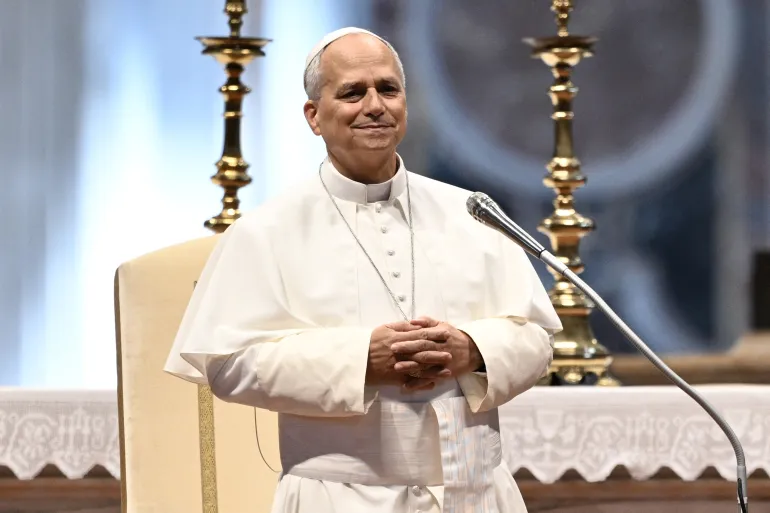
Pope Leo XIV has declared that the death penalty is “inadmissible” while his home country, the United States, announces plans to livestream an execution by firing squad.
Marking World Day Against the Death Penalty on Saturday, the pope reiterated the Catholic Church’s teaching on capital punishment, writing on X that it was “inadmissible because it is an attack on the inviolability and dignity of the person”.
“The common good can be safeguarded and the requirements of justice can be met without recourse to capital punishment,” his post said.
“Effective systems of detention have been developed that protect citizens while at the same time do not completely deprive those who are guilty of the possibility of redemption,” added the leader of the Catholic Church.
The American Pope’s comments come days after US Secretary of Defense Pete Hegseth said on Thursday that the firing squad execution of Nidal Malik Hasan on December 3 will be livestreamed.
Hasan was convicted of killing 13 people and wounding 32 others in a shooting at the Fort Hood military base in 2009.
Pope Leo did not specifically refer to the planned execution, or last month’s botched execution attempt on Christa Pike, who survived two doses of the lethal injection in Tennessee.
But his post came hours after his top deputy, Cardinal Pietro Parolin, the Vatican secretary of state, told Vatican News that the plan to livestream Hasan’s execution was “unacceptable”.
It was Leo’s predecessor, Pope Francis, in 2018 who first amended official Catholic teaching to declare capital punishment “inadmissible” in all circumstances.
[Aljazeera]
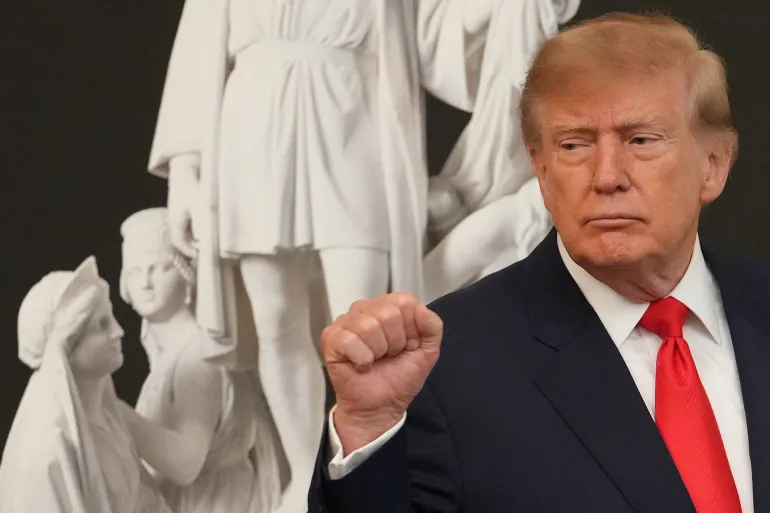
United States President Donald Trump said that Russia has agreed to supply 300,000 tonnes of diesel fuel to global markets amid discussions with Russian President Vladimir Putin.
“I have just concluded a highly successful discussion with President Vladimir Putin, of Russia, wherein it was agreed that Russia will immediately supply over 300,000 Tons of Diesel Fuel to the American and Global Marketplace, another 500,000 Tons during the month of November, and 1,000,000 Tons immediately thereafter,” Trump said in a post on his Truth Social platform.
The president added that Russia would deliver an additional 3 million tonnes of fuel “within a short period of time”. He said that the country would supply 500,000 tonnes in November.
An envoy for Russian President Vladimir Putin, Kirill Dmitriev, praised cooperation between Russia and the United States on diesel and energy in a post on X shortly after.
“Russia-US cooperation on diesel and energy will benefit the world,” Dmitriev wrote on X.
Petrol price pressures
The deal comes despite Ukrainian air strikes, which have taken more than half of the country’s oil refining capacity offline, according to claims made by Ukraine’s Ministry of Defence on Sunday.
The latest announcement comes a week after the G7 countries agreed to release 100 million barrels amid pressure from the White House.
Diesel prices have been elevated in recent months but have started to decline. The average price for a gallon is $6.27 ($1.66 per litre), according to the American Automobile Association (AAA), which tracks daily petrol prices. That’s down $0.10 from this time last week, but up $5.94 from this time one month ago.
[Aljazeera]

Rahmat, Malik fifties lead Afghanistan’s strong reply

Showers above 75 mm are likely at some places in the Western, Sabaragamuwa, Central, Uva and North-Western provinces and in Galle, Matara, Anuradhapura and Mannar districts.

Iranian ships stranded, Lanka fears US sanctions

Sri Lanka CERT warns of overseas university admission scams

Navi Pillay’s Lankan affairs in focus as she wins 2026 Nobel Peace Prize

Lanka welcomes Indian SC remarks on Katchatheevu dispute

‘Dates have the highest sugar content to fight Coronavirus’

Sunday Island 27 December – Headlines

#SundayIsland 17th December – Headlines

Sunday Island – 28th March

Sunday Island Headlines – 21 March

Sunday Island – 21st February – Headlines
-

 News7 days ago
Geneva takes up Sallay’s case and govt. ignores opportunity to answer accusations
-

 Features6 days ago
Preventing grievances from becoming communal
-

 Features4 days ago
The Sri Lankan who made Scottish history
-

 Sports4 days ago
Nissanka absence opens door for Sri Lanka’s young guns
-

 News5 days ago
Gnansara Thera to be assigned to prison printing section: Officials
-

 News3 days ago
NDB fraud Rs 60mn more than reported
-

 Features7 days ago
Sri Lanka Cricket Bill: Governance reform is not yet a cricket strategy
-

 News3 days ago
Removing monk’s robes matter for Sangha to decide: Mahanayake Theras