
Latest News
Hezbollah blames Israel after pager explosions kill nine and injure thousands in Lebanon


Nine people, including a child, have been killed after handheld pagers used by members of the armed group Hezbollah to communicate exploded across Lebanon, the country’s health minister says.
Iran’s ambassador to Lebanon was among 2,800 other people who were wounded by the simultaneous blasts in Beirut and several other regions.
Hezbollah, which is backed by Iran, said the pagers belonged “to employees of various Hezbollah units and institutions” and confirmed the deaths of eight fighters.
The group blamed Israel for what it called “this criminal aggression” and vowed that it would get “just retribution”. The Israeli military declined to comment.
Hours before the explosions, Israel’s security cabinet said stopping Hezbollah attacks on the north of the country to allow the safe return of displaced residents was an official war goal.
There have been almost daily exchanges of fire across the Israel-Lebanon border since the day after the start of the war between Israel and Hamas in Gaza on 7 October.
Hezbollah has said it is acting in support of the Iran-backed Palestinian group.
In its latest statement on Wednesday, Hezbollah said it would carry on its “operations in support of Gaza”, adding that this was a “continuous path separate from the hard price that awaits the enemy in response to its massacre on Tuesday”.
Both Hezbollah and Hamas are proscribed as terrorist organisations by Israel, the UK and other countries.
The UN’s spokesman said the latest developments in Lebanon were “extremely concerning, especially given that this is taking place within a context that is extremely volatile”.
Many Lebanese were in a state of shock and disbelief on Tuesday evening, unable to get their heads around an event that was unprecedented in scale and nature.
Hezbollah said an unspecified number pagers – which the group relies on heavily for communications due to the risk of mobile phones being hacked or tracked – exploded at around 15:30 local time (12:30 GMT) in the capital Beirut and many other areas.
One CCTV video showed an explosion in a man’s bag or pocket at a supermarket. He is then seen falling backwards to the ground and crying out in pain as other shoppers run for cover.
Hours later, ambulances were still rushing to hospitals overwhelmed with the number of casualties, 200 of whom the health minister said were in a critical condition. Outside, relatives were waiting in the hope of receiving updates.
The LAU Medical Centre in Beirut’s Ashrafieh district closed its main gate and was limiting the number of people getting in. “It’s very sensitive and some scenes are horrific,” one staff member told the BBC.
Most of the wounds were at the level of the waist, face, eyes and hands, he said, adding: “A lot of casualties have lost fingers, in some cases all of them.”
The wife of Iranian ambassador Mojtaba Amani said he was “slightly injured” by one of the explosions and that he was “doing well” in hospital.
Hezbollah’s media office announced the deaths of eight fighters. It did not give details on the locations and circumstances, saying only that they were “martyred on the road to Jerusalem”.
A source close to the group told AFP news agency that the son of Hezbollah MP Ali Ammar and the 10-year-old daughter of a Hezbollah member in the Bekaa Valley were among those killed. Later, the source said the son of another lawmaker, Hassan Fadlallah, was wounded, having initially reported that he was dead.
Fourteen people were also wounded by exploding pagers in neighbouring Syria, where Hezbollah is fighting alongside government forces in the country’s civil war, according to the UK-based Syrian Observatory for Human Rights.
“We hold the Israeli enemy fully responsible for this criminal aggression,” Hezbollah said in a statement on Tuesday evening.
“This treacherous and criminal enemy will certainly get his just retribution on this sinful aggression from where it counts and from where it does not count,” it added.
Lebanese Prime Minister Najib Mikati also blamed Israel for the explosions, saying that they represented a “serious violation of Lebanese sovereignty and a crime by all standards”.
Iranian Foreign Minister Abbas Araghchi said he told his Lebanese counterpart that he “strongly condemned Israeli terrorism”.
The US, Israel’s closest ally, denied any involvement and urged Iran not to heighten tensions.
Hezbollah did not say what it believed had caused the pagers to explode.
The Wall Street Journal cited a source as saying the affected devices were from a new shipment that Hezbollah had received in recent days. A Hezbollah official also told the newspaper some people had felt the pagers heat up before the blasts.
Overheated lithium-ion batteries can catch fire, but experts said hacking into the pagers and making them overheat would not usually cause such explosions.
A former British Army munitions expert, who asked not to be named, told the BBC the pagers would have likely been packed with between 10g and 20g of military-grade high explosive, hidden inside a fake electronic component.
Once armed by a signal, called an alphanumeric text message, the next person to use the device would have triggered the explosive, the expert said.
Lina Khatib, a Middle East analyst at the UK-based Chatham House think tank, told the BBC: “Israel has been engaging in cyber operations against Hezbollah for several months, but this security breach is the largest in scale.”
Nicholas Blanford, a Beirut-based senior fellow of the American think tank the Atlantic Council, said: “Israel in one fell swoop has rendered combat ineffective hundreds if not thousands of Hezbollah fighters, in some cases permanently.”
He warned that Hezbollah’s leaders would now “face extreme pressure from the ranks and supporters to retaliate heavily”, describing it as “the most dangerous moment” in the Hezbollah-Israel conflict since October.
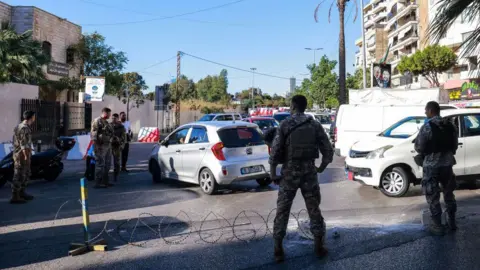
A statement put out by the Israeli military on Tuesday evening did not comment on the pager explosions, but said the chief of staff Lt Gen Herzi Halevi had held a situational assessment with commanders “focusing on readiness in both offence and defence in all arenas”.
It also said there was no change in defensive guidelines to the Israeli public but asked them to remain alert and vigilant.
Earlier in the day, the military said an air strike had killed three “Hezbollah terrorists operating within a terrorist infrastructure site” in the Blida area, near Lebanon’s border with Israel.
Lebanon’s health ministry confirmed that three people had been killed in an Israeli strike, while Hezbollah’s media office said it had carried out missile and drone attacks targeting Israeli troops and military sites.
Israel’s Shin Bet internal security service also said it had foiled a Hezbollah bomb attack targeting an unnamed former senior Israeli security official. Hezbollah did not comment on the accusation.
This comes at a time when Israel’s government is threatening to step up its military effort against Hezbollah.
On Tuesday morning, Israel’s security cabinet made the safe return of 60,000 residents displaced in the north by Hezbollah attacks an official goal of the Gaza war.
Defence Minister Yoav Gallant said during a meeting with US envoy Amos Hochstein on Monday that the only way to return northern residents was through “military action”.
“The possibility for an agreement is running out as Hezbollah continues to ‘tie itself’ to Hamas, and refuses to end the conflict,” a statement from his office said.
Since the hostilities escalated in October, at least 589 people have been killed in Lebanon, the vast majority of them Hezbollah fighters, according to the Lebanese health ministry.
On the Israeli side, 25 civilians and 21 members of security forces have been killed, the Israeli government says.
[BBC]

Latest News
Appointment of Cabinet Sub-Committee for the Organization of 79th Independence Day Commemoration

The Cabinet of Ministers has approved the resolution furnished by the Minister of Public Administration, Provincial Council, and Local Government to appoint a Cabinet Sub-Committee chaired by the Prime Minister and with the participation of relevant Ministers, to organize and direct the affairs of the country’s 79th Independence Day Commemoration
Ceremony, which falls on 2027-02-04.
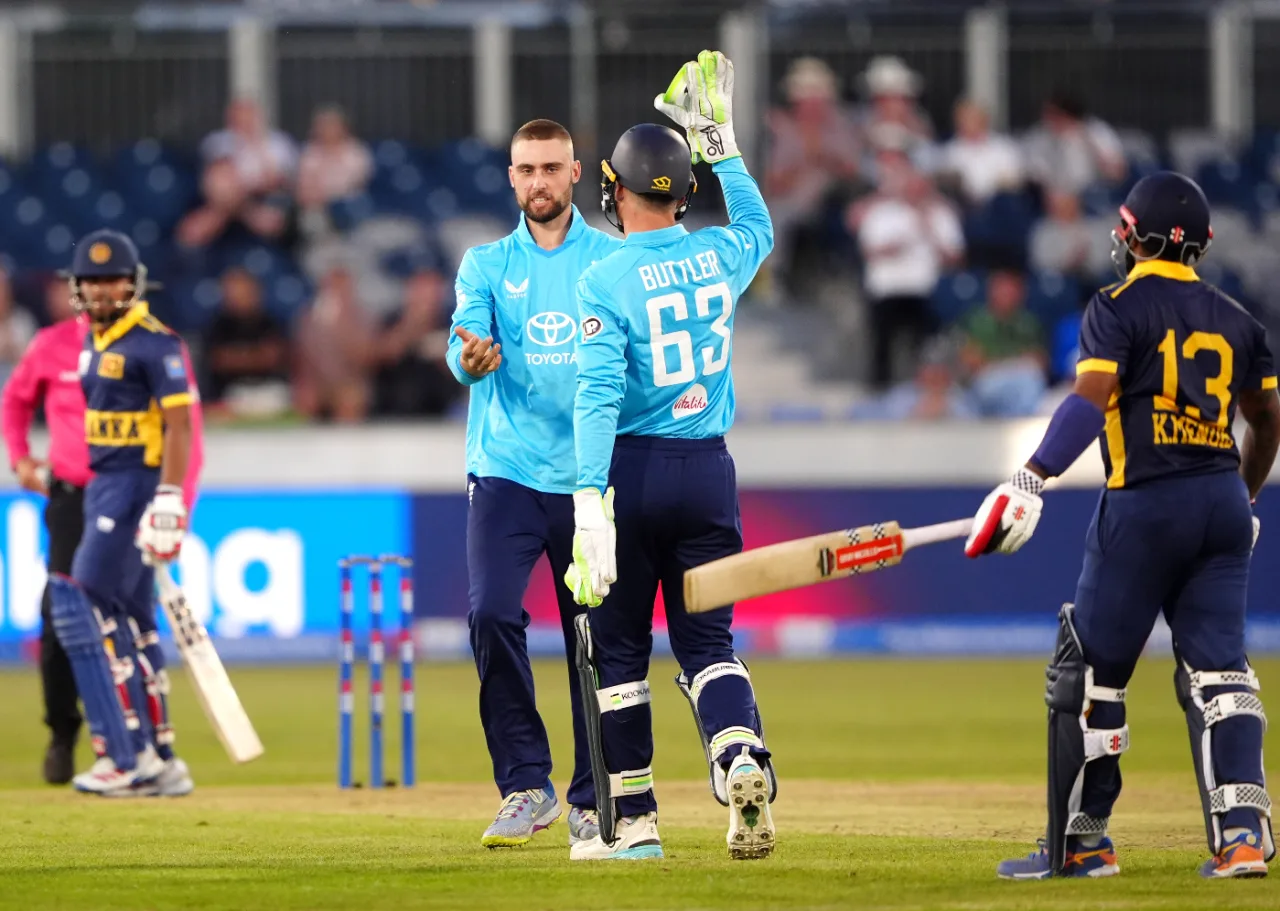
England are finally on the rise again in ODIs, after a long period of stagnation and decline. They pulled off their lowest successful defence in four years as they cruised past Sri Lanka at the Riverside in Durham, and have now won five matches out of seven since the start of this year under Harry Brook and Brendon McCullum.
The first ODI was more competitive than any of the three T20Is last week, as England wobbled against Sri Lanka’s debutant legspinner Sachindu Colombage in the middle overs. They failed to hit a six on a two-paced, end-of-season surface, and Brook – who threw his head back in frustration when he carved to deep point – was the only batter to find any real fluency.
But Sri Lanka’s run chase never got going. Captain Kusal Mendis made 42 on his return from a hamstring injury and Dunith Wellalage landed a few late blows, but their middle order went missing against Jamie Overton’s cross-seamers and Will Jack’s offbreaks. This was an unglamorous and forgettable win, but England have not had enough of those in recent years.
Jacks took three wickets in four balls to finish things off, giving him outstanding figures of 5 for 22 – the second best in an ODI by an England spinner. It meant that Adil Rashid, ruled out of the series with a hand injury, was hardly missed, and completed an impressive all-round performance by Jacks after he cracked 46 not out to drag England to 265.
England’s ODI results have tailed off sharply since they won their first World Cup under Eoin Morgan’s captaincy, with 50-over cricket slipping to the bottom of the ECB’s list of priorities. Across the six years after their 2019 triumph, they won 33 and lost 40 in ODIs and suffered humiliating group-stage exits in both the 2023 World Cup and the 2025 Champions Trophy.
They started 2026 ranked eighth in the world by the ICC, and with players and management anxious to secure automatic qualification for next year’s World Cup, but things have started to click for them. They have come from behind to win series against Sri Lanka (away) and India (home) this year, and will now target wins at Headingley and The Oval to seal a whitewash.
It has been a turbulent summer for McCullum, who lost his job as Test coach after England’s chaotic, self-sabotaging series defeat to New Zealand. But his partnership with Brook has been a revelation: England’s white-ball teams have won 10 completed games out of 11 this summer, and are finally starting to develop a clear identity.
Brook cited strike rotation and playing longer innings as two areas for England’s batters to improve before this series, and their new mentor Kevin Pietersen led a “spin masterclass” at Monday morning’s training session. They showed in this match that there is still plenty of scope to get better, stumbling against Colombage as they lost 4 for 29 in 7.5 overs through the middle.
A legspinner with an idiosyncratic action, Colombage spent last summer playing club cricket for Downham Stow in the East Anglian Premier League, but won his call-up after impressing in the recent Lanka Premier League. He was picked ahead of Wanindu Hasaranga in Chester-le-Street and made Joe Root his first victim in taking 3 for 44 on international debut.
England lost Tom Banton early to an Asitha Fernando outswinger – which trimmed the off bail – after choosing to bat, but Root started brightly. He pinged two early cover drives for four to take England to 64 for 1 after the initial powerplay, before they lost Ben Duckett lbw as he tried to sweep Wellalage’s left-arm spin.
Root had an early scare when he survived an lbw review off Colombage’s third ball, but was busy with Brook through the middle overs. They scampered between the wickets, though perhaps slightly too enthusiastically: Brook very nearly ran Root out on 42 with an optimistic single, though Colombage did for him an over later, finding just enough turn to beat the bat.
It ended a 404-run, five-innings stretch between dismissals for Root in ODIs, and when Brook miscued a charging slap to deep point off Dusmantha Chameera, it set a wobble in motion: Buttler was lbw to Colombage, Charith Asalanka’s direct hit did for Rehan Ahmed, and Overton played around a straight one from Colombage.
Jacks offered some resistance from No. 6, hitting four fours in a row off Chameera when the field came up due to Sri Lanka’s painfully slow over-rate. But the impressive Dilshan Madushanka pegged back Gus Atkinson’s off stump, and two Fernando yorkers accounted for Jofra Archer and Josh Tongue to leave Jacks stranded on 46 not out.
England’s 265 proved far more than enough. Kamindu Mendis fell tamely plinking Atkinson to midwicket, and Pathum Nissanka edged behind flashing at Tongue, while Banton held an excellent low catch at cover to get Pavan Rathnayake. Jacks had Asalanka and Mendis lbw sweeping, and Overton’s hard lengths did for Janith Liyanage.
When Rehan’s googly did for Colombage, Sri Lanka were 133 for 7 and the game was up. Wellalage smeared Archer for the game’s first six, clearing Duckett on the rope, and cracked Rehan for 4-4-6 to put a dent in the margin. But he picked out mid-on for 45 off Jacks, who finished the game by having Fernando caught at long-on then cleaning up Madushanka.
It was Jacks’s second five-wicket haul as an England player and his first since his Test debut four years ago, and he won the match award after a stellar all-round effort. He is Brook’s vice-captain for this series in Jacob Bethell’s injury-enforced absence, and is becoming an increasingly important player.
Scores:
England 265 in 48.1 overs (Joe Root 44, Harry Brook 67, Will Jacks 46*; Asitha Fernando 3-53, Sachindu Colombage 3-44, ) beat Sri Lanka 176 in 37 overs (Dunith Wellalage 45, Kusal Mendis 42; Jamie Overton 2-21, Will Jacks 5-22) by 89 runs
[Cricinfo]
[Cricinfo]

Cabinet approves purchase of machinery for the Sri Lanka Land Development Corporation
Cabinet approval for Project to Build Secure, Skilled, and Empowered Community for families resettled at the at Kalinga Mawatha, housing scheme
Appointment of Cabinet Sub-Committee for the Organization of 79th Independence Day Commemoration
Establishment of New Management Framework for the Dr. Nevil Fernando Hospital

Will Jacks five-for seals comfortable England defence of 265

Showers above 100 mm are likely in the Western, Sabaragamuwa, Central and North-western provinces and in Galle and Matara Districts

‘Dates have the highest sugar content to fight Coronavirus’

Sunday Island 27 December – Headlines

#SundayIsland 17th December – Headlines

Sunday Island – 28th March

Sunday Island Headlines – 21 March

Sunday Island – 21st February – Headlines
-

 News6 days ago
US embassy won’t comment on IGP’s probe into joint drug raid
-

 News4 days ago
Shanakiyan urges urgent action over reported death sentence for Lankan in Saudi Arabia
-

 News5 days ago
Bid for Basil’s extradition nears final stage: Police
-

 Business6 days ago
All-new Bolero MaXX unveiled in Sri Lanka
-

 News3 days ago
Namal Rajapaksa Buddhist gambit fails, bail denied
-

 Opinion6 days ago
A journalist who wrote across the divide
-

 Features3 days ago
Why the spelling Sri Lankan names in English vary
-

 Features3 days ago
Three bands, a new identity: Sri Lankan wolf snake recognised as distinct species