
Latest News
Hezbollah blames Israel after pager explosions kill nine and injure thousands in Lebanon


Nine people, including a child, have been killed after handheld pagers used by members of the armed group Hezbollah to communicate exploded across Lebanon, the country’s health minister says.
Iran’s ambassador to Lebanon was among 2,800 other people who were wounded by the simultaneous blasts in Beirut and several other regions.
Hezbollah, which is backed by Iran, said the pagers belonged “to employees of various Hezbollah units and institutions” and confirmed the deaths of eight fighters.
The group blamed Israel for what it called “this criminal aggression” and vowed that it would get “just retribution”. The Israeli military declined to comment.
Hours before the explosions, Israel’s security cabinet said stopping Hezbollah attacks on the north of the country to allow the safe return of displaced residents was an official war goal.
There have been almost daily exchanges of fire across the Israel-Lebanon border since the day after the start of the war between Israel and Hamas in Gaza on 7 October.
Hezbollah has said it is acting in support of the Iran-backed Palestinian group.
In its latest statement on Wednesday, Hezbollah said it would carry on its “operations in support of Gaza”, adding that this was a “continuous path separate from the hard price that awaits the enemy in response to its massacre on Tuesday”.
Both Hezbollah and Hamas are proscribed as terrorist organisations by Israel, the UK and other countries.
The UN’s spokesman said the latest developments in Lebanon were “extremely concerning, especially given that this is taking place within a context that is extremely volatile”.
Many Lebanese were in a state of shock and disbelief on Tuesday evening, unable to get their heads around an event that was unprecedented in scale and nature.
Hezbollah said an unspecified number pagers – which the group relies on heavily for communications due to the risk of mobile phones being hacked or tracked – exploded at around 15:30 local time (12:30 GMT) in the capital Beirut and many other areas.
One CCTV video showed an explosion in a man’s bag or pocket at a supermarket. He is then seen falling backwards to the ground and crying out in pain as other shoppers run for cover.
Hours later, ambulances were still rushing to hospitals overwhelmed with the number of casualties, 200 of whom the health minister said were in a critical condition. Outside, relatives were waiting in the hope of receiving updates.
The LAU Medical Centre in Beirut’s Ashrafieh district closed its main gate and was limiting the number of people getting in. “It’s very sensitive and some scenes are horrific,” one staff member told the BBC.
Most of the wounds were at the level of the waist, face, eyes and hands, he said, adding: “A lot of casualties have lost fingers, in some cases all of them.”
The wife of Iranian ambassador Mojtaba Amani said he was “slightly injured” by one of the explosions and that he was “doing well” in hospital.
Hezbollah’s media office announced the deaths of eight fighters. It did not give details on the locations and circumstances, saying only that they were “martyred on the road to Jerusalem”.
A source close to the group told AFP news agency that the son of Hezbollah MP Ali Ammar and the 10-year-old daughter of a Hezbollah member in the Bekaa Valley were among those killed. Later, the source said the son of another lawmaker, Hassan Fadlallah, was wounded, having initially reported that he was dead.
Fourteen people were also wounded by exploding pagers in neighbouring Syria, where Hezbollah is fighting alongside government forces in the country’s civil war, according to the UK-based Syrian Observatory for Human Rights.
“We hold the Israeli enemy fully responsible for this criminal aggression,” Hezbollah said in a statement on Tuesday evening.
“This treacherous and criminal enemy will certainly get his just retribution on this sinful aggression from where it counts and from where it does not count,” it added.
Lebanese Prime Minister Najib Mikati also blamed Israel for the explosions, saying that they represented a “serious violation of Lebanese sovereignty and a crime by all standards”.
Iranian Foreign Minister Abbas Araghchi said he told his Lebanese counterpart that he “strongly condemned Israeli terrorism”.
The US, Israel’s closest ally, denied any involvement and urged Iran not to heighten tensions.
Hezbollah did not say what it believed had caused the pagers to explode.
The Wall Street Journal cited a source as saying the affected devices were from a new shipment that Hezbollah had received in recent days. A Hezbollah official also told the newspaper some people had felt the pagers heat up before the blasts.
Overheated lithium-ion batteries can catch fire, but experts said hacking into the pagers and making them overheat would not usually cause such explosions.
A former British Army munitions expert, who asked not to be named, told the BBC the pagers would have likely been packed with between 10g and 20g of military-grade high explosive, hidden inside a fake electronic component.
Once armed by a signal, called an alphanumeric text message, the next person to use the device would have triggered the explosive, the expert said.
Lina Khatib, a Middle East analyst at the UK-based Chatham House think tank, told the BBC: “Israel has been engaging in cyber operations against Hezbollah for several months, but this security breach is the largest in scale.”
Nicholas Blanford, a Beirut-based senior fellow of the American think tank the Atlantic Council, said: “Israel in one fell swoop has rendered combat ineffective hundreds if not thousands of Hezbollah fighters, in some cases permanently.”
He warned that Hezbollah’s leaders would now “face extreme pressure from the ranks and supporters to retaliate heavily”, describing it as “the most dangerous moment” in the Hezbollah-Israel conflict since October.
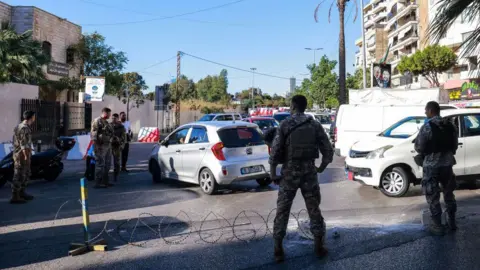
A statement put out by the Israeli military on Tuesday evening did not comment on the pager explosions, but said the chief of staff Lt Gen Herzi Halevi had held a situational assessment with commanders “focusing on readiness in both offence and defence in all arenas”.
It also said there was no change in defensive guidelines to the Israeli public but asked them to remain alert and vigilant.
Earlier in the day, the military said an air strike had killed three “Hezbollah terrorists operating within a terrorist infrastructure site” in the Blida area, near Lebanon’s border with Israel.
Lebanon’s health ministry confirmed that three people had been killed in an Israeli strike, while Hezbollah’s media office said it had carried out missile and drone attacks targeting Israeli troops and military sites.
Israel’s Shin Bet internal security service also said it had foiled a Hezbollah bomb attack targeting an unnamed former senior Israeli security official. Hezbollah did not comment on the accusation.
This comes at a time when Israel’s government is threatening to step up its military effort against Hezbollah.
On Tuesday morning, Israel’s security cabinet made the safe return of 60,000 residents displaced in the north by Hezbollah attacks an official goal of the Gaza war.
Defence Minister Yoav Gallant said during a meeting with US envoy Amos Hochstein on Monday that the only way to return northern residents was through “military action”.
“The possibility for an agreement is running out as Hezbollah continues to ‘tie itself’ to Hamas, and refuses to end the conflict,” a statement from his office said.
Since the hostilities escalated in October, at least 589 people have been killed in Lebanon, the vast majority of them Hezbollah fighters, according to the Lebanese health ministry.
On the Israeli side, 25 civilians and 21 members of security forces have been killed, the Israeli government says.
[BBC]

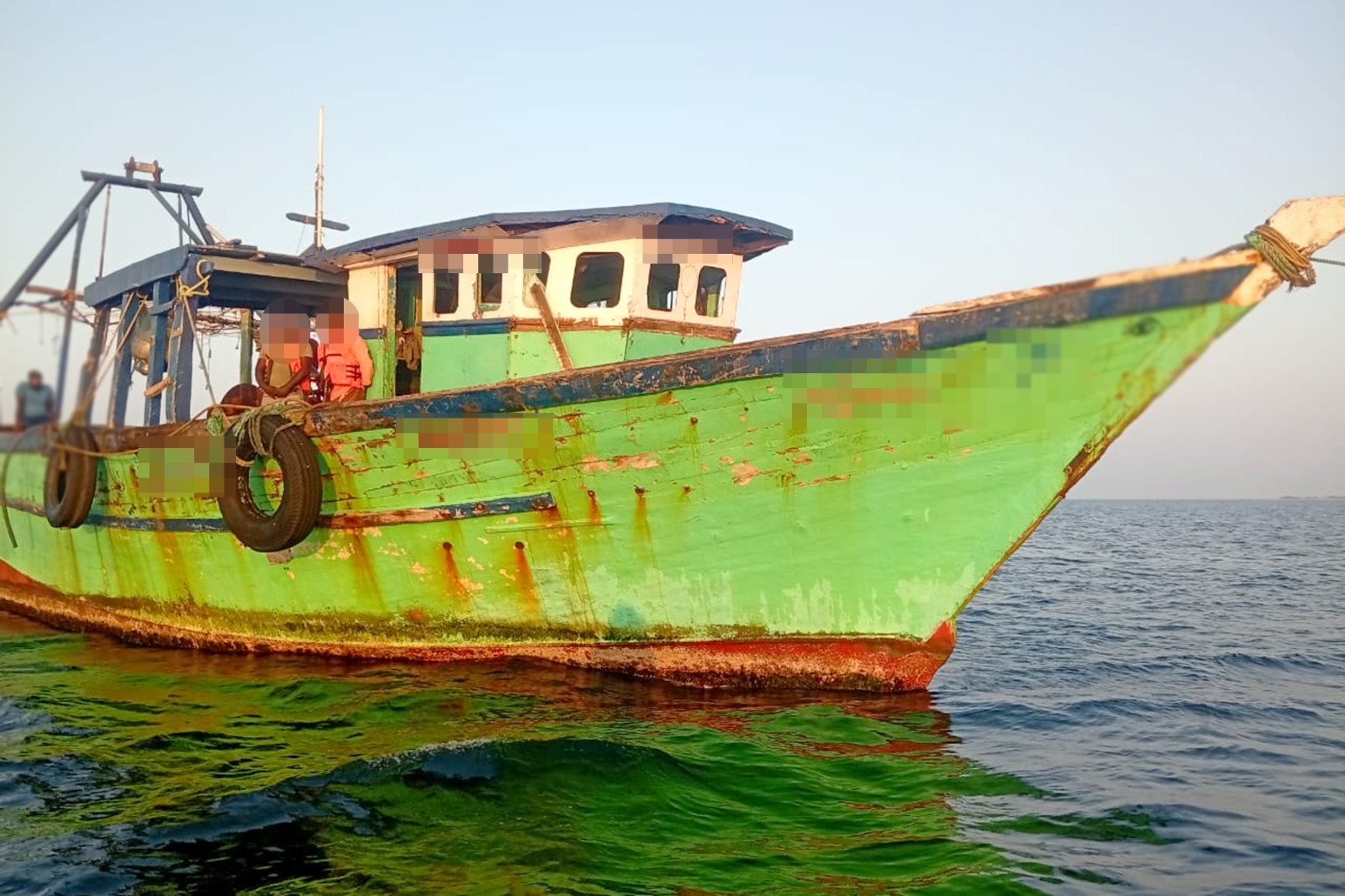
During an operation conducted in the dark hours of 11 Mar 26, the Sri Lanka Navy seized an Indian fishing boat and apprehended 02 Indian fishermen while they were poaching in Sri Lankan waters, in the sea area North of Mannar.
The North Central Naval Command spotted a group of Indian fishing boats engaging in illegal fishing, trespassing into Sri Lankan waters. In response, naval craft of the North Central Naval Command were deployed to drive away those Indian fishing boats from island waters off Mannar.
The seized boat (01) and Indian fishermen (02) were handed over to the Fisheries Inspector of Kilinochchi for onward legal proceedings.

The bodies of 84 Iranian sailors killed in a torpedo attack by a US submarine last week in the Indian Ocean are due to be flown home on Friday, Sri Lanka’s defence ministry has said.
The seamen were among 130 thought to be aboard the Iranian warship, the Iris Dena, when it was sunk on 4 March about 40km (25 miles) from Sri Lanka’s southern coastline.
A police escort transferred bodies to Mattala Rajapaksa International Airport on Friday morning for the repatriation to Iran, after they were stored in two freezers at Galle National Hospital.
Sri Lanka said 32 sailors rescued by its navy after the torpedo attack “will remain in Sri Lanka”, according to news agency AFP.
A magistrate in the Sri Lankan city of Galle ordered that the 84 bodies should be released to the Iranian embassy.
US Defense Secretary Pete Hegseth said shortly after the sinking that the Iranian warship had died a “quiet death”.
Iran’s Foreign Minister Abbas Araghchi said the US had “perpetrated an atrocity at sea, 2,000 miles away from Iran’s shores”, adding that “the US will come to bitterly regret precedent it has set”.
Video released by the US Department of Defense after the incident showed a ship being struck, causing the stern to rise up before exploding.
The Iris Dena had been returning from a military exercise hosted by India when it was attacked.
Its sinking in international waters came during the current US-Israeli war with Iran and marked a dramatic widening of the conflict.
Iran has since launched retaliatory strikes across the Middle East – targeting Gulf countries allied with the US.

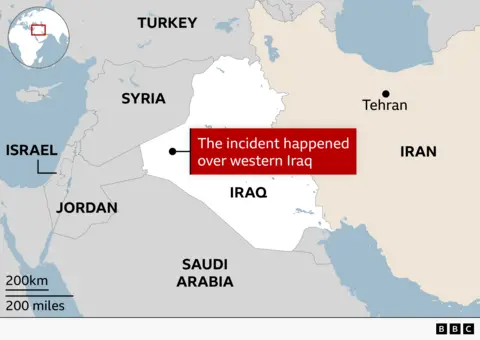
Four of six members of a US military refueling aircraft’s crew have been confirmed dead after it crashed in western Iraq, US Central Command (Centcom) says.
Rescue efforts continue after the loss of the KC-135, it said, having earlier said neither hostile nor friendly fire were involved in the downing of the aircraft.
The tanker had been involved in ongoing US operations against Iran and was one of two aircraft involved in the incident. The second landed safely.
The Boeing-manufactured aircraft are capable of refueling planes midair and typically play a major role in US military operations. They were used extensively in the first Gulf War to extend the range of fighter jets and bombers.
Centcom said the incident occurred around 14:00 ET (19:00 GMT) on Thursday and that the circumstances of the crash were now under investigation.
The US military command unit added that the identities of the personnel who had been killed were being withheld for 24 hours so their next of kin could be notified.
The KC-135 usually has a crew of at least a pilot, a co-pilot and a boom operator responsible for controlling the refuelling arm of the aircraft.
Centcom earlier described the crash as happening over friendly airspace – but this is a region of Iraq where pro-Iranian militias operate. Iran’s military claimed on state TV that an allied group had targeted the plane with a missile.
Thursday’s crash brings the official US military death toll in the US-Israel war with Iran, which began a fortnight ago, to 11.
The US military has now lost at least four aircraft during the current war.
Earlier this month, three F15s were shot down in “an apparent friendly fire incident” over Kuwait, officials said. All six crew members were able to safely eject.
Boeing manufactured the KC-135 Stratotanker for the US military in the 1950s and early 1960s.
It has been a backbone to the US military’s air refuelling fleet, and allow combat aircraft to carry out longer missions without needing to land.
[BBC]

Navy seizes an Indian fishing boat poaching in Mannar seas

Bodies of 84 Iranian sailors killed in US torpedo strike to be repatriated

Four crew members killed after US refuelling plane crashes in Iraq

Safeguarding linguistic heritage is not only a cultural responsibility, but also a shared commitment to preserving the diversity of our world – PM

This is not an ordinary scholarship programme. It defines the future vision of our country – PM

West Indies name unchanged squad for home T20Is against Australia

‘Dates have the highest sugar content to fight Coronavirus’

Sunday Island 27 December – Headlines

#SundayIsland 17th December – Headlines

Sunday Island – 28th March

Sunday Island Headlines – 21 March

Sunday Island – 21st February – Headlines
-

 News7 days ago
Peradeniya Uni issues alert over leopards in its premises
-

 News5 days ago
Repatriation of Iranian naval personnel Sri Lanka’s call: Washington
-

 News7 days ago
Wife raises alarm over Sallay’s detention under PTA
-

 Features5 days ago
Winds of Change:Geopolitics at the crossroads of South and Southeast Asia
-

 News4 days ago
Prof. Dunusinghe warns Lanka at serious risk due to ME war
-

 Sports3 days ago
Royal start favourites in historic Battle of the Blues
-

 Latest News7 days ago
Heat Index at ‘Caution Level’ in the Sabaragamuwa province and, Colombo, Gampaha, Kurunegala, Anuradhapura, Vavuniya, Hambanthota and Monaragala districts
-

 Features7 days ago
The final voyage of the Iranian warship sunk by the US