
Sports
Herath creates history at Paralympics, Dulan wins bronze


Sri Lanka Army’s Dinesh Priyantha Herath created history winning country’s first Paralympics gold medal and proved his coach Pradeep Nishantha’s prediction right as he beat India’s defending champion and world record holder in the men’s F46 javelin throw in Tokyo yesterday.
In his third attempt, Herath hurled the javelin to a distance of 67.79 metres, the furthest a Para athlete in the F46 category had ever thrown in the history. The world and Paralympics record holder Devendra Jhajharia who was attempting to defend his title, also improved on his previous mark but the Indian’s best throw fell more than three metres behind the Sri Lankan’s new mark. The previous World Record mark was 63.97 metres.
While the 35-year-old Herath stormed to gold, the reigning Rio 2016 champion Devendra claimed silver with a throw of 64.35 metres.
Last week in an interview with The Island Pradeep Nishantha, the Gateway College coach who also trained country’s Olympic thrower Sumeda Ranasinghe said that his charges were ready to create history in Tokyo on Monday. And it was exactly what Herath and Dulan Kodithuwakku did. While Herath won country’s first ever gold, Kodithuwakku won a bronze in the F64 javelin throw making it the first time the country had won more than one medal at Paralympics.
For Herath it was the second Paralympics medal. Herath first won bronze at the Rio Paralympics in 2016.
While acknowledging the support given by the Sports Minister, Sports Council, Army Commander, his coach, Paralympics Committee and the officials of his regiment, the Gajaba Regiment athlete dedicated his gold medal to his wife.
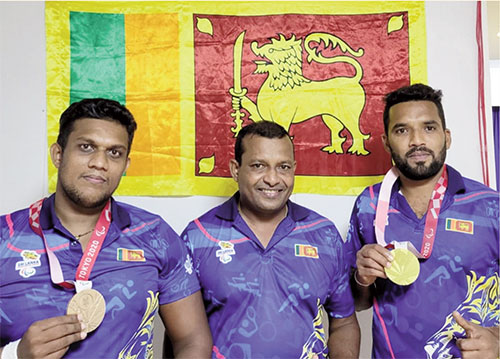 Coach Pradeep Nishantha flanked by gold medal winner Dinesh Priyantha Herath (right) and bronze winner Dulan Kodithuwakku (left) after their historic achievement at Tokyo Paralympics on Monday.
“I am very happy because my dream came true. I have no words to describe the feeling,” said Priyantha, who kissed the Sri Lankan flag after claiming victory.
Commenting on his historic feat Army Commander Gen. Shavendra Silva yesterday told The Island that he had an opportunity to meet Sgt. Dinesh Priyantha Herath before the Sri Lankan Paralympics team left for Tokyo. “Javelin thrower Sgt. Herath was confident of securing the Gold at F 46 event,” Gen. Silva, who is also the Chief of Defence Staff said. Responding to a query, Gen. Silva said that Sgt Herath of the Gajaba Regiment was wounded in action on Dec 16, 2008 during fierce fighting in the Kilinochchi area.
Enlisted to the Army on 18 March 2004 as a recruit, Herath completed basic training at Saliyapura. Following the Kilinochchi incident, he took part in Army-organized Para Athletic training events at the GR Regimental HQ. In 2012, he won Gold in Javelin Throw (52 m) in Army Para Athletic Meet, first place in Malaysia’s Para Athletic Meet (52.95 m) in 2012, second place in Germany’s Para Athletic (Qualifying) Meet (53.09m) in 2017 and again the second place in London Para Athletic Meet-2017 recording 59.90m in the same event.
In the F64 javelin throw event held in the afternoon yesterday, Kodithuwakku was in the second place until his final attempt. While India’s Sumit Sumit led from the first throw, Kodituwakku commenced his attempts with a throw of 62.11 metres before making his best feat in the fourth attempt, a throw of 65.61 metres. But he had to settle for bronze medal after Australia’s Burian Michal delivered a throw of 66.29 metres in the final round.
Sri Lanka has participated in every Paralympics since 1996 but until yesterday had won only bronze medals at the quadrennial event. Country won the first Paralympics medal, a bronze when Pradeep Sanjaya was placed third in the T46 400 metres at the 2012 Paralympics in London. Dialog has been the main sponsor of Sri Lanka’s Paralympics teams during the last two decades.





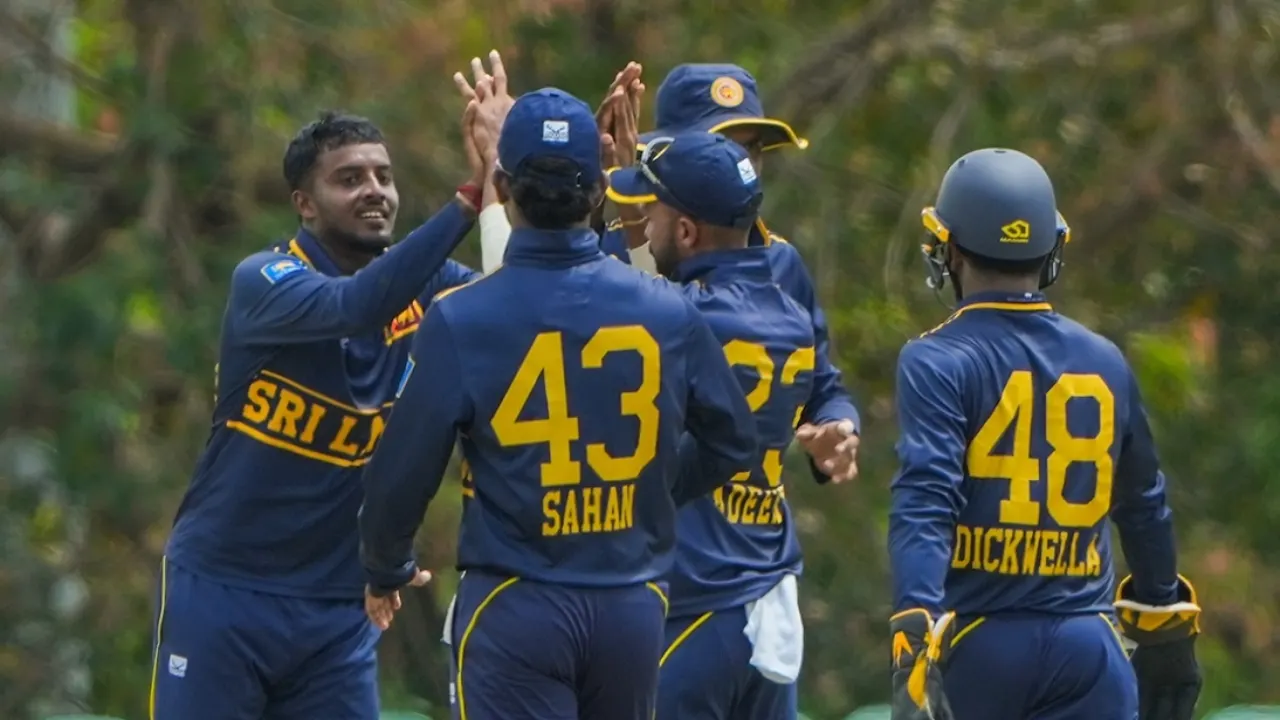
Opening batter Sineth Jayawardena has charged into the Sri Lanka T20I squad for the series against Pakistan, while Vijayakanth Viyaskanth has claimed the legspinner’s spot in the absence of the injured Wanindu Hasaranga. Seam-bowling allrounder Chamindu Wickremesinghe has also been named, as has batter Sahan Arachchige, while seamer Binura Fernando makes a return.
Omitted from the the squad were the likes of batter Charith Asalanka, fast bowler Dilshan Madushanka, ambidextrous spinner Tharindu Rathnayake, and batting allrounder Janith Liyanage.
Fast bowler Dushmantha Chameera was named in the squad, but his participation is subject to fitness.
Jayawardena, 21, has got his call-up because of an outstanding recent run in domestic T20s. In the past month, he has struck 101 off 52 and 82 off 32 for Tamil Union Cricket Club in the club T20 competition. He has played a single T20I, at the ongoing Asiad, but otherwise has never been part of a full-strength Sri Lanka side.
Others, such as Wickramasinghe, Arachchige, and Viyaskanth have earned their call-ups through years of performance at domestic level. Each of these players has appeared in T20 internationals for Sri Lanka before, but with the national team having had little success in this format in 2026, this inclusion represents their best chance yet to embed themselves within the side.
The three T20Is, which are all set to be played in Rawalpindi, will begin on October 9.
Sri Lanka squad :
Kamil Mishara, Sineth Jayawardena, Kusal Mendis (capt.), Lahiru Udara, Sahan Arachchige, Kamindu Mendis, Dasun Shanaka, Chamindu Wickramasinghe, Dunith Wellalage, Maheesh Theekshana, Vijayakanth Viyaskanth, Binura Fernando, Nuwan Thushara, Eshan Malinga, Dushmantha Chameera (subject to fitness)
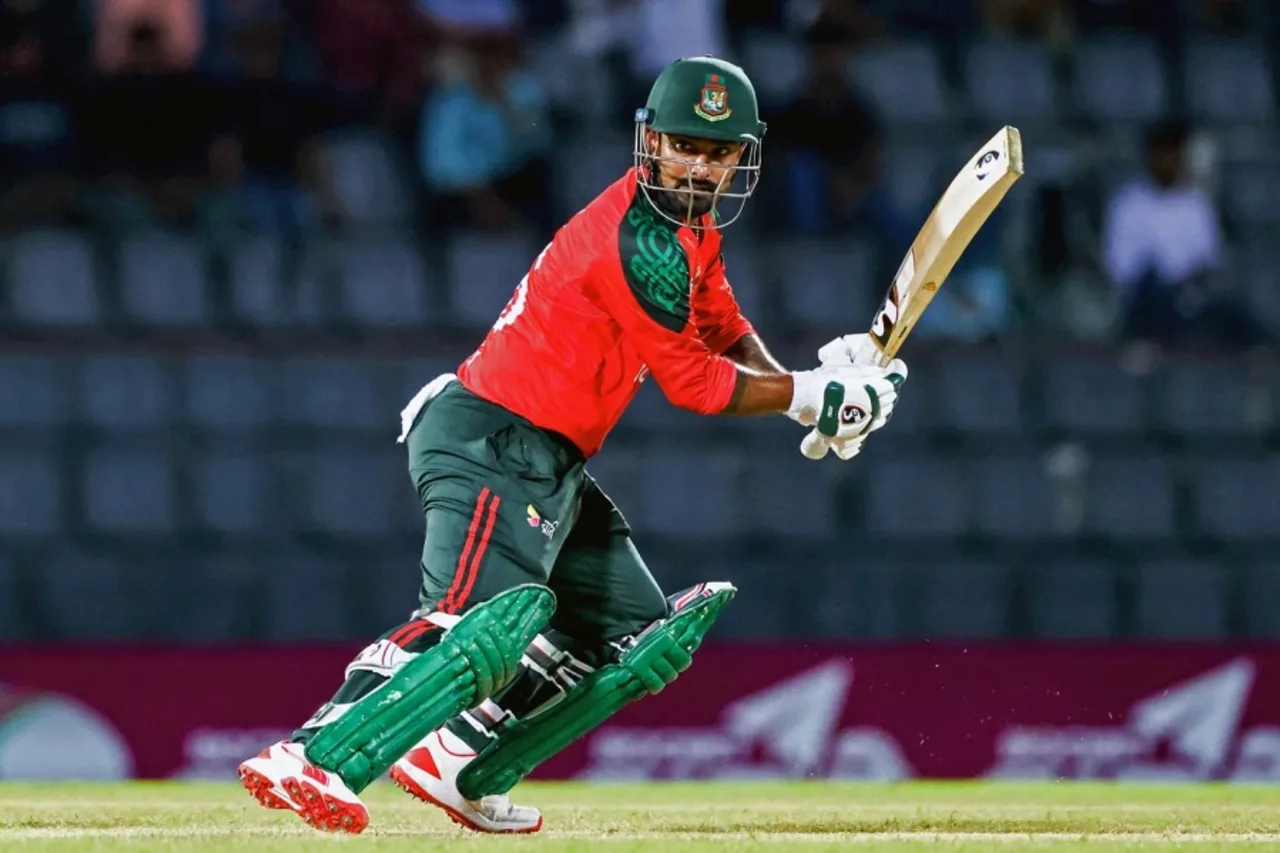
At the end of a wretched week in Nisshin, Bangladesh and Sri Lanka have something real to play for: an Asian Games bronze.
Both teams have a point to prove. Bangladesh recovered well from a poor start in their semi-final against Pakistan, thanks to Towhid Hridoy’s efforts with the bat, but their bowlers couldn’t defend 111 in a 13-overs-a-side game, and Mustafizur Rahman was taken to the cleaners in one of his rare poor outings in T20Is.
But at least they ran Pakistan close. In the other semi-final, India ran riot over Sri Lanka, bowling them out for 45. Sri Lanka had a second-string side on the field, but they wouldn’t have bargained for the basic mistakes they made, like the three run-outs in their innings.
Bangladesh, who can call on most of their first-choice players, start the third-place match as clear favourites, but the testing conditions at Nisshin can even up contests that look one-sided on paper. And both teams will have the motivation of bringing joy to contingents that have endured mostly barren Asian Games campaigns.
After a run-less Australia tour where Litton Das made three ducks in a row in the Test series, he was out for 2 against Pakistan. Litton faced just three balls, off which he attempted two reverse-sweeps, the second of them costing him his wicket. It was a perplexing innings on a pitch that offered a lot of turn and awkward bounce. Sometimes it’s hard to say if a batter is really out of form when he’s made a string of low scores, but Litton, who has led Bangladesh impressively in this format over the last couple of years, will want to break out of this run quickly.
Sahan Arachchige couldn’t quite muster up a captain’s performance against India, especially after his top three batters fell for ducks. He scored 9 before falling to a sweep shot against Axar Patel. He had earlier taken two wickets with his offbreaks. The 30-year-old allrounder now has the chance to put together a better show and inspire his team to the bronze.
Both teams could test their bench strength in the bronze-medal match.
Sri Lanka (probable): Sineth Jayawardena, Lasith Croospulle, Sohan de Livera (wk), Nuwanidu Fernando, Sahan Arachchige (capt), Ashen Bandara, Chamika Karunaratne, Wanuja Sahan, Tharindu Ratnayake, Vijayakanth Viyaskanth, Binura Fernando.
Bangladesh (probable): Tanzid Hasan, Saif Hassan, Litton Das (capt), Parvez Hossain Emon (wk), Towhid Hridoy (c), Mosaddek Hossain, Mahedi Hasan, Rishad Hossain, Aliss Al Islam/Nasum Ahmed, Shoriful Islam, Mustafizur Rahman/Hasan Mahmud.
[Ceicinfo]

The Wanderers Stadium in Johannesburg will host the 2027 ODI World Cup final, as it did in 2003, as well as the marquee match between India and Pakistan on October 10 at next year’s tournament. Wanderers, South Africa’s biggest ground with a capacity of over 30,000, has been preferred over Newlands in Cape Town, an iconic ground because of its mountain backdrop.
Newlands will instead host the opening match between India and defending champions Australia on October 7. So, a re-match of the 2023 final kicks off the group stage of the 14th edition of the tournament. Prior to that, the Namibia Cricket Ground in Windhoek will stage the Super Series, a three-team preliminary round which will decide which side makes it to the 12-team main event. Newlands gets a semi-final as well on November 17, with the other knockout game scheduled to take place in SuperSport Park in Tshwane (Centurion) on November 18. Zimbabwe, the co-hosts, are getting five games in the World Cup group stage and they play all of them at home.
The 12 teams – two of whom have yet to be decided – will be divided into two groups of six. Afghanistan, Australia, India, Pakistan, Zimbabwe and one of the qualifiers make up Group A. Bangladesh, England, South Africa, Sri Lanka, New Zealand and the other qualifier make up Group B. The two qualifiers will come from a 10 team tournament early next year, with the winner advancing to the group stage and the losing finalist and two losing semi-finalists to play the Super Series. A venue for the qualifiers has yet to be established but it is likely to be played either in South Africa or Namibia. The top eight teams besides the co-hosts in the ICC rankings on September 30 this year gained automatic qualification to the World Cup.
The World Cup will be staged between October 2 – to commemorate the birthday of Mahatma Gandhi, who spent two decades working as a lawyer in South Africa – and will conclude on November 21. The semi-finals and the final will have a reserve day.
South Africa, the co-host in group B, begin their campaign against New Zealand – a re-match of the 2026 T20 World Cup semi-final – at Newlands on October 9. Zimbabwe, the co-host in group A, will face Afghanistan in Bulawayo on October 11 to start their journey.
The top three teams of each group will move into the Super 7 phase, with the better fourth-place finisher across the two groups taking the seventh spot. Several teams already have their designations for the Super 7 phase and there is a chance of a second India vs Pakistan game in Cape Town on November 7.
- A1: India
- A2: Australia
- A3: Pakistan
- AB4: England
- B1: New Zealand
- B2: South Africa
- B3: Sri Lanka
If either Bangladesh or Afghanistan or any other team who are not seeded, get through their groups, they will assume seeding of the seeded team that gets knocked out.
In addition to hosting the preliminary round of the World Cup, Windhoek will host three group games, two of them involving 2019 champions England. The newly constructed Mosi-oa-Tunya Stadium in Victoria Falls, Zimbabwe got the final game of the group stages – India vs Zimbabwe on October 24 and three Super 7 matches. According to the ICC’s pre-seeding, these will be India vs Australia on October 28, Pakistan vs England on October 30 and Australia vs New Zealand on November 1.
There will be five matches played at Durban, including the final one of the Super 7 between A1 (India) and B3 (Sri Lanka) on November 14. In all there are 12 venues – Windhoek in Namibia, Victoria Falls, Harare and Bulawayo in Zimbabwe and Cape Town, Paarl, Johannesburg, Tshwane (Centurion), Bloemfontein, Durban, KuGompo City (East London) and Gqeberha (Port Elizabeth).
[Cricinfo]

Ambassador of the UAE to Sri Lanka meets with the Prime Minister

EU rejects Trump’s diesel demand amid Iran war shortages

Sineth Jayawardena, Vijayakanth Viyaskanth in Sri Lanka squad for Pakistan T20Is

Bronze at stake as Bangladesh, Sri Lanka look to bring cheer to Asian Games contingents

Wanderers to host 2027 men’s ODI World Cup final as well as India vs Pakistan

Prime Minister joins Gandhi Jayanti Commemoration

‘Dates have the highest sugar content to fight Coronavirus’

Sunday Island 27 December – Headlines

#SundayIsland 17th December – Headlines

Sunday Island – 28th March

Sunday Island Headlines – 21 March

Sunday Island – 21st February – Headlines
-

 Editorial7 days ago
Birth of a bad law
-

 News5 days ago
Police remove Thileepan statue in Jaffna
-

 News7 days ago
TIN mandatory for key transactions from Nov. 1
-

 Features5 days ago
The 22nd Amendment, constitutional recovery and illiberal slippage
-

 Features5 days ago
Of foreigners as CEOs of Lankan ventures
-

 Latest News3 days ago
Gold winner Tharanga gets brand-new Honda Vezel from SLAAJ
-

 News5 days ago
Sajith rejects Jt. Opp. protest sabotage claim; SJB TU chief demands remedial action
-

 Features4 days ago
Thailand’s biggest new global star …